
By Saloni Nagar, Medically Reviewed by Dr. Jimisha Shah, B.V.Sc & A.H., PGDAW
The calcium phosphorus ratio for cats is not something most owners think about until a veterinarian brings it up. By that time, an unbalanced diet may have been in place for months or even years. The ratio is most often disrupted by meat-only or organ-heavy diets with no bone or calcium source, grain-free cat food mineral imbalance linked to legume-heavy replacements, and commercial foods that use multiple inorganic phosphorus additives.
All of these can raise phosphorus beyond what dietary calcium can balance. Wet food vs dry food mineral balance also matters. Wet foods often provide a more reliable calcium-to-phosphorus balance than dry kibble, but no food format is automatically safe. Always evaluate the ratio on the label, regardless of the food type or price.
The recommended ratio of 1:1 to 2:1 stays the same throughout a cat’s life. What changes with age is the impact of getting that ratio wrong. Kittens need more of both minerals while their bones are growing, and senior cats become less efficient at clearing excess phosphorus. A food that worked well at age five may no longer be the best choice at age twelve. If you remove the dietary cause early enough, the right food can support recovery. However, structural bone changes that are already established may only improve partially.
This is the final, action-focused article in a four-part series on the calcium-phosphorus ratio in cats. It is written for owners who understand the problem and now want to make informed feeding decisions.
Whether you read the earlier articles or arrived here because of a food label or your veterinarian’s recommendation, this guide provides a practical framework. It explains which dietary patterns can cause imbalance, which food formats are generally more reliable, how mineral needs change with life stage, and whether changing food can help correct an existing problem.
Every recommendation is format- and brand-agnostic. This article gives you the criteria to evaluate food, not a list of specific products. The right choice depends on your cat’s life stage, current health, and the values listed on the label.
Common Causes of Calcium-Phosphorus Imbalance in Cats
Before evaluating which foods get the ratio right, it helps to understand which feeding patterns and ingredients create the problem. Once you know the cause, the solution becomes much easier to understand.
This section explains the three most common dietary triggers. These include the nutritional profile of meat-only diets, the ingredients that raise phosphorus levels, and the less obvious issue that can develop in grain-free formulations.
Each section below explores one of these causes in detail. The goal is to help you read food labels with more confidence instead of feeling overwhelmed.
Why a Raw Meat Diet Upsets the Ratio?
Muscle meat on its own delivers many times more phosphorus than calcium, pushing the ratio far below the safe minimum. The imbalance falls into a different category than the borderline commercial foods most owners worry about. The reason is simple. Calcium is stored in bones, not muscle tissue. A diet built around raw meat can cause calcium deficiency in cats, which is dealing with an almost complete lack of calcium, not just a small shortfall.
To put this into perspective, a typical serving that owners searching muscle meat only diet cats safe might consider healthy, such as chicken breast, beef, turkey, or pork, contains about 150 to 200 mg of phosphorus per 100 g but only 5 to 10 mg of calcium per 100 g. That gives plain muscle meat a calcium phosphorus ratio for cats of only about 0.03:1 to 0.07:1. The recommended minimum is 1:1.
This is not a small imbalance. It is one of the most severe mineral imbalances seen in common feeding practices. That is worth stating clearly because many owners are told this approach is natural or closer to an ancestral diet.
Organ meat makes the problem worse, not better. It is easy to see why owners add liver, kidney, or heart because these foods are rich in nutrients. However, an organ-meat cat diet has too much phosphorus, which is a real concern that can outweigh those benefits.
Liver alone contains about 380 mg of phosphorus per 100 g and very little calcium. When a meal combines muscle meat and organ meat without ground bone, bone meal, or a verified calcium supplement, the functional Ca:P ratio usually stays well below 0.1:1. Adding liver and other organs felt like doing something extra healthy, not piling more phosphorus on top of an already low-calcium base.
This feeding pattern often continues because the damage is not obvious at first. A cat eating an all-meat diet may appear healthy and energetic for weeks before the hormonal changes discussed in Article 2 begin causing measurable effects.
Veterinary case reports published in the Journal of Feline Medicine and Surgery (Parker et al., reviewed 2024) describe kittens on all-meat diets developing fractures and reduced bone density as early as two months of age. Adult cats have also shown measurable bone demineralization within two to four months when fed all-meat diets without calcium supplementation.
The imbalance also develops quickly. A Ca:P ratio of about 0.05:1 is much lower than the roughly 0.8:1 seen in some borderline commercial foods. Because the gap is so large, the body’s compensatory hormones rise faster and more dramatically than they do with a moderately unbalanced commercial diet.
Some raw-feeding communities recommend meat-and-organ diets without bone. Others add chicken wings or necks because they assume those cuts provide enough calcium. This is one reason raw feeding cats without bones remains an important consideration.
The challenge is that the bone-to-meat ratio in these cuts may still be too low to achieve a 1:1 Ca:P ratio across the entire diet. Correctly balancing a raw diet relies on calculated amounts of bone or a precise calcium source rather than approximate eyeballing of “meaty bones.” Visual estimates cannot reliably replace calculated mineral values.
Which Ingredients That Raise Phosphorus in Cat Food?
The ingredient list is the best place to estimate a food’s phosphorus load. What ingredients raise phosphorus in cat food generally fall into two groups. Knowing the difference matters because each type behaves differently in the body.
The first group includes naturally high-phosphorus ingredients. Veterinary nutritionists refer to these as high-phosphorus protein sources, which contain organic phosphorus. One example is fish meal in cat food, phosphorus, one of the richest natural phosphorus sources used in pet food. Manufacturers commonly add it to dry kibble to boost protein and improve taste.
Other cat food ingredients high in phosphorus include poultry by-product meal, which contains rendered poultry parts, organs, and soft tissues. Individual organ meats, such as liver, kidney, and spleen, also belong in this group. Egg products contain moderate to high phosphorus but relatively little calcium.
Meat and bone meal is slightly different. It contains calcium from bone along with phosphorus, so its internal calcium-to-phosphorus ratio is more balanced than pure meat. However, it still contributes a high overall mineral load. Cats absorb about 60% to 70% of the phosphorus from these natural ingredients.
The second group has received growing attention in recent research. This group is called the inorganic phosphate additive load. It refers to the number of synthetic phosphate ingredients a food contains. These include phosphate additives in dry cat food and wet foods, where manufacturers use them to improve processing, texture, and shelf life.
Research published in the Journal of Urology and Renal Diseases (Steffen and Dobenecker, 2023) found that phosphoric acid combined with soluble sodium phosphate significantly increased blood phosphate levels and kidney stress markers in healthy cats. According to the Tufts University Cummings School of Veterinary Medicine Clinical Nutrition Service (2022), no commercial test can reliably separate organic from inorganic phosphorus in pet food. As a result, labels list only total phosphorus, not how much of it is highly absorbable.
In practical terms, any ingredient ending in “phosphate” is an inorganic phosphorus source. Common examples include dicalcium phosphate, monocalcium phosphate, sodium phosphate, potassium phosphate, and phosphoric acid.
Dicalcium phosphate provides both calcium and phosphorus and appears in many dry foods. Monocalcium phosphate works in a similar way but is slightly more acidic. Sodium phosphate and potassium phosphate act as preservatives and emulsifiers while supplying highly absorbable phosphorus without calcium. Phosphoric acid is another preservative and is absorbed almost completely.
A well-formulated food may include one phosphate ingredient near the bottom of the ingredient list. Foods with a higher inorganic phosphate additive load may contain two or three phosphate additives, with some appearing in the first ten ingredients. A recipe that combines a natural source like fish meal in cat food phosphorus with several phosphate additives in the top part of the list carries a much heavier phosphorus burden before you even calculate the numbers.
Scanning down the ingredient list and making a quick note of any “phosphate” words you see takes less than 30 seconds. Treating a recipe with several phosphate additives high in the list as a prompt to ask the manufacturer or your vet more questions is a sensible response. It helps you make a more informed decision based on what the label shows.
Can Grain-Free Cat Food Raise Phosphorus?
Grain-free cat food does not automatically mean lower phosphorus. In many commercial formulas, removing grains actually increases the phosphorus load. The reason is simple. Grain-free recipes replace grains with other ingredients, which can create a grain-free cat food phosphorus problem many owners do not expect.
The most common grain replacements are peas, lentils, chickpeas, potatoes, sweet potatoes, and tapioca. Among these, peas and lentils in cat food phosphorus content is especially important. Both ingredients are naturally high in phosphorus. They also contain phytates, compounds that bind calcium in the gut and reduce how much the body can absorb. As a result, a grain-free recipe that relies heavily on peas and lentils may deliver more usable phosphorus than a similar food that contains grains, despite its cleaner marketing image.
The grain-free cat food mineral imbalance risk increases because of how these recipes are formulated. Grain-free foods often contain more meat and fish, which naturally raise phosphorus levels. Legumes add even more plant phosphorus. Many recipes also include dicalcium phosphate or other inorganic calcium sources to replace displaced minerals. This combination can produce a food with a high total phosphorus content. On paper, the calcium-to-phosphorus ratio may still appear acceptable because of how it is calculated.
Phytates add another layer to the issue. According to the Merck Veterinary Manual (2024 update), calcium absorption depends closely on vitamin D, and phytates in legume-heavy diets can bind calcium in the gut and reduce its availability. This means a grain-free food with a calculated calcium-to-phosphorus ratio of 1.2:1 may still provide less usable calcium than the label suggests.
Checking whether your grain-free choice leans heavily on peas, lentils, or chickpeas in the top five ingredients is a simple first step. It helps you judge whether the listed ratio is likely to reflect what your cat actually absorbs.
Some grain-free foods maintain an excellent calcium-to-phosphorus balance. The important point is that a grain-free label does not guarantee better mineral nutrition.
One owner, Sofia, fed her three-year-old Siamese, Luca, a grain-free dry food for almost a year. I picked a grain-free kibble, assuming fewer carbs meant a better choice, and never thought to question the mineral side. While reading the ingredient list one evening, she found three separate phosphate compounds. After switching to a wet food with a confirmed calcium-to-phosphorus ratio in the target range, she noticed Luca seemed more settled and energetic within a few weeks.
The calcium phosphorus ratio for cats in a grain-free food should always be evaluated on its own merits, just as you would evaluate any other food.
Understanding which ingredients and feeding patterns create imbalance makes it much easier to compare different food formats. The next section explains where each format tends to succeed or fall short.
This finding comes from one of the most cited veterinary nutrition services in North America, and it changes how the grain-free label question should be read.
The Tufts Clinical Nutrition Service notes that current pet food labels do not provide a reliable way for consumers to determine how much phosphorus comes from natural food ingredients versus added inorganic phosphate compounds. Manufacturers are not required to separately disclose these phosphorus sources, making accurate distinction impossible from the label alone.
Even if you carefully read an ingredient list, there is currently no reliable way to calculate exactly how much phosphorus comes from whole-food ingredients versus added phosphate additives without additional manufacturer information or laboratory analysis.
Two cat foods may list similar total phosphorus percentages yet differ substantially in how much phosphorus is absorbed by the body. Ingredient lists can help identify potential phosphate additives, but they cannot reveal the precise proportion of organic versus inorganic phosphorus in the finished food.
Calcium Phosphorus Balance Across Cat Food Formats
Understanding which ingredients and dietary patterns drive phosphorus up is only part of the evaluation. The next step is understanding how different food formats handle those ingredients and whether the format itself makes a reliable ratio more or less likely.
This section compares dry food, wet food, and the formats most likely to skew the ratio in the wrong direction. Each section below looks at one format or format category in enough detail to support a practical comparison rather than a general preference.
Is Dry Cat Food High in Phosphorus?
Dry cat food is more variable in calcium-to-phosphorus balance than wet food, and the format itself is part of the reason, not just the ingredients.
The manufacturing process for kibble uses higher heat and pressure than wet food production. This process reduces some naturally occurring minerals in the raw ingredients. Because of this, the kibble calcium phosphorus balance cannot depend on the natural ingredients alone. Manufacturers almost always add mineral supplements, and these commonly include phosphate additives in dry cat food.
Research reviewed in the Journal of Feline Medicine and Surgery (Stockman, 2024) found that phosphate additives in dry cat food appear in most commercial kibble formulas. They are usually needed for manufacturing rather than added by choice. When reading a label, the important question is not whether phosphate additives are present. Instead, ask how many are included and which types they are.
Dicalcium phosphate is the most common additive in kibble. It supplies both calcium and phosphorus, so it does not automatically upset the ratio. Sodium phosphate and potassium phosphate are different. They add phosphorus without calcium, which can shift the balance toward phosphorus. These inorganic phosphates are also absorbed very efficiently, at about 85% to 100%.
Several studies have found that the actual phosphorus content of commercial dry foods often exceeds the minimum listed on the guaranteed analysis. In some cases, the difference ranges from 20% to 40%. This is why is dry cat food high in phosphorus does not have a simple yes-or-no answer. Some formulas stay well within a healthy range, while others carry a much higher inorganic phosphorus load than the label first suggests.
A well-formulated dry food often contains one phosphate additive placed near the lower third of the ingredient list. It should also list calcium in the guaranteed analysis so you can calculate the ratio. A formula deserves a closer look if it lists several phosphate compounds near the top of the ingredients, along with fish meal in cat food phosphorus sources or poultry by-product meal as major protein ingredients. That combination increases both natural and inorganic phosphorus at the same time.
When evaluating a label, is dry cat food high in phosphorus depends on the individual formula, not the format alone. Four factors deserve the closest attention: high fish meal or poultry by-product meal, multiple phosphate additives, legume-heavy grain-free recipes, and the higher mineral concentration that comes with low moisture. These are also useful indicators of dry cat food mineral content high vs low.
A phosphorus value of 1.2% in dry food delivers much more phosphorus per calorie than the same percentage in wet food. So, what to look for on kibble label minerals includes a calculated Ca:P ratio between 1.2:1 and 1.8:1 on a dry matter basis, no more than one phosphate additive, calcium listed in the guaranteed analysis, and fish meal not appearing in the first three ingredients. These points also help answer does dry cat food have good calcium phosphorus ratio for a specific product instead of assuming all kibble is the same.
Finally, the phrase “complete and balanced” tells you the food meets minimum nutritional standards. It does not guarantee the ideal mineral ratio. Understanding that difference helps you evaluate dry foods more confidently.
Is Wet Food Better for Phosphorus Balance?
Wet food made from identifiable whole protein sources with minimal inorganic phosphate additives is the most consistently reliable format for Ca:P balance. The reason comes from how it is made, not just what it contains. Wet food goes through less intensive heat processing than dry kibble, so it keeps more of the naturally occurring minerals in its ingredients. Because of this, manufacturers usually need fewer inorganic phosphate additives than they do for kibble.
Research published in the British Journal of Nutrition (Coltherd et al., 2022) found that the dietary Ca:P ratio affects phosphorus levels in a cat’s blood after eating. In simple terms, the mineral ratio in the food influences how much phosphorus enters the bloodstream, especially when soluble inorganic phosphates are present. Wet cat food phosphorus levels that come mainly from whole meat, broth, and other natural ingredients are absorbed at about 60% to 70%. In comparison, the inorganic phosphate additives used more often in dry food are absorbed at about 85% to 100%.
This difference explains why two foods with similar label values can behave very differently in a cat’s body. Pate cat food mineral balance is often more favorable than gravy-style or highly emulsified recipes. Pâté-style foods made mostly from whole meat with few additives are among the commercial options most likely to provide a naturally balanced phosphorus profile instead of relying on heavy supplementation.
So, is wet cat food better for calcium phosphorus balance? In general, yes, but it is not a guarantee. The wet food vs dry food mineral balance comparison usually favors wet food when you choose the recipe carefully. However, some wet foods labeled “complete and balanced” still contain sodium phosphate, potassium phosphate, or phosphoric acid. These ingredients are especially common in loaf-style or emulsified products because they help create the desired texture.
Fish-based wet food phosphorus for cats is another important consideration. Tuna-, salmon-, and sardine-based wet foods naturally contain more phosphorus, regardless of whether they are wet or dry. A tuna pâté without phosphate additives can still have a high natural phosphorus load because fish is naturally rich in phosphorus. Gravy-style wet foods that rely heavily on by-products may also have less predictable mineral profiles than recipes based mainly on whole muscle meat.
The practical goal is choosing wet cat food with fewer phosphate additives, not simply choosing wet food over dry food. For most owners, the best starting point is a wet food made from identifiable whole protein sources with minimal phosphate additives. Dry food usually requires closer label review, and neither format removes the need to evaluate the ingredient list carefully.
Wet food is not a single category on the shelf, and the format it comes in affects how reliably it delivers a clean phosphorus profile. This table breaks down what each format typically means for Ca:P balance.
Which Cat Foods Unbalance the Phosphorus Ratio?
Some feeding approaches and food formats consistently create a calcium-to-phosphorus ratio outside the safe range. Understanding which formats carry this structural risk helps owners evaluate foods before buying them instead of discovering a problem after blood test results months later.
How risky a food format is depends on how it is formulated, not simply whether it is raw, dry, or wet.
Raw cat food calcium phosphorus balance varies greatly depending on whether the diet includes properly calculated bone content or another verified calcium source. Raw feeding cats without bone risks is one of the clearest examples of a feeding approach that consistently creates a severe mineral imbalance.
As explained in the meat-only section above, boneless raw meat produces a Ca:P ratio of about 0.03:1 to 0.07:1. This remains true regardless of the meat’s quality or variety. Guidance from the Cornell Feline Health Center (2024) notes that raw diets have no proven overall health advantage and carry documented food safety risks. The mineral imbalance exists separately from the food safety concern. Both issues are real, and both apply specifically to boneless raw diets.
Complete raw diets with the correct amount of bone have a very different nutritional profile. Around 10 to 15 percent raw meaty bone can produce an appropriate Ca:P ratio when calculated correctly. Correctly balancing a raw diet relies on calculated amounts of bone or a precise calcium source rather than approximate eyeballing of “meaty bones.” Veterinary nutrition experts consistently emphasize this point.
Grain-free dry food mineral imbalance represents one of the highest-risk combinations among commercial kibble. A grain-free dry food that combines high meat or fish content, legume-heavy ingredients such as peas and lentils in the top five ingredients, and multiple inorganic phosphate additives brings together several phosphorus-raising factors at the same time.
This pattern is supported by nutritional reviews of commercial grain-free cat foods. Legume-heavy grain-free formulas combine plant phosphorus with animal phosphorus and often rely on extra phosphate additives to hit mineral targets. Likewise, organ-rich foods and single-protein cat food phosphorus load with fish as the main protein source create a moderately high-risk category. These foods can be appropriate, but they require verification instead of assumptions.
Tuna only cat diet mineral problems clearly show the risks of single-protein fish diets. Tuna is naturally one of the highest-phosphorus protein sources. A diet built mainly around tuna creates a high phosphorus load before any additives are considered. The same principle applies to salmon-only, sardine-only, and other single-fish diets.
Single-protein fish diets group a high-phosphorus animal source with the potential for additional additive load, making phosphorus control more challenging. For this reason, even premium single-protein fish-based wet foods deserve Ca:P ratio verification before long-term feeding.
The correct Ca:P ratio is not the same throughout a cat’s life. A food that suits a healthy three-year-old adult may not provide enough minerals for a fast-growing kitten. The same food may also need re-evaluation for a twelve-year-old senior cat.
Calcium and Phosphorus Needs at Every Life Stage
With dietary causes and food format risks now explained, the next question is whether the same calcium-to-phosphorus ratio applies throughout a cat’s life. It does not. The target ratio stays the same, but the amount of calcium and phosphorus a cat needs, the effects of an imbalance, and the risks at each life stage are different.
This section looks at kittens, the bone condition linked to early-life mineral imbalance, healthy adult maintenance, and why senior cats need a different approach to phosphorus.
Do Kittens Need a Different Calcium Ratio?
A kitten’s calcium and phosphorus needs are much higher than an adult cat’s. This is not a small difference. Adult maintenance food does not provide enough calcium for a kitten that is actively building bone.
A kitten’s skeleton grows and mineralizes rapidly during the first year of life. During this period, calcium demand per pound of body weight is higher than at any other time in the cat’s life.
According to AAFCO guidelines based on NRC recommendations, the minimum calcium level for kitten food calcium phosphorus ratio growth diets is 1.0% on a dry matter basis. The adult minimum is 0.6%. That is almost a 70% difference. The minimum phosphorus level is 0.8% for growth and 0.5% for adult maintenance.
This is why growth-stage foods are formulated with higher absolute calcium and phosphorus levels to match the demands of active bone formation, not just overall calories. They are not simply smaller pieces of kibble. FEDIAF guidelines also recommend a Ca:P ratio closer to 1.5:1 for growing kittens because bone formation requires a slightly calcium-dominant balance.
The key idea is life-stage-appropriate mineral density, which means providing the right amount of calcium and phosphorus for a kitten, adult, or senior cat instead of using one formula for every age.
So, can I feed adult cat food to a kitten? Veterinary nutritionists generally advise against it. A food that meets the adult minimum of 0.6% calcium provides only about 60% of a kitten’s minimum calcium requirement. Many fast-growing kittens are switched to adult food too early because they appear large for their age, but their skeleton is still developing.
Adult food is also usually lower in protein. Kittens need extra protein for muscle, organ, and tissue growth in addition to bone development. Feeding adult food during active growth is one of the easier ways to create the kind of mineral imbalance discussed earlier in this series.
Adult maintenance foods are designed to hold an already formed skeleton steady rather than to build one from scratch. That is why AAFCO kitten calcium minimum standards are not interchangeable with adult maintenance standards.
Can Rickets in Kittens Come From Diet?
Rickets is the clinical name for the metabolic bone disease that develops in growing animals when bone and cartilage do not mineralize properly. In kittens, it is most commonly caused by an inadequate calcium-to-phosphorus ratio in the diet. It is not a rare or exotic condition. It is a documented, preventable outcome of specific dietary choices, and its early signs are often visible before permanent bone changes develop.
A common question owners ask is, “Is rickets in kittens from diet?” In most feline cases, yes. Veterinary case reports published in the Journal of Veterinary Diagnostic Investigation (Zambarbieri et al., 2023) and the Journal of Feline Medicine and Surgery (Parker et al., reviewed 2024) document rickets in kittens fed all-meat diets, adult maintenance food, and homemade diets without verified mineral composition.
Kitten bone problems from wrong food follow a predictable pattern. Low dietary calcium raises parathyroid hormone (PTH), a hormone that tells the body to release calcium from bones when blood calcium falls. As a result, the body removes calcium from the growing skeleton faster than the diet can replace it.
What does rickets look like in practice? The first signs often include bowed front legs, as the radius and ulna begin to bend under the kitten’s body weight. Owners may also notice swollen or knobby wrists and ankles, slower-than-expected growth, pain when the kitten is handled, or a wide-based, waddling walk.
Some kittens also develop fractures during normal activity that a healthy, well-mineralized skeleton would usually tolerate without injury. As the condition progresses, many kittens become reluctant to run, jump, or play.
Is rickets reversible in kittens? That depends on when treatment begins. If dietary correction happens before the growth plates close, usually around 12 months of age, the bones can continue to mineralize as they grow. Mild bowing may improve or even be corrected completely.
After the growth plates close, permanent deformities become much more likely. Severe bowing or shortened bones caused by poorly healed fractures may not fully recover. The earlier the diet is corrected, the better the chance of a complete recovery. This directly connects the early warning signs discussed in Article 3 with the outcomes explained here.
What Ratio Do Adult Cats Actually Need?
For healthy adult cats on a maintenance diet, the target calcium-to-phosphorus ratio is 1.2:1 to 1.6:1 on a dry matter basis. This sits comfortably within the safe 1:1 to 2:1 range and provides a practical safety margin against both calcium deficiency and phosphorus excess.
Many owners ask, what Ca:P ratio for adult cat food should they look for? According to FEDIAF nutritional guidelines (2021, cited in Stockman 2024), the safe ratio across life stages is 1:1 to 2:1. However, the recommended range for healthy adult cats is 1.2:1 to 1.6:1.
As veterinary nutritionists often note, a Ca:P ratio in the roughly 1.2 to 1.6 to 1 range on a dry basis is a practical sweet spot for many adult cats, providing margin on both sides of the minimum. The minimum calcium level is 0.6% on a dry matter basis. Phosphorus above 1.0% deserves a closer look, while levels above 1.5% warrant careful evaluation of inorganic phosphorus sources.
A maintenance diet is designed to keep an adult cat healthy rather than build new bone. It is generally appropriate for cats between one and seven years of age, although breed, body condition, and annual blood work may influence that timeline.
Complete and balanced adult foods that meet AAFCO or FEDIAF standards are usually the simplest choice. Look for products that publish actual calcium and phosphorus values within the 1.2:1 to 1.6:1 range. Wet foods made with whole muscle meat and few or no phosphate additives are more likely to achieve this balance through natural ingredients.
Dry food can also provide an appropriate ratio. Look for formulas that use dicalcium phosphate as the only phosphate additive, list calcium in the guaranteed analysis, and fall within the recommended Ca:P range.
For adult cats, dry cat food mineral content high vs low is an important distinction. Not all kibble contains the same amount of phosphorus. A well-formulated dry food with a clean ingredient list can outperform a poorly formulated wet food.
When deciding what to look for on the kibble label for minerals, check the calculated Ca:P ratio using the guaranteed analysis. Also, review the ingredient list for the number and type of phosphate additives, and make sure calcium is listed. A cat eating a well-balanced maintenance diet with a ratio around 1.3:1 has a low risk of developing the hormonal changes described in Article 2. However, maintenance nutrition should not stay unchanged forever, because a cat’s phosphorus needs shift as it enters the senior years.
Why does phosphorus matter more in Senior Cats?
My cat had eaten the same brand for years and done well. It hadn’t occurred to me that turning twelve changed how her body handles phosphorus. That realization is exactly what this section addresses.
The same food that maintained normal phosphorus levels at age four may lead to higher blood phosphorus at age twelve. The food has not changed. The cat’s kidneys have. This is one of the most important nutritional changes that comes with aging, especially for owners who have fed the same brand for years without any obvious problems.
The kidneys remove excess phosphorus from the bloodstream. As cats age, their glomerular filtration rate, the kidneys’ filtering efficiency, gradually declines. This is a normal part of aging and does not always mean kidney disease.
A cat with 30% lower filtration efficiency absorbs the same amount of dietary phosphorus as before. However, it removes phosphorus less efficiently, so blood phosphorus gradually rises on the same diet. Research published in the Journal of Feline Medicine and Surgery (Stockman, 2024) reports that excessive soluble and inorganic phosphorus intake is a concern even in otherwise healthy cats. The review also identifies senior cats as a group that deserves closer attention to dietary phosphorus.
This is why senior cat food lower phosphorus formulations exist. They are not designed only for cats with diagnosed kidney disease. They also support aging cats whose kidneys are becoming less efficient before routine blood tests show clear disease.
Managing phosphorus levels for older cats diet planning is also recommended in the 2023 AAHA Senior Care Guidelines. These recommendations align with IRIS guidelines, which advise phosphorus control as the first nutritional step when blood phosphorus becomes elevated in cats with chronic kidney disease (CKD), a progressive loss of kidney function over time.
A 2020 study by researchers at Oregon State University, Colorado State University, and UC Davis, later reviewed by Tufts University nutritionist Dr. Cailin Heinze, found that many commercial senior cat foods were not meaningfully lower in phosphorus or sodium than standard adult foods. This finding matters because foods marketed as senior diets do not automatically provide lower phosphorus.
In the United States, the word “senior” is a marketing term rather than a regulated nutritional category. AAFCO does not publish separate nutrient profiles for senior or geriatric cats. As a result, senior cat food lower phosphorus should never be assumed based only on the front of the package.
Senior cats also face a less obvious nutritional risk. Some develop elevated ionized calcium, called hypercalcemia, which means calcium levels in the blood become too high. In some cases, a calcium-to-phosphorus ratio near the upper limit of 2:1 may contribute to excess calcium rather than simply protecting against phosphorus.
For that reason, many veterinary nutritionists prefer a ratio closer to the middle of the safe range, around 1.2:1 to 1.5:1, for healthy senior cats.
Many owners also wonder when to switch cat to senior food. Most veterinary nutritionists recommend discussing this between seven and ten years of age. The decision should depend on breed, body condition, and blood test results rather than age alone.
A cat with rising blood phosphorus, BUN (blood urea nitrogen), or creatinine, even if the values remain within the normal laboratory range, may already be showing early changes in kidney function. At that stage, a phosphorus-restricted formula, a food intentionally made with lower phosphorus and often recommended for cats with reduced kidney function, may be worth discussing with your veterinarian.
It is also reasonable to ask your veterinarian whether a “growth” or “all life stages” food is still appropriate for your adult or senior cat based on its current health. A senior life-stage diet is designed for older cats whose kidneys and bones change with age. Blood test results, together with a careful diet review, provide the best guide for deciding when to make that transition.
Priya had been feeding her eleven-year-old Ragdoll, Milo, the same adult dry food for years without obvious problems. During a routine veterinary visit, the veterinarian noticed that Milo’s phosphorus level had increased slightly each year. After switching to a senior-formulated wet food with a lower phosphorus profile, Priya noticed that Milo seemed more comfortable and settled during the evenings.
With the causes, food formats, and life-stage requirements now explained, the next practical question is whether changing the diet can actually correct an imbalance. It is also important to understand can switching cat food fix mineral imbalance and how long to see improvement after changing cat food in real-world situations.
Correcting a Calcium-Phosphorus Imbalance Through Diet
Seeing the connection between the food in the bowl and the internal changes described in the earlier articles makes the choice feel both more urgent and more manageable. That is exactly the right perspective for this section.
Dietary correction can make a real difference, but it also takes time. This section explains cat bone changes reversible with a better diet, whether does every meal needs a perfect calcium-to-phosphorus ratio, and what Ca:P ratio cat food should have when you compare foods. It also covers the practical steps owners can use when evaluating any cat food label.
How Long Before Bone Damage Becomes Measurable?
Structural bone changes caused by a long-term calcium-to-phosphorus imbalance develop over months, not days. The sooner you correct the diet, the better the chance of recovery. This timeline matters because it gives owners a meaningful opportunity to act before bone changes become permanent. Understanding where your cat falls on that timeline helps set realistic expectations instead of causing either panic or false reassurance.
Veterinary nutrition research published in the Journal of Feline Medicine and Surgery (Stockman, 2024) and case evidence from Parker et al. (reviewed 2024) describe a general pattern of progression.
During the first one to two weeks, the earliest measurable change is hormonal. FGF-23 (fibroblast growth factor-23, a phosphate-regulating hormone produced by bone cells) begins to rise as the body responds to excess phosphorus relative to calcium. No structural bone damage has occurred at this stage.
Between weeks two and six, PTH (parathyroid hormone, the hormone that tells bone to release calcium when blood calcium is low) starts to increase. Bone resorption also begins, although standard imaging cannot yet detect these changes.
Between weeks six and sixteen, thinning of the outer dense layer of bone, called cortical bone thinning, becomes measurable on sensitive imaging. During this period, fracture risk also begins to increase, especially in kittens.
From months three to six, reduced bone density becomes visible on imaging in kittens. Adult cats may begin showing early mobility or behavioral changes. Nutritional secondary hyperparathyroidism (NSHP), the condition in which the parathyroid glands produce too much PTH because of long-term dietary calcium deficiency, can also be diagnosed through blood testing.
After six months and beyond, permanent bone changes become more likely. Kittens may develop established osteodystrophy, a progressive deterioration of bone structure and quality. Adult cats are also more likely to show obvious mobility problems.
Many owners ask whether switching cat food can fix mineral imbalance and how long it takes to see improvement after changing cat food. The answer depends on when the diet is corrected.
Hormone levels usually recover first. FGF-23 and PTH often return to normal within a few weeks after removing the dietary trigger. This early improvement is important, even though visible bone recovery takes much longer.
Bone mineral density can also improve. Kittens that are still growing and adult cats both have metabolically active skeletons that constantly remodel. With the right nutrition, bones can gradually remineralize over several months. Muscle loss linked to mineral imbalance also begins to improve, and muscle recovery often becomes noticeable within eight to twelve weeks of dietary correction.
Some changes, however, may not fully reverse. These include permanent limb deformities in kittens after the growth plates have closed, shortened bones that healed in poor alignment after fractures, and severe osteodystrophy in adults where major cortical bone loss has already occurred.
I was hoping a simple swap would solve everything overnight, and needed to hear that bone and mineral changes move on a slower timetable. Setting realistic expectations makes the transition easier and less discouraging.
Even in advanced cases, meaningful improvement is still possible. The goal is to stop further bone loss and support as much remineralization as the skeleton can still achieve.
Whether cat bone changes are reversible with a better diet depends on timing rather than a simple yes-or-no answer. Early dietary correction offers the best chance of complete recovery. Later correction can still provide meaningful improvement, although some structural changes may already be permanent.
Does Every Meal Need a Perfect Ratio?
The calcium-to-phosphorus ratio does not need to be perfect at every meal. The body responds to the average mineral balance over days and weeks, not to a single meal. This is one of the more reassuring aspects of feline mineral physiology. It also makes can I rotate cat foods and keep minerals balanced much easier to answer.
The PTH and FGF-23 systems that drive the imbalance described in Article 2 respond to long-term mineral imbalance, not brief changes. A single meal with a Ca:P ratio of 0.8:1 does not trigger the bone resorption process. The body has enough buffering capacity to handle short-term variation from the ideal ratio.
So, does every meal need a perfect calcium phosphorus ratio to protect your cat? No. Chronic PTH elevation develops when the dietary average stays below 1:1 over days or weeks, not because of one sardine treat or one canned meal that is slightly low in calcium. The body can comfortably buffer occasional meals that drift from the ideal ratio as long as the average across days or a week stays within a reasonable range. Understanding that a consistently good average matters more than a perfect individual meal makes food choices feel more realistic. It also reflects how feline mineral physiology actually works.
The practical answer to can I rotate cat foods and keep minerals balanced is straightforward. If you rotate between two or more commercial foods, calculate the Ca:P ratio for each one. If every food falls within the 1.2:1 to 1.6:1 range, the rotation is nutritionally balanced and provides variety without creating a mineral imbalance.
Writing down which foods you are currently rotating and roughly how often each appears in the bowl over a typical week is a simple five-minute check. It helps you see whether your rotation is truly balanced or relies too heavily on one food. Rotating between several well-balanced foods tends to be safer than rotating between foods that each sit at the edge of the acceptable range.
For example, rotating between foods with ratios of 0.9:1 and 1.1:1 may produce an average that looks acceptable on paper. However, each food still spends time below the ideal target. Aiming to build your rotation from foods that each fall into the target range rather than hoping they average out from extremes is the more reliable approach.
If your cat also receives raw or fresh food toppers, include those in the overall dietary calculation instead of judging them on their own. An occasional piece of chicken added to a commercial diet with a reliable 1.4:1 ratio is unlikely to create a mineral problem. However, feeding tuna or liver as a daily topper without a calcium source, especially alongside a food that already contains relatively high phosphorus, can gradually lower the overall dietary ratio. In that situation, calculating the overall average is more reliable than making assumptions.
What Ratio Should Cat Food Have?
The specific ratio to target depends on your cat’s life stage, and if phosphorus is not listed on the label, there are direct steps to get the information rather than estimating without it. Once I understood how to look at the numbers, I went back through my cupboard and realized some of the foods looked very different on closer inspection. The calculation is not complicated, and having a clear target range makes the shelf feel navigable rather than overwhelming.
According to nutritional guidelines established by AAFCO and FEDIAF, and reviewed in Stockman (2024) and the Merck Veterinary Manual (2024 update), the following targets represent practical evaluation benchmarks for label assessment:
| Life Stage | Target Ca:P Ratio (DM) | Minimum Calcium (DM) | Phosphorus Range (DM) |
|---|---|---|---|
| Kitten | 1.5:1 (range 1:1–2:1) | 1.0% | 0.8–1.2% |
| Adult maintenance | 1.2:1–1.6:1 | 0.6% | 0.5–1.0% |
| Senior (7+ years) | 1.2:1–1.5:1 | 0.6% | 0.5–0.8% |
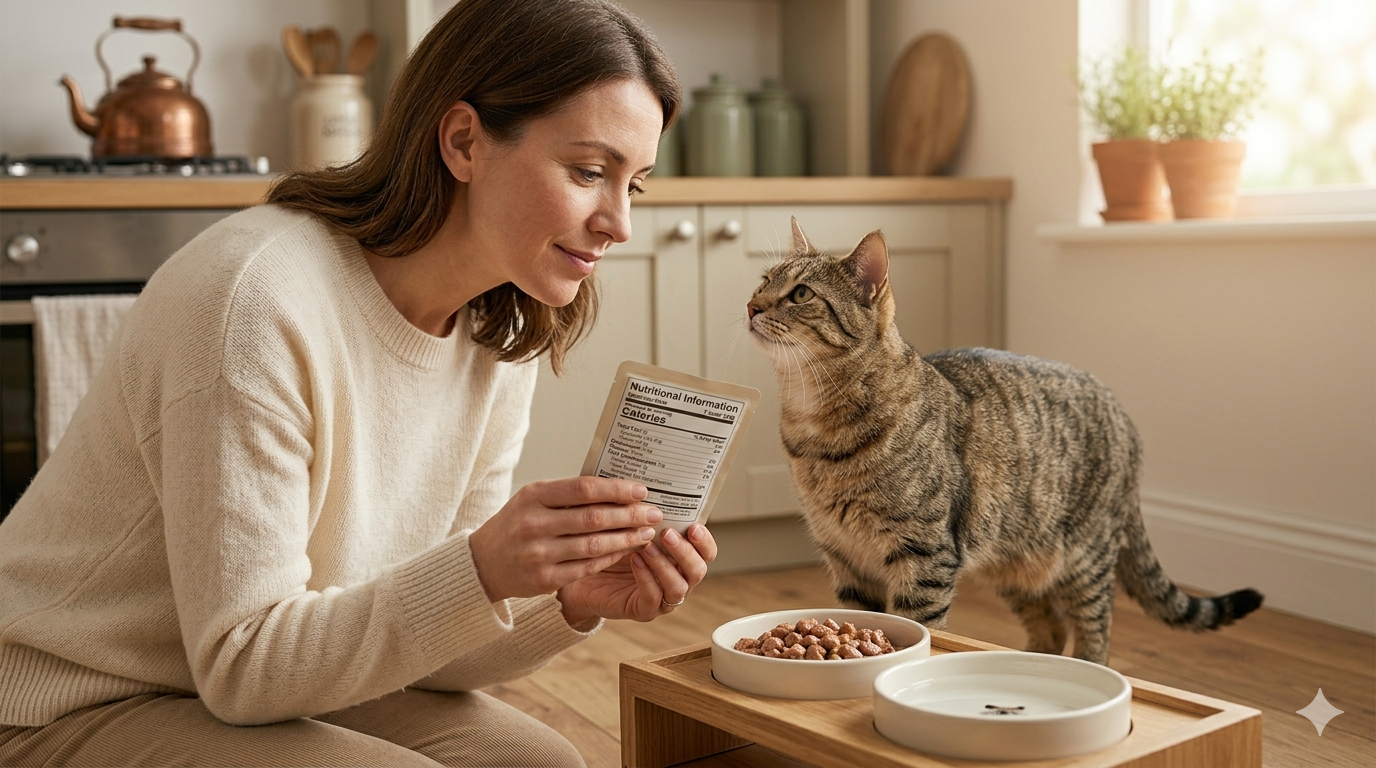
How to find the values on the label: Locate the guaranteed analysis panel on the package and find the calcium (%) and phosphorus (%) values. Convert both to a dry matter basis (DM% = as-fed% divided by 1 minus the moisture fraction). Then divide the calcium DM% by the phosphorus DM% to calculate the ratio and compare it with the appropriate life-stage target. Using the ratio range as a filter to narrow down the shelf, and then choosing among the remaining options based on your cat’s preferences and any other health needs, turns an overwhelming pet food aisle into a manageable shortlist.
Cat food label missing phosphorus is a common challenge. Phosphorus is not legally required on pet food labels in every market, so its absence is not unusual. If the label does not include phosphorus, there are four practical ways to find it.
First, visit the manufacturer’s website. Many brands publish detailed nutrition sheets with typical analyzed calcium and phosphorus values on a dry matter basis.
Second, emailing or calling the manufacturer to ask for typical analyzed calcium and phosphorus values when the packaging only shows minimums is a practical next step. How to ask cat food company for a mineral analysis is a straightforward and legitimate request. Ask for the “typical analyzed calcium and phosphorus values on a dry matter basis for this specific product.” Any responsible manufacturer should be able to provide this information.
Third, use trusted third-party pet food nutrition databases that compile manufacturer data and independent laboratory analyses.
Fourth, ask your veterinarian. Veterinary nutritionists and clinics with a nutrition focus often have access to manufacturer nutrition databases that are not publicly available.
After you calculate the ratio, check the ingredient list as a second step. The numbers alone do not tell the whole story. Count the phosphate-containing additives in the ingredient list. If you find two or more, or if any phosphate appears within the first ten ingredients, assume the effective phosphorus load is higher than the calculated ratio suggests.
This matters because inorganic phosphate additives are absorbed at 85% to 100% efficiency, regardless of the total phosphorus percentage on the label. For example, a food with a calculated ratio of 1.2:1 and no inorganic phosphate additives is generally more reassuring than a food with a 1.3:1 ratio that contains three phosphate additives. The ratios look similar, but the amount of phosphorus the cat absorbs is not.
Bringing your short list of candidate foods, plus their Ca:P ratios and phosphorus sources, to your vet to discuss which suits your individual cat gives that conversation a practical starting point. It is far more useful than asking a general question about nutrition.
Price and packaging often do most of the convincing for cat owners. Learning to question whether “premium” also means mineral-smart changes how you evaluate a food. I used to scan for the protein percentage first. Now I check the mineral section before anything else. That shift in focus is the practical habit this article aims to build.
With this framework, you can evaluate the major causes of mineral imbalance, compare different food formats, understand how calcium and phosphorus needs change through each life stage, and judge whether changing foods can correct an existing imbalance. Together, these steps give you a practical, evidence-based way to assess any cat food’s Ca:P profile.
For the foundational explanation of what the ratio is, how to calculate it from a food label, and what AAFCO and FEDIAF guidelines specify: Article The Calcium-to-Phosphorus Ratio in Cats: What It Is, Why It Matters, and What the Numbers Actually Mean
Conclusion
The calcium-to-phosphorus ratio for cats is not one fixed number that applies to every cat. It is a nutritional relationship that should be evaluated based on your cat’s life stage, the type of food you feed, and the ingredients that contribute to the phosphorus content. No food format, price, or marketing claim can replace checking the ratio and reviewing the ingredient list. Once you know what Ca:P ratio cat food should have, the calculation is straightforward, and this article has given you the framework to do it.
You now know which feeding patterns are most likely to create serious Ca:P imbalances. These include raw meat diet calcium deficiency in cats, organ-heavy diets without bone or calcium supplementation, the grain-free cat food phosphorus problem caused by legume-heavy replacements, and foods that contain multiple inorganic phosphate additives. You also understand how dry cat food mineral content high vs low compares with wet food, where each format can go wrong, and why neither should be considered safe without checking the label.
You have also seen how calcium and phosphorus needs change throughout a cat’s life. Kittens need higher amounts of both minerals, which is why is rickets in kittens from diet is an important question with a well-documented answer. You also understand why senior cats become more vulnerable to mineral imbalance in both directions. Finally, you have a realistic understanding of how switching cat food can fix mineral imbalance, how long recovery may take, and what improvements are realistically possible at different stages of damage.
If your cat’s current food falls outside the recommended Ca:P range, or if it contains several inorganic phosphate additives, it is worth considering a food change. Discuss that decision with your veterinarian while also considering your cat’s age, blood test results, and any current symptoms. Arriving with the calculated Ca:P ratio, the phosphorus sources listed in the ingredients, and a timeline of when any concerning signs began makes that discussion much more productive than a routine wellness conversation alone.
The goal of this series has never been to create unnecessary worry. Instead, it has been to give you the knowledge and confidence to evaluate your cat’s diet using evidence rather than marketing claims.
Questions to Ask Your Vet
- What is the calcium-to-phosphorus ratio of the food my cat is currently eating, and does it fall within the recommended range for their life stage?
- My cat is [age] — is it worth reviewing their food’s phosphorus level given where they are in their life stage?
- My cat’s last blood panel showed [phosphorus / BUN/creatinine value] — does this suggest we should look at their phosphorus intake?
- The ingredient list on my cat’s current food includes [phosphate additive names] — is this a level worth discussing?
- My cat has been eating a primarily meat-based or grain-free diet — is a bone density or mineral assessment worth considering?
- If I transition my cat to a lower-phosphorus food, what should I be watching for in terms of improvement over the following weeks?
- My cat is a kitten — is the food I am currently using verified as a growth-stage formulation, or is it adult maintenance labeled as “all life stages”?
- Are there any blood markers we should recheck in three to six months after a food transition to see whether the change is having the intended effect?
FAQ: Calcium Phosphorus Ratio in Cat Food
1. How does the ideal Ca:P ratio differ between kittens, adults, and senior cats?
The safe ratio range of 1:1 to 2:1 applies across all life stages, but absolute mineral requirements and optimal targets differ. According to nutritional guidelines established by AAFCO, kittens require a minimum of 1.0 percent calcium dry matter versus 0.6 percent for adults, and the optimal ratio for growing kittens sits closer to 1.5:1. Senior cats generally benefit from a ratio in the middle of the range, around 1.2:1 to 1.5:1, because they can face risk from both directions: excess phosphorus from reduced renal clearance and excess calcium from the ionized hypercalcemia that some older cats develop. Your veterinarian can advise on the most appropriate target for your individual cat’s life stage and current health status.
2. Is wet food or dry food better for calcium-phosphorus balance?
Wet food made from whole protein sources with minimal inorganic phosphate additives generally performs more reliably on Ca:P balance than dry kibble, because it is less processing-dependent and less likely to contain multiple phosphate additives. Dry food is more variable and typically carries a higher inorganic phosphate additive load. Neither format is automatically safe. The calcium phosphorus ratio for cats must be calculated from the label for any food regardless of format, and a well-formulated dry food can outperform a poorly formulated wet food on this specific measure. Your veterinarian or a veterinary nutritionist can help evaluate specific options for your cat.
3. Does grain-free cat food affect the calcium-phosphorus ratio?
Frequently yes. Grain-free cat food mineral imbalance is a real concern because grain-free formulas typically replace grains with phosphorus-containing legumes and tend to include higher meat and fish inclusion, both of which push phosphorus upward. Many grain-free formulas also add multiple inorganic phosphate compounds. The grain-free label provides no nutritional guarantee about Ca:P balance. The ratio must be calculated directly from the label of any specific product, and your vet can help interpret those values in context.
4. Can I fix a Ca:P imbalance just by switching cat food?
In many cases, yes. If the imbalance is in the early hormonal phase, removing the dietary trigger typically allows the hormonal cascade to resolve within weeks. If structural bone damage has already accumulated, dietary correction can halt further damage and support remineralization, but established structural changes may not fully reverse. The earlier the correction, the more complete the recovery tends to be, which is one reason why symptom recognition (Article 3) and dietary awareness before symptoms appear are so practically valuable. A veterinarian can assess where your cat currently sits on this spectrum.
5. How long before switching food shows improvement in bone-related symptoms?
First improvements are typically metabolic and behavioral. Within two to four weeks of dietary correction, energy levels and appetite often improve as the hormonal suppression of vitamin D begins to resolve. Muscle tone and movement quality improvements typically become noticeable within four to eight weeks. Meaningful improvement in bone density and skeletal function may require three to six months of sustained correct nutrition. The timeline tends to move faster in younger cats with higher skeletal metabolic activity and in cases identified before significant structural damage occurred. Individual variation is significant, and your veterinarian is best placed to track progress with blood panel and imaging findings.
6. What ratio should I look for on a cat food label — and what if it is not listed?
Target 1.2:1 to 1.6:1 on a dry matter basis for adult cats; for kittens, aim for 1.5:1 DM; for seniors, 1.2:1 to 1.5:1 DM. If phosphorus is not listed on the label, which is not unusual since it is not legally required in all markets, contact the manufacturer directly and request the typical analyzed calcium and phosphorus values on a dry matter basis. Third-party pet food nutrition databases also compile this information for many commercial brands. Your veterinarian can also help access manufacturer nutritional data that is not publicly listed.
Disclaimer: This article is written for educational purposes only and does not replace professional veterinary advice. Always consult a licensed veterinarian before making changes to your cat’s diet or health management.
References
Veterinary Guidelines and Institutional Sources
- Association of American Feed Control Officials (AAFCO). Nutrient Profiles for Cats — Growth and Adult Maintenance. Referenced via Tufts University Cummings School of Veterinary Medicine Clinical Nutrition Service, 2022. Available at: https://cats.com/phosphorus-in-cat-food
- Cornell University College of Veterinary Medicine — Cornell Feline Health Center. Feeding Your Cat. Updated 2024. Available at: https://www.vet.cornell.edu/departments-centers-and-institutes/cornell-feline-health-center/health-information/feline-health-topics/feeding-your-cat
- European Pet Food Industry Federation (FEDIAF). Nutritional Guidelines for Complete and Complementary Pet Foods for Cats and Dogs. 2021. Available at: https://europeanpetfood.org/wp-content/uploads/2022/03/Updated-Nutritional-Guidelines.pdf
- International Renal Interest Society (IRIS). IRIS Treatment Guidelines for Chronic Kidney Disease in Cats and Dogs. 2023. Referenced via Today’s Veterinary Practice. Available at: https://todaysveterinarypractice.com/urology-renal-medicine/treatment-chronic-kidney-disease-dogs-cats/
- American Animal Hospital Association (AAHA). 2023 AAHA Senior Care Guidelines for Dogs and Cats — Disease Management: Nutritional. 2023. Available at: https://www.aaha.org/resources/2023-aaha-senior-care-guidelines-for-dogs-and-cats/disease-management-nutritional/
- Merck Veterinary Manual. Nutritional Requirements of Small Animals. Updated 2024. Available at: https://www.merckvetmanual.com/management-and-nutrition/nutrition-small-animals/nutritional-requirements-of-small-animals
- VCA Animal Hospitals. Nutrition for Cats with Chronic Kidney Disease. Canadian Academy of Veterinary Nutrition (CAVN). Available at: https://vcahospitals.com/know-your-pet/nutrition-for-cats-with-chronic-kidney-disease
- PetMD. Hyperparathyroidism in Cats. Available at: https://www.petmd.com/cat/conditions/endocrine/c_ct_excess_parathyroid_hormone
Peer-Reviewed Research
- Stockman, J. Dietary Phosphorus and Renal Disease in Cats: Where Are We? Journal of Feline Medicine and Surgery, Vol. 26, Issue 10. 2024. Available at: https://pmc.ncbi.nlm.nih.gov/articles/PMC11529143/ and https://journals.sagepub.com/doi/full/10.1177/1098612X241283355
- Coltherd, J.C., Staunton, R., Colyer, A., et al. Dietary Calcium to Phosphorus Ratio Affects Postprandial Phosphorus Concentrations in Feline Plasma. British Journal of Nutrition, Vol. 128, pp. 1689–1699. 2022. Available at: https://www.cambridge.org/core/journals/british-journal-of-nutrition/article/dietary-calcium-to-phosphorus-ratio-affects-postprandial-phosphorus-concentrations-in-feline-plasma/531D7871CE44FC221912C6C006B4DCCB
- Steffen, C. and Dobenecker, B. The Phosphate Additives Phosphoric Acid and Sodium Phosphate Lead to Hyperphosphatemia as well as Increased FGF23 and Renal Phosphate Excretion in Healthy Cats. Journal of Urology and Renal Diseases, Vol. 08: 1339. 2023. Available at: https://www.gavinpublishers.com/article/view/the-phosphate-additives-phosphoric-acid-and–sodium-phosphate-lead-to-hyperphosphatemia-as-well-as-increased-fgf23-and-renal-phosphate-excretion-in-healthy-cats
- Parker, V.J., Gilor, C., and Chew, D.J. Feline Hyperparathyroidism: Pathophysiology, Diagnosis and Treatment of Primary and Secondary Disease. Journal of Feline Medicine and Surgery. 2015, reviewed 2024. Available at: https://pmc.ncbi.nlm.nih.gov/articles/PMC10816244/
- Zambarbieri, J., Fusi, E., Bassi, J., and Scarpa, P. Nutritional Secondary Hyperparathyroidism in a Kitten, Supported by Immunoenzymatic Measurement of Feline Intact Parathyroid Hormone. Journal of Veterinary Diagnostic Investigation, Vol. 35(2), pp. 163–167. 2023. Available at: https://pubmed.ncbi.nlm.nih.gov/10649598/
- Summers, S.C., Stockman, J., Larsen, J.A., et al. Evaluation of Nutrient Content and Caloric Density in Commercially Available Foods Formulated for Senior Cats. Journal of Veterinary Internal Medicine, Vol. 34, pp. 2029–2035. 2020. Referenced via Tufts University Cummings School of Veterinary Medicine (Heinze, C.R., VMD). Available at: https://sites.tufts.edu/petfoodology/2021/01/18/comparing-senior-and-adult-cat-diets/
- Epidemiology of Chronic Kidney Disease (CKD) in Cats: An Analysis of the Factors Involved. PMC / National Institutes of Health. 2024. Available at: https://www.ncbi.nlm.nih.gov/pmc/articles/PMC12734309/
Veterinary Educational and Clinical References
- Vetlexicon Felis. Nutritional Secondary Hyperparathyroidism in Cats. Updated 2024. Available at: https://www.vetlexicon.com/felis/nutrition/articles/nutritional-secondary-hyperparathyroidism/
- Royal Canin Veterinary Academy. Nutritional Management of Cats with Chronic Kidney Disease. Citing Elliott et al. 2023. Available at: https://academy.royalcanin.com/en/veterinary/nutritional-management-of-cats-with-chronic-kidney-disease
- Tufts University Cummings School of Veterinary Medicine — Clinical Nutrition Service. Comparing Senior and Adult Cat Diets (Heinze, C.R., VMD, MS, DACVIM). January 2021. Available at: https://sites.tufts.edu/petfoodology/2021/01/18/comparing-senior-and-adult-cat-diets/
- Tufts University Cummings School of Veterinary Medicine — Clinical Nutrition Service. Phosphorus in Cat Food: Everything You Need to Know. November 2022, via Cats.com. Available at: https://cats.com/phosphorus-in-cat-food
- Cat Food Central. AAFCO Nutrient Requirements for Cats. 2023. Available at: https://catfoodcentral.co/kb-article/aafco-nutritional-guidelines/

Saloni Nagar is the founder and lead content creator of Bark & Meow Tales. As a dedicated cat parent and researcher, she transitioned from personal loss to pet health advocacy, focusing on early warning signs and preventive care. Saloni specializes in translating complex veterinary concepts into actionable guidance for pet parents. Her work is driven by a commitment to helping others interpret subtle feline health signals before they escalate, ensuring that every cat has a voice through informed, compassionate care.