
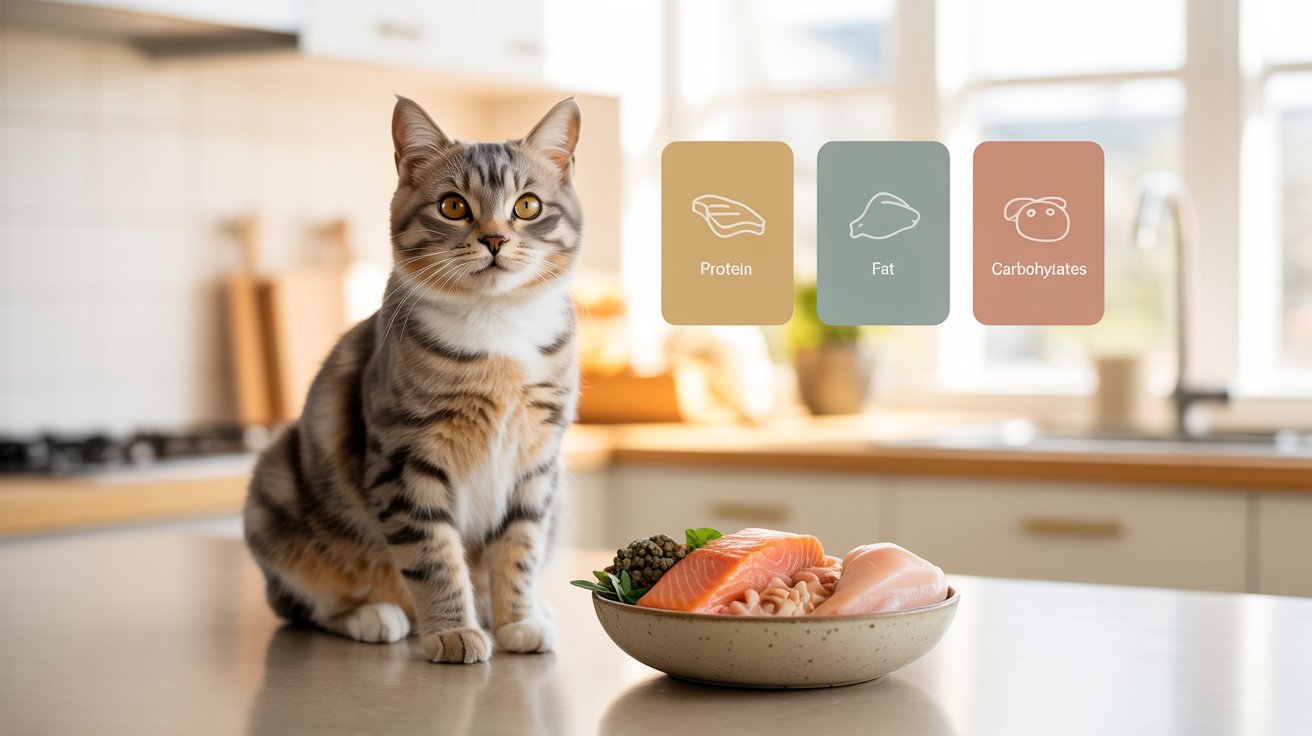
By Saloni Nagar, Medically Reviewed by Dr. Jimisha Shah, B.V.Sc & A.H., PGDAW
It can be a bit of a shock to realize that the sleepy companion currently curled on your sofa possesses the exact same metabolic hardware as a wild leopard.
Your indoor cat is a marvel of evolutionary biology, perfectly adapted for a life of high-stakes pursuit and survival. Even as they lounge on a sun-drenched windowsill or chase a feathered wand across the carpet, their internal systems remain strictly wired as those of an obligate carnivore.
However, there is a fundamental disconnect between that ancient biological blueprint and the modern, sedentary life of a domestic pet.
As pet parents, we often find ourselves caught in a metabolic paradox. we provide an environment that is 100% safe and comfortable, yet we often offer food that is calorie-dense and far removed from what a feline body is naturally designed to process.
This mismatch is at the heart of many common health struggles, from subtle weight gain to noticeable shifts in energy.
It is natural to feel a sense of worry when you notice your cat isn’t as active as they once were, or when their body shape begins to change despite your best efforts at portion control.
This guide is designed to help you bridge that gap by looking at the science behind indoor cat nutrition balance.
We will explore how to:
- Decode the specific biological needs of an “apartment lion” without the pressure of clinical jargon.
- Identify the subtle, day-to-day signs of a macronutrient imbalance in cats.
- Adjust protein, fat, and carb ratios based on established veterinary guidance to support feline metabolic health.
Throughout this guide, you will also find real observations from pet parents who navigated these exact challenges because sometimes the most useful thing is simply knowing that someone else’s cat went through this too, and came out the other side.
Indoor Cat Nutrition vs Outdoor Cats: Key Differences That Impact Health
When we talk about the nutritional requirements of a house-dwelling feline, it helps to start by acknowledging that their daily reality is worlds apart from their outdoor counterparts.
While their DNA is identical, their daily caloric “spend” is not.
Many of us might overlook how significantly a simple four-walled environment changes the way a cat’s body handles the food we put in their bowl.
In this section, we will examine how the lower activity levels in indoor cats necessitate a shift in how we view food as fuel. We will look at the impact of reduced calorie burn indoors and why the transition from natural hunting vs bowl feeding changes the way their bodies handle energy.
Do indoor cats need a different diet than outdoor cats
Outdoor cats burn significantly more energy through stalking, chasing, and patrolling territory, which means their bodies process calories very differently than those of cats who live exclusively indoors.
This difference in daily energy expenditure is the single biggest reason why indoor and outdoor cats have meaningfully different nutritional requirements, even when they are the same age, breed, and size.
Outdoor cats live a life of high stakes physical demand.
To survive, they must track, stalk, and chase prey, activities that require intense, explosive bursts of energy.
Often, a feral or free roaming cat will hunt between 10 to 20 small meals throughout a 24 hour cycle.
This environmental vs dietary stimulation keeps their metabolism in a constant state of flux, burning through fat and protein as they work for their next meal.
In contrast, indoor cat lifestyle differences fundamentally change the metabolic equation.
Most indoor cats have their meals delivered in a static bowl at set times, replacing the hunt with a short walk to the kitchen.
Without the need to patrol territory or pursue prey, the “apartment lion” requires a diet built around nutrient density rather than caloric volume, a biologically appropriate cat diet designed for a cat that burns far less than their biology was built to expect.
How does low activity in indoor cats change protein, fat, and carb needs?
When an indoor cat moves less, their need for quick burning energy sources drops, but their biological requirement for protein stays just as high, because cats use protein not just for muscle, but to fuel their organs and immune system at a baseline level every single day.
Feeding less of everything equally is one of the most common and costly mistakes in managing reduced calorie burn indoors.
Think of it like a sports car idling in a garage, it doesn’t need a full tank of high octane fuel just to sit there.
But cut the oil, and the engine still suffers.
Because lower activity levels in indoor cats reduce overall energy demand, the protein to calorie ratio needs to be deliberately managed to prevent muscle loss while keeping total calories in check.
Veterinary schools such as the Cornell Feline Health Center consistently note that cats require high protein intake for the basic maintenance of organs and immune function, not just for building muscle.
If an indoor cat’s diet is padded with fat or carbohydrates to compensate for a lower price point, they may hit their calorie ceiling before ever meeting their protein floor.
Understanding energy metabolism in cats, and the specific order in which these needs must be met, is what separates a well balanced indoor diet from one that quietly causes a long term macronutrient imbalance in cats.
What health risks do indoor cats face because of diet and lifestyle?
Indoor cats face a metabolic risk that is almost invisible until it has already taken hold, their bodies are genetically calibrated for a high activity lifestyle, but their daily reality provides almost none of it, creating a chronic mismatch between how their cells expect to use energy and how much energy actually arrives.
According to the AVMA, roughly 50–60% of domestic cats in the U.S. are now classified as overweight or obese, with indoor only status identified as a major contributing factor.
This physical safety of living indoors comes with a hidden cost, what could be called “metabolic boredom,” where the body stores energy it never has the opportunity to burn.
Without the environmental vs dietary stimulation of a real hunt, the indoor cat relies entirely on their owner to provide the correct indoor cat nutrition balance through the bowl.
When owners interpret a sedentary, low energy cat as simply “getting older” or being “naturally lazy,” they often miss the more actionable explanation, that the indoor cat diet quality itself may be failing to meet the cat’s biological needs, and a shift in macronutrient ratios, rather than just portion size, is what the body is actually asking for.
High-Carbohydrate Diet Risks in Indoor Cats: Weight Gain, Hunger, and Metabolic Issues
One of the most frequent points of confusion for pet parents is the role of carbohydrates in a cat’s bowl.
As obligate carnivores, cats have a very specific way of processing energy, and an excessive carbohydrate intake in cats can lead to a cycle of weight gain and constant hunger that feels impossible to break.
It can be incredibly disheartening to feel like your cat is always “starving” even when you are following the feeding guidelines on the bag.
In the following sections, we will dive into why the dry kibble carbohydrate load is often far higher than a cat’s biological limit.
We will explain the “Hunger Loop” caused by blood sugar fluctuations in indoor cats and how fat storage from surplus carbs can lead to early metabolic dysfunction in cats.
Why is my indoor cat gaining weight even when I feed the right amount?
A cat can gain weight consistently while being fed the “recommended” amount if the food itself is high in carbohydrates, because a carb heavy diet shifts the cat’s metabolism into fat storage mode even when total calories appear controlled. This is less about how much is in the bowl and more about what the body does with it once it arrives.
This happens because of a critical mismatch between calorie density and nutrient density.
If a cat’s food is high in carbohydrates, the body may prioritize storing those carbs as fat storage from surplus carbs rather than burning them for immediate energy, especially given the lower activity levels in indoor cats that mean there is rarely enough movement to draw that stored energy back down.
Many owners feel a genuine sense of guilt here, but it is often the composition of the food rather than the volume that is the true culprit.
Think of it like a car that only runs on premium fuel being filled with a low grade substitute, the engine can’t burn it efficiently, so the excess just collects as “sludge” in the tank.
Adjusting indoor cat diet quality toward fewer carbohydrates, rather than simply reducing portion size, is usually the more effective first step.
Can dry food make indoor cats gain weight faster?
Dry kibble requires starch to hold its shape during manufacturing, which means even premium brands carry a significantly higher dry kibble carbohydrate load than wet food, often in the range of 35–45% carbohydrates on a dry matter basis, far exceeding what a cat’s biology is designed to handle.
Because kibble is also low in moisture, it is far more calorically dense by volume, making it structurally easy for an indoor cat to overconsume energy without ever feeling physically full.
While cats can digest processed starches, sometimes at rates exceeding 90%, as noted in research summaries from PetMD, they have no biological requirement for them.
The issue is not digestion, it is the metabolic cost of constantly processing a fuel source the feline body was never designed to prioritize.
A small handful of kibble can deliver the same calories as a significantly larger portion of protein rich wet food, which makes overconsumption almost invisible until the weight is already there.
This is one of the most consistent and underappreciated drivers of feline metabolic health challenges in the modern home.
Why does my indoor cat act hungry all the time after eating?
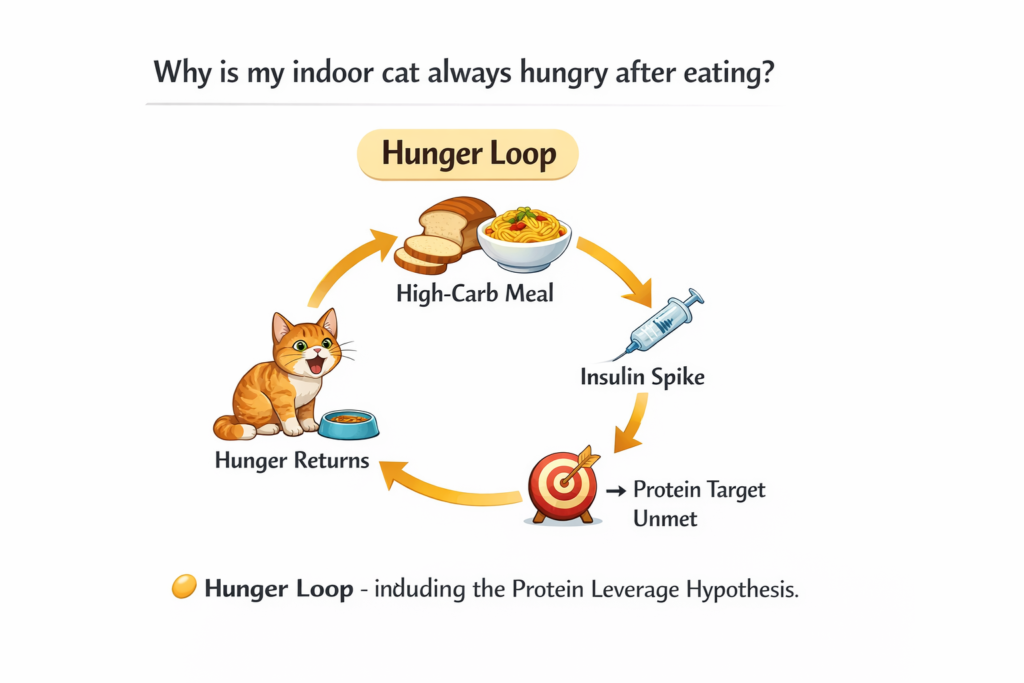
Cats are biologically driven to keep seeking food until they have met a specific daily protein target, a mechanism known as the Protein Leverage Hypothesis, which means a high carb, low protein meal can leave a cat calorically full but nutritionally unsatisfied, triggering a carb driven hunger rebound that sends them back to the bowl within an hour.
This is not a behavioral quirk, it is the brain sending a genuine biological signal that fundamental needs haven’t been met.
Veterinary literature supports the idea that a cat’s hunger system operates on amino acid availability, not calorie count.
If the food delivers plenty of energy but insufficient bioavailable protein, the brain keeps the “hunger” signal active because the protein target hasn’t been reached.
The cat isn’t being “difficult”, their body is simply searching for the building blocks it lacks, and it will keep searching until it finds them or until the owner steps in with something more biologically appropriate.
The Cat Who Always Seemed Hungry
A colleague of mine, Rajan, had a five-year-old tabby named Biscuit who would finish his bowl and within twenty minutes be sitting beside it again, staring at Rajan with what he described as “genuine desperation.” Rajan had tried every portion adjustment he could think of, even splitting meals into three servings a day, but the post-meal begging never stopped.
His vet introduced him to the concept of the protein leverage effect that Biscuit’s brain was essentially keeping the hunger signal active because the amino acid target was never being met, regardless of calories consumed. The kibble Biscuit had been eating for three years listed chicken as the first ingredient, but the fourth and fifth ingredients were pea protein and corn gluten plant-based proteins his body couldn’t fully use. Switching to a food where the first three ingredients were all animal-sourced stopped the begging cycle within two weeks. Rajan said it was the first time in years that Biscuit walked away from his bowl and simply went to sleep.
Why is my overweight indoor cat always begging for food?
While the previous section explains hunger driven by unmet protein targets, this persistent begging in an already-overweight cat is more often driven by a different mechanism entirely the blood sugar crash that follows a high-carb meal.
Insulin spikes after high-carb meals are followed by a rapid drop in circulating glucose, and those blood sugar fluctuations in indoor cats trigger a cellular “starvation” signal that makes the body demand food again, regardless of what it consumed an hour before.
This creates what amounts to a glucose rollercoaster. The cat eats, blood sugar rises sharply, feline insulin response kicks in to bring it back down, and then the crash registers in the brain as urgency not fullness.
The cat acts starving because, on a hormonal level, the body is in a low-energy state and signaling accordingly. For pet parents, this cycle is exhausting and often leads to the very overfeeding they are trying to avoid. Recognizing that the begging is metabolic rather than manipulative is the first step toward breaking it.
How can I tell if my cat’s food has too many carbohydrates?
An overly carb-heavy diet tends to show up in a pattern of physical and behavioral signals that, individually, might seem unrelated but together point clearly to a diet that is outpacing the cat’s ability to process it. Recognizing these signs early is what allows owners to course-correct before excessive carbohydrate intake in cats creates longer-term metabolic damage.
Common indicators include:
- Constant begging or food obsession between meals
- A “food coma” pronounced lethargy immediately after eating
- A dull, dry coat or persistent dandruff
- Large volumes of stool caused by stool bulk from plant fillers the cat cannot fully digest
- Gradual weight gain despite controlled portions
Are carbohydrates actually bad for indoor cats or just misunderstood?
Carbohydrates are not toxic to cats, but they are biologically unnecessary and for a sedentary indoor cat whose minimal carbohydrate tolerance in cats is easily exceeded, a high-carb diet consistently produces the same downstream effects weight gain, feline insulin response dysregulation, and a slow drift toward metabolic imbalance.
The issue is not a single meal; it is chronic daily overexposure to a fuel source the feline body has no efficient mechanism to process.
In the wild, a cat’s natural prey contains less than 5% carbohydrates. Many commercial indoor cat foods contain 35% to 45% to maintain shelf stability and reduce ingredient costs. For an active outdoor cat, some of that excess might burn off.
For an indoor cat spending 16 hours a day asleep on a cushion, it accumulates. Even small, consistent reductions in dietary carbohydrate often produce noticeable improvements in energy, coat quality, and body composition within weeks.
Can too many carbs in cat food lead to diabetes?
There is a well-documented association between chronically high-carbohydrate diets and the development of Type II diabetes in cats, because repeated insulin spikes after high-carb meals gradually wear down the pancreas’s ability to regulate glucose effectively a process that represents early metabolic dysfunction in cats that may be reversible if caught early but becomes harder to manage the longer it continues.
The Cornell Feline Health Center identifies a protein-forward diet as one of the primary dietary strategies for supporting long-term metabolic stability in cats.
When the feline body is forced to mount a significant feline insulin response multiple times per day, every day, over months or years, the pancreatic beta cells responsible for insulin production begin to lose efficiency.
This is not an overnight process, which is part of why it is so easy to miss until the diagnosis arrives. The encouraging counterpoint is that dietary intervention specifically, reducing carbohydrates and increasing animal protein is also one of the most effective tools for managing and sometimes reversing early-stage feline diabetes.
What happens if indoor cats eat high-carb food long term?
Long-term excessive carbohydrate intake in cats produces a compounding set of outcomes that go well beyond weight gain including chronic fatigue, deteriorating coat quality, reduced play drive, and the accumulation of visceral fat around internal organs that places ongoing stress on the liver and kidneys.
This gradual metabolic slowdown from diet is particularly insidious because each individual symptom is easy to attribute to aging rather than nutrition.
The fat storage from surplus carbs doesn’t simply settle under the skin as visible pudge. Visceral fat the kind that wraps around the organs is metabolically active in ways that compound the problem, driving low-grade inflammation and further disrupting feline metabolic health over time.
Owners often describe this stage as their cat becoming “a different animal” less curious, less playful, harder to engage. What reads as a personality shift is frequently a body in metabolic distress.
The Weight That Wouldn’t Budge
A reader named Priya whose four-year-old indoor cat, Mochi, had been steadily gaining weight for nearly two years despite carefully following the feeding guidelines printed on the kibble bag. She had even reduced the portion slightly below the recommended amount, feeling guilty every time Mochi finished the bowl and immediately began circling her ankles for more.
When Priya’s vet suggested looking at the food’s carbohydrate content rather than just the portion size, she was genuinely surprised the bag had always seemed “premium” to her. The dry matter carbohydrate calculation revealed the food was sitting at nearly 42%. After transitioning to a high-protein wet food over ten days, Mochi stopped the post-meal begging almost immediately. Within six weeks, he had lost nearly half a kilogram without Priya reducing calories at all. She told me the most relieving part wasn’t the weight loss it was realizing she hadn’t been overfeeding him. The food had simply been working against his biology the entire time.
Protein Deficiency in Indoor Cats: Muscle Loss, Weakness, and Body Composition Changes
It is a unique quirk of feline biology that cats do not use protein the way humans or dogs do they use it as their primary energy source through a continuous process called gluconeogenesis, meaning their bodies are essentially “always on” when it comes to burning protein. Because of this, a loss of lean muscle mass in cats can happen far faster than most owners expect when daily protein intake falls short.
In this section, we will discuss the phenomenon of the “fat-thin” cat, where there is fat preservation despite muscle loss. We will explain muscle catabolism in indoor cats and why protein requirements for maintenance are so critical across every life stage.
Why is my indoor cat losing muscle but gaining belly fat?
When a cat’s diet doesn’t supply enough bioavailable protein, the body doesn’t wait it begins breaking down its own skeletal muscle to extract the amino acids needed to keep the heart, liver, and immune system functioning, which is why muscle catabolism in indoor cats can occur even in cats that appear overweight.
The result is fat preservation despite muscle loss, producing a body that looks simultaneously too heavy and too thin depending on where you look.
It can be quite startling to run your hand along your cat’s spine and feel every vertebra clearly while looking down at a large, swinging belly. This is not a paradox it is the body prioritizing survival. Fat is harder for the body to mobilize quickly; muscle is not. So when protein bioavailability in cat food is insufficient, muscle goes first.
Think of the body like a house where the owner is burning the wooden furniture for heat because there isn’t enough firewood even while the attic is stuffed with insulation (fat) that can’t be easily converted to warmth. Many pet parents see the belly and assume the cat is well-fed. The spine tells a different story.
| Zone | What’s Happening | Why It Matters |
|---|---|---|
| Rear Legs / Hind Quarters | Muscle wasting / thinning limbs | Often the first sign of protein deficiency or age-related sarcopenia |
| Shoulders / Spine | Loss of tone, visible bones | Indicates cat is breaking down lean tissue to meet needs |
| Lower Belly (Primordial Pouch) | Fat accumulation, loose skin | Normal fat reserve area; can grow even if muscle is lost |
| Visceral Abdominal Area | Internal fat build-up | Linked to excess carbs and reduced protein intake |
| Overall Body Condition | Looks “skinny-fat” or imbalanced | Misleads owners — weight gain ≠ muscle gain |
Why does my cat have a saggy belly but look skinny elsewhere?
While the previous section explains the mechanics of the body consuming its own muscle for fuel, this “skinny-fat” appearance is also driven by a separate hormonal process high-carbohydrate diets actively stimulate fat storage through lipogenesis while simultaneously starving the muscles of the amino acids they need to maintain their mass.
The result is a body that is building fat and losing muscle at the same time, which is one of the clearest amino acid deficiency signs visible to the naked eye.
A saggy belly, sometimes mistaken entirely for the natural primordial pouch, becomes exaggerated when a macronutrient imbalance in cats tips the hormonal scales toward fat accumulation.
The thighs and back the largest muscle groups tend to show the deficit first, creating that distinctive “ridge of bone” feel along the spine while the abdomen remains soft and pendulous.
This is fundamentally a diet architecture problem. When protein bioavailability in cat food is low and carbohydrates are high, the body receives constant signals to store rather than build. Addressing the ratio not just reducing total calories is what breaks this pattern.
An imbalanced macronutrient ratio is often the hidden reason a cat looks fat while actually losing muscle.
Why are my senior indoor cat’s back legs getting weak while belly grows?
Senior cats experiencing weakness in the hind legs paired with a large, soft belly are showing the combined effects of age-related muscle wasting (sarcopenia) and a protein intake that was never high enough to counter it and contrary to older advice about “protecting the kidneys” with less protein, current veterinary guidance consistently supports higher, not lower, animal protein intake for healthy senior cats.
Without adequate protein, the loss of leg muscle creates a self-reinforcing cycle: weaker legs mean less movement, less movement accelerates further muscle loss.
As cats age, the efficiency with which their bodies extract and use protein from food also declines, meaning protein requirements for maintenance actually increase with age rather than decrease.
A senior cat on the same diet they ate at three years old may be quietly protein-deficient by the time they are twelve even if nothing else has changed.
This age-related muscle wasting is frequently masked by abdominal fat accumulation, which leads owners to believe the cat is well-nourished when the muscles are actively thinning. Hind leg weakness is often the first functional sign that the body has been running a protein deficit for some time.
Does low-protein cat food cause muscle loss in indoor cats?
Yes cats have a metabolic requirement for protein that is continuous and non-negotiable, meaning if their food does not supply enough, the body immediately begins cannibalizing skeletal muscle to meet it, regardless of how many total calories the cat has consumed.
This is why protein bioavailability in cat food specifically the sourcing of protein from animal rather than plant ingredients determines whether the diet actually prevents muscle loss or merely appears to.
Cats require specific amino acids taurine, arginine, and others that are found in meaningful concentrations only in animal tissue. Plant proteins may carry a similar gram count on a label, but they do not deliver the same amino acid profile the feline body is built to use.
For an obligate carnivore, plant protein is like trying to build a brick wall with sponges the shape might be there, but the structural integrity is missing. When protein requirements for maintenance go unmet day after day, the body’s solution is always the same: find the amino acids elsewhere, starting with the muscles it already has.
One nutrient that’s especially easy to overlook in a poorly balanced diet is taurine — see how taurine deficiency silently damages the heart
How can I check if my cat’s food has enough protein?
A diet too low in quality protein tends to show up first in the areas of the body that are most metabolically expensive to maintain muscle mass, coat quality, and energy which is why the earliest signs of insufficient protein are often dismissed as general aging rather than a correctable nutritional gap.
Owners might notice:
A cat that feels “fragile” despite carrying visible weight around the middle
A noticeable reduced play drive in indoor cats less interest in toys, shorter bursts of activity
Weakness or wobbliness in the hind legs when jumping or landing
A coat that feels thin, dull, or has a “spiky” texture rather than a smooth lie
Amino acid deficiency signs such as slow wound healing, persistent lethargy, or unusual behavioral withdrawal
Beyond Macros: Why specific amino acids are the “Spark Plugs”
Even a diet that hits the right protein percentage can fall short if it lacks the specific amino acids that cats cannot synthesize on their own particularly taurine and arginine, which are found almost exclusively in animal tissue and are essential for heart function, ammonia processing, and cellular energy production. This is why protein bioavailability in cat food is not just about quantity but about whether the protein source actually delivers what a feline body requires at the molecular level.
If protein is the “brick” used to build and maintain the body, arginine is the “waste management system” that prevents toxic ammonia from accumulating in the blood a process that can become life-threatening rapidly in cats if arginine is absent. Taurine deficiency, meanwhile, is directly linked to dilated cardiomyopathy in cats, a condition that was historically traced back to diets relying heavily on plant-based protein sources.
A biologically appropriate cat diet doesn’t just check the protein box it ensures these biological “spark plugs” are always present in the right form. Choosing a food with animal protein as first ingredient is the simplest way to verify that the amino acid foundation is in place before evaluating anything else on the label.
How much protein does an indoor cat actually need daily?
Healthy adult indoor cats require a minimum of 26% protein on a dry matter basis for basic organ maintenance, but most veterinary nutritionists now recommend 45–55% for cats who need to actively preserve lean muscle and senior cats may need up to 65% of their calories from high-quality animal protein to counteract the natural acceleration of age-related muscle wasting.
The source of that protein matters as much as the percentage, because animal-sourced protein delivers a complete amino acid profile that plant sources cannot replicate.
These figures represent dry matter basis numbers the level playing field comparison that removes moisture from the equation. For a cat eating wet food, this means checking the label math carefully rather than trusting the “as fed” percentages at face value.
Ensuring the protein comes from animal tissue, not pea protein concentrate or soy isolate, is what determines whether those percentage points actually translate into muscle preservation or simply pass through as waste.
This is also why plant-based diets struggle to meet a cat’s macronutrient needs — the ratio itself becomes biologically impossible without animal protein.
The Spine She Hadn’t Noticed
A friend named Deepa had always described her eight-year-old cat, Ginger, as “pleasantly chubby.” Ginger had a visible belly and moved slowly, which Deepa had long attributed to her naturally laid-back personality. It wasn’t until a routine vet visit that the vet ran a hand along Ginger’s back and pointed out that her spine and hip bones were clearly palpable beneath the fur something that hadn’t registered to Deepa because the belly always drew her attention first.
The vet explained that Ginger’s low-protein kibble had been allowing fat to accumulate while her muscle mass quietly declined over several years. Deepa told me she felt a complicated mix of shock and guilt she had genuinely believed Ginger was well-fed. After transitioning to a high-protein, animal-based wet food, Ginger’s spine became less prominent over the following three months as her muscle mass began to recover. More noticeably, she started using the cat tree again something Deepa had quietly assumed Ginger had simply “grown out of.”
Why Unbalanced Meals Cause Lethargy, Excess Sleep, and Low Energy
An indoor cat that sleeps through the afternoon, skips playtime, and seems permanently disinterested in the world around them is not necessarily aging or depressed they may simply be running on the wrong fuel. Unstable energy levels in cats are one of the most consistently underdiagnosed consequences of a poor diet, precisely because the symptoms are so easy to normalize.
We tell ourselves the cat is “just relaxed” or “naturally low-energy,” when in reality the body is caught in a cycle it cannot break without a dietary change.
In the sections below, we will examine the difference between slow energy release from fats vs carbs, explore how metabolic slowdown from diet presents as behavioral disengagement, and explain why what looks like laziness is often a measurable physiological response to what is sitting in the bowl.
Can my cat’s food be the reason for low energy and laziness?
A cat fed a high-carbohydrate diet experiences sharp spikes and rapid crashes in available energy throughout the day, which is the primary dietary driver of post-meal lethargy and it stands in direct contrast to the slow, stable energy release that comes from fat-based metabolism, which is what a cat’s body is actually built to run on.
This distinction between carb-based and fat-based energy is the single most important concept in understanding why so many indoor cats seem permanently low-energy despite eating regularly.
Cats are not designed to use carbohydrates as a primary fuel source the way humans or dogs are. Their metabolic preference is fat specifically, the breakdown of dietary and body fat into ketone bodies and fatty acids that release energy gradually and consistently.
Think of fat metabolism like a slow-burning log on a fire it produces steady, reliable heat for hours. Carbohydrate metabolism, by contrast, is like throwing paper into the same fire it flares brightly and dies quickly, leaving the body searching for the next source of fuel almost immediately.
This is why post-meal energy crashes are so common in cats eating kibble-heavy diets. The carbohydrate load produces a brief energy surge followed by a rapid drop, and during that drop the cat’s body has little choice but to rest and wait.
Over time, this cycle creates a baseline state of unstable energy levels in cats that owners read as personality when it is actually biochemistry.
Why does my indoor cat sleep all day and avoid playing?
A gradual decline in play drive and an increase in daily sleep hours is one of the earliest and most reliable behavioral signals that a cat’s diet is producing energy instability and because it develops slowly over weeks or months, most owners attribute it to aging rather than nutrition.
The key diagnostic question is not how much the cat sleeps, but whether the sleep pattern changed around the same time as a food change, a life transition, or a gradual weight increase.
Healthy cats sleep between 12 and 16 hours per day this is entirely normal and reflects their evolutionary design as burst-energy predators who conserve between hunts. The concern arises when that number climbs consistently above 16 hours, when the cat no longer responds to play invitations they previously enjoyed, or when reduced play drive in indoor cats appears alongside weight gain and post-meal disengagement.
A useful way to think about this, a healthy cat’s energy should look like a compressed spring quiet at rest, but explosive when triggered.
A cat with energy instability from diet looks more like a deflated balloon low at rest and slow to respond even when stimulated. If your cat used to chase a wand toy for five minutes and now loses interest after thirty seconds, the issue is rarely boredom.
It is almost always the body’s inability to access stable energy on demand a direct consequence of metabolic slowdown from diet driven by an imbalanced macronutrient profile.
Is sleeping 18–20 hours normal or a sign of poor diet in cats?
While the previous section addresses gradual energy decline driven by macronutrient imbalance, sleeping consistently above 18 to 20 hours per day points to a more specific mechanism the interaction between circadian feeding rhythms and repeated insulin dips that leave the cat in a near-constant low-energy state.
This is physiologically distinct from depression, and the two are frequently confused because the behavioral presentation looks almost identical from the outside.
Cats have an internal biological clock a circadian rhythm that is closely tied to feeding. In the wild, this rhythm is regulated by the timing and composition of meals, a protein-and-fat-rich prey meal triggers a period of alert rest followed by a natural activity window. When that meal is replaced by a carbohydrate-heavy kibble feeding, the expected hormonal sequence is disrupted.
Blood sugar fluctuations in indoor cats following a high-carb meal produce insulin dips that suppress alertness and drive the body toward extended sleep as a conservation mechanism.
Over time, repeated insulin dips at predictable meal intervals essentially train the body to expect low-energy periods throughout the day. The cat is not depressed it is hormonally exhausted.
True dietary depression from isolation or environmental stress presents differently: it typically includes changes in grooming, appetite suppression, and hiding behavior.
A cat that eats enthusiastically but sleeps excessively immediately afterward is almost always showing a dietary energy response rather than an emotional one. Shifting toward a fat-forward, lower-carbohydrate diet resets the hormonal rhythm and typically produces noticeable improvements in alertness within two to three weeks.
Do high-carb diets make indoor cats less active?
Excess dietary carbohydrate does not make cats lazy in a behavioral sense but it does create the physiological conditions that make sustained activity difficult, by producing blood sugar volatility that the feline body has almost no metabolic tools to manage smoothly.
The “lazy cat” is one of the most persistent myths in feline ownership, and in many cases it is simply a description of a cat whose energy system is being chronically undermined by the wrong fuel source.
The idea that some cats are simply low-energy by nature is not entirely wrong breed, age, and temperament all play a role. But when a previously active cat becomes noticeably less engaged, or when a young cat never develops the play drive expected of their age, diet deserves to be the first variable examined rather than the last.
Blood sugar volatility from high-carb feeding is not dramatic or visible it does not look like a crisis. It looks like a cat that just seems a little tired, a little disinterested, a little slower than they used to be. That subtlety is exactly what makes it so easy to miss and so important to name.
A cat whose diet provides fat as primary energy source stable, slow-releasing, biologically appropriate simply has more consistent access to the fuel needed for spontaneous activity, play, and engagement. The energy is there when the moment calls for it, rather than locked behind a metabolic cycle the body was never designed to manage.
The Afternoon Cat
My own aunt noticed that her indoor cat, Sultan, had developed a very predictable daily pattern he would eat his dry food breakfast, spend roughly twenty minutes doing a slow lap of the apartment, and then collapse into a deep, almost unresponsive sleep for the next five to six hours. He was not playful in the evenings either. She had assumed this was simply what middle-aged indoor cats did.
When she mentioned it to her vet during a routine checkup, the vet asked what Sultan was eating and flagged the high-carbohydrate load of the kibble as the likely driver of what she described as “post-meal crashes.” The vet explained that the sharp blood sugar rise and subsequent drop following a starchy meal was essentially mimicking the experience of a heavy, carb-loaded lunch the kind that makes humans want to nap at their desks. After introducing a high-protein wet food at the morning meal, Sultan’s afternoon collapse shortened noticeably. Within a month, he was reliably active in the early afternoon for the first time in years. My aunt said it felt less like a diet change and more like getting her cat back.
Digestive Health Signals in Indoor Cats: What Poop, Vomiting, and Hydration Reveal About Diet
A cat’s digestive tract is remarkably short and efficient, designed to process highly digestible animal tissues quickly. When we introduce large amounts of plant matter or low-moisture kibble, it can lead to digestive stress from dry food and other noticeable gastrointestinal issues. As pet parents, the “litter box report” is often our best insight into how well a diet is actually being utilized.
Below, we will investigate the mechanics of delayed gastric emptying and how low-moisture diets in cats impact transit time. We will also address the connection between stool bulk from plant fillers and hairball frequency and digestion.
Why does my cat vomit after sudden bursts of energy (zoomies)?
When a cat eats dry kibble too quickly, the food expands rapidly in the stomach as it absorbs digestive fluids, creating physical pressure that triggers a regurgitation reflex. This “scarf and barf” pattern is almost always linked to digestive stress from dry food rather than any behavioral problem with the cat.
Many pet parents witness this frustrating cycle firsthand. Because dry kibble is very low in moisture, it begins to swell almost immediately once it hits the stomach’s digestive juices. It’s a bit like a dry sponge hitting a puddle the volume of the food can double or triple in minutes inside the stomach.
If the cat has also been riding a carb-driven hunger rebound, they may approach the bowl with intense urgency and eat far too fast, leading to delayed gastric emptying as the stomach struggles to process the dense, expanding mass. This physical pressure almost always triggers the regurgitation reflex. It’s a common frustration, but it’s often the food’s physical form rather than the cat’s “manners” at the bowl.
Are frequent hairballs in indoor cats linked to poor diet?
Frequent hairballs are often a sign that the gut’s natural motility has slowed down, allowing hair to accumulate instead of passing through and diet is one of the most common reasons this happens.
Both low-moisture diets in cats and diets high in indigestible plant fiber are known to reduce the wave-like contractions that keep the digestive tract moving.
While some grooming-related hair in the system is completely normal, when hairball frequency and digestion become a weekly battle, the diet deserves a closer look. Think of the digestive tract as a one-way conveyor belt; if the belt moves too slowly, “cargo” like hair starts to pile up and has to be sent back out the way it came.
A diet heavy in plant fiber can slow down the “migrating motor complex” the rhythmic muscular contractions responsible for moving both food and loose hair through the gut.
Beyond motility, low-moisture diets in cats reduce the natural lubrication of the intestinal lining. High-quality animal fats and adequate hydration are what allow hair to slide through the system cleanly.
If you’re seeing more hairballs than usual, it’s worth reconsidering the moisture and fat balance in their meals before reaching for a hairball paste.
Why is my cat’s poop large, dry, or pale on dry food?
Large, pale, or particularly odorous stools are a direct sign that the body is passing a significant portion of the food as unused waste rather than absorbing it which almost always points to poor protein bioavailability in cat food. A cat on a biologically appropriate cat diet typically produces very small, dark, and nearly odorless stools because the body has actually used what it consumed.
The size and color of a cat’s stool are among the most honest indicators of indoor cat diet quality. Cats are extraordinarily efficient at processing animal protein, so when the digestive system is working well, very little goes to waste.
Large, light-colored, or particularly smelly stools are essentially a “receipt” for all the ingredients the cat’s body couldn’t use. This waste is almost always driven by stool bulk from plant fillers corn, wheat, pea fiber, and other plant-based ingredients the feline gut simply isn’t built to break down.
The cat may be eating a full bowl at every meal but absorbing only a fraction of it, which is a hallmark of low indoor cat diet quality.
Feline Gut Health -The Difference Between “Fiber” and “Fillers”
Functional fiber and cheap filler ingredients are not the same thing, and mistaking one for the other is one of the most common errors in indoor cat feeding. A small, targeted amount of fiber like pumpkin can support gut motility and hairball passage, while bulk plant fillers like corn and wheat simply pass through as waste and drive inflammation.
We now understand that feline metabolic health is built from the gut outward. While cats have a very minimal carbohydrate tolerance, the conversation around fiber is more nuanced than simply “fiber bad.” The real distinction is between purpose and quantity.
Cheap filler ingredients corn, wheat, soy offer no digestive benefit to a cat and consistently lead to stool bulk from plant fillers, intestinal inflammation, and poor nutrient absorption. Functional fiber, on the other hand, works differently at a physiological level. Think of functional fiber like a broom: it doesn’t feed the cat, but it sweeps the digestive tract clean supporting hairball frequency and digestion without triggering the insulin spikes after high-carb meals that fillers produce. A small addition of pumpkin or cellulose can keep the gut’s “conveyor belt” moving without any of the metabolic cost of a high-carb diet.
Why is my indoor cat drinking more water on a dry food diet?
Cats that drink noticeably more water while on an exclusively dry diet are usually compensating for chronic, low-level dehydration and research consistently shows they rarely drink enough to fully close the gap. This ongoing dehydration-related digestive strain places long-term stress on the kidneys and slows overall gut function.
Cats evolved as desert hunters, biologically wired to obtain the vast majority of their hydration directly from the prey they consumed. In the wild, a mouse is roughly 70% water; dry kibble is typically only 10%. That is not a minor difference it is a fundamental mismatch between the food’s form and the cat’s physiology.
Even when a cat appears to be drinking frequently from a bowl or fountain, research indicates that cats on dry-only diets rarely consume enough water to compensate for what their meals lack. This quiet, chronic shortfall forces the kidneys to work harder to filter and concentrate nitrogenous waste, and it slows the intestinal transit that keeps digestion smooth.
Addressing this gap through moisture-adjusted nutrition adding wet food, broths, or transitioning to a moisture-rich diet is one of the most impactful single changes a pet parent can make.
The Litter Box That Said Everything
A neighbor named Kavya had been dealing with what she described as an “industrial-scale litter box situation” with her three-year-old domestic shorthair, Pepper. The stools were large, pale, and particularly odorous so much so that she had started keeping the litter box in a separate room with the door cracked. She had assumed this was simply how cats were.
Her vet took one look at the description and asked to see the ingredient list on Pepper’s food. The first five ingredients included corn, wheat gluten, soy meal, and chicken by-product meal a lineup the vet described as “more farm than carnivore.” The large, pale stools were a direct output of all the plant matter Pepper’s digestive system was passing straight through without absorbing. After switching to a food where the first three ingredients were named animal proteins, the difference in the litter box was, in Kavya’s words, “almost embarrassing I couldn’t believe food could do that.” The stools became smaller, darker, and far less intrusive within ten days.
Skin and Coat Health in Indoor Cats: Nutritional Deficiencies and Imbalances
The skin is the largest organ of the body, and it is often the first place a macronutrient imbalance in cats becomes visible to the naked eye. When a cat isn’t getting the right types or amounts of dietary fat, their skin barrier health in cats begins to deteriorate in ways that show up clearly in the coat. It can be worrying to see your once-sleek cat develop a dull coat or persistent dandruff.
We will now look at how an omega fatty acid imbalance can trigger an inflammatory response to diet, and discuss the direct role of coat oil production and the nutritional causes of dandruff.
Why does my indoor cat have dandruff and a dull coat?
Dandruff concentrated on the lower back is a reliable early sign of poor fat quality in cat food, specifically a deficiency in Omega-3 fatty acids that causes the skin’s lipid barrier to dry out and flake. Unlike environmental dandruff, this type tends to be persistent and appears even in cats that are grooming normally.
Fats are essential for maintaining the lipid layer of the skin, which functions as a moisture-locking seal. Without adequate dietary fat and specifically the right type of fat the skin loses its ability to hold hydration from the inside out. Think of skin cells like bricks; fats are the mortar that holds them together and keeps the “weather” out. When the mortar is cheap or missing, the wall begins to crumble.
This is frequently the result of an omega fatty acid imbalance diets too high in Omega-6 fatty acids from plant oils, without enough Omega-3 from animal sources like fish or organ meats, set off an inflammatory response to diet at the skin level.
The coat loses its sheen, takes on a “dusty” texture, and skin flakes become visible when you run a brush through the fur. If the coat feels stiff rather than silky to the touch, the fat profile of the food is worth examining first.
Can poor diet cause itching and overgrooming in indoor cats?
Where dandruff signals a structural breakdown of the skin’s lipid layer, sudden itchiness and belly over-grooming point to a different mechanism an active inflammatory cascade triggered by an omega fatty acid imbalance that makes the skin hypersensitive to stimuli it would normally tolerate.
This distinction matters because the fix is not just “more fat,” but specifically more animal-sourced Omega-3 fatty acids that regulate the inflammatory response.
Diet-related itchiness driven by a compromised skin barrier health in cats is more common than many owners realize. When the protective oils that coat and seal the skin are depleted, the barrier becomes permeable suddenly, ordinary environmental factors like house dust, pollen, or even fabric become irritants the skin reacts to.
Over-grooming on the belly is a cat’s instinctive response to that low-grade inflammation and discomfort. It can easily be mistaken for a behavioral issue or an allergy when the root cause is nutritional.
By realigning the diet toward biologically appropriate macronutrient ratios that prioritize animal-based fats, the body can restore natural coat oil production the internal conditioning system that keeps skin supple, sealed, and itch-free. It’s the difference between a dry, cracked leather glove and one that has been properly conditioned; the conditioned one moves without irritation.
A Common Observation
I remember speaking with a neighbor who was worried because her seven-year-old cat, Leo, had stopped grooming his back and seemed perpetually “grumpy.” His coat looked dusty and he had visible dandruff. After she consulted her vet and transitioned him from a high-carb dry food to a protein-forward diet for cats, she noticed the “dust” disappeared within a month.
More importantly, Leo started jumping onto the kitchen counter again something he hadn’t done in over a year. It wasn’t that he was “lazy”; his body just didn’t have the right building blocks to keep his skin comfortable and his energy metabolism in cats properly fueled.
Optimal Macronutrient Balance for Indoor Cats: Protein, Fat, and Carbohydrate Guidelines
Finding the “sweet spot” for an indoor cat means looking past the marketing on the front of the bag and focusing on the actual biologically appropriate macronutrient ratios. It can feel like you need a degree in nutrition just to buy a bag of food, but it often comes down to a few core principles that mirror a cat’s natural biology.
In this section, we will define the “Golden Ratio” for feline health. We will cover why a protein-forward diet for cats is non-negotiable and how to use fat as primary energy source effectively.
What is the ideal protein, fat, and carb ratio for indoor cats in 2026?
For a healthy adult indoor cat, veterinary nutritionists generally recommend a diet with 45–60% protein, 25–35% fat, and no more than 10% carbohydrates on a dry matter basis. These ranges are designed to mirror the macronutrient profile of whole prey while accounting for the lower activity demands of an indoor lifestyle.
While every cat is an individual, this framework closely mimics the ancestral diet while reducing total caloric load for a sedentary cat. The goal is to maximize calorie density vs nutrient density so the cat reaches satiety, holds lean muscle, and avoids surplus energy being stored as fat.
Think of this as “high-performance fuel in smaller servings” because your cat isn’t running marathons outdoors, every bite needs to be packed with usable nutrients rather than filler calories.
The biologically appropriate macronutrient ratios for a healthy indoor cat are generally:
- Protein: 45% – 60%
- Fat: 25% – 35%
- Carbohydrates: 0% – 10% (Maximum)
The table below summarizes these macronutrient ranges based on dry matter basis, which removes moisture to give a more accurate comparison across food types.
Macronutrient Recommended Range Role in Feline Nutrition Protein 45% – 60% Muscle maintenance, immune function, satiety signal Fat 20% – 35% Primary energy source, supports hormones & absorption Carbohydrates 0% – 10% (or less) Non-essential; excess may trigger hunger rebound
What are the recommended macronutrients for indoor cats?
The ratios above set the target, but achieving them in practice requires understanding how to read and compare different food formats on a level playing field and that tool is called dry matter basis. Without converting to dry matter, the moisture differences between wet and dry food make a direct label-to-label comparison almost meaningless.
The key to translating these goals into actual feeding decisions is moisture-adjusted nutrition. Because wet food contains 75–80% water and kibble contains roughly 10%, the “Guaranteed Analysis” percentages on each label reflect very different concentrations of actual nutrients.
To find the true macronutrient split, pet parents need to look at the dry matter basis the numbers as if all moisture were removed.
A protein-forward diet for cats ensures that the cat’s amino acid requirements are met before anything else. When protein is sufficiently high, cats naturally eat less overall because they reach satiety faster and stay there longer.
When the body finally gets the amino acids it’s been searching for, the brain switches off the hunger alarm. This is the most sustainable and biologically honest path to weight management for an indoor cat.
What percentage of protein should good cat food contain?
Indoor cats need a minimum of 26% protein on a dry matter basis for basic maintenance, but research increasingly supports levels above 40% for cats that need to preserve lean muscle mass which is most adult indoor cats.
The source of that protein matters just as much as the percentage, since cats have a minimal carbohydrate tolerance and are metabolically unable to compensate with plant-based proteins.
Ensuring this protein comes from animal sources is non-negotiable from a physiological standpoint. Plant proteins lack the specific amino acid profile that feline metabolism is built around particularly taurine and arginine, which cats cannot synthesize on their own in sufficient quantities.
Animal protein provides the specific “key” that fits your cat’s metabolic lock; plant proteins are often like trying to open a door with a key that’s the right color but the wrong shape.
Should protein be higher than fat in an indoor cat diet?
In a biologically appropriate indoor cat diet, protein should always be the dominant macronutrient by percentage typically sitting between 45% and 60% on a dry matter basis while fat plays an essential but secondary role as the primary energy source, usually ranging between 25% and 35%.
This protein-over-fat hierarchy is not a dietary trend; it reflects the exact macronutrient ratio found in a cat’s natural whole-prey diet.
The relationship between protein and fat in a cat’s diet is best understood as a partnership with a clear hierarchy protein leads and fat supports. Protein covers the cat’s amino acid requirements, organ maintenance, immune function, and muscle preservation.
Fat then steps in as the preferred fuel source for daily energy, coat health, and fat-soluble vitamin absorption. Think of protein as the architect and fat as the construction crew you need both, but the architect always sets the plan first.
Where many commercial cat foods go wrong is inverting this relationship delivering moderate protein alongside disproportionately high fat content to improve palatability and reduce ingredient costs. This produces a cat that may enjoy the taste of their food but is quietly accumulating fat storage from surplus carbs and dietary fat while their protein target remains unmet.
For an indoor cat whose lower activity levels mean fat burns slowly, keeping protein firmly above fat on a dry matter basis is the single most important structural decision in the diet.
Should indoor cats eat low-carb diets?
Yes, a low-carbohydrate diet is not a lifestyle preference for indoor cats but a biological necessity, because cats have a minimal carbohydrate tolerance and lack the metabolic enzymes needed to efficiently process the carbohydrate loads found in most commercial kibble. For a sedentary indoor cat whose energy demands are already low, excess dietary carbohydrate has nowhere to go except into fat storage.
The case for low-carb feeding in indoor cats is grounded in basic feline physiology rather than dietary trend. Cats have measurably low levels of salivary amylase the enzyme that begins carbohydrate digestion in the mouth and their hepatic glucokinase activity, the liver enzyme responsible for processing glucose, is essentially fixed regardless of how many carbohydrates they consume.
In simple terms, the cat’s body has no dimmer switch for carbohydrate processing it runs at a fixed low setting whether the meal contains 5% carbs or 45%, which means the excess simply overflows into the system as metabolic noise.
For indoor cats specifically, the argument becomes even stronger. An outdoor cat burning energy through territory patrol and hunting has some capacity to work through dietary carbohydrate. An indoor cat spending 16 hours asleep on a sofa does not.
Keeping carbohydrates below 10% on a dry matter basis and ideally closer to 5% is the range most aligned with both ancestral prey composition and the realities of a sedentary indoor lifestyle. This single adjustment, more than any other dietary change, is what most consistently produces improvements in weight, energy stability, and long-term feline metabolic health.
What are the benefits of high-protein, low-carb cat food?
This section addresses what actually happens in the cat’s body when both principles are applied together because the combined effect of high protein and low carbohydrate is meaningfully greater than either change produces individually.
The benefits of a high-protein, low-carb diet operate across every major body system simultaneously, which is why the dietary shift tends to produce multiple visible improvements at the same time rather than one isolated change.
The benefits operate across six distinct areas:
1. Sustained satiety without overconsumption High protein activates the cat’s amino acid-based satiety signal, switching off the hunger drive once the daily target is met. Low carbohydrate removes the carb-driven hunger rebound that keeps that signal artificially active between meals. Together they produce a cat that eats an appropriate amount and stops the most reliable foundation for long-term weight management.
2. Stable energy throughout the day Without the blood sugar spike and crash cycle driven by high-carb meals, the cat’s energy access becomes consistent and predictable. Post-meal energy crashes disappear, replaced by the slow, steady fuel release of fat-based metabolism that keeps the cat alert and playful between meals rather than immediately asleep after them.
3. Preservation of lean muscle mass When protein is sufficiently high, the body has no need to cannibalize skeletal muscle for amino acids. Muscle catabolism in indoor cats one of the most damaging and invisible consequences of poor diet is directly prevented by keeping protein above the maintenance threshold consistently.
4. Improved coat and skin condition High-quality animal protein delivers the specific amino acids required for keratin production the structural protein that determines coat texture and density. Combined with the animal-sourced fats that support coat oil production and skin barrier health in cats, the visible improvement in coat quality is often the first change owners notice after a dietary transition.
5. Healthier digestive output A diet built on bioavailable animal protein produces significantly less waste than one padded with plant fillers. Stool bulk from plant fillers decreases, stools become smaller, darker, and less odorous, and overall gut transit improves as the digestive system processes ingredients it was actually designed to handle.
6. Long-term metabolic protection Consistent low-carbohydrate feeding prevents the repeated insulin spikes after high-carb meals that gradually wear down pancreatic function over months and years. This directly reduces the risk of early metabolic dysfunction in cats and the development of feline Type II diabetes one of the most preventable diet-related conditions in the modern indoor cat population.
Wet Food vs Dry Food for Indoor Cats: Macronutrient Differences and Health Impact
When comparing feeding formats, the debate often centers on convenience versus biology but for the indoor cat, the most significant difference lies in moisture. Many of us grew up feeding only kibble, so it can be a meaningful shift in perspective to start treating moisture as a nutritional variable in its own right.
Is wet food better than dry food for indoor cats nutritionally?
Dry kibble typically delivers 35–50% carbohydrates on a dry matter basis because starch is required to bind the pellets during manufacturing, while wet food often contains fewer than 10% carbohydrates and 75–80% moisture creating a natural carbohydrate dilution effect that fundamentally changes how the body processes each meal. This single difference has a significant feeding format impact on metabolism, appetite regulation, and long-term weight management.
The concentrated nature of kibble is its biggest nutritional challenge. The dry kibble carbohydrate load is not a formulation choice it’s a manufacturing requirement which means it’s structurally difficult to produce a truly low-carb dry food. Wet food sidesteps this entirely.
Think of it like the difference between eating a grape and a raisin; the grape fills you up more because of the water content, even though the sugar is essentially the same.
By volume, wet food is far less calorically dense, which allows an indoor cat to eat a satisfying portion size while consuming fewer total calories. This is one of the most practical tools available for managing caloric density of kibble and quietly increasing water intake from food without the cat ever noticing a “diet.”
Use this table to visually reinforce the moisture and carb dilution differences discussed above. It supports AI Overviews, improves dwell time, and clarifies why format matters not just ingredients.
| Factor | Dry Food (Kibble) | Wet Food (Canned/Pouched) |
|---|---|---|
| Moisture | ~10% | ~70–80% |
| Carb Load | Moderate to High (often 25–50%) | Low (typically under 10%) |
| Caloric Density | High — concentrated per gram | Lower — more volume per calorie |
| Satiety Impact | Lower satiety, may lead to overfeeding | Higher satiety due to water + protein content |
How do I know if my cat’s current food is causing weight gain?
Cat food causes weight gain far more often through its macronutrient composition and format than through portion size alone meaning a cat can gain weight consistently while being fed the exact recommended amount if the food’s carbohydrate load, caloric density, or moisture content is mismatched to their biological needs. Before reducing portions, the format and macro profile of the food itself deserves examination first.
This is one of the most common and most frustrating experiences in indoor cat ownership. The bowl is not overflowing, the feeding schedule is consistent, and yet the cat continues to expand quietly and steadily month after month. The instinct is to reduce the portion further.
The problem is that portioning down a nutritionally mismatched food simply delivers less of the wrong thing rather than more of the right thing.
The two biggest food level drivers of unexplained weight gain are format and macronutrient composition, and understanding both changes the way you approach the problem entirely.
Format -Dry vs Wet
Dry kibble is structurally required to contain starch as a binding agent, which means even a premium kibble carries a dry kibble carbohydrate load that wet food simply does not. Because kibble is also low in moisture it is far more calorically dense by volume. A small measured cup of kibble can deliver the same calories as a significantly larger and more satiating portion of wet food.
The cat finishes the bowl quickly, does not feel full, and the hunger signal continues driving them back to beg for more. Think of it like the difference between eating a handful of crackers versus a bowl of soup made from the same ingredients. The soup fills you up because of the volume and water content even though the base nutrition is comparable.
Macros -Carbohydrate Percentage
Even within the same format, a food high in carbohydrates shifts the cat’s metabolism toward fat storage from surplus carbs rather than energy expenditure, particularly in a sedentary indoor cat whose reduced calorie burn indoors means there is rarely enough daily movement to draw that stored energy back down.
The body prioritizes processing carbohydrate for immediate energy and anything surplus goes directly to fat storage. This happens independently of portion size, which is why cutting the amount in the bowl without changing the composition of what is in it produces frustratingly limited results.
The most reliable diagnostic question is not “how much am I feeding” but “what am I actually feeding” because in the majority of unexplained weight gain cases in indoor cats, the food’s format and macro profile are doing more damage than the portion size ever could.
Choosing the Right Cat Food: Understanding Labels, Ingredients, and Macronutrients
Navigating the pet food aisle can be overwhelming, especially when marketing terms like “indoor formula” or “natural” don’t necessarily reflect what’s actually inside the bag. It takes a bit of practice to look past the appealing packaging and decode what the fine print is really telling you.
How do I read cat food labels to check protein, fat, and carbs?
The biggest trap on any cat food label is the gap between crude protein and digestible protein because a food can legally claim 40% protein while delivering far less usable nutrition if that protein is coming from plant-based sources the feline body cannot fully process. Reading a label accurately means looking beyond the percentage and asking where that protein is actually coming from before trusting any number on the panel.
The Guaranteed Analysis panel is where most pet parents start and most pet parents stop. It lists protein, fat, fiber, and moisture as percentages, which looks straightforward until you realize these are crude measurements they reflect total content detected in a laboratory burn test, not the percentage the cat’s body can actually extract and use.
A food with 38% crude protein from pea protein concentrate and chicken by-product meal is not nutritionally equivalent to a food with 38% crude protein from deboned chicken, salmon, and turkey liver, even though the label percentages look identical.
Proper guaranteed analysis interpretation requires three steps that most labels make deliberately inconvenient to complete.
The first step is ingredient list prioritization. Ingredients are listed in descending order by pre-cooking weight. The first five ingredients tell you what the food is predominantly made of before processing. Look for named animal proteins deboned chicken, salmon, turkey in the first three positions.
If the first five ingredients include pea protein, corn gluten meal, soy isolate, or potato protein, the crude protein number on the panel is being inflated by plant sources the cat cannot efficiently convert into usable amino acids. This is the crude versus digestible protein gap in practical terms.
The second step is hidden carbohydrate source identification. Manufacturers are not required to list total carbohydrate content on the label. To find it, add the listed protein, fat, crude fiber, moisture, and ash percentages together and subtract the total from 100.
What remains is the estimated carbohydrate percentage. If label transparency issues make ash content unavailable, use 2% as a standard estimate. A result above 10% on a dry matter basis signals a carbohydrate load that exceeds what most indoor cats can metabolize efficiently.
The third step is moisture adjustment. Because wet food contains 75 to 80% moisture and dry food contains roughly 10%, comparing their Guaranteed Analysis percentages directly is like comparing the weight of a grape to a raisin and concluding they are different foods.
To compare them fairly, convert both to a dry matter basis by dividing each nutrient percentage by the percentage of dry matter in the food. This gives you the true concentration of each macronutrient and makes moisture-adjusted nutrition comparison between formats genuinely meaningful rather than misleading.
The front of a cat food bag is a marketing conversation. The back panel is a nutritional one. Learning to read the back panel in these three steps takes less than two minutes per food and is the single most transferable skill in long-term indoor cat nutrition management.
What do cat food macros actually mean for pet owners?
This section steps back further and explains what each macronutrient actually does inside your cat’s body in plain language because knowing a food has 45% protein means very little if you do not understand why that number matters more than the other two numbers beside it. This is the plain-language foundation that makes every other nutritional decision in this article actionable rather than abstract.
Most pet parents encounter the word “macronutrients” and immediately picture something clinical and complicated. In practice, macronutrients are simply the three categories of fuel and building material that every meal delivers protein, fat, and carbohydrate and each one does a fundamentally different job inside your cat’s body.
What protein does
Protein is not just muscle food. For a cat it is the primary currency of biological function used for building and repairing muscle, yes, but also for fueling organs, supporting immune response, producing enzymes, and maintaining the structural integrity of skin and coat.
Unlike humans or dogs, cats run their energy system through protein even when other fuel sources are available, through a process called gluconeogenesis.
This means protein is always being consumed by the body regardless of activity level, which is why protein requirements for maintenance in cats are significantly higher than in most other domestic animals and why running short on it produces consequences so quickly.
What fat does
Fat is the most calorically dense macronutrient and the one the feline body is most efficiently designed to use as fat as primary energy source for sustained, stable daily energy. Beyond energy, dietary fat is essential for absorbing fat-soluble vitamins A, D, E, and K, for maintaining the lipid layer of the skin that prevents moisture loss and dandruff, and for producing the natural coat oils that keep fur soft, shiny, and supple. The type of fat matters as much as the amount — animal-sourced fats rich in Omega-3 fatty acids deliver anti-inflammatory benefits that plant-derived fats high in Omega-6 do not.
What carbohydrate does
In an honest plain-language explanation, carbohydrate does very little for a cat that protein and fat do not already do better. Cats have no dietary requirement for carbohydrate at any life stage no minimum carbohydrate intake is needed for health or survival. In commercial pet food, carbohydrates serve primarily as a cheap calorie source and a structural binder that holds kibble together during manufacturing.
For an indoor cat with minimal carbohydrate tolerance and low daily energy expenditure, carbohydrates in excess of roughly 10% of the diet on a dry matter basis consistently produce more metabolic cost than nutritional benefit.
The simplest possible summary for any pet parent standing in the food aisle is this: protein builds and maintains everything, fat fuels and protects everything, and carbohydrate does neither efficiently in a cat. Every label decision flows logically from understanding those three sentences.
How do I choose the right balanced food for my indoor cat?
The Guaranteed Analysis panel is a starting point, but proper guaranteed analysis interpretation requires combining it with ingredient list prioritization because percentages alone don’t reveal whether the protein is coming from chicken or from pea protein concentrate. Look for animal protein as the first ingredient and scan the first five for hidden carbohydrate sources like peas, potatoes, tapioca, or corn before trusting any percentage on the label.
If the first five ingredients look more like a garden salad than a butcher’s counter, the carbohydrate load is almost certainly too high for an obligate carnivore regardless of what the protein percentage claims.
From there, use a moisture-adjusted nutrition calculation to find the true dry matter carb percentage. If label transparency issues make the carb content hard to find which they often do, since manufacturers are not required to list it directly you can estimate it by adding up the listed protein, fat, fiber, moisture, and ash percentages and subtracting the total from 100. What’s left is carbohydrates.
The interactive tool below helps you calculate your cat food’s real protein percentage after adjusting for water content. All you need are the two numbers listed on the label: moisture % and crude protein %.
Dry Matter Protein Calculator
Enter moisture and crude protein values from your cat food label:
Reading the Label for the First Time
A reader named Meena wrote to me after spending what she described as "forty-five confusing minutes in the pet food aisle" trying to compare two brands that both claimed to be "high protein" and "indoor formula." Both bags had a cat mid-leap on the front. Both listed chicken as the first ingredient. She bought the cheaper one and went home feeling uncertain.
When she looked more carefully at the ingredient lists later, she noticed that the less expensive bag listed pea protein, potato starch, and tapioca as the third, fourth, and fifth ingredients pushing the actual animal content significantly lower than the front of the bag implied. She did the dry matter carbohydrate calculation for the first time and found the cheaper food sat at 38% carbs versus 11% for the other. She told me the experience changed how she shops entirely she now turns the bag over before she even looks at the front. The front of the bag, she said, is advertising. The back is the actual conversation.
Nutritional Adjustments for Neutered and Senior Indoor Cats
A cat's nutritional needs are not static — they shift in meaningful ways following life events like neutering and again as the cat moves into its senior years. It's natural to feel uncertain when your senior cat starts slowing down, but often a thoughtful macro adjustment makes a more lasting difference than simply switching brands.
Do neutered indoor cats need different macro ratios?
Neutering causes a measurable drop in metabolic rate that typically becomes apparent within the first few months post-surgery, meaning the same food that maintained a healthy weight before the procedure may now cause gradual fat accumulation.
The most effective response is to keep protein high to preserve lean muscle and satiety, reduce fat slightly, and hold carbohydrates as close to zero as possible to prevent post-neutering metabolic changes from compounding over time.
Research from VCA Animal Hospitals confirms that reduced caloric needs after neutering are a predictable, physiological outcome not a matter of the cat becoming "less active." Following surgery, the body's idle speed slows down, meaning the same bowl of food now quietly delivers a caloric surplus day after day.
A biologically appropriate cat diet that was established early can prevent those post-neutering metabolic changes from turning into a lifetime of weight management struggles.
What is the best diet composition for neutered indoor cats?
Neutered indoor cats need a diet built around high animal protein, moderate fat, and near zero carbohydrates because the hormonal shift following surgery reduces metabolic rate significantly while the appetite drive often remains completely unchanged, creating a situation where the same food that maintained a healthy weight before the procedure now quietly delivers a daily caloric surplus.
The most common mistake after neutering is reducing portion size rather than addressing the composition of the food itself, which solves the calorie problem temporarily while leaving the macronutrient imbalance completely intact.
The hormonal changes following neutering affect more than just metabolism. Estrogen and testosterone both play a role in regulating appetite signaling and fat distribution, and their reduction following surgery tips the hormonal balance toward fat accumulation in ways that portion control alone cannot fully counteract.
A neutered cat fed a high carbohydrate kibble is now managing a reduced metabolic rate, a compromised appetite signaling system, and a food that actively promotes fat storage through its carbohydrate load simultaneously. This combination is why post neutering weight gain happens so reliably and so quickly even in cats whose owners have not changed anything about how they feed.
The best diet composition for a neutered indoor cat prioritizes three things in order.
First: keep protein high and from animal sources
Protein must remain the dominant macronutrient after neutering, not be reduced along with total calories. The cat's amino acid requirements for organ maintenance, immune function, and muscle preservation do not decrease after surgery. Reducing protein to cut calories accelerates the muscle loss that the lower activity level of a neutered indoor cat already makes them vulnerable to.
Maintaining muscle in senior cats and in recently neutered cats requires the same fundamental commitment to animal protein density regardless of the caloric adjustment being made elsewhere in the diet.
Second: reduce fat moderately rather than dramatically
Fat reduction is the most appropriate lever for reducing total caloric intake in a post neutering diet because fat is the most calorically dense macronutrient. A moderate reduction in dietary fat content produces a meaningful caloric reduction without compromising protein levels or triggering the amino acid deficit that drives compensatory overeating.
Dramatic fat reduction, however, removes the stable energy source and skin barrier support that the cat still requires regardless of neuter status, so the adjustment should be moderate and deliberate rather than aggressive.
Third: eliminate fiber dilution as a weight management strategy
A common but counterproductive approach to post neutering weight management is switching to a high fiber indoor formula marketed specifically for neutered or weight management cats. These foods use fiber to create a feeling of fullness while diluting caloric density, which sounds logical but creates two significant problems for a cat.
The additional indigestible plant fiber adds stool bulk from plant fillers that the feline digestive system was not designed to process, and the high fiber content typically comes packaged with a higher carbohydrate load overall that undermines the very metabolic stability the diet change was supposed to support.
A cat fed a high fiber weight management kibble is essentially being managed with a tool designed for a human digestive system applied to an obligate carnivore. The tool does not fit the biology.
The correct alternative is not more fiber but better protein. A food with higher protein bioavailability in cat food from named animal sources creates genuine satiety through amino acid signaling rather than artificial fullness through gut bulk, and it does so without the inflammatory and metabolic costs that fiber dilution strategies consistently produce in cats.
How should macronutrients change for senior indoor cats?
The macronutrient needs of a senior indoor cat are driven by a completely different biological process called sarcopenia, which is the age related and largely inevitable loss of skeletal muscle mass that accelerates significantly after the age of ten and requires a higher rather than lower protein intake to slow its progression. This distinction matters because the instinct of many owners is to feed senior cats less as they slow down, when the evidence consistently supports feeding them more of the right macronutrient, not less of everything.
Sarcopenia in cats follows a predictable pattern. The body's ability to extract and utilize protein from food declines with age, meaning a senior cat absorbs meaningfully less usable protein from the same gram of food than they did at three or five years old.
Simultaneously the rate at which the body breaks down muscle for amino acids during periods of insufficient dietary intake increases. The result is a double acceleration of age related muscle wasting that a diet calibrated for a middle aged cat cannot adequately counter. Maintaining muscle in senior cats is therefore not a passive outcome of feeding the same good diet for longer. It is an active intervention that requires deliberately increasing protein density as the cat ages rather than simply maintaining it.
The macronutrient adjustments a senior indoor cat needs operate across three specific areas.
Protein: increase quantity and prioritize digestibility
Current veterinary consensus supports protein intake of up to 65% of total calories from high quality animal sources for healthy senior cats, significantly above the 45 to 55% range recommended for healthy adults. This is not excess. It is compensation for the reduced absorption efficiency that aging creates. The source of that protein becomes even more critical in senior cats than in adults because digestibility determines how much of the listed protein percentage actually reaches the bloodstream as usable amino acids. Senior cats benefit most from highly digestible animal proteins such as chicken, turkey, and fish rather than beef or plant sources, which require more digestive work for lower amino acid yield.
Fat: maintain rather than reduce
The instinct to reduce dietary fat in a senior cat that is moving less and appears to be gaining weight is understandable but often counterproductive. Senior cats are actually at greater risk of becoming underweight than overweight in the later years of life as muscle wasting accelerates, and adequate dietary fat supports the caloric density needed to maintain body weight as appetite naturally decreases with age.
Fat also remains the preferred fuel source for energy metabolism in cats at every life stage, and its role in maintaining skin barrier health in cats and supporting coat quality becomes more important as the natural coat oil production that skin cells generate declines with age.
Carbohydrates: reduce further not maintain
Senior cats have an even lower tolerance for dietary carbohydrate than healthy adults because aging reduces both insulin sensitivity and the liver's capacity to manage glucose fluctuations. The blood sugar fluctuations in indoor cats that a healthy adult might manage with minor metabolic cost become more physiologically disruptive in a senior cat whose regulatory systems are less resilient.
Keeping carbohydrates as close to zero as possible in a senior cat's diet removes one of the most avoidable sources of metabolic stress at a life stage where the body has fewer reserves to manage it with.
The single most useful reframe for owners of senior cats is this: the goal of nutrition in the senior years is not weight management but muscle preservation, and those two goals require meaningfully different dietary strategies.
A diet optimized for muscle preservation in a senior cat will almost always be higher in protein, adequate in fat, and lower in carbohydrate than anything marketed as a senior formula on a typical pet food shelf.
After the Surgery
A colleague named Arjun had always kept his cat, Bruno, lean and active. Bruno was four years old when he was neutered, and within six months Arjun noticed his ribs were becoming harder to feel and his waist once clearly defined had softened into a continuous line from shoulder to hip. Nothing else had changed. Same food, same portions, same apartment.
His vet explained that neutering had measurably reduced Bruno's resting metabolic rate, meaning the food that had maintained him perfectly before the procedure was now delivering a quiet daily surplus. Rather than simply reducing the portion, the vet recommended shifting to a higher-protein, lower-fat formulation to keep Bruno's satiety levels up while reducing his caloric intake. Arjun made the transition gradually over eight days. Bruno's waist came back within two months. Arjun told me the most useful thing the vet said was this: "The surgery changed his engine size. The fuel needed to change with it."
Long-Term Diet Planning for Indoor Cats: Weight Control, Prevention, and Overall Health
Creating a sustainable dietary plan is about more than optimizing a single meal it's about establishing a consistency that adapts with your cat across every life stage. This is a journey of observation, and it's completely fine to make gradual dietary transitions as you learn what your specific cat responds to best.
How can I prevent obesity in indoor cats through diet?
The most reliable way to prevent obesity in an indoor cat is to anchor the diet in a protein-forward approach that keeps the cat biologically satiated, paired with structured meal times that prevent the carb-driven hunger rebound from driving overconsumption between meals. Sustainable feeding routines not portion guessing or free feeding are what turn a good diet into a long-term result.
A protein-forward diet for cats works because it addresses the root of overeating: the cat's body continues signaling hunger until its amino acid needs are met, regardless of how many calories have already been consumed. Structured, scheduled meals reinforce this by removing the anxiety-eating dynamic that free feeding can create. Consistency is key your cat's metabolism thrives on a predictable, high-quality fuel schedule.
What are the early signs of an unbalanced diet in indoor cats?
While the previous section focuses on weight as the visible outcome, the earlier warning signs of poor indoor cat nutrition balance tend to show up in subtler, easy-to-dismiss ways and recognizing them early is what allows a course correction before the damage compounds. These signals are the body's way of communicating a macronutrient gap long before the scale becomes a concern.
Many pet parents, looking back, recognize they saw several of these "dashboard warning lights" for months before connecting them to diet:
- Post-meal energy crashes- a cat that seems more lethargic after eating than before
- A "skinny-fat" body shape -fat preservation despite muscle loss along the spine and hindquarters
- Frequent hairball frequency and digestion issues despite regular grooming
- Persistent nutritional causes of dandruff that don't resolve with brushing
How can I fix my indoor cat’s diet safely and effectively?
Correcting a cat's diet is less about finding the "perfect food" overnight and more about a structured, gradual dietary transition that gives the digestive system time to adjust without triggering the stress response that comes from abrupt change. The most important early signal that the transition is working is not the scale it's improvements in energy, stool quality, and coat texture within the first two to three weeks.
If you suspect the current macro ratios are off, start by introducing a small amount of wet food alongside the existing kibble roughly 25% wet to 75% kibble and shift that balance slowly over 7 to 10 days.
Observing energy and coat changes during this window gives you real, visible feedback to guide each step forward. The goal throughout is not dramatic reinvention but a steady, informed move toward a true indoor cat nutrition balance.
Conclusion: Harmonizing Biology with the Modern Indoor Lifestyle
Navigating the world of feline nutrition often feels like a balancing act between the ancient instincts of an obligate carnivore and the gentle, sedentary reality of a domestic pet. As we have explored throughout this guide, the "Apartment Lion" thrives best when their diet mirrors the high-protein, moderate-fat, and low-carbohydrate profile of their ancestral prey even while their daily life has shifted toward the sun-drenched corners of a living room.
By shifting the focus toward a protein-forward diet for cats and understanding the carbohydrate dilution effect found in moisture-rich foods, pet parents can meaningfully support their cat's feline metabolic health.
The data provided by institutions like the Cornell Feline Health Center and the AVMA underscores a clear consensus: maintaining lean muscle mass in cats is the foundation of longevity, especially as they navigate post-neutering metabolic changes or the earliest signs of their senior years.
The Path Forward Observation and Partnership
Providing a biologically appropriate macronutrient ratio is not a one-time decision but an ongoing practice of watching how your individual cat responds through their coat quality, energy between meals, muscle definition, and litter box output. These physical signals are more reliable than any single label claim.
Providing a biologically appropriate macronutrient ratio is not a one-time event but a lifestyle commitment to observing and responding to your cat's unique needs. Think of yourself as a health detective: the food label provides the clues, but your cat's coat, energy, and muscle tone provide the ultimate verdict. Whether it is catching the early signs of muscle catabolism in indoor cats or noticing how blood sugar fluctuations in indoor cats blunt their enthusiasm for play, your role as an informed observer is the most valuable tool in your cat's health arsenal.
Ultimately, finding the right protein, fat, and carb ratio for your indoor cat is about reducing metabolic stress and ensuring that every calorie consumed serves a biological purpose. By prioritizing protein bioavailability in cat food and consciously managing calorie density vs nutrient density, you are giving your cat the foundation to live as vibrantly as their biology was always designed to support.
Final Summary of Research Patterns
While the section above focuses on the daily relationship between owner and cat, this final note addresses the broader scientific picture and the consensus is clearer than the pet food marketing landscape might suggest. High-quality animal protein is the single most consistently supported variable for preventing muscle catabolism in indoor cats and maintaining long-term feline health in a sedentary environment.
Current veterinary data highlights strong agreement on the necessity of animal-sourced protein, while acknowledging that the precise upper limit for carbohydrates remains an area of active refinement within feline nutrition research. What is not in dispute is that managing calorie density vs nutrient density rather than simply reducing portion size is the primary lever for keeping indoor cats healthy across life stages.
Because every cat's metabolic rate, age, and history are different, the most effective approach is a careful, non-alarmist one: work alongside your veterinarian, observe your cat's physical responses, and adjust gradually. The goal has always been an indoor cat nutrition balance that supports thriving not just surviving.
Indoor cats face a metabolic risk that is almost invisible until it has already taken hold, their bodies are genetically calibrated for a high activity lifestyle, but their daily reality provides almost none of it, creating a chronic mismatch between how their cells expect to use energy and how much energy actually arrives.
According to the AVMA, roughly 50–60% of domestic cats in the U.S. are now classified as overweight or obese, with indoor only status identified as a major contributing factor.
This physical safety of living indoors comes with a hidden cost, what could be called "metabolic boredom," where the body stores energy it never has the opportunity to burn.
Without the environmental vs dietary stimulation of a real hunt, the indoor cat relies entirely on their owner to provide the correct indoor cat nutrition balance through the bowl.
When owners interpret a sedentary, low energy cat as simply "getting older" or being "naturally lazy," they often miss the more actionable explanation, that the indoor cat diet quality itself may be failing to meet the cat's biological needs, and a shift in macronutrient ratios, rather than just portion size, is what the body is actually asking for.
FAQs: Protein, Fat, and Carb Balance for Indoor Cats
Is it normal for my indoor cat to get hyper right before meal time?
Pre-meal hyperactivity in indoor cats is a completely normal biological response the body's internal clock triggers a brief surge of hunting energy in anticipation of food, mimicking the alertness a wild cat would feel before a kill. The concern arises only when this energy spike is followed immediately by a prolonged crash after eating, which signals the meal itself is not delivering the stable fuel the body was preparing for.
This pattern is sometimes called "predatory drift" the cat's circadian rhythm activates their hunt mode on schedule, but the bowl delivers a carbohydrate-heavy meal that cannot sustain what the body just ramped up for. Switching to a higher-protein, fat-forward meal at this feeding window often smooths the spike-and-crash cycle noticeably within a few weeks.
Can two cats in the same house need completely different diets?
Yes, two cats living in the same household can have genuinely different macronutrient needs based on age, neuter status, activity level, and individual metabolic rate, meaning feeding both from the same bowl on the same schedule may be optimal for one and harmful for the other. The most common version of this problem is a senior cat and a younger adult sharing food formulated for only one life stage.
The practical solution most vets recommend is separate feeding stations in different rooms with timed meal access rather than free feeding, which allows each cat to receive a portion and formula suited to their individual needs without the competition or cross-eating that communal bowls create.
Does the order in which a cat eats protein, fat, and carbs in a meal matter?
Unlike humans, cats do not eat mixed macronutrient meals in courses everything arrives in the bowl simultaneously but the ratio of macronutrients present in that single meal determines the hormonal sequence the body initiates, which is why composition matters far more than any concept of eating order. A meal that leads with bioavailable animal protein triggers a satiety response relatively quickly, while a carbohydrate-forward meal delays that signal and keeps the hunger drive active longer.
The practical takeaway is that the first ingredient on the label is not just a marketing position it reflects which macronutrient is present in the highest concentration and therefore which metabolic pathway the meal will predominantly activate.
My cat eats the same amount every day but their weight keeps changing — why?
Consistent portion size does not guarantee consistent caloric or macronutrient intake if the food formula, batch, or brand has changed even subtly because manufacturers are permitted to adjust ingredient ratios within a range without changing the label. Beyond formulation variation, a cat's metabolic rate itself fluctuates with seasonal light changes, hormonal cycles in unspayed females, and stress levels, meaning the same bowl of food genuinely delivers different metabolic outcomes at different times of year.
The most reliable way to track this is to monitor body condition score the physical feel of the ribs and waist on a monthly basis rather than relying on the scale alone, since muscle gain and fat loss can produce a stable weight reading while body composition changes significantly underneath it.
Is a raw diet actually better for indoor cats or is it just a trend?
Raw diets can offer genuinely higher protein bioavailability and significantly lower carbohydrate content than most commercial kibble, which aligns well with feline biology but the benefit depends entirely on whether the raw diet is nutritionally complete and handled safely, since an improperly balanced raw diet can create the same amino acid deficiencies it claims to solve. The trend framing is misleading in both directions raw feeding is neither a guaranteed upgrade nor an unnecessary risk, and the quality of formulation matters more than the format itself.
For indoor cats specifically, a commercially prepared raw or freeze-dried raw diet that meets AAFCO nutritional standards offers most of the macronutrient benefits without the food safety complexity of home-prepared raw feeding.
Why does my indoor cat beg for food immediately after finishing a full bowl — could something be wrong medically?
Persistent food-seeking behavior immediately after a complete meal can have both dietary and medical explanations, and the two are worth distinguishing dietary causes typically produce gradual onset begging tied to meal timing, while medical causes like hyperthyroidism, diabetes, or intestinal parasites tend to produce sudden onset food obsession often accompanied by weight loss despite increased appetite. If the begging is new, sudden, and paired with any change in weight, coat, or litter box output, a vet visit to rule out medical causes should come before any dietary adjustment.
When medical causes have been ruled out, the most common dietary explanation is that the food is delivering insufficient bioavailable protein relative to its calorie content meaning the cat's brain is still registering an unmet amino acid target even after the bowl is empty, which keeps the hunger signal running regardless of how many calories were just consumed.
Disclaimer: This article is for educational purposes only and is not a substitute for professional veterinary advice, diagnosis, or treatment. Always consult a licensed veterinarian if you have concerns about your cat’s health, diet, or behavior.
Feline Nutrition & Metabolic Health References
The following research data was used to support the educational content in this article. All findings are drawn from verified, institutionally backed sources and are presented here for transparency and reference.
Primary Institutional Resources
- Cornell University College of Veterinary Medicine (Feline Health Center):Feeding Your Cat
- Context: A comprehensive guide on the biological needs of obligate carnivores and the risks of obesity.
- American Veterinary Medical Association (AVMA):Your Pet's Medications & Pet Obesity
- Context: Essential data on the prevalence of obesity in indoor cats and management strategies.
- VCA Animal Hospitals:Nutrition - General Feeding Guidelines for Cats
- Context: Detailed breakdowns of how cats process proteins, fats, and minerals differently than other species.
Feline Diabetes & Carbohydrate Research
- Journal of Feline Medicine and Surgery:Feeding Cats for Health and Longevity
- Context: Research regarding the impact of high-carbohydrate diets on insulin sensitivity and the development of feline diabetes.
- The Merck Veterinary Manual:Management of Diabetes Mellitus in Cats
- Context: Clinical overview of how dietary intervention (low carb/high protein) serves as a primary management tool.
Protein Requirements & The "Protein Leverage Hypothesis"
- National Institutes of Health (NIH) / PubMed:The Protein Leverage Hypothesis in Cats
- Context: The pivotal study explaining why cats continue to eat until protein requirements are met, leading to overconsumption of calories in low-protein diets.
- Association of American Feed Control Officials (AAFCO):Nutrient Profiles for Cat Foods
- Context: The regulatory standard for "Guaranteed Analysis" and minimum biological requirements for feline maintenance.
Senior & Neutered Cat Metabolism
- Tufts University (Cummings School of Veterinary Medicine):Nutritional Requirements of Senior Cats
- Context: Modern guidance on preventing sarcopenia (muscle wasting) in aging cats through high-quality protein.

Saloni Nagar is the founder and lead content creator of Bark & Meow Tales. As a dedicated cat parent and researcher, she transitioned from personal loss to pet health advocacy, focusing on early warning signs and preventive care. Saloni specializes in translating complex veterinary concepts into actionable guidance for pet parents. Her work is driven by a commitment to helping others interpret subtle feline health signals before they escalate, ensuring that every cat has a voice through informed, compassionate care.