
By Saloni Nagar, Medically Reviewed by Dr. Jimisha Shah, B.V.Sc & A.H., PGDAW
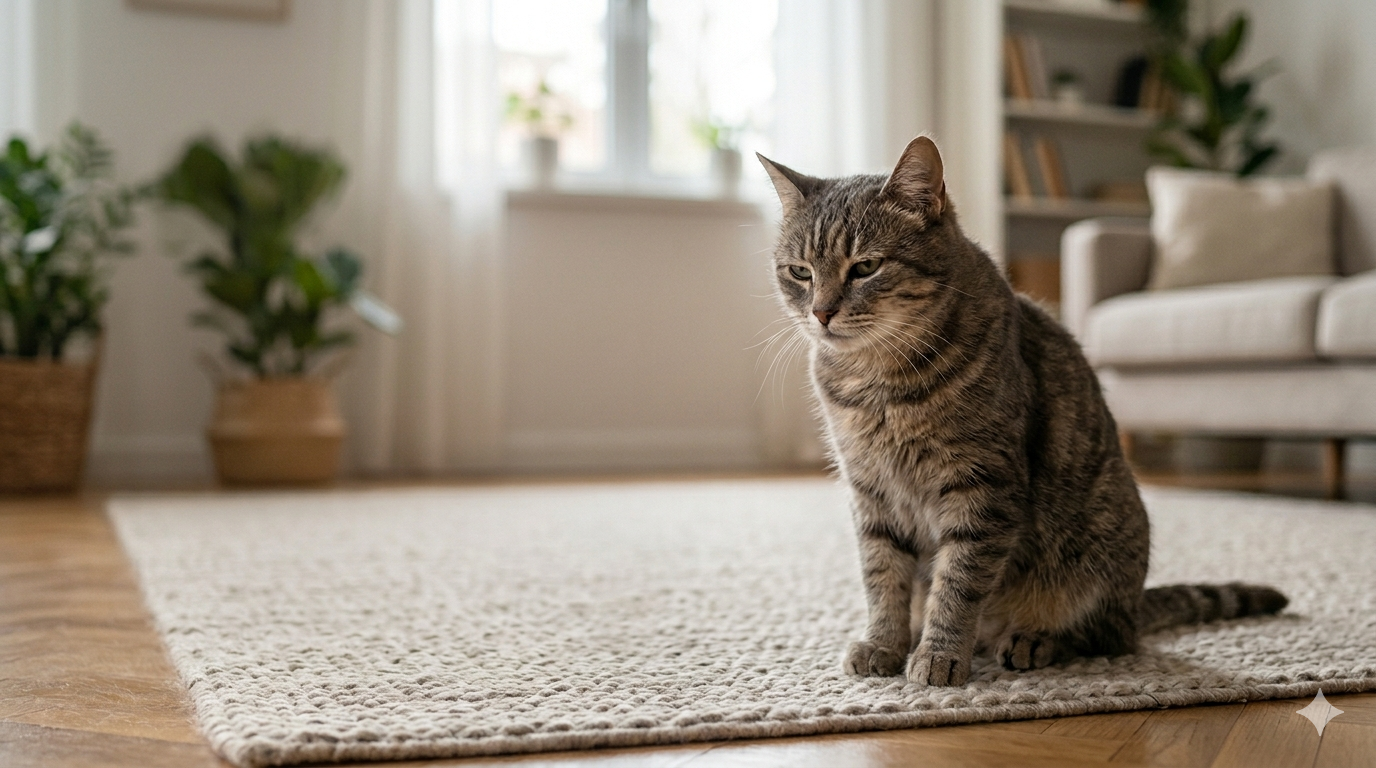
If you’ve noticed your cat becoming quieter than usual, retreating to corners, or simply seeming off after skipping meals, you may be wondering why cats act strange after not eating and whether something more serious could be going on. That instinct to pay attention matters more than you might realize.
Cats are creatures of striking consistency. They follow routines, hold preferences, and communicate in subtle, often understated ways. When both their appetite and their behavior shift at the same time, even slightly, it’s rarely a coincidence.
The two changes together often point to something happening beneath the surface, something the body is already responding to, even before more obvious symptoms appear.
This is especially important for cat owners. Some of the most serious nutritional and metabolic issues in cats, including one tied to the amino acid arginine, can start with unremarkable signs.
A cat is acting quietly. A cat is sleeping a little more. A cat that just doesn’t seem like herself.
Many of these early signs progress quietly. Acting withdrawn or less interactive can develop into visible weakness, confusion, or loss of coordination if the issue isn’t recognized.
This article explores the early behavioral shifts associated with appetite loss in cats, including what they may look like, why they occur, and what they could be signaling, so you’re equipped to notice them, not just react.
Early Behavioral and Physical Warning Signs of Appetite Loss in Cats
When a cat stops eating, most owners first assume it is a temporary preference, a dislike of a new food, a mild stomach upset, or typical “fussy cat” behavior.
Sometimes, that is all it is.
However, there is a clear difference between a cat that is being selective and one showing changes in behavior when a cat stops eating. When appetite loss is paired with shifts in how a cat acts, moves, or engages with its surroundings, it requires closer attention.
This section explains the full range of early warning signs. It looks beyond food refusal and focuses on the noticeable behavior changes when cats skip meals that often appear alongside it. From sudden personality shifts to unusual quietness, from hiding to low energy, each of these patterns is an early sign worth recognizing.
Understanding these signs together, rather than separately, helps caring owners move from “I’ll keep an eye on it” to “I need to do something about this.”
Why is my cat not eating and acting strange all of a sudden?
When a cat’s behavior changes noticeably at the same time their appetite drops, that combination is often the first sign that something deeper may be going on.
Behavior changes often appear before clear physical symptoms, which is why they deserve early attention.
Cats do not change their personalities without a reason.
If your cat goes from curious and interactive to quiet and withdrawn within a short period, and is also eating less or nothing at all, that combination should be taken seriously.
Cats start acting strange after not eating for a reason. The body begins to feel the effects of missing nutrition, and behavior is often the first visible sign of that internal shift.
In these early stages, owners often notice unusual movement patterns. A cat who normally trots over to greet you may barely lift her head. There may be less response to familiar sounds. A cat may avoid eye contact or interaction when that was never typical before.
Each sign alone may seem mild. But in a cat who was previously consistent and predictable, they stand out.
From a biological standpoint, this pattern makes sense. Cats are obligate carnivores, and their metabolism is built around animal protein. Unlike dogs or humans, they cannot easily rely on backup energy pathways when food is withheld.
A 2023 peer-reviewed review in the Journal of Animal Science and Biotechnology (Wu et al., PMC) explains that cats have a very limited ability to produce essential nutrients such as arginine on their own. Even a short period without enough food can begin to create measurable internal imbalance.
That imbalance, even early on, can appear as subtle changes in how a cat moves through her environment — quieter, slower, slightly less engaged.
It may not look dramatic.
But it is real, and it signals that something has changed.
Symptom Checker: Is Your Cat Showing Early Warning Signs?
Cats rarely show obvious illness early. Instead, they display subtle behavioral shifts that many owners miss.
Step 1: Appetite
Has your cat stopped eating?
Step 2: Behavior
Is your cat acting differently?
Step 3: Energy Level
How active is your cat?
🧾 Your Result
Why is my cat refusing food and behaving differently than usual?
A cat that refuses food and simultaneously seems different in temperament or habits is showing a pattern that goes beyond selective eating.
When behavior changes alongside appetite loss, the two together point to something that warrants closer observation.
This distinction is important, and many experienced cat owners recognize it in hindsight: a picky cat still shows normal energy and curiosity.
She may turn her nose up at a bowl and then immediately wander off to find something more interesting.
A cat whose behavioral shifts are linked to appetite loss is medically significant and tends to show something different, a general withdrawal from the things she normally engages with.
You might notice less interest in the environment overall.
A cat that used to watch the window, follow household sounds, or investigate new smells now sits in one place for extended periods.
There may be subtle irritability in a cat that normally tolerates handling, but now moves away from touch. Or the opposite: unusual stillness and passivity where there used to be activity. Changes in routine often signal that something is wrong.
Cats are habitual animals. Mealtimes, rest spots, and social patterns tend to stay remarkably consistent in a healthy cat.
When routine begins to fray at the same time appetite disappears, it’s a signal worth noting.
The 2022 ISFM Consensus Guidelines on management of the inappetent cat, published in the Journal of Feline Medicine and Surgery, state that inappetence in cats “may have many origins” and should lead to a nutritional and medical evaluation, rather than watchful waiting alone.
If you think you may have missed earlier warning signs, this guide will help you recognize them.
In feline health, small behavioral shifts often carry significant meaning. This guide helps you interpret what those changes are actually signaling—so you can recognize early imbalance or distress before it escalates.
🍽 Sudden Food Refusal
A sudden refusal to eat is rarely behavioral—it is often physiological. In clinical observation, appetite loss is one of the earliest indicators of internal imbalance, including digestive distress, metabolic disruption, or toxin accumulation. Cats rely heavily on smell and internal signaling to regulate food intake, so when these systems are affected, eating stops abruptly. Even within 24–48 hours, this can begin to place stress on liver function in some cats.
😿 Behavior Change
Behavioral changes are often the first visible sign that something is wrong internally. Cats are neurologically sensitive to internal imbalance, and even subtle discomfort can alter how they respond to their environment. This may present as confusion, unusual quietness, or a shift in personality. Because cats instinctively mask pain, these changes are often early-stage signals rather than late symptoms.
🙈 Hiding or Withdrawal
Withdrawal is a survival-driven behavior. In nature, a sick animal avoids attention to reduce vulnerability. When a domestic cat begins hiding, avoiding contact, or isolating itself, it often reflects internal discomfort or stress. This behavior is not random—it is an adaptive response that typically appears before more obvious signs of illness.
😴 Reduced Energy
A drop in energy is often tied to metabolic changes. When food intake decreases or internal imbalance develops, the body conserves energy for essential functions. This leads to lethargy, reduced movement, and decreased interaction. Persistent low energy should always be evaluated alongside appetite and behavioral patterns, as it often reflects systemic strain rather than simple fatigue.
Why is my cat not eating, hiding, or becoming very quiet?
Hiding or becoming unusually quiet is a recognized response in cats experiencing physical discomfort or internal stress. It is one of the more consistent early patterns that owners report in cats who have stopped eating. This sign, the quiet retreat, can surprise owners because it may look calm or even peaceful. A cat curled under the bed or tucked behind furniture may not appear visibly distressed.
However, cats becoming quiet or withdrawn without food is a well-documented self-protective response. In the wild, vulnerability increases risk, so cats instinctively withdraw when they feel unwell.
Domestic cats still retain this instinct. What separates meaningful hiding from normal rest is persistence and context. A cat that occasionally seeks a quiet place to nap is behaving normally.
A cat that remains hidden during regular feeding times, does not come out for familiar sounds or routines, and seems unresponsive when approached is showing a different pattern.
The quietness itself, not just the hiding, can also provide important clues.
Cats that stop vocalizing when they normally would, fail to respond to their name as usual, or seem mentally distant may be showing early behavioral signs of appetite loss in cats that deserve attention.
This type of withdrawal often appears during the earliest phase of nutritional or metabolic disruption, before more obvious signs such as weakness or coordination problems develop.
Some of the most important warning signs don’t look serious at first. These subtle changes are often dismissed as normal behavior—but they can signal early internal stress or discomfort.
“If you notice 2 or more of these signsfrom below, don’t ignore them.”
The Cat Who Went Quiet
Janki had owned her Abyssinian, Miso, for four years and knew his patterns the way most people know their morning routines. He waited by the kitchen door at 7am. He knocked things off the counter by 10. He announced dinner at 5:30 with an enthusiasm that bordered on theatrical.
So when Miso spent an entire Tuesday behind the washing machine something he hadn’t done since his first week in the flat Janki noticed. He hadn’t eaten his morning meal. He wasn’t responding to the particular whistle she used to call him. He was simply very, very quiet.
She booked a same-day appointment at her local veterinary clinic. During the examination, the veterinarian identified early signs of gastrointestinal discomfort and flagged that Miso’s current food a recent switch to a grain-free dry formula may not have been meeting his amino acid requirements at the levels his breed and activity level needed. A complete, protein-appropriate wet diet was recommended alongside a short monitoring period.
Within five days, Miso was back at the kitchen door at 7am. The counter casualties resumed shortly after.
What are the warning signs of appetite loss and low energy in cats?
Low energy combined with appetite loss can mean the body’s energy balance is already being affected. It is one of the clearer early warning signs that something more than simple preference is causing the inappetence.
A decline in energy and interest in cats without food often follows a recognizable pattern.
The cat may sleep more than usual. This is not the relaxed, stretched-out sleep of a healthy cat, but a heavier and more withdrawn kind of rest.
Movement around the home decreases. Interest in play fades. Normal triggers for engagement, such as a toy, a familiar sound, or someone entering the room, get less response.
From a nutritional standpoint, this pattern makes sense.
Cats are obligate carnivores and rely heavily on protein and amino acids for energy and normal metabolic function. When food intake drops or stops, the body shifts into conservation mode.
Veterinary nutrition literature reviewed by the Merck Veterinary Manual (updated 2023) notes that cats have higher protein and essential amino acid requirements than dogs and cannot compensate well when dietary intake falls short.
Because they cannot easily rely on alternative energy pathways, low energy and reduced activity can appear relatively quickly in a cat that is not eating.
Signs of weakness and low energy in cats not eating are not always dramatic at first.
They usually begin as small changes: slightly less movement, a little less interest, or a slower response. For an owner who knows their cat’s normal behavior, these differences are often noticeable, and they are important.
If your cat has already started acting a little unusual, you should read this breakdown of early warning signs
When a cat stops eating or begins acting differently, the progression is often gradual—but significant. What starts as a small change can escalate within days if the underlying issue isn’t addressed.
📈 Behavior Change Timeline
Day 1
Slight appetite drop
Your cat may eat less or show reduced interest in food. This is often the earliest sign that something is off internally, even if behavior otherwise appears normal.
Day 2
Low energy, less interaction
As energy intake drops, your cat may become quieter, less active, or avoid interaction. This reflects early metabolic slowdown and growing internal stress.
Day 3
Visible weakness
Weakness, instability, or clear behavioral changes may become noticeable. At this stage, the body is under strain, and delaying action increases risk significantly.
My cat hasn’t eaten in a day and is acting weird is this serious?
A full day without food, combined with noticeable behavioral changes, moves the situation beyond “let’s see how she does.”
When a cat is not eating and is also acting differently, that combination can signal that something may be developing.
It is easy to dismiss a single missed meal. Cats sometimes eat less, especially during warm weather or minor changes in their environment.
However, cats showing unusual behavior after missing meals, even after just one day, changes the picture.
This pairing often suggests the issue has moved past the earliest stage. The body has already gone without enough nutrition for a meaningful period, and the behavioral shift reflects that.
At this point, monitoring should become more deliberate. Note the exact time of the last meal. Watch whether behavior continues to change. Look for any new signs. Be ready to contact a veterinary clinic if there is no improvement or if symptoms become more noticeable.
It is also important to understand why a single day can matter for cats.
Research cited in the Journal of Animal Science and Biotechnology (Wu et al., 2023) explains that cats have a limited ability to produce essential amino acids, including arginine, from internal sources. Even a relatively short fast can begin to affect liver function related to the urea cycle.
This response is not the same in most other pets. It is specific to cats and their biology as obligate carnivores.
If your cat is already showing unusual behavior, this guide will help you recognize the signs.
Physiological Effects of Food Deprivation on Energy and Behavior
The early signs described in the previous section, hiding, quietness, and subtle behavioral shifts are the kinds of changes that often make an owner pause and wonder.
The signs in this section are different.
They are more visible and more physical. They reflect a body that has moved beyond the earliest stage of nutritional disruption into something more measurable.
When a cat who has not been eating begins to show weakness, lethargy, or a general sense of being “off,” it signals that the internal effects of missed nutrition are becoming more pronounced.
This section explains why that happens, what is occurring inside the body that leads to these visible changes, and what each pattern of weakness or lethargy typically looks like in a cat that has not been eating enough.
Understanding how low energy can progress to more noticeable weakness, and then to faster decline, helps owners recognize not only what they are seeing, but what it may mean for the timeline ahead.
Why is my cat acting lethargic or unusual after not eating?
Lethargy in a cat that has stopped eating is often one of the earliest and most consistent physical signs that the body’s energy reserves are being used up.
It usually appears before more serious symptoms and reflects the body trying to cope with inadequate nutrition.
Cats appearing tired or less responsive after not eating is a pattern veterinarians commonly see. Owners often describe it in simple terms: “She just seems really tired,” or “She’s not herself. She’s just lying there.”
This type of lethargy is different from normal feline rest.
A healthy cat sleeping comfortably looks relaxed and peaceful. A lethargic cat looks heavy, slower to react, less interested in her surroundings, and missing the quiet alertness that healthy cats usually maintain, even while resting.
In practical terms, lethargy may show up as reduced movement around the home, slower reactions to sounds or touch, and a noticeable drop in normal investigative behaviors such as sniffing, watching, or exploring.
The curiosity that usually defines a cat often fades.
The biological reason is straightforward.
Cats, as obligate carnivores, rely on a steady supply of dietary protein and essential amino acids for energy and normal metabolic function.
According to the Merck Veterinary Manual (updated August 2023), cats have higher natural nitrogen losses and greater protein requirements than dogs. Their metabolism is built around consistent intake of animal-based nutrition.
When that intake decreases or stops, the body shifts into conservation mode. One of the first changes appears in movement and responsiveness.
This is also where arginine becomes relevant.
A 2023 peer-reviewed review in the Journal of Animal Science and Biotechnology (Wu et al., PMC) explains that cats have a very limited ability to produce arginine because of low activity of the enzyme pyrroline 5-carboxylate synthase in the intestinal lining.
This enzyme helps produce ornithine, which supports the urea cycle, the liver’s main process for clearing ammonia, a waste product of protein metabolism.
If arginine levels drop, even briefly, the urea cycle can begin to struggle.
That early disruption may show up as the dull, withdrawn lethargy that owners often notice first.
Changes in cats rarely appear all at once. They develop in stages—often starting subtly before becoming clearly visible.
In the early stage, changes are often easy to overlook. A cat may eat slightly less, appear quieter, or behave just a bit differently than usual. These subtle shifts are not random—they often reflect the body adjusting to an emerging internal imbalance. At this point, most owners do not recognize these signs as clinically meaningful because the cat still appears generally stable.
As the condition progresses, these small changes begin to compound. Reduced food intake affects energy availability, leading to decreased activity and less interaction. The cat may start hiding more frequently or withdraw from normal routines. This stage represents a transition from subtle signals to functional impact, where the body is no longer maintaining normal balance.
In later stages, the signs become more visible and difficult to ignore. Weakness, instability, or clear behavioral changes may develop as metabolic strain increases. At this point, the issue is no longer mild or self-resolving. The progression from subtle to obvious reflects a shift from early imbalance to active physiological stress, where intervention becomes more urgent.
Why does my cat become weak after skipping meals?
Weakness in a cat that hasn’t eaten reflects the body using internal reserves when food is not available.
It is a more advanced sign than lethargy and suggests the situation may be worsening.
A cat becoming weak after skipping meals looks different from simple tiredness.
A lethargic cat may still get up and move at times. A cat with true weakness moves less, and when she does move, it takes more effort.
Owners may notice their cat struggling to jump onto surfaces she normally reaches easily, walking more slowly, or seeming to lack her usual strength.
Reduced strength, a slower gait, and reluctance to be active are the most common patterns.
These changes are not as subtle as hiding or being quiet. They are more visible, more measurable, and often more concerning.
From a physiological standpoint, when a cat does not receive enough dietary protein and amino acids, the body begins to draw from internal reserves.
In cats, this can include muscle tissue.
The 2022 ISFM Consensus Guidelines on inappetent cats, published in the Journal of Feline Medicine and Surgery, note that cats are strict carnivores with high protein requirements. When food deprivation occurs, especially alongside illness, lean body mass can decline relatively quickly, affecting physical strength and function.
Loss of energy in cats that haven’t eaten is not just about calories. It reflects a broader metabolic disruption that can also affect muscle and overall body function.
There is also a connection to arginine and ammonia.
Research published in PMC, Acquired Urea Cycle Amino Acid Deficiency and Hyperammonaemic Encephalopathy in a Cat (Dor et al., 2018), documents that reduced arginine availability, whether due to diet, intestinal absorption problems, or kidney disease, can impair the urea cycle.
If ammonia is not cleared efficiently, rising levels can affect neuromuscular function, contributing to the physical weakness owners may observe.
Can a cat’s condition worsen quickly if it stops eating?
When a cat’s condition worsens quickly after she stops eating, the speed of that change is important.
It suggests the body can no longer keep up with the underlying problem.
Reduced activity levels in cats that are not eating often start gradually, then increase more rapidly.
Owners sometimes describe a tipping point. The cat is quieter and less active for a day or two, and then suddenly declines faster than expected.
That acceleration matters.
In cats, the speed of decline after appetite loss and in cases of cats becoming quiet or withdrawn without food can be faster than in many other animals because of how their metabolism works.
Feline hepatic lipidosis, the most common acquired liver disease in cats, is a clear example of how quickly deterioration can follow inappetence.
Clinical reviews, including work published in the Journal of Feline Medicine and Surgery (Webb, 2018, PMC) and guidance reaffirmed by the Merck Veterinary Manual (August 2023), note that lipidosis can develop after as few as two to seven days of anorexia.
More than 85 to 95 percent of affected cats have an identifiable underlying condition that triggered the appetite loss.
This context is not meant to alarm, but to show that rapid worsening in a cat that is not eating follows a well-documented pattern in feline medicine.
The decline in energy and interest in cats without food may begin as lethargy, then progress to clear weakness, and eventually to neurological or systemic signs, which the next section addresses.
The key point at this stage is simple: the speed of change provides useful information.
If your cat seems to be getting worse faster than expected, that change deserves attention and should be taken seriously.
Many cats start showing subtle behavioral changes before serious symptoms appear—this guide explains the early warning signs owners often miss
When Tired Became Something More
Marcus had always described his Maine Coon, Theo, as “aggressively lazy” a cat who treated napping as a competitive sport. So when Theo started sleeping more than usual, Marcus’s first reaction was a mild amusement. Theo was just being Theo.
It was only on the third day when Theo didn’t get up for his evening meal, something that had never happened in six years that Marcus recognized the tiredness had a different quality to it. Theo wasn’t stretching between naps. He wasn’t repositioning himself. He was simply still, in a way that felt heavier than sleep.
At the veterinary clinic the following morning, bloodwork revealed that Theo’s protein intake had been insufficient for some time. The veterinarian explained that cats with lower dietary protein intake can begin to lose lean muscle mass relatively quickly, and that what Marcus was observing as unusual stillness was the body beginning to conserve resources. A higher-protein, animal-based complete diet was introduced alongside appetite support.
Three weeks later, Theo was once again making his slow but deliberate journey to his food bowl each evening right on schedule, and with his characteristic air of a cat doing you a favor.
Why Your Cat’s Symptoms Shouldn’t Be Looked at Separately
Looking at one symptom by itself can be misleading. Cats often show small, overlapping changes instead of one obvious sign, and it is the combination that tells the real story.
For example, a cat skipping one meal may not seem serious. But if that same cat is also quieter than usual, less active, or starting to hide, the situation changes. What seems minor on its own begins to form a pattern when these signs appear together.
In clinical observation, patterns matter more than single signs because the body rarely reacts in just one way. Eating less lowers energy. Lower energy changes behavior. Behavior changes can lead to withdrawal. These responses are connected, not separate problems.
That is why several mild symptoms together can be more important than one severe symptom alone. A cat who seems “just a little off” in multiple ways may be at a more significant stage than a cat with one isolated change.
Timing also matters. When symptoms appear at the same time or begin to overlap within a short period, it often means the condition is progressing rather than staying stable. That progression is what shifts early warning signs into something that needs closer attention.
The goal is not to react to every small change. It is to notice when those changes start forming a pattern. When you begin to see symptoms as connected, it becomes easier to recognize when the situation is no longer minor.
Symptom Pattern Matcher: Don’t Look at Signs in Isolation
Single symptoms can be misleading. What matters is how multiple changes appear together.
Use this quick matcher to see what combinations of symptoms may indicate.
| Symptom Combination | What This Pattern Suggests | How to Interpret It |
|---|---|---|
| Not eating + Low energy | Early metabolic stress | The body is already conserving energy due to reduced intake—this is more than just appetite loss |
| Not eating + Hiding | Internal discomfort or illness | Withdrawal combined with appetite loss is a strong early warning pattern |
| Not eating + Vomiting | Digestive or systemic issue | Food refusal with vomiting is rarely minor and often requires closer attention |
| Eating less + Sleeping more | Energy imbalance developing | Reduced intake is starting to affect overall activity levels |
| Hiding + Less interaction | Behavioral distress signal | Cats often isolate when unwell—this combination is commonly overlooked |
| Weakness + Not eating | Escalating physiological strain | Indicates progression beyond early stage into more serious impact |
| Wobbling + Low energy | Coordination + strength decline | May suggest neurological or muscular involvement, not just fatigue |
| Vomiting + Weakness | Systemic stress | The body is under strain—this combination increases concern significantly |
| Not eating + Weight loss | Ongoing inadequate intake | Suggests the issue has persisted long enough to affect body condition |
| Drinking less + Not eating | Dehydration risk | Combined reduction increases risk faster than either symptom alone |
| Acting strange + Hiding | Early neurological or internal distress | Subtle but important combination often seen before visible illness |
| Less playful + Sleeping more | Declining energy reserves | Indicates reduced metabolic function rather than normal variation |
| Difficulty jumping + Weakness | Muscle or strength decline | Functional impact is now visible in movement and coordination |
| Vomiting + Not eating + Low energy | High-risk cluster | Multiple systems affected—this pattern should not be ignored |
| Hiding + Not eating + Weakness | Advanced warning pattern | Strong indication of internal distress requiring prompt attention |
| Eating treats but not meals + Low energy | Appetite suppression pattern | Not true eating—suggests underlying nausea or imbalance |
| Acting normal but not eating | Hidden early-stage issue | Appetite loss alone is enough to raise concern even without other signs |
| Sudden behavior change + Low energy | Systemic or neurological shift | Rapid changes often indicate underlying disruption rather than mood |
| Sleeping more + Not eating + Hiding | Compounding early signs | Multiple subtle symptoms combining into a clearer risk picture |
| Any 3+ symptoms together | Pattern-based concern | The more symptoms combine, the less likely it is to be minor |
Neurological Symptoms Associated With Prolonged Food Deprivation in Cats
There is a clear difference between a cat who is simply tired and a cat who seems confused.
The previous section focused on the physical effects of not eating, including weakness, lethargy, and declining energy.
This section looks at something different: what happens when the nervous system begins to feel the effects of inadequate nutrition, especially when ammonia processing is disrupted.
The signs discussed here, such as unsteady walking, blank staring, disorientation, or what owners often describe as acting “drunk,” can be alarming to witness.
They are also often misunderstood because they do not immediately appear to be related to nutrition.
Understanding how these signs can develop from something as specific as arginine insufficiency, and what they look like in real life, helps owners recognize why they require prompt veterinary attention.
Why is my cat acting drunk or disoriented after not eating?
When a cat appears uncoordinated, vacant, or unusually disconnected from her surroundings after not eating, it may signal that the nervous system is reacting to changes in internal chemistry.
This presentation goes beyond simple fatigue.
Cats acting different due to lack of food in this way, appearing mentally distant, moving oddly, or seeming to look through rather than at things, is one of the more striking changes owners report.
It often causes immediate concern because it looks very different from normal tiredness or typical illness related lethargy.
Owners may notice a floating or unsteady quality to movement, steps that do not land correctly, posture that seems slightly off, or a gaze that appears unfocused.
The cat may move slowly with an unusual rhythm or stand in one place without a clear purpose.
Some describe their cat as seeming “not there,” physically present but not mentally engaged.
There is a documented biological basis for this pattern.
A 2023 review in the Journal of Animal Science and Biotechnology by Wu et al., available through PMC, explains that when arginine intake is insufficient in cats, the liver’s urea cycle becomes impaired. As a result, ammonia, a normal byproduct of protein metabolism, can build up in the bloodstream.
This condition, called hyperammonemia, is toxic to the nervous system.
The same research notes that cats can begin developing hyperammonemia within one to three hours of eating an arginine deficient meal.
The neurological signs that follow can look, to an owner, very much like intoxication.
Why is my cat stumbling, wobbly, or losing coordination?
Loss of physical coordination in a cat that hasn’t been eating is a sign that the nervous system may be affected.
It is more serious than lethargy or weakness and requires prompt attention.
Cats showing unusual behavior after missing meals in this way, such as stumbling, walking with an unsteady gait, swaying while standing, or losing their usual balance, represent a clear step beyond earlier signs of weakness.
Cats are normally very agile.
If a cat struggles to walk in a straight line or appears to work hard to stay balanced, that is outside the normal range.
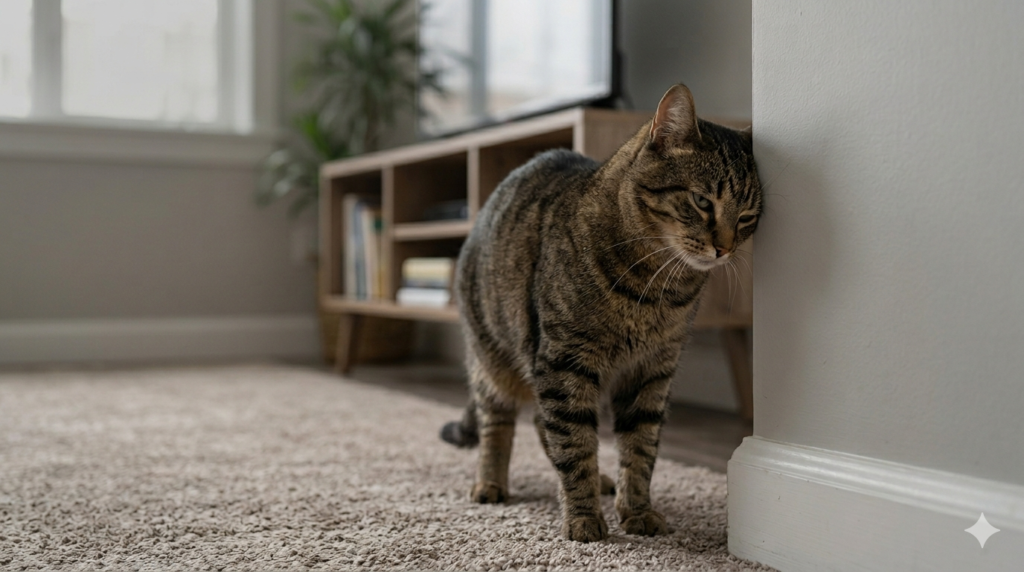
What to look for includes difficulty walking in a straight path, a swaying motion while moving, leaning against walls or furniture for support, or stumbling when stepping up or down.
These signs are not subtle. Unlike quietness or reduced activity in earlier stages, they are usually obvious even if you are not closely monitoring your cat.
There is a clear physiological reason for this.
Foundational research by Morris and Rogers, published in the Journal of Nutrition in 1978 and still cited in current veterinary literature, including a 2023 PMC review, showed that cats fed an arginine-deficient diet developed hyperammonemia that progressed to ataxia, the medical term for loss of muscle coordination, along with other serious neurological signs.
In this setting, ataxia means the brain and muscles are no longer communicating with normal precision, due to the neurotoxic effects of ammonia on the central nervous system.
Changes in balance or movement are often more than simple clumsiness. In cats, coordination issues can reflect underlying neurological stress, weakness, or systemic imbalance—especially when they appear suddenly or alongside other symptoms.
📊 Coordination Loss Indicator Table
| Observed Symptom | What It May Indicate | Expert Interpretation |
|---|---|---|
| Wobbling or Unsteady Walking | Loss of balance or coordination control | This may reflect early neurological disruption or reduced muscle control. It can occur when the body is under metabolic stress or when normal nerve signaling is affected. |
| Falling or Collapsing | Possible neurological or systemic issue | Sudden loss of stability suggests that the body is struggling to maintain posture. This is often considered a more advanced sign and may indicate significant internal imbalance or weakness. |
| Difficulty Jumping or Climbing | Reduced strength or coordination | Cats rely heavily on precision and strength for movement. Difficulty performing routine actions like jumping can indicate early muscle fatigue, weakness, or declining energy reserves. |
| Slow or Delayed Movement | Low energy or impaired response | A noticeable delay in movement or reaction may point to reduced neurological responsiveness or general lethargy linked to decreased metabolic function. |
Why is my cat staring blankly or reacting slowly?
A cat that stares without focus or responds to stimuli much more slowly than usual may be showing signs of reduced neurological awareness.
This pattern is different from normal sleepiness and has greater clinical significance.
Healthy cats are naturally alert, even when resting. Their ears move, their eyes track subtle motion, and they respond to familiar sounds within seconds.
A cat that appears to be staring at nothing, whose eyes do not follow movement as they normally do, or who takes an unusually long time to register that someone has entered the room is showing a pattern of reduced neurological responsiveness.
This sign, cats appearing tired or less responsive after not eating in this specific, neurologically flavored way, is different from the fatigue-related lethargy described in the previous section.
The difference is meaningful.
Fatigue makes a cat slower. Reduced neurological awareness makes a cat less engaged with her surroundings.
Owners who know their cat well often recognize this distinction immediately, even if they cannot fully explain it.
As documented in a 2021 clinical study on hyperammonemia in azotemic cats by Carvalho et al., published in the Journal of Feline Medicine and Surgery, elevated blood ammonia in cats can present along a spectrum that begins with mild changes in awareness and behavior, including this type of blunted responsiveness, before progressing to more severe neurological signs.
This recognized clinical spectrum supports what observant owners often notice in the earlier stages.
What does head pressing or severe confusion mean in cats?
A cat that stares without focus or responds to stimuli much more slowly than usual may be showing signs of reduced neurological awareness.
This pattern is different from normal sleepiness and has greater clinical significance.
Healthy cats are naturally alert, even when resting. Their ears move, their eyes track subtle motion, and they respond to familiar sounds within seconds.
A cat that appears to be staring at nothing, whose eyes do not follow movement as they normally do, or who takes an unusually long time to register that someone has entered the room, is showing a pattern of reduced neurological responsiveness.
This sign, cats appearing tired or less responsive after not eating in this specific, neurologically flavored way, is different from the fatigue-related lethargy described in the previous section.
The difference is meaningful.
Fatigue makes a cat slower. Reduced neurological awareness makes a cat less engaged with her surroundings.
Owners who know their cat well often recognize this distinction immediately, even if they cannot fully explain it.
As documented in a 2021 clinical study on hyperammonemia in azotemic cats by Carvalho et al., published in the Journal of Feline Medicine and Surgery, elevated blood ammonia in cats can present along a spectrum that begins with mild changes in awareness and behavior, including this type of blunted responsiveness, before progressing to more severe neurological signs.
This recognized clinical spectrum supports what observant owners often notice in the earlier stages.
The Walk That Wasn’t Right
Saoirse had adopted her rescue Siamese mix, Fig, eight months earlier and had spent most of that time learning the particular vocabulary of his personality the chirp that meant he wanted the window open, the slow blink that meant he was content, the precise angle of his tail when he was about to cause trouble.
Which is why, on a Friday evening, she immediately registered that something about the way Fig was walking across the kitchen wasn’t right. He wasn’t limping. He wasn’t dragging a paw. He was just slightly off as though each step required a fraction more calculation than it should. He’d eaten very little over the previous two days, which she had attributed to the summer heat.
She brought him to an emergency veterinary clinic that same evening. After examination and blood tests, the veterinarian found elevated ammonia levels alongside low protein markers, and explained that Fig’s diet a homemade raw preparation Saoirse had been following from an online guide was missing several essential amino acids, including arginine, at the levels cats require. A commercially complete, veterinarian-recommended diet was introduced and carefully transitioned over the following week.
Within ten days, the walk was back to normal. The chirping about the window resumed on day four, which Saoirse later described as the most reassuring sound she had ever heard.
Diagnostic Challenges and Common Misinterpretations of Early Symptoms
Everything discussed so far, quiet withdrawal, declining energy, physical weakness, and more concerning neurological signs, tends to follow a recognizable progression when you know what to watch for.
The reality, though, is that many owners do not know what those early signs look like. Even attentive and caring owners may only realize later that they missed the early window.
This is not a failure of attention.
It reflects how this condition typically presents.
The early signs of arginine-related nutritional disruption in cats are genuinely easy to misread. Not because owners are careless, but because those signs closely resemble common, minor issues that usually resolve on their own.
This section explains three specific reasons why noticeable behavior changes when cats skip meals are often attributed to something else: the subtle nature of early symptoms, their overlap with everyday minor problems, and the clinical consequences of delayed recognition.
Understanding why misidentification happens so often is not about blame. It is about giving owners the context they need to trust their instincts sooner and to recognize why earlier action can truly make a difference.
Why do early symptoms of not eating look like minor issues in cats?
The earliest signs of nutritional disruption in cats, such as reduced appetite, slight quietness, and mild withdrawal, are nearly indistinguishable from the kind of minor, self-resolving behavioral shifts that cats occasionally show for completely benign reasons.
This is the primary reason early warning signs are so often overlooked.
Many caring owners have had the experience of noticing their cat seems a little off, deciding to give it a day or two, and having the cat return to normal on her own.
That experience is common and often entirely reasonable. Cats do occasionally eat less, rest more, or seem quieter without any underlying health concern.
The challenge is that early behavioral signs of appetite loss in cats that are medically significant look almost identical to those of benign episodes in the beginning.
The changes are gradual rather than sudden.
A cat does not typically go from fully healthy to visibly unwell in a single afternoon.
She becomes slightly quieter.
Her appetite drops a little, then more.
She rests in her usual spot, but for longer periods.
None of these changes, taken in isolation, is obviously alarming. That gradual progression is exactly what makes them easy to attribute to mood, weather, a minor stomach upset, or another ordinary explanation.
What is important to understand is that arginine deficiency and the hyperammonemia that can follow donot always result from a cat simply refusing food.
As a 2018 case report published in the Journal of Feline Medicine and Surgery Open Reports (Dor et al., PMC) documented, arginine deficiency can develop in cats with inflammatory bowel disease or chronic kidney disease, even when food is being offered and partially consumed.
Intestinal malabsorption can reduce the absorption of arginine from the diet, and reduced kidney function can impair the limited renal synthesis of arginine that cats rely on as a secondary source.
In these cases, dietary intake may appear adequate on the surface, making the underlying deficiency more difficult to identify without veterinary testing.
The 2022 ISFM Consensus Guidelines in the Journal of Feline Medicine and Surgery specifically note that inappetence “may have many origins” and encourage nutritional assessment of every patient because the surface presentation rarely tells the full story.
For owners, this translates into a simple but important principle: subtle changes in cats that stop eating properly deserve more than a day or two of passive observation, especially if the behavior change persists or worsens.
Many early warning signs are misinterpreted as harmless or temporary. Understanding the gap between perception and reality can help you recognize problems sooner.
| What Owners Think | What It Often Actually Means |
|---|---|
| Just not hungry | Early illness, digestive discomfort, or metabolic imbalance affecting appetite signals |
| Being picky with food | Reduced sense of smell, nausea, or internal stress rather than preference change |
| Probably bored of the same food | Appetite suppression due to underlying discomfort, not boredom |
| Just tired today | Early energy depletion caused by reduced food intake or internal imbalance |
| Sleeping more than usual is normal | Possible lethargy linked to metabolic slowdown or emerging illness |
| Hiding because it wants space | Instinctive withdrawal due to discomfort, stress, or feeling unwell |
| Avoiding me for no reason | Behavioral response to internal distress or pain, not mood change |
| Acting a little strange today | Early neurological or systemic changes that haven’t fully developed yet |
| Not playing like before | Reduced energy availability or early weakness, not just mood variation |
| Skipped one meal, that’s okay | Even short-term food refusal can start affecting internal balance in cats |
| Drinking less water is normal | Potential dehydration risk or reduced overall intake due to illness |
| Maybe it will fix itself | Delaying action can allow early-stage issues to progress into more serious conditions |
| It’s just aging | Age-related changes happen gradually—sudden shifts are more likely linked to a problem |
| No vomiting or obvious symptoms, so it’s fine | Many feline illnesses start without visible symptoms and show only subtle behavioral signs |
| Still walking, so not serious | Cats can maintain basic movement even when internal stress is increasing |
| It ate a little, so it’s okay | Partial eating can still be insufficient and indicate ongoing appetite suppression |
| Probably stress from environment | Stress can contribute, but persistent symptoms often indicate deeper physiological issues |
| It will eat when it gets hungry enough | In cats, prolonged refusal can worsen appetite suppression instead of correcting it |
| I’ll wait another day and see | Time-sensitive conditions in cats can escalate quickly within 24–48 hours |
Why is loss of appetite often mistaken for hairballs or stomach problems?
The specific combination of symptoms associated with arginine insufficiency, including vomiting, appetite loss, and general malaise, overlaps significantly with common minor gastrointestinal issues. This makes it one of the patterns most often misattributed in feline health.
Vomiting is one of the most common reasons cat owners contact veterinary clinics. It is also one of the signs most frequently attributed at home to hairballs or a mild stomach upset.
When a cat vomits and then seems quieter and less interested in food, it is natural to assume she is dealing with a hairball or that her stomach is temporarily unsettled. In many cases, that assumption is correct.
The concern arises when those same surface symptoms reflect something more significant.
Research shows that one of the early clinical signs of hyperammonemia in cats, the ammonia buildup that can follow arginine insufficiency, is vomiting.
Foundational experimental observations by Morris and Rogers, cited in the 2023 Journal of Animal Science and Biotechnology review (Wu et al., PMC), found that cats fed a single arginine-free meal developed severe emesis, hypersalivation, and neurological effects.
These signs do not reveal their cause at first glance.
They often look like routine gastrointestinal upset.
In the same way, cats acting differently due to a lack of food, including lethargy and reduced appetite, may be attributed to pancreatitis. This is a relatively common condition in cats and shares significant symptom overlap.
Guidance from VCA Animal Hospitals on feline hepatic lipidosis notes that in more than 90 percent of affected cats, an underlying disease, which may include pancreatitis, inflammatory bowel disease, or other gastrointestinal disorders, is driving the inappetence.
This layering of conditions creates a clinical picture that is not easy to interpret from the outside.
A 2023 case report published in the Canadian Veterinary Journal described a cat with hyperammonemia caused not by arginine deficiency but by functional cobalamin deficiency, specifically the accumulation of methylmalonic acid secondary to exocrine pancreatic insufficiency.
This case, described as the first of its kind in the literature, reinforces an important point: the behavioral and physical signs owners observe do not come with labels explaining their cause.
Vomiting, appetite loss, and altered behavior can arise from multiple nutritional and metabolic pathways, which is why professional evaluation remains the most reliable way to determine what is truly driving the presentation.
⚠️ Misdiagnosis Comparison: What Seems Normal vs What May Be Serious
Many early symptoms in cats are dismissed as minor or routine. The difference between a harmless issue and a serious one often lies in pattern, frequency, and accompanying changes.
| Symptom | Common Assumption (Harmless Explanation) | What May Actually Be Happening (When It’s Concerning) |
|---|---|---|
| Vomiting | Hairball or minor stomach upset | Repeated vomiting, especially with weakness or appetite loss, may indicate gastrointestinal or systemic issues |
| Not eating | Just not hungry or being picky | Appetite suppression due to nausea, internal imbalance, or early illness |
| Eating less | Temporary mood change | Early metabolic stress or digestive discomfort reducing intake |
| Sleeping more | Normal cat behavior | Lethargy linked to low energy, illness, or systemic strain |
| Hiding | Wants space or privacy | Instinctive behavior due to discomfort, pain, or feeling unwell |
| Less playful | Just getting older or bored | Reduced energy availability or early weakness |
| Weight loss | Normal fluctuation | Ongoing inadequate intake or underlying health issue |
| Drinking less water | Nothing unusual | Risk of dehydration, especially if combined with not eating |
| Acting quiet | Calm or relaxed mood | Early behavioral change signaling distress or internal imbalance |
| Sudden behavior change | Mood swing | Possible neurological or systemic disruption |
| Skipping meals occasionally | Normal variation | In cats, repeated or prolonged skipping can quickly become serious |
| Difficulty jumping | Aging or laziness | Muscle weakness, joint issues, or declining energy reserves |
| Wobbling slightly | Temporary imbalance | Possible neurological involvement or coordination loss |
| Bad breath | Food-related smell | Chemical or metabolic changes (in some cases, toxin buildup) |
| Mild weakness | Just tired | Early-stage physical decline or inadequate nutrition |
| Vomiting once and stopping | Resolved issue | If paired with low appetite or lethargy, may still indicate underlying problem |
| Still walking normally | Must not be serious | Cats often mask illness and maintain basic function despite internal stress |
| Eating treats but not meals | Just preference | Selective eating can still indicate appetite suppression or nausea |
| Seems fine after resting | Temporary fatigue | Symptoms may fluctuate but still reflect ongoing internal imbalance |
| Waiting it out | It will pass on its own | Delays can allow early-stage issues to progress significantly |
How does delayed recognition make a cat’s condition worse?
The longer arginine insufficiency and its consequences go unaddressed, the greater the opportunity for metabolic disruption to deepen, and the more pronounced the clinical signs may become.
Time is a meaningful factor in how this condition progresses.
This is not about creating urgency for its own sake.
It is about understanding a well-documented clinical reality: the progression from early nutritional disruption to more serious metabolic consequences in cats can occur more quickly than many owners expect. Delays in recognition are linked to poorer outcomes across several feline inappetence-related conditions.
The University of Illinois College of Veterinary Medicine, in guidance published by Dr. David Williams, an international expert on feline gastrointestinal disease and long-serving faculty member, notes that if a cat stops eating, veterinary care should be sought promptly. He emphasizes that earlier intervention is associated with improved clinical outcomes.
Dr. Williams also explains that the increased use of early nutritional support in veterinary practice has reduced the incidence of conditions such as hepatic lipidosis, not because the disease itself has changed, but because earlier action alters the course of illness.
Research on feline hepatic lipidosis helps illustrate this point, even though it is a distinct condition from arginine deficiency.
A clinical review by Webb at Colorado State University, published in the Journal of Feline Medicine and Surgery in 2018 (PMC), documents that lipidosis can develop after as few as two to seven days of anorexia. The duration of anorexia is directly associated with the severity of liver involvement.
In obese cats that stopped eating, body weight losses of 30 to 40 percent were reported over six to seven weeks, with lipidosis developing during that time. However, clinically significant liver dysfunction appeared much earlier in the course.
For arginine specifically, the timeline can be even shorter.
Multiple peer-reviewed sources, including the 2023 review in the Journal of Animal Science and Biotechnology, confirm that hyperammonemia can develop within one to three hours after a single arginine-free meal.
This does not mean that every cat who misses a meal is in danger.
However, it does mean that when cats start acting strange after not eating, and when that change persists or worsens, the window for early intervention is both real and important.
The 2022 ISFM Consensus Guidelines state clearly that delayed intervention may lead to further deterioration, and that prompt management of contributing factors, including underlying illness and nutritional status, is closely tied to recovery outcomes.
For owners, this leads to a simple and empowering conclusion: recognizing these patterns early and discussing them with a veterinarian sooner can meaningfully influence the outcome.
Even short delays can shift a condition from mild to serious. This timeline shows how symptoms can progress when early signs are overlooked.
🟢 Delay: 24 Hours
Mild but meaningful changes begin
At this stage, symptoms may appear subtle—such as reduced appetite or slight behavioral shifts. Internally, however, the body has already begun adjusting to decreased energy intake. Early metabolic changes can start even when outward signs seem minor.
- ✔ Slight appetite drop or food refusal
- ✔ Mild lethargy or reduced activity
- ✔ Subtle behavior change (quieter, less interactive)
🟡 Delay: 48 Hours
System stress and early neurological signs
Continued lack of food begins to impact multiple systems. Energy reserves decline further, and internal imbalance may start affecting neurological function. Behavioral changes become more noticeable and harder to dismiss.
- ⚠ Noticeable lethargy and reduced movement
- ⚠ Increased hiding or withdrawal
- ⚠ Possible wobbling, disorientation, or unusual behavior
🔴 Delay: 72 Hours+
Critical condition and visible decline
By this point, the body is under significant physiological strain. Weakness, instability, and clear behavioral changes may be evident. The condition is no longer early-stage, and further delay increases the risk of serious complications.
- 🚨 Visible weakness or difficulty standing
- 🚨 Severe lethargy or near inactivity
- 🚨 Increased risk of systemic complications
The Owner Who Almost Waited
James had been convinced that his British Shorthair, Clove, was going through a phase. She had gone off her food once before two summers ago, during a heatwave and had come back to it on her own after three days. He was prepared to give it the same time again.
What gave him pause was a comment from his partner on day two: “She hasn’t moved from that spot since yesterday morning.” Clove was on the sofa. Not sleeping in the relaxed, occasionally twitching way she normally did just sitting, very still, with an expression that James struggled to describe later except to say it looked like she was somewhere else.
He called the veterinary clinic that afternoon rather than waiting for the third day. The veterinarian found that Clove had developed early signs of liver stress consistent with the beginning stages of hepatic lipidosis a condition, the vet explained, that can develop in cats after as few as two to three days without adequate food intake, and that is significantly easier to address when caught early. Nutritional support was introduced immediately, alongside investigation of the underlying cause of her appetite loss.
Clove was eating on her own again within two weeks. James later said the thing he was most grateful for was his partner’s observation the specific, quiet noticing of a cat who had stopped moving because it was exactly the kind of detail he had almost talked himself out of taking seriously.
Conclusion
If there is one thing this article has tried to make clear, it is this: when a cat is not eating and acting differently than usual, that combination is not something to ignore.
It may turn out to be minor, but the pattern itself, the pairing of appetite loss with behavioral change, deserves to be taken seriously from the start.
The signs that matter most often begin quietly.
A cat is becoming quieter than usual.
Subtle changes in cats that stop eating properly, such as less interaction, more time spent in one place, or a slight dimming of the alertness that defines a healthy cat’s engagement with her world.
These early signals are easy to overlook, and many caring owners only recognize them clearly in retrospect.
The goal of understanding them now is to make that recognition possible in the moment, not afterward.
From there, the progression is meaningful and follows a documented pattern.
What begins as early behavioral signs of appetite loss in cats can develop into visible weakness and fatigue as the body draws on internal reserves.
If nutritional disruption continues, whether due to dietary deficiency, malabsorption, or an underlying condition such as inflammatory bowel disease or chronic kidney disease, the signs can progress further into neurological territory, including unsteady movement, disorientation, and reduced responsiveness.
Each stage reflects a body working harder to compensate for what it lacks.
Arginine sits at the center of this discussion because of something unique to cats as obligate carnivores.
Unlike most other animals, cats cannot synthesize arginine from precursor molecules in meaningful amounts.
As confirmed by peer-reviewed research, including the 2023 review in the Journal of Animal Science and Biotechnology (Wu et al., PMC), and the foundational work of Morris and Rogers, this metabolic limitation means arginine must be supplied in the diet at every meal.
When it is not, the liver’s ability to clear ammonia from the bloodstream begins to decline, and the consequences can unfold more quickly than many owners expect.
That is not a reason to panic every time a cat skips a meal.
Most cats eating a complete, commercially prepared diet receive adequate arginine without intervention, as AAFCO’s 2023 guidelines require minimum arginine levels in cat food for this reason.
However, it is a reason to pay attention when appetite loss occurs alongside behavioral change and to recognize that this combination carries biological significance beyond normal fussiness or mood.
Delays in recognizing these patterns are common and understandable.
Early signs overlap with minor, everyday issues.
Vomiting can look like a hairball.
Quietness can look like normal rest.
Reduced appetite can look like pickiness.
This is why awareness, not anxiety but informed awareness, is so valuable.
It allows a caring owner to move from “I will give it another day” to “I am going to call the veterinary clinic today” at the right time, rather than after the opportunity for early intervention has narrowed.
The practical summary is simple.
Watch for appetite loss that lasts beyond a meal or two.
Notice when behavioral change appears alongside it, especially if that change includes withdrawal, reduced energy, physical weakness, or signs of disorientation or impaired coordination.
Keep a mental or written note of when your cat last ate normally, because that timeline is useful information for a veterinarian.
Trust the instinct that tells you something seems different, because in cats, that instinct often reflects a real change.
Early recognition does not require medical training.
It requires knowing your cat, paying attention to her normal patterns, and understanding that when those patterns shift along with her appetite, the responsible response is to take it seriously and contact a veterinary professional who can help determine what is happening.
Frequently Asked Questions
Can a cat go without food overnight without any risk?
Most healthy adult cats can go from an evening meal to a morning meal without immediate metabolic concern. However, if the next meal is also refused, that extended gap moves into a range where closer monitoring is appropriate.
Does drinking water help a cat that is not eating?
Drinking water helps prevent dehydration, but it does not replace the protein and amino acids a cat’s body requires. A cat that is drinking but not eating can still develop the same internal metabolic changes associated with food deprivation.
Can a cat recover fully after not eating for several days?
Many cats that receive timely and appropriate veterinary care after a period of significant food deprivation recover without lasting organ damage. The Merck Veterinary Manual notes that cats who recover from hepatic lipidosis typically do not have permanent liver damage.
Is a cat that eats only a few bites still at risk?
A cat consistently eating only a small portion of its normal intake may still be at risk, even without complete food refusal. Guidance from the Ontario Veterinary College indicates that hepatic lipidosis can begin when food intake drops to roughly 50 to 75 percent of normal over several days.
Do indoor cats face a different risk from not eating compared to outdoor cats?
Indoor cats may face a slightly higher risk in some cases because they cannot supplement their intake independently and are more likely to be overweight, both of which can reduce their safety margin during food refusal. Outdoor cats may occasionally find food elsewhere, but this should never be considered a reliable safeguard.
Disclaimer: This article is for educational purposes only and is not a substitute for professional veterinary advice, diagnosis, or treatment. Always consult a licensed veterinarian if you have concerns about your cat’s health, diet, or behavior.
Resources and References
All data points, statistics, and expert guidance referenced throughout this article are drawn from the following verified, Tier-1 sources. Links were accurate at the time of publication.
Scientific and Peer-Reviewed Research
1. Amino Acid Nutrition and Metabolism in Domestic Cats and Dogs Wu G. et al. Journal of Animal Science and Biotechnology — February 2023. Key finding: Cats cannot synthesize arginine de novo; hyperammonemia develops within 1–3 hours of arginine-deficient feeding due to impaired ureagenesis. 🔗 Read on PMC
2. Acquired Urea Cycle Amino Acid Deficiency and Hyperammonaemic Encephalopathy in a Cat with IBD and CKD Dor C. et al. Journal of Feline Medicine and Surgery Open Reports — 2018. Key finding: First reported case of acquired arginine deficiency in a cat without dietary deprivation; IBD and CKD identified as contributing factors. 🔗 Read on PMC
3. Hyperammonemia in Azotemic Cats Carvalho L. et al. Journal of Feline Medicine and Surgery — 2021. Key finding: Hyperammonemia in cats is associated with arginine and cobalamin deficiency and hepatobiliary disorders; behavioral changes including altered mentation documented. 🔗 Read on Sage Journals
4. Hepatic Lipidosis: Clinical Review Drawn from Collective Effort Webb C.B. Journal of Feline Medicine and Surgery — 2018. Key finding: Hepatic lipidosis is the most common acquired liver disease in cats; develops after as few as 2–7 days of anorexia; more than 85–95% of cases have an identifiable underlying condition. 🔗 Read on PMC
5. Feline Hyperammonemia Associated with Functional Cobalamin Deficiency: A Case Report Canadian Veterinary Journal — May 2023. Key finding: First documented case of feline hyperammonemia caused by methylmalonic acid accumulation secondary to cobalamin deficiency — confirming multiple nutritional pathways to ammonia toxicity in cats. 🔗 Read on ResearchGate
6. Nutritional and Metabolic Responses to Arginine Deficiency in Carnivores Morris J.G., Rogers Q.R. PubMed / NIH — Foundational research; still cited in current 2023 veterinary literature. Key finding: Low activity of pyrroline-5-carboxylate synthase in feline intestinal mucosa is the primary metabolic basis for cats’ dietary arginine dependency. 🔗 Read on PubMed
7. 2022 ISFM Consensus Guidelines on Management of the Inappetent Hospitalised Cat Taylor S. et al. Journal of Feline Medicine and Surgery — 2022. Key finding: Inappetence is one of the most common presenting complaints in ill cats; delayed nutritional intervention is directly associated with worse clinical outcomes. 🔗 Read on PubMed
Institutional and Veterinary Guidance
8. Feline Hepatic Lipidosis — Merck Veterinary Manual Reviewed and revised August 2023. Key finding: Anorexia combined with overconditioned body state sets the stage for the most common potentially lethal acquired liver disease in cats. 🔗 Read on Merck Vet Manual
9. Nutritional Requirements of Small Animals — Merck Veterinary Manual Updated 2023–2024. Key finding: Cats require a minimum of 26% dry matter protein as adults; arginine and taurine are among the essential amino acids that must be supplied by diet. 🔗 Read on Merck Vet Manual
10. Hepatic Lipidosis: When Cats Don’t Eat — University of Illinois College of Veterinary Medicine Dr. David Williams, Diplomate ECVIM and ACVIM. Key finding: Early veterinary intervention in anorexic cats is directly associated with reduced incidence of hepatic lipidosis; prompt action changes clinical trajectory. 🔗 Read on VetMed Illinois
11. Hepatic Lipidosis in Cats — VCA Animal Hospitals Key finding: In greater than 90% of cats with hepatic lipidosis, an underlying disease drives the inappetence; conditions include IBD, pancreatitis, cancer, and diabetes mellitus. 🔗 Read on VCA

Saloni Nagar is the founder and lead content creator of Bark & Meow Tales. As a dedicated cat parent and researcher, she transitioned from personal loss to pet health advocacy, focusing on early warning signs and preventive care. Saloni specializes in translating complex veterinary concepts into actionable guidance for pet parents. Her work is driven by a commitment to helping others interpret subtle feline health signals before they escalate, ensuring that every cat has a voice through informed, compassionate care.