
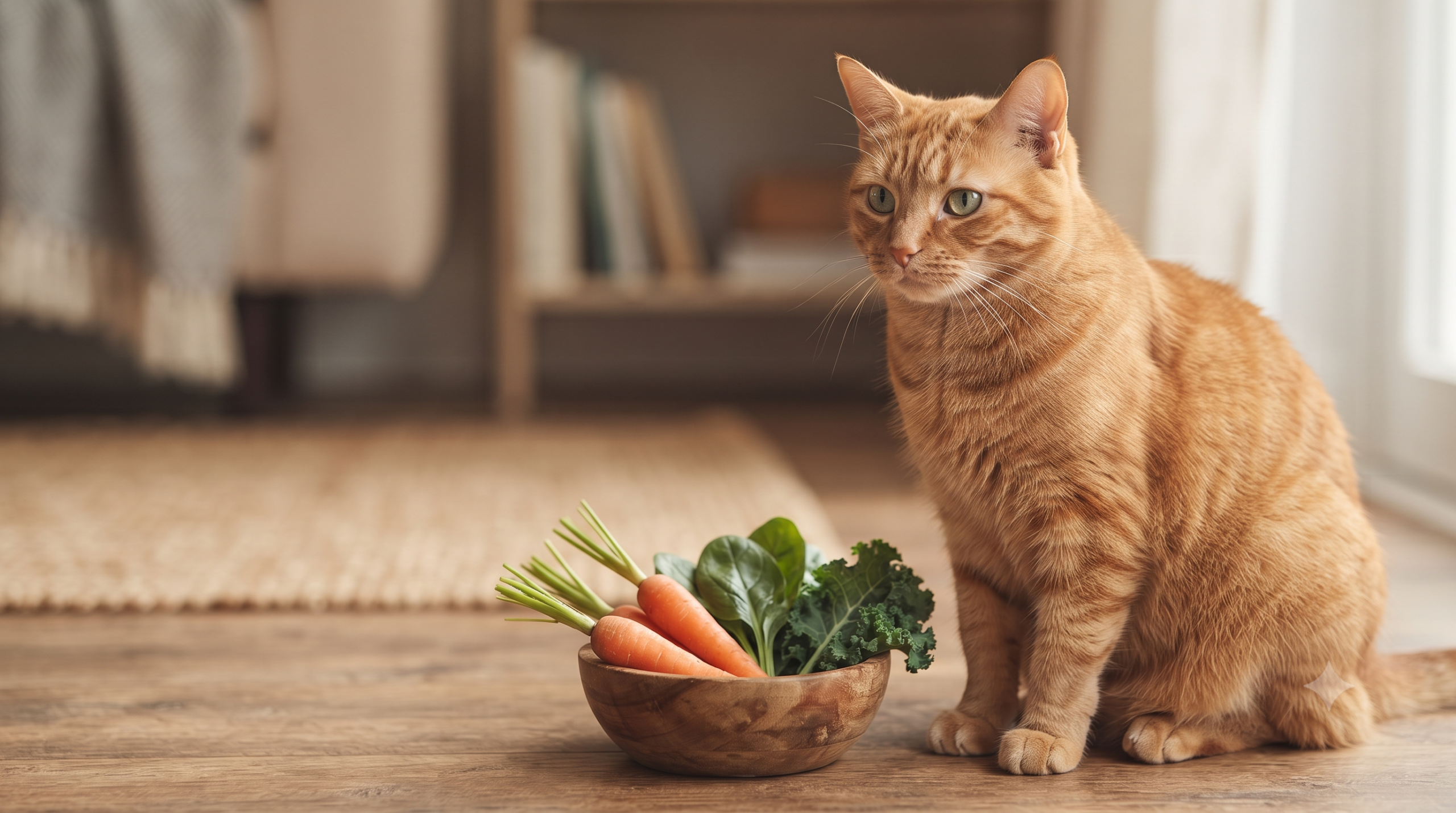
By Saloni Nagar, Medically Reviewed by Dr. Jimisha Shah, B.V.Sc. & A.H., PGDAW
Cats have a limited ability to convert beta-carotene into vitamin A. Unlike many other mammals, cats cannot rely on this conversion to meet their vitamin A needs. They require a dietary source of preformed vitamin A, which their bodies can use directly.
Beta-carotene is a plant pigment found in foods such as carrots and leafy greens. The body can normally convert this pigment into retinol, a usable form of vitamin A, through a process involving specific enzymes. Research in domestic cats has shown that some conversion can occur, but the amount appears insufficient to meet their full vitamin A requirements.
Many cat owners discover this topic after searching can cats eat carrots or wondering why cats can’t have vegetables like other pets. The question may also arise after noticing that a cat’s coat has lost its usual shine over the past few weeks or reading conflicting advice online about feeding vegetables to cats.
These observations can raise reasonable questions about feline nutrition, but they do not automatically indicate a vitamin A deficiency. Changes in coat condition, eye appearance, or energy levels can have several possible causes, and no single visible sign can confirm a nutritional deficiency.
In simple terms, cats have evolved with nutritional requirements that differ from those of many other companion animals. Their limited ability to obtain vitamin A from plant-based beta-carotene is one example of this specialization and helps explain why they depend on specific nutrients in their diet as obligate carnivores.
This article focuses specifically on the biology behind beta-carotene conversion in cats. It explores the enzymes involved, the tissues where nutrient processing takes place, how feline metabolism differs from that of other animals, and what research tells us about this biological limitation. It does not cover what to feed your cat instead, as that topic is addressed in a separate guide.
Below, we will examine physical signs that may occur with vitamin A deficiency while explaining why these signs are not specific to this condition. We will also look at the scientific evidence behind the conversion pathway and how a veterinarian can assess whether a cat’s symptoms and dietary history warrant further investigation.
Signs of Vitamin A Deficiency in Cats
Before exploring the biology behind cats’ limited ability to convert beta-carotene into vitamin A, it helps to understand what a nutritional problem might look like. Vitamin A supports normal skin and epithelial tissues, among other functions, and a deficiency can affect more than one part of the body.
However, the signs discussed below are not exclusive to vitamin A deficiency. Changes in coat condition, skin texture, or grooming habits can have several causes. Think of this section as background information, not a checklist for diagnosing your cat.
What Causes a Dull Coat in Cats?
A cat’s coat that looks dull on a vegetable-heavy diet may raise questions about nutritional adequacy. Owners may describe a coat that lacks its usual shine despite feeding foods that appear healthy or carefully selected.
Vitamin A plays an important role in maintaining healthy skin and supporting normal cell growth and differentiation. A deficiency can contribute to skin changes and a poor hair coat, but these signs alone cannot confirm that vitamin A levels are low.
You might notice that your cat’s coat has lost its usual shine over the past few weeks. Perhaps the fur feels coarser than it used to under your hand, or you find yourself wondering whether your cat has always groomed this much. Dry, flaky skin may also prompt questions about diet.
These observations deserve attention, but they need to be interpreted in context. Coat condition reflects several aspects of health and nutrition, not just one vitamin. Grooming habits, parasites, skin disease, other nutritional imbalances, and underlying health problems can all contribute to changes in the skin or fur.
This is especially important when a cat eats a homemade diet or receives a large share of its food from vegetables and other ingredients that have not been formulated to meet feline nutritional requirements. Cats need an appropriate dietary source of preformed vitamin A because their ability to convert plant-based beta-carotene into usable vitamin A is limited. Nevertheless, a vegetable-heavy diet does not automatically mean a cat has developed a deficiency, and a dull coat does not establish that beta-carotene conversion is the cause.
If you search for cat coat dull no shine, you will find that this observation can have many possible explanations. Rather than assuming a particular nutrient is responsible, pay attention to when the change began, whether it is getting worse, and whether other signs have appeared. A veterinarian can assess these observations alongside your cat’s diet and medical history to determine whether further investigation is appropriate.
Coat and Skin Observation Checklist
Use this quick checklist to record visible changes you can observe right now. It can help you describe the pattern clearly to your veterinarian.
| ✓ | What to Check | What to Look For |
|---|---|---|
| ☐ | Coat color | Notice whether the coat looks lighter, darker, reddish, brownish, yellowish, or otherwise different from its usual color. |
| ☐ | Coat texture | Check for unusual dryness, greasiness, brittleness, roughness, or matting. |
| ☐ | Hair density | Look for areas where the coat appears thinner or less full than usual. |
| ☐ | Bald or sparse patches | Check for clearly visible areas of missing, broken, or shortened hair. |
| ☐ | Skin color | Gently part the fur and look for unusual redness, darkening, paleness, or other color changes. |
| ☐ | Skin surface | Look for flakes, dandruff, crusts, scabs, sores, or other visible changes. |
| ☐ | Skin irritation | Check for swelling, redness, inflammation, or areas that appear uncomfortable. |
| ☐ | Scratching or licking | Watch for repeated scratching, licking, biting, or rubbing of a particular area. |
| ☐ | Grooming pattern | Notice whether your cat is grooming normally or leaving certain areas poorly groomed. |
| ☐ | Coat distribution | Check whether the change is even across the body or concentrated in specific patches. |
Tip: Take clear photographs of any noticeable change under similar lighting. Compare them over time rather than relying on memory. A change accompanied by hair loss, significant itching, skin lesions, appetite changes, weight loss, or reduced energy is worth discussing with your veterinarian.
What Eye Changes Should Cat Owners Notice?
Cloudy eyes or changes in a cat’s vision can be concerning, particularly when they appear unexpectedly or cannot easily be explained by age. Some owners notice a change in the eyes during evening light, while others find that their cat seems less confident moving around in dim rooms or starts bumping into familiar objects.
Vitamin A is essential for normal vision, including the processes that help the eyes function in low light. Severe vitamin A deficiency can affect eye health and vision. However, cloudy eyes and difficulty navigating at night are not specific to this deficiency and should not be used to identify it at home.
A search such as cat eyes cloudy not old may reflect a reasonable concern, but age is only one possible factor. Eye cloudiness and vision changes can have several causes, including eye disease, injury, and other health problems. A cat’s eyes seeming different after eating carrots regularly also does not establish that the carrots or their beta-carotene content caused the change.
If you notice cloudiness, a sudden change in vision, squinting, redness, or other unusual eye symptoms, contact a veterinarian promptly. Sudden vision changes and painful or visibly abnormal eyes warrant urgent veterinary assessment. Identifying the cause matters more than assuming that a nutritional deficiency is responsible.
Eye and Vision Observation Checklist
Use this checklist to note specific changes you can observe at home. It is not a diagnostic test, but these observations can give your veterinarian useful information about your cat’s eyes and vision.
| ✓ | What to Check | What to Look For |
|---|---|---|
| ☐ | Eye appearance | Look for unusual cloudiness, a visible film, discoloration, or a change in the normal appearance of either eye. |
| ☐ | Pupil size | Check whether the pupils appear noticeably different in size from each other. |
| ☐ | Pupil response | Observe whether the pupils appear to change size normally when moving between brighter and dimmer areas. |
| ☐ | Eye discharge | Note watery, thick, cloudy, yellowish, or excessive discharge around the eyes. |
| ☐ | Squinting | Watch for repeated squinting, keeping one eye partly closed, or avoiding opening an eye fully. |
| ☐ | Rubbing the eyes | Check whether your cat repeatedly paws at, rubs, or scratches around the eyes. |
| ☐ | Navigation in dim light | Notice whether your cat hesitates, bumps into objects, misjudges jumps, or moves unusually cautiously in familiar low-light areas. |
| ☐ | Navigation in familiar spaces | Watch for bumping into furniture, missing familiar jumps, or hesitating on routes your cat normally navigates confidently. |
| ☐ | Tracking movement | Observe whether your cat follows a moving toy, hand, or object with its eyes as it normally does. |
| ☐ | Jumping and climbing | Look for unusual hesitation or misjudgment when jumping onto familiar surfaces. |
| ☐ | Light sensitivity | Notice whether your cat suddenly avoids bright areas, keeps the eyes partly closed, or appears uncomfortable in normal lighting. |
| ☐ | Changes between the two eyes | Compare both eyes for differences in appearance, pupil size, discharge, or behavior. |
Important: Do not shine a bright light directly into your cat’s eyes as a home vision test. If you notice sudden vision changes, a suddenly enlarged or very different pupil, severe squinting, significant eye pain, an injured eye, or sudden difficulty navigating, contact a veterinarian promptly.
Why Do Kittens Lose Whiskers?
Finding a few whiskers on the floor or noticing that a kitten’s coat feels rougher than expected can prompt questions about growth and nutrition. Some owners compare a kitten’s coat with that of a littermate or wonder whether thinning whiskers are a normal part of development.
Kittens have higher nutrient requirements relative to their size during growth, and their diet needs to provide the nutrients required for healthy development. However, kitten whiskers falling out or a kitten’s fur feeling rough instead of soft does not, by itself, indicate vitamin A deficiency.
Whiskers naturally shed and regrow, so finding an occasional whisker is not necessarily a cause for concern. More noticeable whisker loss, broken whiskers, irritated skin, bald patches, or a persistently rough coat deserves closer attention, particularly if other changes occur at the same time.
A poor-quality coat can sometimes accompany nutritional problems, but skin conditions, parasites, grooming issues, and other illnesses may produce similar changes. Vitamin A deficiency is one possible nutritional concern, not a conclusion that can be drawn from whisker loss alone.
If a kitten’s coat changes persist or the kitten is not growing as expected, a veterinarian can assess its overall health, feeding history, and diet. This is more useful than trying to identify a specific vitamin deficiency from appearance alone.
Kitten vs. Adult Sign Comparison
A cat’s coat and whiskers naturally change as it grows, so a difference in appearance does not automatically indicate a health problem. The table below focuses on normal, observable differences across life stages while recognizing that individual cats develop at different rates.
| Observable Feature | Kitten | Young Adult | Adult |
|---|---|---|---|
| Coat appearance | Often softer, finer, and sometimes slightly different in color or texture from the eventual adult coat | Adult coat becomes more established, with color and texture becoming more consistent | Coat generally reflects the cat’s established adult pigmentation and texture |
| Coat density | May appear less dense or have a fluffy, juvenile appearance depending on breed | Usually becomes fuller and more defined as the adult coat develops | Generally stable, although seasonal shedding can change apparent density |
| Whiskers | Growing and developing; may appear shorter or finer relative to the head | Usually reach their mature length and thickness | Generally mature and consistent, with occasional natural breakage or shedding |
| Color changes during growth | Coat may gradually change as kitten hair is replaced by adult hair | Remaining juvenile color changes may become less noticeable | New color changes are less likely to be explained simply by maturation and are worth documenting if they are unusual |
Important: There is no single age at which every cat’s coat or whiskers become fully mature. Breed, genetics, season, and individual development can all affect appearance. A sudden change, patchy hair loss, skin abnormality, or damaged/broken whiskers should be discussed with a veterinarian rather than automatically attributed to age.
What Are the Signs of Vitamin A Deficiency?
People searching for cat vitamin A deficiency symptoms often want to know whether several changes occurring together could point to a nutritional problem. Vitamin A deficiency can affect multiple body systems, including the eyes and the tissues that line and protect parts of the body. However, the signs vary, and many overlap with other conditions.
Possible findings associated with vitamin A deficiency in cats include eye-surface changes, inflammation affecting the eyes, and abnormalities in epithelial tissues. Poor coat condition may also occur in nutritional disorders, but it is not specific to vitamin A deficiency. The significance of these findings depends on the cat’s overall health, dietary history, and veterinary examination.
You may notice that your cat seems slightly different in its coat or energy while otherwise behaving normally. That observation is worth recording, but it does not establish a deficiency. Comparing notes with other cat owners can provide reassurance or raise questions, yet another cat’s experience cannot confirm the cause of your cat’s symptoms.
Tracking when a change began, whether it is progressing, and whether other symptoms have appeared can help a veterinarian assess the situation. Mild, isolated changes don’t always indicate a serious problem, but persistent or unexplained changes shouldn’t be dismissed just because a cat otherwise appears well.
The important distinction is between noticing a possible sign and identifying its cause. Symptoms of vitamin A deficiency in cats overlap with other conditions, and a veterinarian may need to consider the diet, clinical findings, and appropriate tests together. Do not start vitamin A supplements based on symptoms alone, because excessive vitamin A can also harm cats.
A vegetarian or vegan diet that has not been specifically formulated to meet feline nutritional requirements is not appropriate for cats. Cats need a nutritionally complete diet that supplies the nutrients essential to their health, including an appropriate source of vitamin A. The biological reasons behind this requirement and cats’ limited ability to use plant-based beta-carotene are explained in the next section.
What Veterinary Evidence Says About Coat & Skin Changes
What the veterinary evidence says: A cat’s coat and skin can be influenced by nutrition, hormones, genetics, season, environment, and disease. Veterinary references also note that nutritional problems can contribute to changes such as a dull or unkempt coat, but these signs are nonspecific and should not be used alone to diagnose a nutrient deficiency. Merck Veterinary Manual
Why this matters: Visible signs such as hair loss, itching, scaling, skin-color changes, or an altered coat can have many causes. Veterinary assessment therefore considers the history, physical examination, diet, progression of the signs, and appropriate diagnostic testing rather than attributing the pattern to nutrition alone. Merck Veterinary Manual
Source type: Merck Veterinary Manual, veterinary dermatology references, and feline nutrition guidance.
Cats Have a Limited Ability to Convert Beta-Carotene
Cats process certain nutrients differently from many other mammals. One important example is their limited ability to convert beta-carotene, a pigment found in plants, into vitamin A. This difference is not simply a digestive weakness or a temporary problem. It reflects a distinct feature of feline nutrient metabolism.
The key question is how efficiently cats can carry out this conversion. Research has shown that domestic cats can convert some beta-carotene into retinol, a form of vitamin A the body can use. However, this conversion appears insufficient to meet their vitamin A requirements without a dietary source of preformed vitamin A.
The following sections explain the enzyme involved in this process, what researchers have found in cats, how their metabolism differs from that of dogs, and what remains uncertain about the underlying genetics. They also explain why absorbing beta-carotene is not the same as obtaining enough vitamin A from it.
What Enzyme Helps Convert Beta-Carotene?
In many mammals, beta-carotene can be broken down into retinal, which can then be converted into retinol. An enzyme called beta-carotene-15,15′-dioxygenase 1, commonly known as BCO1, plays an important role in this process.
BCO1 carries out a type of chemical reaction called oxidative cleavage. In simple terms, it splits a beta-carotene molecule at a specific location to produce retinal, a compound involved in vitamin A metabolism.
Cats have traditionally been described as unable to convert beta-carotene into vitamin A. This understanding came from earlier studies that detected little or no evidence of conversion under the conditions tested. However, later research refined that conclusion.
A 2012 study by Green and colleagues used labelled beta-carotene to track what happened after domestic cats consumed it. The researchers detected labelled retinol derived from the beta-carotene dose. This demonstrated that some conversion can occur in cats, although the study did not calculate a reliable overall conversion efficiency. The authors concluded that the pathway was likely insufficient to meet cats’ vitamin A requirements without preformed vitamin A in their diet.
Therefore, it is more accurate to describe feline beta-carotene conversion as limited rather than completely absent. The evidence establishes the metabolic outcome, but it does not, by itself, prove that BCO1 is entirely missing or inactive in every relevant tissue.
This is a biological difference, not something that can be corrected simply by changing meal timing. Its practical nutritional significance is that cats need an appropriate dietary source of preformed vitamin A.
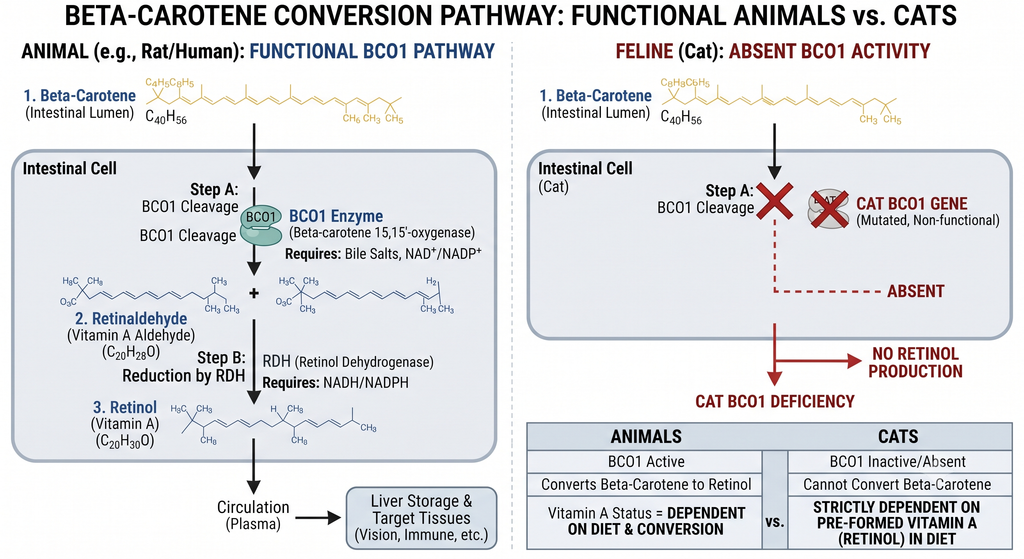
What This diagram says
1. The Process in Functional Animals (Left Side)
In animals that can process beta-carotene, a two-step conversion happens inside the intestinal cells:
- Step A: An enzyme called BCO1 cleaves the large beta-carotene molecule in half, creating two molecules of Retinaldehyde (Vitamin A aldehyde).
- Step B: Another enzyme converts Retinaldehyde into Retinol (Active Vitamin A), which is then stored in the liver or used throughout the body.
2. The Defect in Cats (Right Side)
Cats possess intestinal cells and beta-carotene, but they have a critical genetic defect.
- The Blockage: The gene responsible for creating the BCO1 enzyme is mutated and non-functional in cats.
- The Result: Because they lack the BCO1 enzyme, they cannot perform Step A of the conversion process. No Retinaldehyde is created, and consequently, no Retinol is produced.
3. The Summary Table
The bottom table highlights the fundamental difference:
- ANIMALS are converters: Their Vitamin A status depends on their ability to convert beta-carotene from their diet.
- CATS are strict dependents: They cannot perform the conversion and therefore are strictly dependent on eating pre-formed Vitamin A (like retinol from meat) in their diet to survive.
Where Does Beta-Carotene Conversion Occur?
In mammals that convert beta-carotene into vitamin A, the process can occur in tissues including the intestinal lining and the liver. The intestinal mucosa is the layer of cells lining the inside of the gut, while the liver performs several important functions in nutrient processing and storage.
These tissues are relevant because the body must do more than absorb a plant pigment to obtain vitamin A from it. The pigment must also undergo the chemical reactions needed to produce usable vitamin A compounds.
Research in cats has demonstrated that beta-carotene can be absorbed, while the amount converted into retinol appears limited. However, findings from whole-animal feeding studies do not establish that the relevant enzyme is completely absent from both the feline intestine and liver.
For that reason, statements that a cat’s intestine and liver cannot process plant-derived beta-carotene at all would be too absolute. The available evidence supports limited conversion in cats overall, but the exact contribution of individual tissues requires more specific evidence.
This distinction also helps explain why the issue is not the same as a general digestive disorder. A cat may absorb beta-carotene without converting enough of it into vitamin A to meet its nutritional needs.
Tissue Activity Reference Chart
Enzyme activity can differ substantially between tissues and species. The table below is a high-level reference, not a quantitative laboratory comparison; “high” and “moderate” describe relative biological activity rather than a specific measured value.
| Tissue Type | Enzyme Activity Level |
|---|---|
| Cat — intestinal mucosa | High — active site of nutrient digestion, absorption, and metabolic processing |
| Cat — liver | High — major site of nutrient metabolism, synthesis, detoxification, and biochemical conversion |
| Dog — intestinal mucosa | High — substantial digestive and nutrient-absorption activity |
| Dog — liver | High — major organ for nutrient metabolism and biochemical processing |
| Human — intestinal mucosa | High — extensive digestive, absorptive, and nutrient-processing activity |
Important: “Enzyme activity” is enzyme-specific. A tissue cannot accurately be described as simply having “more enzymes” overall. If this table is being used to explain a particular nutrient or pathway, the relevant enzyme should be identified and compared using species-specific research rather than a generalized activity label.
Can Cats and Dogs Convert Beta-Carotene?
Cats and dogs have different nutritional requirements, even though they share many aspects of mammalian physiology. Their ability to obtain vitamin A from plant-based beta-carotene is one area where the evidence deserves careful comparison.
Earlier research found little or no detectable conversion in cats under the conditions studied. In contrast, the 2012 study by Green and colleagues detected the conversion of labelled beta-carotene into retinol in domestic cats. The result showed that the pathway is not completely absent, even though its contribution to vitamin A nutrition appears limited.
Dogs have also been studied for their vitamin A and carotenoid metabolism. However, a broad statement that dogs always convert carrots efficiently while cats cannot convert them at all oversimplifies the evidence. Conversion can depend on biological factors, and the results of studies conducted in one species should not automatically be applied to another.
The dietary distinction is more important than a simple comparison of whether each animal can process a particular vegetable. Cats are obligate carnivores, with nutritional requirements shaped by their evolutionary history as meat-eaters. Dogs have greater dietary flexibility, but they still require an appropriately balanced diet.
When comparing cats vs. dogs and vitamin A, the key point is that their nutrient requirements and metabolic capacities are not interchangeable. Cats need an adequate supply of preformed vitamin A in their diet rather than relying on plant-based beta-carotene to meet their requirements.
Cats vs. Dogs Enzyme Function Comparison
Cats and dogs differ in several aspects of nutrient metabolism because their evolutionary diets have shaped different enzyme pathways and nutritional requirements. The table below focuses on well-established dietary adaptations, rather than implying that one species simply has more enzymes than the other.
| Species | Enzyme Status | Dietary Classification |
|---|---|---|
| Cat — carbohydrate metabolism | Reduced capacity for certain carbohydrate-processing pathways compared with omnivorous species; cats have limited ability to regulate some glucose-producing pathways through diet | Obligate carnivore |
| Cat — amino-acid metabolism | High activity of pathways used to continually metabolize dietary protein, including enzymes involved in amino-acid catabolism | Obligate carnivore |
| Cat — vitamin A metabolism | Limited ability to convert beta-carotene into usable vitamin A compared with many omnivores | Obligate carnivore |
| Dog — carbohydrate metabolism | Greater capacity for carbohydrate digestion and glucose handling than cats, including adaptation to dietary starch | Omnivorous / facultative carnivore |
| Dog — amino-acid metabolism | Can metabolize dietary protein effectively but has greater metabolic flexibility because nutrients can be obtained from a broader diet | Omnivorous / facultative carnivore |
| Dog — vitamin A metabolism | Has greater ability to use plant-derived carotenoid precursors than cats | Omnivorous / facultative carnivore |
Key takeaway: Cats and dogs should not be treated as nutritionally interchangeable. Cats have retained several metabolic adaptations associated with a meat-based diet, while dogs have greater flexibility in processing nutrients from both animal and plant sources.
What Do Scientists Know About the BCO1 Gene?
The genetic explanation for cats’ limited beta-carotene conversion needs to be treated separately from the evidence that the conversion itself is limited.
A pseudogene is a DNA sequence that resembles a functional gene but has lost the ability to produce a normally functioning product. This can happen when genetic changes disrupt a gene over evolutionary time. The process is known as pseudogenization.
It is tempting to explain feline beta-carotene metabolism by saying that the BCO1 gene is present but inactive. However, that specific claim requires direct genetic or molecular evidence. Limited conversion in a feeding study does not, on its own, establish whether a gene is absent, altered, weakly expressed, or producing an enzyme with reduced activity.
The 2012 study demonstrated that cats could convert some labelled beta-carotene into retinol. It did not establish a complete genetic explanation for the pathway’s limited efficiency. Likewise, the earlier finding of little or no detectable conversion does not prove that the gene is a pseudogene.
For this reason, it is important to distinguish the general concept of pseudogenization from the specific question of what happens to BCO1 in domestic cats. Unless a suitable primary genetic study directly confirms the proposed mechanism, the claim that the feline BCO1 gene is definitively a pseudogene should not be presented as an established fact.
What the available feeding research does support is the practical conclusion: cats cannot rely on beta-carotene conversion to meet their vitamin A needs.
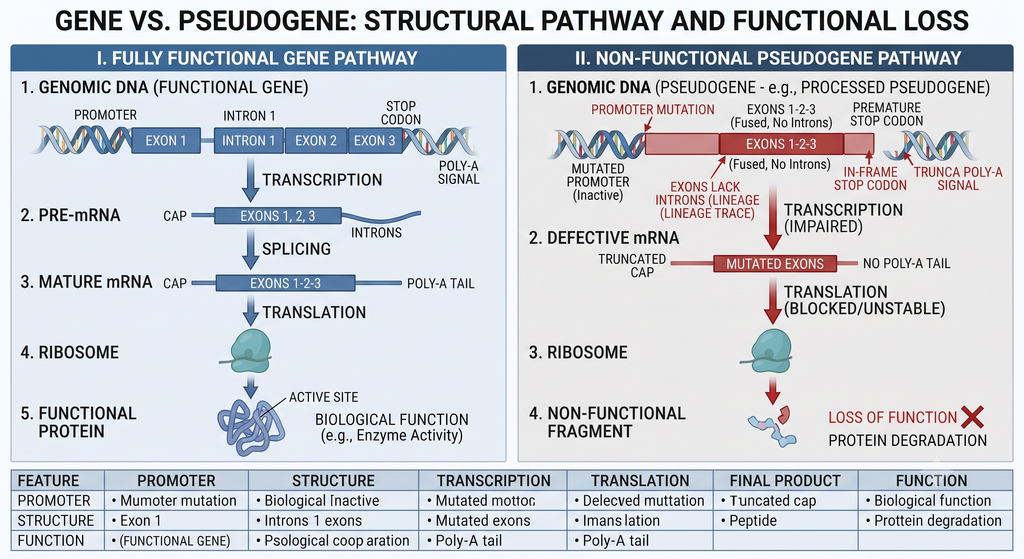
This diagram illustrates the critical differences between a functional gene and a pseudogene at the molecular level, showing exactly why the pseudogene is “broken” even though the DNA sequence still exists.
It is divided into two main columns:
1. Functional Gene Pathway (Left Column)
This shows the normal, healthy process (the “Central Dogma of Biology”) that creates a working protein:
- Genomic DNA (Functional Gene): The DNA contains all the correct instructions, including a working Promoter (the “on switch”), distinct Exons (coding regions), and Introns (non-coding regions that are removed).
- Pre-mRNA: The entire gene (exons and introns) is copied into a raw RNA strand.
- Mature mRNA: The introns are carefully spliced out, leaving only the protein-coding exons.
- Ribosome: The mature mRNA travels to the ribosome, the cell’s protein factory.
- Functional Protein: The ribosome reads the code and builds a folded protein with an Active Site, which performs a specific Biological Function (like enzyme activity).
2. Non-Functional Pseudogene Pathway (Right Column)
This shows how a processed pseudogene (a common type formed by reverse transcription of an mRNA) has lost the ability to make a functional protein:
- Genomic DNA (Pseudogene): This DNA looks like a gene, but it is critically flawed.
- Mutated Promoter: The “on switch” is broken, making it difficult or impossible to start the process.
- No Introns: Because it originated from an mRNA template, it lacks all the original introns. This is a key “lineage trace.”
- Premature Stop Codons: The code contains “stop” signals much earlier than it should, which will truncate the protein.
- Defective mRNA: Because the promoter is mutated, transcription is impaired. The resulting mRNA is defective: it’s truncated (shorter than normal) and lacks a poly-A tail.
- Ribosome: The ribosome tries to read this defective code.
- Non-Functional Fragment: The process produces only a small, malformed, unstable peptide fragment. This results in a complete Loss of Function, and the fragment is quickly marked for Protein Degradation.
Summary Table
The table at the bottom provides a quick comparison of key features:
| Feature | Functional Gene | Pseudogene |
| Promoter | Biological Active | Mutated (Inactive) |
| Structure | Introns and Exons | Only Exons (fused) |
| Transcription | Normal | Impaired (or absent) |
| Translation | Normal | Blocked/Unstable |
| Final Product | Functional Protein | Peptide (Non-functional fragment) |
| Function | Biological Function | Protein Degradation |
In short, a pseudogene is a “molecular fossil”—it carries the sequence of a once-useful gene but is now a silent, non-functional remnant of evolution.
What Studies Say About Beta-Carotene Conversion?
Scientists have investigated feline beta-carotene metabolism by feeding cats beta-carotene and measuring the compounds that appeared in their blood and other samples. These studies help distinguish the absorption of beta-carotene from its conversion into vitamin A.
A 2002 study by Schweigert and colleagues examined beta-carotene absorption and vitamin A-related compounds in domestic cats. The researchers detected beta-carotene after administration but found no evidence of substantial conversion using the methods and conditions of that study. Their findings supported the view that cats rely on preformed vitamin A in their diet.
A later study, published in 2012 by Green and colleagues, used stable-isotope-labelled beta-carotene. This approach allowed the researchers to distinguish retinol derived from the administered beta-carotene from retinol already present in the body.
The researchers detected labelled retinol in the cats’ blood after the dose. This provided direct evidence that some conversion had occurred. However, the study did not calculate an overall conversion efficiency, and its findings did not establish that beta-carotene could meet the cats’ full vitamin A requirements.
These studies should not be treated as if they reached identical conclusions. The 2002 study found no detectable or substantial conversion under its experimental conditions, while the 2012 study detected a small conversion signal using a different method. The later findings refined the earlier understanding rather than demonstrating that cats can meet their vitamin A needs from plant pigments.
The distinction matters when interpreting scientific literature. A result described as undetectable in one experiment does not always prove that a biological process never occurs. The detection method, study design, sample size, and experimental conditions all affect what researchers can conclude.
For readers, the practical takeaway remains straightforward: the available research does not support relying on beta-carotene as a sufficient source of vitamin A for cats.
Research Methodology Note
How researchers assess nutrient deficiency: Nutrient deficiencies in cats are generally established through controlled feeding studies, in which animals receive diets with defined nutrient levels for a specified period. Researchers may then evaluate clinical signs, growth or body condition, blood concentrations, tissue concentrations, enzyme activity, and other physiological markers. In some studies, tissue samples are collected to determine whether a dietary deficiency has altered nutrient stores or biological function.
Importantly, a change in a blood value does not automatically prove a dietary deficiency. Researchers interpret laboratory findings alongside the diet composition, duration of feeding, clinical findings, and appropriate tissue or functional measurements.
Source type: Controlled animal feeding studies, veterinary nutrition research, blood/tissue biochemical analysis, and peer-reviewed nutrient-deficiency studies.
Research citation: For the specific deficiency discussed in this section, cite the original peer-reviewed feeding study that established the deficiency rather than using a general nutrition webpage as the primary evidence.
What Happens to Beta-Carotene in Cats?
Beta-carotene does not have to be converted into vitamin A to be absorbed. These are separate biological processes, and this distinction helps explain the findings from feline nutrition studies.
After a cat consumes beta-carotene, some of the pigment can be absorbed into the body. In mammals that convert it efficiently, BCO1 can split beta-carotene to produce retinal. Retinal can then be reduced to retinol or converted into other compounds involved in vitamin A functions.
Retinol, retinal, and retinoic acid are related but distinct compounds. Retinol is a major transport and storage form of vitamin A, retinal has an important role in vision, and retinoic acid helps regulate gene activity and cell development. They should not be treated as interchangeable forms with identical functions.
In cats, the conversion of beta-carotene into retinol is limited. This means that absorbing the pigment does not guarantee that the cat obtains enough vitamin A from it. Researchers have detected beta-carotene in cats and have also demonstrated some conversion into retinol, but the conversion appears inadequate to meet their full vitamin A requirements.
It would therefore be inaccurate to say that every unconverted beta-carotene molecule simply passes through the digestive system unchanged. Absorption, metabolism, distribution, and elimination are separate processes, and the fate of the unconverted portion is not fully explained by the conversion studies alone.
The important nutritional point is that plant-derived beta-carotene cannot be relied upon to supply a cat’s full vitamin A requirement. Cats need an appropriate source of preformed vitamin A in their diet. The next section explores how this metabolic difference fits into the broader biology of obligate carnivores.
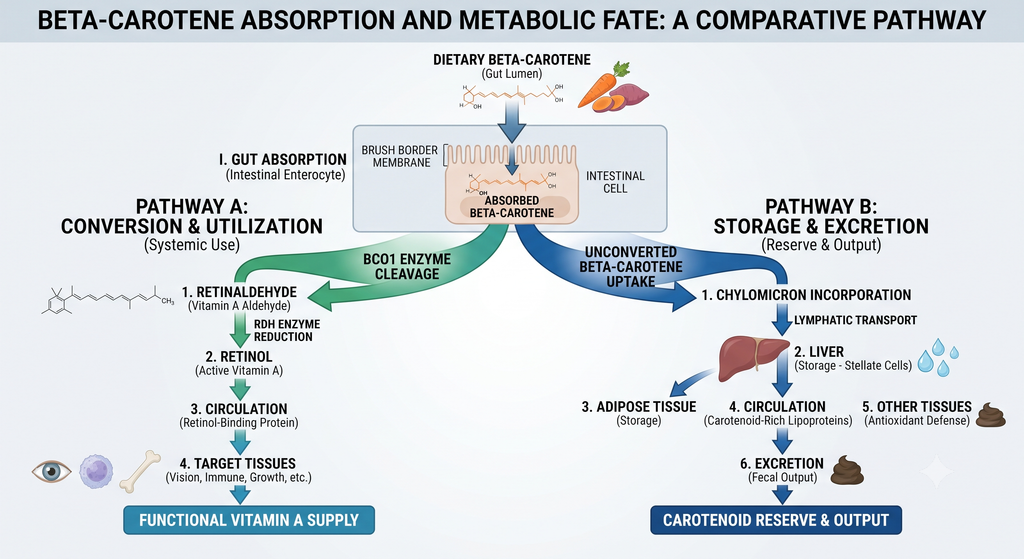
This diagram illustrates the two primary metabolic paths that beta-carotene (a provitamin A carotenoid found in foods like carrots and sweet potatoes) takes after it is absorbed by the body.
Here is the breakdown:
1. The Common Entry Point
At the top, Dietary Beta-Carotene enters the gut lumen and is absorbed by the intestinal cells (enterocytes).
2. The Critical Divergence
Once inside the intestinal cell, the absorbed beta-carotene splits into two distinct pathways based on whether the body needs it for Vitamin A.
Pathway A: Conversion & Utilization (The “Active Use” Path)
This pathway is for when your body needs Vitamin A.
- BCO1 Enzyme Cleavage: An enzyme called BCO1 splits the beta-carotene molecule in half, creating Retinaldehyde (Vitamin A aldehyde).
- RDH Enzyme Reduction: Another enzyme (RDH) converts the retinaldehyde into Retinol (Active Vitamin A).
- Circulation: The active retinol is bound to a special protein and released into the bloodstream.
- Target Tissues: It is delivered to organs that need it, such as the eyes (for vision), the immune system, and for growth.
Result: A Functional Vitamin A Supply.
Pathway B: Storage & Excretion (The “Reserve” Path)
This pathway is for beta-carotene that is not converted into Vitamin A.
- Unconverted Beta-Carotene Uptake: The beta-carotene remains intact and is incorporated into structures called chylomicrons.
- Lymphatic Transport & Liver Storage: These chylomicrons travel through the lymphatic system and are primarily stored in the liver (in stellate cells).
- Other Storage & Use: From the liver, it can be transported to adipose tissue (body fat) for storage, or circulate in the blood to other tissues where it can act as an antioxidant.
- Excretion: Any excess that is not stored or used is eventually excreted as waste (fecal output).
Result: A Carotenoid Reserve & Output.
Summary
In short, the diagram shows how your gut handles beta-carotene: it either transforms it immediately into active Vitamin A to be used by the body, or it stores it as-is (as a carotenoid) in the liver and other tissues for future needs or antioxidant protection.
Cats Process Beta-Carotene Differently From Other Animals
Cats differ from many other mammals in how they obtain vitamin A. Some species can convert beta-carotene, a pigment found in plants, into retinol, a form of vitamin A. Cats can perform some of this conversion too, but research suggests that the process is not efficient enough to meet their vitamin A requirements on its own.
This difference helps explain why cats need preformed vitamin A in their diet rather than relying on carrots or other plant foods as their main source. Looking at other species also helps put feline nutrition into perspective.
How Other Animals Use Beta-Carotene?
Beta-carotene is a provitamin A carotenoid. This means the body can use it as a starting material to produce vitamin A. In many mammals, enzymes help split beta-carotene into compounds that can be converted into retinol.
However, the ability to use beta-carotene varies between species. It is not accurate to assume that every herbivore or omnivore converts it equally well, or that an animal’s broad dietary category alone tells us how efficiently the process works.
Cats are an important example of this variation. A study using labelled beta-carotene found that domestic cats produced labelled retinol after receiving an oral dose. The researchers did not calculate an exact conversion efficiency, but concluded that the conversion was likely inadequate to meet cats’ vitamin A requirements without preformed vitamin A in the diet.
Diet Type and Vitamin A Conversion Ability Table
Different species have different abilities to convert provitamin A carotenoids, such as beta-carotene, into biologically active vitamin A. These differences are important when comparing plant-based and animal-derived vitamin A sources.
| Diet Type | Conversion Ability | Primary Vitamin A Source |
|---|---|---|
| Herbivores | Generally high, although the ability varies considerably between species | Primarily provitamin A carotenoids from plants, with species-specific differences in conversion efficiency |
| Omnivores | Variable to moderate/high, depending on species | Combination of provitamin A carotenoids and preformed vitamin A from animal-derived foods |
| Carnivores — dogs | Able to convert carotenoids to vitamin A | Combination of dietary carotenoids and preformed vitamin A |
| Obligate carnivores — cats | Very limited/absent conversion of beta-carotene to biologically useful vitamin A | Primarily preformed vitamin A from animal-derived dietary sources |
Important: “Herbivore,” “omnivore,” and “carnivore” are broad dietary classifications, and conversion ability is species-specific. It should not be assumed that every herbivore or omnivore converts beta-carotene at the same efficiency.
For cats: This is one reason feline diets need to provide preformed vitamin A rather than relying on beta-carotene-rich plant ingredients to meet the cat’s vitamin A requirement.
Why Cats Need Nutrients From Animal Sources?
Cats are obligate carnivores, meaning their nutritional needs reflect adaptations to a meat-based diet. One important example is their requirement for preformed vitamin A, which is naturally present in animal tissues.
This helps answer a common question: why do cats need meat-based nutrients rather than relying on plants? For vitamin A, the key issue is not that cats cannot use any plant-derived compounds. It is that they cannot rely on beta-carotene conversion to supply all the vitamin A they need.
This distinction matters when cat owners read about the nutritional benefits of vegetables. Carrots contain beta-carotene, but they should not be treated as a substitute for the preformed vitamin A supplied by an appropriately formulated cat food.
Obligate carnivore physiology also does not mean every plant ingredient is automatically unsuitable for cats. The important consideration is whether the overall diet meets a cat’s nutritional requirements. A complete and balanced food formulated for the appropriate life stage is a more reliable foundation than trying to meet individual nutrient needs with selected vegetables.
The difference reflects feline nutritional biology, not a mistake made by a modern cat owner. Understanding it can help explain why a food that supplies useful nutrients to one species may not meet the same nutritional need in another.
Vet Conversation Guide: Diet History & Vitamin A
Cats have specific nutritional adaptations that affect how they obtain vitamin A. If you’re discussing diet, supplements, or a suspected nutritional problem with your veterinarian, these questions can help connect your cat’s actual diet history with those needs.
- Does my cat’s current food provide enough preformed vitamin A?
- Is the vitamin A in this food primarily from animal-derived ingredients, supplements, or both?
- Does my cat’s diet contain enough vitamin A for their current life stage?
- Could I be relying too much on beta-carotene or plant ingredients to provide vitamin A?
- If I feed a homemade diet, does the complete recipe provide an appropriate amount of preformed vitamin A?
- Could liver or another vitamin-A-rich ingredient be providing too much if I add it regularly?
- Are any supplements I give already providing vitamin A on top of the complete food?
- Would you recommend checking bloodwork or other tests if you’re concerned about my cat’s vitamin A status?
- If we change foods, what should I look for on the nutritional adequacy statement and nutrient information?
- How often should I review the diet as my cat’s age, weight, or health status changes?
Bring this information
Take your cat’s food packaging, ingredient list, Guaranteed Analysis, supplement labels, daily feeding amount, treats, toppers, and any homemade-food recipe to the appointment. This gives your veterinarian the full diet history needed to assess vitamin A intake rather than judging one ingredient in isolation.
How Cats Compare With Other Mammals?
The ability to convert beta-carotene varies among mammals, so it is better to compare documented species differences than to describe the feline pattern as universally rare or unique.
Comparative mammalian metabolism examines how processes such as nutrient absorption and conversion differ between species. These comparisons can help researchers understand why some animals depend more heavily on preformed vitamin A than others.
However, claims about how common a particular enzyme limitation is across mammals require evidence from multiple species. The available cat studies establish that conversion can occur in cats and that it is likely insufficient to meet their vitamin A requirements by itself. They do not, on their own, establish how rare this pattern is across all mammals.
Mammal Species Enzyme Presence Chart
For vitamin A metabolism, the important distinction is whether an animal can convert provitamin A carotenoids such as beta-carotene into active vitamin A. This ability varies among mammals, so broad dietary labels should not be treated as proof of a specific enzyme pathway.
| Species Group | Enzyme / Conversion Presence |
|---|---|
| Humans / primates | Present — can enzymatically convert provitamin A carotenoids to retinal and subsequently active vitamin A |
| Dogs / canids | Present — can convert beta-carotene to vitamin A, although conversion efficiency differs from humans |
| Rodents | Present — several rodent species possess carotenoid-cleaving pathways |
| Ruminants | Present — can convert dietary carotenoids to vitamin A, with efficiency varying among species |
| Horses / equids | Present — capable of carotenoid conversion, although species-specific metabolism affects how efficiently it occurs |
| Cats / felids | Absent or functionally insufficient for meaningful beta-carotene conversion — cats rely on preformed vitamin A in the diet |
Key point: The relevant pathway involves beta-carotene 15,15′-dioxygenase (BCO1), which cleaves beta-carotene to produce retinal. Cats are unusual among mammals because they lack the functional capacity to use beta-carotene as a meaningful source of vitamin A.
Important: “Enzyme present” does not necessarily mean that two species have the same conversion efficiency. Enzyme activity, regulation, diet, and tissue metabolism can differ substantially between species.
Do Other Carnivores Convert Beta-Carotene?
Cats are not the only carnivorous mammals in which beta-carotene conversion may be insufficient to meet vitamin A needs. Research in ferrets found that they can convert beta-carotene into vitamin A, but the conversion was inefficient: beta-carotene alone did not maintain liver vitamin A stores under the study conditions.
This is a useful comparison, but it does not mean cats and ferrets have identical metabolic pathways or the same conversion efficiency. Findings from one species should not automatically be applied to another.
Cats vs. Dogs vs. Other Mammals: Beta-Carotene and Vitamin A
| Species | What the evidence supports | Main nutritional implication |
|---|---|---|
| Cats | Some beta-carotene conversion occurs, but it is likely insufficient to meet vitamin A requirements on its own. | Cats need preformed vitamin A in their diet. |
| Ferrets | Research indicates that beta-carotene can be converted to vitamin A, but inefficiently. | Beta-carotene alone may not maintain adequate vitamin A stores. |
| Dogs | Dogs require dietary vitamin A, but claims about their conversion capacity should be supported by dog-specific evidence. | Do not assume that findings in cats apply to dogs, or vice versa. |
| Herbivores and other mammals | Conversion ability differs by species; broad labels such as “herbivore” do not establish conversion efficiency. | Species-specific evidence is needed for reliable comparisons. |
The central point is that cats cannot depend on plant beta-carotene to meet their vitamin A needs. Although some conversion can occur, preformed vitamin A remains essential in a nutritionally adequate feline diet. The next section looks more closely at what this means when considering carrots and other plant-based sources.
Cats Need a Reliable Source of Preformed Vitamin A
With the biology covered, we can apply it to a familiar question: can carrots or other vegetables provide the vitamin A cats need?
The key distinction is between preformed vitamin A and beta-carotene, a plant pigment that the body can convert into vitamin A. Cats can convert some beta-carotene, but research suggests this process is not sufficient to meet their vitamin A requirements on its own.
This section focuses on the biochemistry behind that difference. Food choices and what to feed cats instead are separate topics.
What Is Preformed Vitamin A?
Preformed vitamin A supplies vitamin A compounds without requiring the body to convert beta-carotene into vitamin A. It is naturally found in animal-derived ingredients and can also be included in appropriately formulated cat food.
Plant pigments called carotenoids work differently. Some, including beta-carotene, are known as provitamin A carotenoids because the body can use them as starting materials to produce vitamin A. This requires an additional conversion step.
This helps answer a common question: do cats need vitamin A from meat? Cats do require preformed vitamin A in their diet because they cannot rely on beta-carotene conversion to meet their needs. However, the important distinction is the form of vitamin A supplied, not whether every ingredient in the food comes from animal tissue.
When checking a cat-food label, seeing beta-carotene listed does not automatically mean the food is nutritionally inadequate. The relevant question is whether the food as a whole provides the required nutrients in appropriate amounts and forms.
Vitamin A Form Comparison Table
Vitamin A can occur as preformed vitamin A or as provitamin A carotenoids. This distinction is especially important in cats because their ability to convert beta-carotene into active vitamin A is very limited.
| Form | Source Type | Usability for Cats |
|---|---|---|
| Retinol | Preformed vitamin A; found naturally in animal tissues and some animal-derived foods | ✅ Directly usable — cats can use retinol without needing to convert it from a carotenoid |
| Retinyl esters | Preformed vitamin A; common storage form in animal tissues and some supplements | ✅ Usable after digestion and conversion to active vitamin A |
| Beta-carotene | Provitamin A carotenoid; abundant in many colorful plant foods | ❌ Not a meaningful vitamin A source for cats because cats have very limited functional conversion of beta-carotene |
| Other provitamin A carotenoids | Plant-derived carotenoids such as alpha-carotene and beta-cryptoxanthin | ❌ Not dependable sources of vitamin A for cats; feline conversion capacity is very limited |
| Vitamin A supplement | Manufactured preformed vitamin A, depending on the specific ingredient | ✅ Can provide usable vitamin A, but the amount must be appropriate because excessive vitamin A can also be harmful |
Key takeaway: For cats, preformed vitamin A is the dependable dietary source. The presence of beta-carotene or other carotenoids in a food should not be treated as equivalent to providing preformed vitamin A.
Safety note: More vitamin A is not necessarily better. Excessive long-term intake of preformed vitamin A can cause toxicity, so vitamin A supplements or large amounts of liver should not be added to a complete cat food without veterinary guidance.
Can Carrots Meet a Cat’s Vitamin A Needs?
Can cats get vitamin A from carrots? Carrots contain beta-carotene, but they should not be relied on to meet a cat’s vitamin A requirements. Although cats can convert some beta-carotene into retinol, this conversion appears too limited to supply all the vitamin A they need.
It is understandable to wonder whether carrots that are considered healthy for humans offer the same nutritional benefit to cats. The answer depends on the nutrient and the species. A food can contain a useful nutrient for humans without being a reliable source of that nutrient for cats.
This also helps clarify two different questions: can cats eat carrots, and can carrots provide the vitamin A cats need? These are not the same question. Whether a particular food is appropriate to offer in small amounts is separate from whether it can meet a nutritional requirement.
Beta-carotene should not automatically be described as bad for cats or completely useless to them. The more accurate point is that cats cannot depend on the conversion of beta-carotene from vegetables to meet their vitamin A needs.
The same distinction applies when people ask why cats cannot have vegetables. The issue is not that all vegetables are inherently unsuitable for cats. It is that vegetables containing beta-carotene cannot replace a reliable source of preformed vitamin A in a nutritionally adequate feline diet.
If you are reviewing a homemade or vegetable-inclusive diet, consider its overall nutritional completeness rather than judging it by one ingredient. A veterinarian can help assess whether the diet meets a cat’s nutritional requirements.
Ingredient Label Reading Checklist: Vitamin A Sources
Use this checklist when reviewing a cat-food label to understand where its vitamin A is coming from. The ingredient list alone cannot determine the total vitamin A supplied by the finished food, so use it together with the nutritional adequacy information.
- 1. Find the complete ingredient list — Start with the Ingredients panel rather than relying on front-of-package claims such as “natural” or “rich in vegetables.”
- 2. Look for preformed vitamin A sources — Check for ingredients such as liver, liver meal, fish liver oil, or other animal-derived vitamin A sources.
- 3. Look for added vitamin A — Search for terms such as vitamin A supplement, retinyl acetate, or retinyl palmitate. These indicate a preformed vitamin A source.
- 4. Identify plant carotenoid sources — Note ingredients such as carrots, sweet potatoes, pumpkin, spinach, kale, or other plant ingredients that can provide carotenoids such as beta-carotene.
- 5. Don’t count beta-carotene as equivalent to vitamin A for cats — A plant ingredient can contribute carotenoids without providing the cat with a dependable source of preformed vitamin A.
- 6. Check the nutritional adequacy statement — Confirm that the product is labeled complete and balanced for cats and for the appropriate life stage.
- 7. Check the Guaranteed Analysis or manufacturer nutrient information — If you need to assess the actual vitamin A content, look for the declared vitamin A level rather than estimating it from the ingredient list.
- 8. Check whether you’re looking at a complete food or a supplement/treat — A treat or topper may contain vitamin-rich ingredients but is not necessarily designed to meet all of a cat’s vitamin A requirements.
Quick takeaway
Don’t judge vitamin A adequacy by asking, “Does this food contain carrots or liver?” Instead ask, “Does the finished food provide an appropriate amount of preformed vitamin A for my cat’s life stage?”
Can Cats Absorb Beta-Carotene From Plants?
Absorption and conversion are two different steps. Absorption is the movement of a substance from the digestive tract into the body. Conversion is the process of changing that substance into another compound.
Research in domestic cats has shown that beta-carotene can be absorbed and that some of it can be converted into retinol. This means the limitation is not a complete inability to absorb beta-carotene.
However, evidence that cats absorb beta-carotene does not establish that their absorption is identical to that of dogs or other omnivores. Differences in absorption and metabolism need to be evaluated using appropriate comparative studies.
The main nutritional point remains the same: cats cannot rely on beta-carotene conversion alone to meet their vitamin A requirements. The next section explains how a veterinarian may investigate a suspected vitamin A deficiency and why symptoms or diet history alone cannot confirm one.
Vet Conversation Guide: Absorption vs. Conversion
Absorption and conversion are different steps in nutrition. Absorption asks whether a nutrient can enter the body from the digestive tract; conversion asks whether the body can transform one compound into another usable form. These questions can help you clarify which issue, if any, matters for your cat.
- Is my concern about nutrient absorption, or about the body’s ability to convert a nutrient into its active form?
- For vitamin A specifically, does my cat need preformed vitamin A from the diet, or can the ingredient I’m feeding provide a usable amount through conversion?
- Could a digestive or intestinal problem reduce my cat’s absorption of preformed vitamin A?
- Are there any medications, supplements, or dietary ingredients that could affect vitamin A absorption or metabolism?
- If my cat eats plant ingredients containing beta-carotene, should I count those toward its vitamin A intake?
- Would my cat’s current food provide enough preformed vitamin A even if carotenoid conversion is not contributing meaningfully?
- Would bloodwork or another test help determine whether my cat has a vitamin A status problem?
- Could liver or another vitamin-A-rich ingredient provide too much vitamin A if added to the current diet?
- If absorption is impaired, should we investigate the underlying digestive problem before changing the diet?
- Based on my cat’s current findings, would you recommend changing the food, supplementing vitamin A, or making no change?
Bring to the appointment
Take the complete food label, ingredient list, Guaranteed Analysis, supplement labels, daily feeding amounts, treats, toppers, and any recent bloodwork. This allows your veterinarian to distinguish between a problem with what the diet provides, what the gut absorbs, and what the body can convert or utilize.
How Vets Check for Vitamin A Deficiency
Understanding how cats process beta-carotene is one thing. Knowing whether vitamin A deficiency is relevant to your own cat is another.
A change in coat condition, vision, or general health does not automatically mean a cat has a nutritional deficiency. A veterinarian can assess the cat’s diet, health history, physical findings, and any appropriate test results to investigate a suspected problem.
What Signs Will a Vet Check?
A veterinarian will consider your cat’s usual diet alongside any health changes and findings from a physical examination. No single symptom can confirm vitamin A deficiency.
Useful information to bring to an appointment includes the food your cat normally eats, whether the diet is commercially formulated or homemade, any supplements being given, and recent dietary changes. Keeping the food packaging or a photograph of the ingredient and nutritional adequacy statements may also help.
It is useful to record when you first noticed a change, whether it has persisted, and whether other changes have appeared. These details help the veterinarian assess the problem, although they cannot establish its cause by themselves.
If you are concerned that your cat’s diet may not provide adequate vitamin A, raise that concern with your veterinarian. Do not assume that a particular ingredient, such as carrots, proves that the diet is deficient. The nutritional adequacy of the complete diet matters more than the presence or absence of one ingredient.
Changes in coat condition, eye appearance, vision, appetite, or activity can have several possible causes. Sudden vision changes or significant eye abnormalities warrant prompt veterinary assessment rather than waiting for a routine appointment.
Vet Visit Preparation Guide
A little preparation can make it much easier for your veterinarian to connect a cat’s diet, symptoms, and recent changes. Bring the following information to the appointment:
- Current diet — Write down the exact brand, product name, flavor, and type of food your cat eats.
- Daily feeding amount — Record approximately how much food your cat receives each day and how meals are divided.
- Complete ingredient list — Take a photo of the entire ingredient panel or bring the package itself.
- Guaranteed Analysis — Include the nutritional information printed on the package.
- Supplements and treats — List every vitamin, mineral, supplement, treat, topper, oil, or human food your cat receives.
- Recent diet changes — Note what was changed, when it changed, and whether the change was gradual or sudden.
- Symptom timeline — Write down when you first noticed each symptom and whether it has improved, worsened, or stayed the same.
- Coat and skin changes — Note changes in color, texture, shedding, hair density, itching, grooming, or visible skin abnormalities.
- Appetite and water intake — Record noticeable changes in eating, drinking, or interest in food.
- Weight changes — Bring recent weights if available, including approximately when each measurement was taken.
- Behavior and activity — Note changes in play, energy, sleep, movement, hiding, or interaction.
- Photos or videos — Bring dated photos of visible changes and short videos if you have recorded unusual movement, grooming, eating, or behavior.
Helpful timeline
Diet change → first noticeable change → progression → other symptoms → current status
Even approximate dates can help your veterinarian determine whether the timing of a dietary change and the appearance of a symptom are actually related.
Can Vets Test Beta-Carotene Conversion?
A specific test for beta-carotene-converting enzyme activity is not part of routine veterinary assessment for most cats. This does not mean that a veterinarian cannot investigate suspected vitamin A deficiency.
Depending on the cat’s history and findings, the veterinarian may review the diet, perform a physical examination, and consider appropriate laboratory testing. Blood measurements of vitamin A may provide useful information, but results can have limitations and may not settle every case on their own.
The diagnosis therefore depends on the wider clinical picture rather than a simple test for whether the enzyme is present or absent. If a nutritional problem is suspected, a veterinarian can help determine whether further investigation or a dietary change is appropriate.
Why Routine Enzyme Testing Is Not Usually the First Step
Veterinary diagnostic context: Routine testing for a specific nutrient-metabolism enzyme is generally not the standard first-line approach when a cat has a suspected nutritional or coat-related problem. Veterinary assessment typically begins with the cat’s history, physical examination, diet review, and appropriate laboratory testing based on the clinical findings. More specialized testing may be considered when the initial evaluation indicates that it is warranted.
This approach reflects standard veterinary diagnostic practice: clinicians generally test for clinically relevant abnormalities rather than ordering a specialized enzyme assay simply because a particular metabolic pathway exists.
Source type: Veterinary diagnostic guidance and clinical pathology references.
Primary reference: Merck Veterinary Manual, veterinary diagnostic evaluation guidance.
Conclusion
Cats have a limited ability to convert beta-carotene into vitamin A. Research has detected some conversion in domestic cats, but the available evidence suggests that it is unlikely to meet their vitamin A requirements without preformed vitamin A in the diet.
This is a feature of feline nutritional biology, not a sign that an owner has necessarily done something wrong. Understanding the difference between preformed vitamin A and plant beta-carotene can help explain why carrots should not be relied on to meet a cat’s vitamin A needs.
If your cat has unexplained health changes or you are unsure whether their diet is nutritionally adequate, consult a veterinarian. A symptom list, ingredient label, or change in diet alone cannot confirm a vitamin A deficiency. Avoid adding vitamin A supplements or making major dietary changes based on guesswork, because both inadequate and excessive vitamin A intake can be harmful.
What to Watch For
These observations can help you prepare for a veterinary appointment. They are not a checklist for diagnosing vitamin A deficiency.
- A coat that looks duller, drier, or rougher than usual.
- Changes in vision or the appearance of the eyes, including sudden changes that need prompt veterinary attention.
- Changes in whiskers, fur texture, or other aspects of a kitten’s growth and appearance.
- Whether your cat eats a commercially formulated complete diet, a homemade diet, or a diet that includes substantial amounts of additional ingredients.
- Any recent changes in food, supplements, appetite, weight, or general behavior.
- How long a change has been present and whether it is getting better, staying the same, or worsening.
Questions to Ask Your Vet
- Could my cat’s current diet be providing enough vitamin A in an appropriate form?
- Could the changes I’ve noticed have several possible causes, including nutritional or non-nutritional ones?
- What information about my cat’s food, supplements, and feeding history would help you assess the situation?
- Would any laboratory testing or further nutritional assessment be appropriate?
- Should I change my cat’s diet or avoid any supplements while we investigate the concern?
Frequently Asked Questions
Do cats lack an enzyme that dogs have?
It is too absolute to say that cats lack all ability to convert beta-carotene into vitamin A. Research has detected some conversion in domestic cats, but it appears insufficient to meet their vitamin A requirements on its own. A direct comparison with dogs should be based on evidence from both species.
How rare is the missing carotene enzyme among mammals?
The phrase “missing enzyme” is not an established description of the findings from the cat feeding studies. These studies show limited conversion, not proof that the enzyme is entirely absent. The available evidence discussed here is also insufficient to establish how rare this trait is across all mammals.
What happens to beta-carotene in a cat’s body if it is not converted?
Cats can absorb beta-carotene, and research has detected some conversion into retinol. The available evidence does not establish that all unconverted beta-carotene passes through the digestive system unchanged. The important nutritional point is that cats cannot rely on this conversion to meet their vitamin A requirements.
Is beta-carotene absorbed differently in cats than in omnivores?
Cats can absorb beta-carotene, but evidence that absorption occurs in cats does not establish that the process is identical to that in dogs or other omnivores. Absorption and conversion are separate processes, and species comparisons require direct evidence.
Can a vet test for the beta-carotene enzyme in cats?
A specific test for this enzyme’s activity is not a standard routine approach. A veterinarian may instead assess the diet, examine the cat, and consider appropriate laboratory tests when investigating a suspected vitamin A deficiency.
What animals besides cats have limited beta-carotene conversion?
Ferrets have also been studied and appear to convert beta-carotene inefficiently. However, findings from ferrets should not automatically be applied to every other carnivorous species. Comparisons should be based on evidence for the particular animal.
What is one of the first signs of vitamin A deficiency?
There is no single visible sign that reliably identifies vitamin A deficiency in an individual cat. Coat changes may occur with nutritional problems, but they can also have many other causes. A veterinarian should assess persistent or unexplained changes rather than relying on one symptom.
How do I know if my cat has vitamin A deficiency?
You cannot reliably confirm vitamin A deficiency from observations at home alone. A veterinarian can consider the cat’s diet, health history, physical findings, and appropriate laboratory results to decide whether a deficiency is likely and whether further testing is needed.
Veterinary Disclaimer: This article is for general information only and is not a substitute for advice from your veterinarian. Changes in your cat’s coat, skin, or eyes can have many causes. If you notice unusual symptoms or have concerns about your cat’s diet, consult your veterinarian before making dietary changes or giving supplements.
References and Further Reading
- Green AS, Tang G, Lango J, Klasing KC, Fascetti AJ. Domestic cats convert [²H₈]-β-carotene to [²H₄]-retinol following a single oral dose. Journal of Animal Physiology and Animal Nutrition. 2012;96(4):681–692. https://pubmed.ncbi.nlm.nih.gov/21797934/
- Schweigert FJ, Raila J, Wichert B, Kienzle E. Cats absorb β-carotene, but it is not converted to vitamin A. The Journal of Nutrition. 2002;132(6 Suppl 2):1610S–1612S. https://jn.nutrition.org/article/S0022-3166%2822%2915165-5/fulltext
- Lederman JD, Overton KM, Hofmann NE, Moore BJ, Thornton J, Erdman JW Jr. Ferrets (Mustela putorius furo) inefficiently convert β-carotene to vitamin A. The Journal of Nutrition. 1998;128(2):271–279. https://pubmed.ncbi.nlm.nih.gov/9446855/
- Shastak Y, Pelletier W. Pet Wellness and Vitamin A: A Narrative Overview. Animals. 2024;14(7):1000. https://pmc.ncbi.nlm.nih.gov/articles/PMC11010875/
- National Research Council. Nutrient Requirements of Dogs and Cats. Washington, DC: The National Academies Press; 2006. https://www.nationalacademies.org/publications/10668
- Merck Veterinary Manual. Nutritional Requirements of Small Animals. https://www.merckvetmanual.com/management-and-nutrition/nutrition-small-animals/nutritional-requirements-of-small-animals
- World Small Animal Veterinary Association. Global Nutrition Guidelines and Nutrition Toolkit. https://wsava.org/global-guidelines/global-nutrition-guidelines/
- International Society of Feline Medicine and contributing authors. ISFM Consensus Guidelines on Management of the Inappetent Hospitalised Cat. 2022. https://pmc.ncbi.nlm.nih.gov/articles/PMC11107985/

Saloni Nagar is the founder and lead content creator of Bark & Meow Tales. As a dedicated cat parent and researcher, she transitioned from personal loss to pet health advocacy, focusing on early warning signs and preventive care. Saloni specializes in translating complex veterinary concepts into actionable guidance for pet parents. Her work is driven by a commitment to helping others interpret subtle feline health signals before they escalate, ensuring that every cat has a voice through informed, compassionate care.