
By Saloni Nagar, Medically Reviewed by Dr. Jimisha Shah, B.V.Sc & A.H., PGDAW
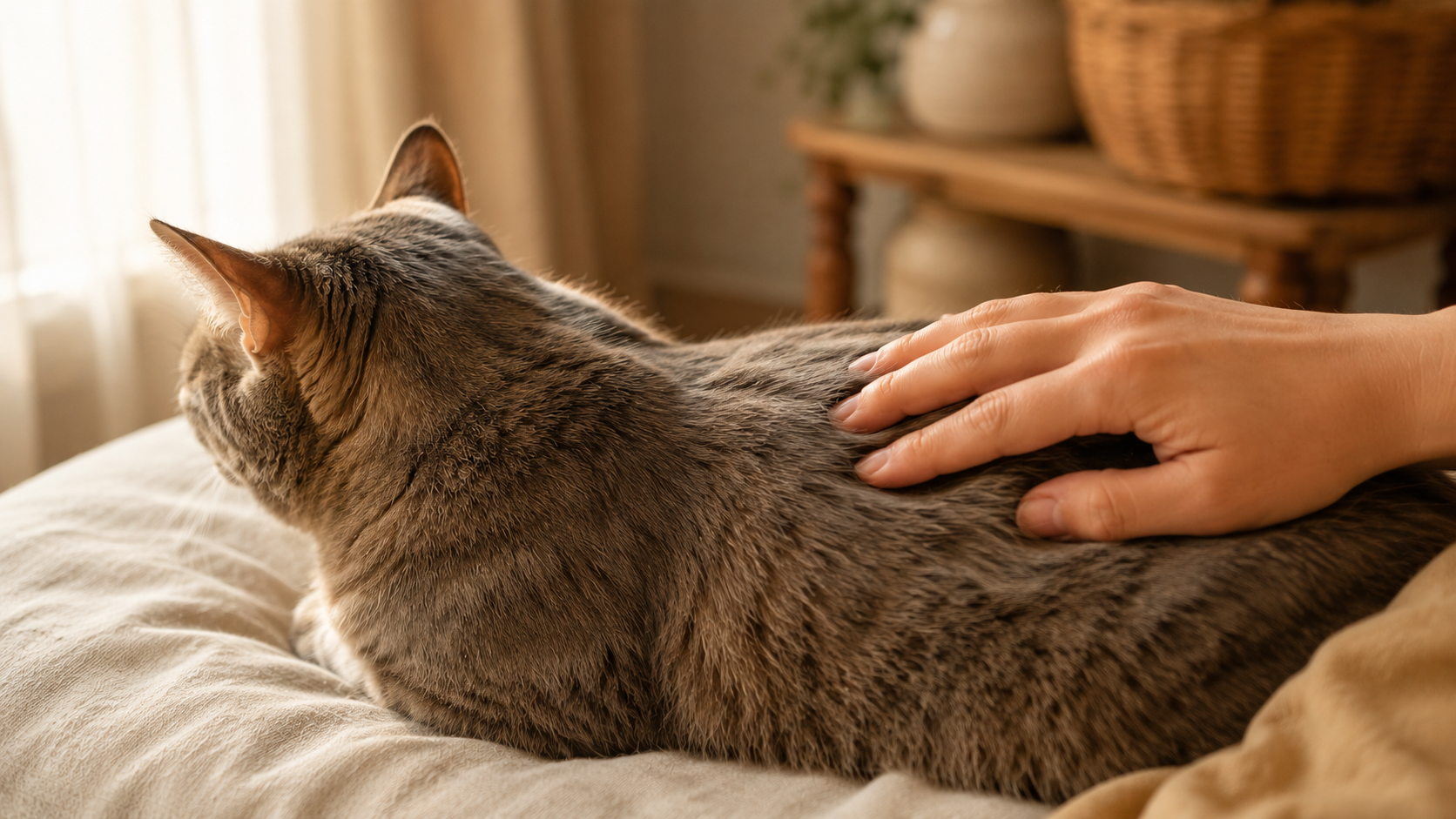
You were stroking your cat and noticed something felt different. The fur was no longer as soft as it used to be. Maybe the change happened so gradually that you could not tell exactly when it started. Or perhaps one day, the light hit her coat just right, and you realized the shine she had as a kitten was gone.
That moment matters more than many owners realize. Coat and skin changes rarely appear all at once. The owners who notice them early are usually the ones paying close, consistent attention to their cat’s appearance and behavior.
This article will guide you through the full range of visible symptoms, from the earliest warning signs to the more advanced changes. It also includes a self-assessment checklist to help you compare those signs with your cat’s current condition and understand the most common conditions that can be mistaken for them.
You do not need a diagnosis to start making sense of what you are seeing. You simply need a clear understanding of what to look for and what those changes may mean.
This article is for educational purposes only and does not replace professional veterinary advice. If you are concerned about your cat’s health, consult a licensed veterinarian.
Signs of a Cat’s Dull Coat to Check For
This section focuses only on what you can see and feel. It does not cover causes, comparisons, or the biology behind the changes. Before you can understand what may be happening, it is important to recognize the symptoms themselves.
The three sections below move from the changes most owners notice in the coat first, to those visible at the skin level, and finally to the more subtle signs that are often overlooked.
Early Signs of Coat Texture Changes
A cat’s dull coat often starts with a change in texture before any visible thinning appears. Fur that once felt soft and looked shiny begins to feel rough and appear flat. Because this change happens gradually, many owners assume it is seasonal or temporary at first.
One of the first things people notice is that the coat no longer reflects light the way it used to. Instead of looking glossy, it appears dull and matte. If you run your hand against the direction of fur growth, the coat may feel rough rather than smooth. Many owners describe it as feeling more like straw than fur. This texture change is often one of the earliest signs and usually appears before other visible changes.
Coat texture is typically the first signal to change, often weeks before visible thinning develops. As hair quality declines, individual hairs lose their smooth surface and natural shine. The entire coat starts to look flat rather than full and healthy. This differs from normal seasonal shedding. Shedding produces loose hairs, while early coat deterioration affects the quality of hairs that remain attached. The change usually appears across the whole coat rather than in isolated patches.
Grooming sessions may also start to feel different. A comb that once moved easily through the coat may begin to catch more often. A fine-toothed comb may reveal not only loose hairs but also hairs that have become brittle and less flexible. Finding broken hairs instead of hairs shed from the root can be an important clue. Loose hairs fall out naturally, while broken hairs suggest a change in hair strength and structure.
Color changes can also appear early and are often mistaken for normal aging or seasonal variation. The coat may look less vibrant than it did a few months earlier. Black or tabby coats can develop a reddish or brownish tint. Orange coats may appear faded, while white coats can take on a dull or dingy appearance even when they are clean. When these changes develop gradually over several weeks, that pattern itself is useful information to track.
Keeping a dated record of exactly what changed and when is one of the most useful things you can bring to a vet. This template makes that straightforward to do at home.
Coat Change Timeline Tracker
Record coat changes each week to monitor improvements in fur texture, shine, and the balance of broken versus naturally shed hairs.
| Week | Observation Date | Fur Texture | Reflectiveness / Shine | Broken vs. Shed Hair Ratio |
|---|---|---|---|---|
| Week 1 | ||||
| Week 2 | ||||
| Week 3 | ||||
| Week 4 |
What Dry Skin Under the Fur Looks Like
Once coat texture begins to change, the next signs often appear at the skin level. You usually notice them only when you part the fur and look closely. Many owners first spot white flakes on a dark sofa or blanket before they think to examine the skin itself.
Parting the fur along the back can reveal changes hidden beneath the coat. The skin may look dry and flaky, sometimes with a grey or ashy appearance, especially along the back and sides where the fur is thickest. This is seborrhea sicca (a dry, flaky skin condition that affects the outer layer of the skin). Unlike oily skin conditions, it creates a dry, dusty texture rather than a greasy or waxy one.
In simple terms, dry, flaky skin reflects changes happening beneath the surface. According to VCA Animal Hospitals, a weakened skin barrier can reduce the skin’s ability to hold moisture and maintain a healthy surface. Skin that appears tight or papery when gently pinched and does not spring back as easily may reflect this loss of normal elasticity.
Ashy patches around the ears, face, and neck are among the easiest signs to miss. Many owners assume they are seeing dirt or normal age-related changes. Skin looks ashy near her ears, even right after a bath. When the area stays the same after grooming, an environmental or hygiene-related cause becomes less likely. These patches often appear on clean cats because the change starts within the body rather than on the skin’s surface.
Small crusted areas that feel slightly raised under your fingertips can be another early clue. The location of these patches matters. Crusting near the ears without redness, swelling, or odor, and dry patches appearing on both sides of the body, often suggest an internal or nutritional issue rather than a local infection. Symmetrical changes across the body usually point to a systemic cause rather than a single wound or irritation. There is no visible scratch, open sore, or discharge. The changes remain dry and confined to the skin’s surface.
Cats with dense or long fur can hide skin changes until they become more advanced. This is why parting the fur during regular handling is a useful habit. Owners often blame flaking on dry winter air or a change in grooming products, especially in indoor cats living in heated homes. While those factors can contribute to skin dryness, they can also delay recognition that the skin itself may be the source of the problem.
Working through each observation point in order gives you a much clearer picture of what you are actually seeing and makes it easier to describe accurately when you speak to your vet.
Skin Surface Observation Guide
Use this simple six-step guide to observe your cat’s skin and coat. These checks are not diagnostic but can help identify changes worth monitoring.
Easy-to-Miss Signs of Coat Problems in Cats
Some of the most reliable signs of systemic protein stress appear in places many owners rarely examine closely. Whisker changes and thinning fur along the spine are two of the most overlooked clues. Both can provide valuable information, and both are easy to miss when a cat otherwise seems normal.
Her whiskers keep snapping in the middle instead of shedding cleanly from the root. Whiskers that shed normally fall out intact from the follicle. Owners often find them whole on bedding, furniture, or the floor. Broken whiskers are shorter and show a clear break somewhere along the shaft. The tip may also look frayed or uneven. Checking whiskers during regular handling is a simple way to gather useful information about coat health.
Whisker breakage can signal systemic protein stress. When the body lacks enough structural protein, it may struggle to maintain the strength of protein-dependent tissues. Whiskers and fur rely on the same building materials, so changes often appear in both. Finding more broken whiskers than usual around feeding areas or bedding is worth noting. Whiskers that appear shorter on one or both sides without an obvious cause also deserve attention. Recording these changes can help track patterns over time.
Fur that lies flat along the spine, even after grooming, is another commonly overlooked sign. The fur running along the back often shows thinning earlier because changes in density are easier to see in this area. During stretching or movement, the coat may appear sparse and flatter than normal. Some owners assume this results from a favorite sleeping position or everyday wear. Watching coat quality over several weeks, especially during food or lifestyle changes, can help determine whether the pattern is temporary or persistent.
Color fading in a previously vibrant coat is another change that owners often associate with aging. The change usually affects the entire coat rather than appearing in isolated patches. Many owners describe it by saying the coat looks washed out compared to a few months ago. That description reflects the gradual, whole-coat nature of the change. The color shift often appears on both sides of the body at the same time. This symmetrical pattern is more noticeable than localized fading in a single area.
When fur texture changes, skin changes, and these subtle structural signs appear together, they can provide a clearer picture of overall coat health. These signs often develop in a predictable sequence. Understanding that pattern can make it easier to judge how advanced the changes may be. The next section provides a practical way to assess them more systematically.
The link between whisker condition and what is happening deeper in the body is one of the most consistently overlooked signals in feline nutrition, and it is backed by documented veterinary nutritional science.
Systemic Protein Stress Signal Callout
Understanding why whisker breakage may sometimes be viewed as part of a broader nutritional picture rather than an isolated grooming issue.
Veterinary nutrition literature and feline nutrient requirement research have long emphasized that structural proteins are continuously allocated among competing body systems.
When dietary protein or essential amino acid availability becomes inadequate, the body may prioritize critical organs and physiological functions before allocating resources to non-essential external structures such as hair fibers, coat quality, and whisker maintenance.
Whiskers are made largely from protein. If a cat is not receiving enough usable protein or key amino acids over time, the body focuses first on more important internal needs. As a result, external structures like the coat and whiskers may show changes such as reduced strength, brittleness, or increased breakage before other obvious signs appear.
Does Your Cat Match These Coat Symptoms?
This section moves from description to self-assessment. Now that you have a clear picture of what each symptom looks like, the checklist below helps you measure how many signs are currently present in your cat and what that combination may suggest as a starting point.
Go through each item and mark Yes, No, or Not Sure. Count your Yes responses at the end and use the score guide to help determine your next steps. Completing a symptom checklist before a veterinary visit is one of the most useful things you can do. It turns casual observations into a structured record, giving your veterinarian clearer information in less time.
One owner, Linda, had been brushing her seven-year-old British Shorthair, Mabel, every few days without paying much attention to what collected in the brush. One day, she placed the loose hair on a white cloth and noticed that many hairs had snapped along the shaft instead of shedding intact. She brought the cloth to her next veterinary appointment. That simple observation helped start a more focused discussion about Mabel’s diet and coat health than previous visits had.
The checklist below follows the same principle. It helps turn scattered observations into a clearer, more organized picture of what you may be seeing at home.
Cat Coat & Skin Symptom Checklist
Go through each item and mark Yes, No, or Not Sure. Count your Yes responses automatically and use the score guide to understand your next step.
Is a Cat’s Dull Coat Nutritional or Something Else?
Knowing what your cat’s coat looks like is only part of the picture. The next step is understanding what other conditions can cause similar changes. Several common health issues can create signs that look almost identical at first glance.
This section walks through the most important comparisons one at a time. Rather than focusing on diagnosis, it focuses on patterns and observations. The goal is to help you approach your veterinary visit with a clearer understanding of what you have noticed and which possibilities you have already considered.
Hair Loss From Nutrition vs. Parasites in Cats
Nutritional coat deterioration and parasite-related hair loss are two of the most commonly confused conditions. At first glance, they can look very similar. However, once you know what to watch for, the behavioral differences become much clearer. She grooms normally, but her coat still looks wrong. That observation often points away from a parasite-related cause.
The clearest difference is behavioral. Nutritional coat problems change how the coat looks and feels, while parasite-related hair loss results from what the cat is doing to herself. Not scratching excessively, but something is clearly off, is a common owner observation that fits a nutritional pattern. The coat continues to deteriorate, but the cat is not actively causing the damage.
Nutritional hair loss is usually diffuse and widespread. It affects larger areas of the body rather than focusing on a single spot. Owners often notice thinning fur that does not seem to follow an obvious pattern. The cat does not repeatedly target one area, and there is no visible injury that explains the change.
Diffuse bilateral coat thinning as a nutritional pattern means both sides of the body change in a similar way at roughly the same time. The change appeared on both sides of her body at the same time is one of the strongest clues that the issue may have an internal, systemic cause rather than a localized external one.
Cats with nutritional coat deterioration usually have little or no itching. They groom normally and do not focus on specific areas. The affected skin typically lacks redness, irritation, or visible trauma. Hot spots are absent, and a fine-toothed comb usually does not reveal flea dirt.
Flea dirt refers to the small, dark specks left behind by fleas. A simple white paper test can help check for it. Comb your cat over a sheet of white paper and look for dark specks. If the specks turn reddish-brown when wet, flea dirt is present. This quick check takes only a few seconds and can provide useful information before a veterinary visit.
Parasite-related hair loss often presents oppositely. The scratching comes first, and the hair loss follows. The cat repeatedly targets the same area, gradually removing fur through licking, scratching, or chewing. Watching where and how often your cat scratches over several days can reveal a clear pattern.
The speed of onset can also help distinguish the two. Parasite-related problems often appear quickly, with noticeable changes developing over days rather than weeks. It is also helpful to look at other pets in the household. Parasites can spread between animals, while nutritional coat deterioration affects only the individual cat whose diet or metabolism is involved.
The key distinction is simple. If the cat is actively causing the fur loss through scratching, licking, or chewing, parasites should be considered first. If the coat continues to deteriorate without the cat targeting it, nutrition becomes a more likely explanation.
The pattern your cat shows, not just whether she is scratching, is what points most clearly toward the underlying cause, and this tool helps you map what you are seeing against the two most commonly confused presentations.
Nutritional vs. Parasite Pattern Checker
Compare itch level and hair loss pattern to see which observation profile your cat’s signs most closely resemble.
How to Tell Ringworm From Coat Thinning
Ringworm and nutritional coat deterioration are among the most commonly confused conditions. Both can cause fur thinning and skin changes without obvious pain or intense scratching. The key differences come down to shape, border, and whether the problem spreads within the household.
Ringworm creates lesions with clear shapes and defined edges. Nutritional coat deterioration causes diffuse thinning without clear borders. One simple question helps separate them: Is the hair loss forming a shape, or is the coat just becoming thinner overall?
Ringworm, formally known as dermatophytosis (a fungal skin infection caused by dermatophyte organisms, not an actual worm), usually appears as circular or oval patches with clearly defined edges. Hairs at the edge of the lesion break near the skin surface, creating a short, stubbled appearance. A scaly or slightly red ring often develops around the border, and the affected area expands outward over time.
The main distinction is circular lesion morphology versus diffuse coat thinning. Ringworm has a recognizable shape and direction of spread. Nutritional coat deterioration does not.
A Wood’s lamp examination (an ultraviolet light tool used by veterinarians to screen for certain fungal infections) causes some strains of ringworm to glow yellow-green under UV light in about 50% of cases, according to veterinary educational resources. This is not a home test. It is also important to know that a negative Wood’s lamp result does not rule out ringworm, which is why veterinary confirmation remains important when circular lesions are present.
The risk of transmission is another practical clue for owners. Dermatophytosis is a zoonotic condition, which means it can spread between animals and humans. If someone in the household develops circular, itchy skin patches while the cat has similar symptoms, a fungal cause becomes much more likely.
Nutritional coat deterioration does not carry any zoonotic risk. It is an internal condition and cannot spread between pets or from pets to people.
By contrast, nutritional coat deterioration causes thinning without any clear geometric shape. There is no distinct border between affected and unaffected areas. The thinning blends gradually into the surrounding coat.
There is also no red or scaly ring, no broken-hair border pattern, and no characteristic outward spread. Instead, the coat changes tend to appear symmetrically across the body. Bilateral symmetric alopecia (fur thinning that appears similarly on both sides of the body) consistently points veterinarians toward internal or nutritional causes rather than infectious ones.
One family’s experience illustrates this difference well. They noticed a gradual thinning along their older cat’s back and assumed ringworm was the cause. After several weeks of antifungal shampoo, a veterinary examination confirmed there was no fungal infection.
A review of the cat’s recent switch to a budget dry food shifted attention toward diet instead. With veterinary guidance and improved nutrition, the coat gradually recovered.
Ringworm vs. Nutrition Vet Question Guide
Bring these questions to your veterinary appointment when circular lesions, patchy hair loss, or diffuse coat thinning could have more than one possible explanation.
Causes of Dull Coat in Cats –The Comparison Table
The table below brings together the five most common causes of coat and skin changes in cats in a simple side-by-side comparison. Veterinary guidance from VCA Animal Hospitals and Cornell University College of Veterinary Medicine supports the distinguishing features included here. No single sign confirms a specific cause on its own. Use this table as a pattern-recognition guide rather than a diagnostic tool.
Interactive Five-Cause Coat Filter
Select up to three observed features. Causes that best match your observations will be highlighted, while weaker matches will fade into the background.
| Possible Cause Profile | Typical Itch | Typical Onset | Typical Pattern | Skin Changes / Spread | Match Score |
|---|---|---|---|---|---|
| Nutritional / Dietary | None–Mild | Gradual | Diffuse Bilateral | Dull coat, brittle fur | 0 |
| Flea or Parasite Related | Intense | Sudden | Tail Base / Neck | Scratching, irritation | 0 |
| Allergic Skin Disease | Moderate–Intense | Sudden | Localized or Patchy | Redness, overgrooming | 0 |
| Fungal / Ringworm-Type Pattern | Mild or None | Gradual | Circular Localized Areas | May affect other pets/people | 0 |
| Systemic / Hormonal Pattern | Usually None | Gradual | Symmetrical Thinning | Body-wide coat changes | 0 |
Seasonal shedding deserves a brief mention because it is usually the first explanation owners consider. It is also one of the most common reasons people delay looking deeper when shedding is not actually the cause. Seasonal shedding follows a predictable pattern, resolves on its own, produces loose hairs rather than broken ones, and does not affect skin condition. If you have blamed the same symptoms on seasonal shedding for two or more shedding cycles without improvement, note how long the changes have been present and share that information with your veterinarian.
Hyperthyroidism also deserves consideration, especially in middle-aged and older cats. According to the Virginia Tech Veterinary Teaching Hospital, approximately 10% of cats aged 10 years or older develop hyperthyroidism, and poor coat quality is one of its recognized signs. Blood testing is required to diagnose this condition. Coat appearance alone cannot reliably distinguish hyperthyroidism from nutritional causes, which is one reason veterinary evaluation remains essential.
Recognizing the pattern differences between these conditions helps you prepare for a more productive veterinary visit. Being able to explain which signs match and which do not gives your veterinarian a clearer starting point. The next section looks at what happens when that evaluation has already taken place, sometimes more than once, without providing a clear answer.
Why Cat Dull Coat Treatments Sometimes Stop Working
Treatment failure is one of the most frustrating experiences for cat owners. It is also one of the most useful diagnostic clues. When antifungal shampoo works for a week and then the symptoms return, or when flea treatment is successful but the coat never improves, those outcomes are not simply bad luck. They form a pattern, and that pattern often provides valuable information.
Understanding why nutrition is often investigated later in the process helps explain why this cycle happens so frequently. It also explains why breaking the cycle requires asking a different set of questions.
The treatment-failure pattern often follows a familiar path. Antifungal shampoo improves the skin temporarily, but symptoms return within two or three weeks. A steroid injection reduces inflammation for a short time, yet flaking and coat dullness return after the medication wears off. Flea treatment eliminates the parasites, but coat quality remains unchanged in the weeks that follow.
Many owners reach a point where multiple veterinary visits have ruled out several possibilities without providing a clear answer. Some cats remain on the same treatment plan for six weeks or longer with only partial improvement or no improvement at all.
This cycle often repeats because topical treatments address surface symptoms rather than the underlying cause. When a shampoo or cream improves the skin temporarily, that response is not evidence that the product failed. Instead, it provides information about what the treatment can and cannot do.
A temporary steroid response followed by a relapse tells veterinarians that the source of the inflammation remains unresolved. The response pattern can also help distinguish nutritional causes from fungal infections. True fungal infections usually show steady improvement with antifungal treatment. Nutritionally driven coat and skin problems may improve briefly at the surface, only to return once treatment stops.
Why does nutrition often appear later in the diagnostic process? Veterinary protocols usually investigate parasites and infections first because they are more common and often easier to treat. In a short consultation, coat quality changes may also seem less urgent than other health concerns.
Another challenge is that there is no standard blood test that directly identifies amino acid bioavailability problems. The integumentary system (the skin, coat, and related structures that form the body’s outer layer) can reflect nutritional issues even when routine blood work appears normal.
Owners also rarely provide a detailed dietary history during a typical appointment. Statements such as, “I changed her food, but her coat still looks bad,” can create the impression that nutrition has already been evaluated when it has not.
A food labeled “complete and balanced” meets minimum nutritional standards established by the Association of American Feed Control Officials (AAFCO). However, that label does not guarantee the food is ideal for every cat’s digestion, nutrient absorption, or metabolic needs.
Priya had fed her two-year-old Abyssinian, Kiran, the same well-known brand for more than a year. During a routine weigh-in, her veterinarian asked about the exact formula she was using. When Priya checked the ingredient list that evening, she discovered the primary protein source came from a plant-based blend rather than named animal meat.
After switching to a food with chicken listed as the first ingredient, she noticed Kiran’s coat felt less wiry within about six weeks. Experiences like this highlight why keeping a detailed record of treatments and outcomes is so valuable.
At this stage, documenting every treatment attempt becomes one of the most useful things an owner can do. Record what was used, how long it was used, the dose given, and the level of improvement observed. This information provides a timeline that helps veterinarians identify patterns more effectively.
It is also helpful to document stressful events that occurred before the coat changes appeared. Significant stress, illness, or environmental changes can trigger telogen effluvium (a temporary disruption of the normal hair growth cycle that causes widespread shedding or coat deterioration after a physical or emotional stressor). This pattern follows a different course than nutritional coat deterioration.
Supplement use should also be recorded, including dose and duration. According to VCA Animal Hospitals, some supplements can unintentionally disrupt the balance of an otherwise adequate diet.
The absence of a diagnosis after multiple veterinary visits is also useful information. It often means the most common causes have already been ruled out. While that can feel frustrating, it also helps narrow the focus toward other possibilities, including nutrition.
Bringing a complete food history to the next veterinary appointment can make a significant difference. Include the ingredient list, main protein sources, how long the current food has been fed, and any supplements being used. Pairing that information with a record of treatments and outcomes turns the next appointment into a new investigation rather than a repeat of previous discussions.
Treatment failure is not a dead end. It is a sign that the root cause has not yet been identified. When parasites, infections, hormonal disorders, and allergies have been reasonably excluded, nutrition becomes the next logical area to evaluate.
With the symptom picture established, the key comparisons explored, and the treatment-failure pattern understood, the final section brings everything together. It answers the questions owners ask most often and provides a practical checklist of signs, observations, and information to track.
Conclusion: Your Cat’s Coat Is Talking — You Just Learned to Listen
A cat’s dull coat and dry skin are not cosmetic concerns. They are your cat’s earliest visible communication that something internal deserves closer attention. The fact that you noticed and followed the thread far enough to work through a full symptom inventory, a self-assessment checklist, and a differential diagnosis comparison means you now have something far more useful than worry. You have a starting point.
Whatever score you reached on the checklist, it reflects a real picture of what is currently present. A low score is worth monitoring and dating. A moderate or high score is worth taking into a structured veterinary conversation, not as an alarm, but as an organized observation. Monitoring coat quality alongside food or lifestyle changes in the weeks ahead, and noting whether the picture shifts, adds more data to that record.
The differential diagnosis work this article walked you through is not wasted effort. Ruling out fleas, ringworm, and allergies through careful observation is the exact process that points remaining attention toward nutrition as the next area to formally investigate. She grooms normally, but her coat still looks wrong, or not scratching obsessively, but something is clearly off. These observations, once you understand what they mean, are precisely what a veterinarian needs to hear to move the conversation in a more productive direction.
If treatments have been tried without lasting improvement, that pattern is not a reflection of anything you did wrong. Topical treatments addressing surface symptoms, not root cause, will always produce temporary results when the underlying driver has not yet been identified. That cycle is a signal. You now have the language to describe it clearly, the record-keeping framework to document it accurately, and the diagnostic context to present it in a way that opens a new line of inquiry rather than repeating an old one.
The next step is not to panic. It is understanding why the skin and coat are always the first place the body shows nutritional stress, before anything else becomes visible, before any other system signals a problem. And that biology, the reason your cat’s coat is always first to suffer, is exactly what Article 2 unpacks.
What to Watch For
Use this list as an observational and preparatory guide before or between veterinary visits. Every item below is something to note, photograph, or record, not something to act on independently.
Coat observations:
- Whether fur texture has changed in the past two to three months, rougher, flatter, or less reflective than before
- Whether the coat color looks more faded or washed out than it did in a previous season
- Whether fur along the spine lies unusually flat or looks thinner when the cat is moving or stretching
- Whether the comb catches more resistance than loose hair during grooming sessions
Skin observations:
- Whether white or grey flakes appear on dark furniture or bedding after the cat sits
- Whether parting the fur along the back reveals dry, powdery, or ashy skin beneath
- Whether any small raised crusted patches are present, and whether they appear on both sides of the body symmetrically
- Whether skin near the ears looks ashy or discolored after a bath, when external soiling is ruled out
Subtle signal observations:
- Whether broken whiskers, snapped at the midpoint rather than shed from the root, are appearing more frequently than usual
- Whether whisker tips look frayed or jagged when examined closely
Behavioral observations:
- Whether the cat is scratching, biting, or targeting a specific area repeatedly, or simply presenting a coat that looks and feels wrong without a behavioral cause
- Whether any other pets in the household are showing similar coat or skin changes
Preparatory steps for the vet:
- A written food history: current food brand, ingredient list, protein source, and how long it has been fed
- A record of every treatment tried, how long it was used, and what degree of improvement it produced
- A note of any supplements currently given, with dose and how long they have been used
- Weekly photographs of the coat taken under consistent lighting, to show progression over time
- A note of any stressful events, illness, rehoming, or environmental changes that preceded the coat changes
- The checklist score from this article, with the specific items marked Yes
FAQ — Cat Dull Coat and Dry Skin
The questions below are the ones owners most commonly arrive at after working through the symptom picture and comparison logic above. Each answer draws only from what has already been covered in this article. None of these answers constitutes a diagnosis, and your veterinarian remains the right person to assess your individual cat’s situation.
1: What does a lysine-deficient cat’s fur actually look and feel like?
A cat experiencing essential amino acid insufficiency in the coat will typically present with fur that looks flat, matte, and unreflective rather than shiny. Many owners describe it as a coat that used to catch the light now looks flat. To the touch, individual hairs may feel rough or wiry, and the coat as a whole may feel more resistant than smooth during handling. Coat color may also appear faded or washed out, and parting the fur along the back to check skin condition may reveal dry, powdery, or ashy skin beneath. Because these changes can also result from other nutritional factors, including essential fatty acid deficiency and mineral imbalances, a veterinary nutritional assessment is the most reliable way to identify which specific factor is involved.
2: How do I tell if my cat’s hair loss is from nutrition or parasites?
Nutritional coat deterioration tends to be diffuse, bilateral, and low-itch. The coat simply looks and feels wrong without the cat targeting any specific area. Parasite-driven hair loss, by contrast, is driven by the cat’s own scratching behavior: localized, intense, with rapid onset and often visible flea dirt on the skin or in a fine-toothed comb. Observing scratching frequency and location over several days, and noting whether both sides of the body are affected equally, gives you a practical behavioral distinction to bring to your vet. Checking for flea dirt using a white paper test is a simple first step before any other assessment.
3: Can lysine deficiency look exactly like ringworm?
Superficially, both conditions can produce fur thinning and skin changes. The patterns are meaningfully different on close observation, though. Ringworm, formally called dermatophytosis, forms circular or oval patches with clearly defined edges and a broken-hair border. Nutritional coat deterioration produces diffuse, shapeless thinning with no geometric pattern and no border. Photographing the coat weekly under the same lighting helps track whether affected areas are forming a shape and spreading outward, which points toward ringworm, or remaining formless and bilateral, which points toward an internal cause. Zoonotic transmission risk is the clearest household signal. If any person in the home develops circular skin lesions alongside the cat’s symptoms, veterinary assessment for ringworm should be prioritized promptly.
4: My vet said everything is fine, but my cat’s coat still looks terrible — what now?
I was told everything is fine, but she still looks unwell, which is one of the most common experiences owners describe in this situation, and it reflects a gap in the standard diagnostic process rather than an error on anyone’s part. Standard diagnostic flow, prioritizing parasites before nutrition, means that “everything is fine” typically indicates that the most common causes have been ruled out, not that nutrition has been formally assessed. Bringing a food history to the vet consultation, including the current food’s ingredient list, protein source, and how long it has been fed, alongside a record of every treatment tried and its outcome, gives the next conversation a different starting point. Asking specifically about a plasma amino acid panel or a full nutritional workup opens a line of inquiry that routine examinations do not automatically include.
5: How many symptoms need to be present before I suspect a nutritional deficiency?
There is no fixed threshold, but tracking how long the symptoms have been present is one of the most useful indicators. Changes that have persisted for four weeks or more without a confirmed diagnosis make nutrition an increasingly relevant area to investigate. The combination of coat, skin, and whisker changes appearing together carries more weight than any single symptom in isolation, because it points toward a systemic pattern rather than a localized or situational cause. Using the symptom checklist earlier in this article, before visiting the vet, gives you a structured count to bring to the appointment, which is more useful than a general description. Five or more Yes responses, particularly when distributed across more than one symptom category, is a reasonable indicator that a nutritional conversation with your vet is worth initiating.
References
All references below are listed in the order they appear or are drawn upon within the article. Every source listed was used to support a specific educational claim. No sources have been invented or included for padding.
Veterinary Institutional Sources
1. VCA Animal Hospitals — Nutrition, Skin, and Cats Used to support: skin barrier function explanation, essential fatty acid deficiency signs, copper and zinc deficiency coat changes, protein requirements for adult cats, supplementation caution URL: https://vcahospitals.com/know-your-pet/nutrition-skin-and-cats
2. VCA Animal Hospitals — The Importance of Your Pet’s Skin and Coat and the Role of Diet Used to support: thyroid disease, kidney disease, and Cushing’s disease as causes of dull coat; zinc role in cell division; EPA and DHA anti-inflammatory properties; supplementation balance caution URL: https://vcahospitals.com/know-your-pet/the-importance-of-your-pets-skin-and-coat-and-the-role-of-diet
3. VCA Animal Hospitals — Lysine Used to support: lysine as an amino acid supplement context; FDA non-review status of lysine supplements; off-label use framing URL: https://vcahospitals.com/know-your-pet/lysine
4. Cornell University College of Veterinary Medicine — The Challenge of Skin Disorders Used to support: multi-causal framing of feline skin and coat problems; omega-3 and omega-6 combination as low-level anti-inflammatory; fatty acid supplement caution URL: https://www.vet.cornell.edu/departments-centers-and-institutes/cornell-feline-health-center/health-information/feline-health-topics/challenge-skin-disorders
5. Cornell University College of Veterinary Medicine — Hyperthyroidism in Cats Used to support: poor hair coat as a documented sign of thyroid conditions; senior cat coat screening recommendation URL: https://www.vet.cornell.edu/departments-centers-and-institutes/cornell-feline-health-center/health-information/feline-health-topics/hyperthyroidism-cats
6. Virginia Tech Veterinary Teaching Hospital — Senior Cat Health Alert: Recognizing Hyperthyroidism Used to support: approximately 10% of cats aged 10 years or older may develop hyperthyroidism; poor coat quality as a documented presentation; hyperthyroidism in the comparison table URL: https://vth.vetmed.vt.edu/animal-care-tips/cat-hyperthyroidism.html
Regulatory and Standards Bodies
7. U.S. Food and Drug Administration (FDA) — Complete and Balanced Pet Food Used to support: AAFCO “complete and balanced” label explanation; regulatory requirements for cat food nutrient profiles; feeding trial standards URL: https://www.fda.gov/animal-veterinary/animal-health-literacy/complete-and-balanced-pet-food
8. Association of American Feed Control Officials (AAFCO) — Cat Food Nutrient Profiles Used to support: minimum lysine requirements for cats (1.20% growth and reproduction; 0.83% adult maintenance); regulatory standard preventing nutritional deficiency in commercial diets; AAFCO label claim explanation throughout H2 #4 Source document: AAFCO Nutrient Requirements for Cats URL: https://souldogsynergy.com/wp-content/uploads/2022/06/AAFCO-Nutrient-Requirements-for-Cats.pdf*Note for editorial team: Link to original AAFCO Official Publication recommended where available via aafco.org*
Peer-Reviewed Research
9. Bol S, Bunnik EM — Lysine Supplementation Is Not Effective for the Prevention or Treatment of Feline Herpesvirus 1 Infection in Cats: A Systematic Review Published in: BMC Veterinary Research, Vol. 11, No. 1, November 2015 PubMed PMID: 26573523 Used to support: cautious framing around lysine supplementation claims throughout the article; context for why lysine advice remains conflicting online; the evidence-challenged status of lysine for FHV-1 management URL: https://www.ncbi.nlm.nih.gov/pmc/articles/PMC4647294/
10. Effect of Supplemental Trace Mineral Source on Haircoat and Hair Loss in Adult Cats Published in: PubMed Central, PMC12466704, 2025 Used to support: emerging evidence that lysine complexed with trace minerals may contribute to short-term coat improvement (transient, day 45 only, not sustained at day 90); nuanced framing around lysine and coat health URL: https://www.ncbi.nlm.nih.gov/pmc/articles/PMC12466704/
11. Wu G et al. — Amino Acid Nutrition and Metabolism in Domestic Cats and Dogs Published in: PubMed Central, PMC9942351, 2023 Used to support: obligate carnivore classification; unique amino acid metabolism in cats compared to dogs; lysine as one of 11 essential amino acids cats cannot synthesize URL: https://www.ncbi.nlm.nih.gov/pmc/articles/PMC9942351/
Professional Veterinary Educational Publications
12. Today’s Veterinary Practice — Role of Dietary Fatty Acids in Dogs and Cats Used to support: omega-6 deficiency as a documented cause of skin and coat abnormalities; EFAs cannot be endogenously produced; EPA and DHA requirements in cats; NRC dietary requirements context URL: https://todaysveterinarypractice.com/nutrition/role-of-dietary-fatty-acids-in-dogs-cats/
13. Merck Veterinary Manual — Nutritional Requirements of Small Animals Used to support: nutritional diseases are rarely seen in cats on good-quality complete commercial diets in higher-income countries; protein percentage requirements for adult cats and kittens; taurine as essential amino acid URL: https://www.merckvetmanual.com/management-and-nutrition/nutrition-small-animals/nutritional-requirements-of-small-animals
Reputable Pet Health Educational Resources
14. PetMD — Can Lysine for Cats Help With Illness? Used to support: cats on complete and balanced commercial food already receive all needed lysine; lysine not FDA-approved as a supplement for cats; off-label use in veterinary medicine framing; regulatory context for supplement claims URL: https://www.petmd.com/cat/general-health/lysine-for-cats
15. Pet Food Institute — A to Z of Pet Food: Leucine and Lysine (and Other Amino Acids) Used to support: lysine and other essential amino acids supporting skin, coat, muscles, and immune function; cats requiring higher dietary protein than dogs; amino acid requirements at different life stages URL: https://www.petfoodinstitute.org/a-to-z-of-pet-food-leucine-and-lysine-and-other-amino-acids/
16. IAMS — How Nutrition Affects Your Cat’s Skin and Coat Health Used to support: optimal omega-6 to omega-3 ratio of 5:1 to 10:1 for feline skin and coat; arachidonic acid requirement unique to cats; three fatty acids supporting coat condition; dull, dry coat and hair loss from fatty acid deficiency URL: https://www.iams.com/cat/cat-articles/how-nutrition-affects-your-cats-skin-and-coat-health
17. Vetster — Poor Coat Condition in Cats Used to support: multiple conditions causing poor coat condition, including hyperthyroidism, diabetes, kidney disease, obesity, osteoarthritis, parasites, and allergic skin disease; dull coat as symptom, not diagnosis; differential diagnosis framing URL: https://vetster.com/en/symptoms/cat/poor-coat-condition
18. EveryCat Health Foundation — Does L-Lysine Supplementation Help Upper Respiratory Viral Infection in Cats? Used to support: context for why conflicting lysine advice exists online; lysine supplementation recommended by over 90% of veterinarians at the time of the 2015 review; institutional acknowledgment of evidence gap URL: https://everycat.org/cat-health/does-l-lysine-supplementation-help-upper-respiratory-viral-infection-in-cats-probably-not/
Supplementary Institutional Reference
19. Fairfax Animal Hospital — Nutrition, Skin, and Cats Used to support: approximately 25% of cat veterinary visits involve skin and haircoat problems; nutritional deficiency in homemade or poor-quality diets framing URL: https://fairfaxanimalhospital.com/cats/nutrition-skin-cats/

Saloni Nagar is the founder and lead content creator of Bark & Meow Tales. As a dedicated cat parent and researcher, she transitioned from personal loss to pet health advocacy, focusing on early warning signs and preventive care. Saloni specializes in translating complex veterinary concepts into actionable guidance for pet parents. Her work is driven by a commitment to helping others interpret subtle feline health signals before they escalate, ensuring that every cat has a voice through informed, compassionate care.