
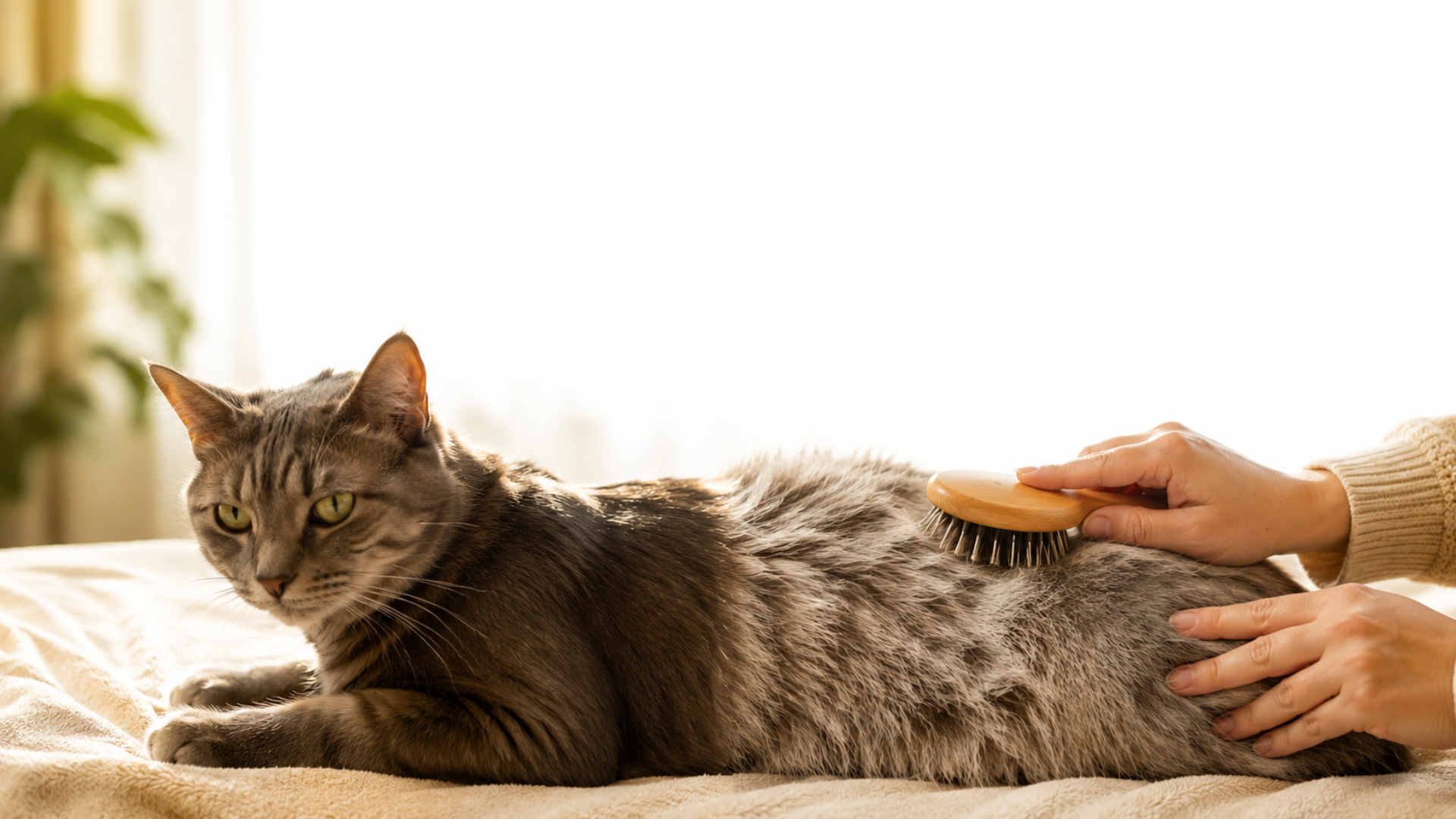
By Saloni Nagar, Medically Reviewed by Dr. Jimisha Shah, B.V.Sc & A.H., PGDAW
You already know something is wrong with your cat’s coat. But do you know why the coat is often the first place a problem becomes visible, rather than the liver or the heart? If you’ve ever thought nothing obvious is wrong, but her coat tells a different story, or I wanted to know why the coat is always the first thing to look wrong, you’re asking exactly the right question. The answer is biological, not random.
If you’ve found yourself thinking, I’m not trying to become a vet, I just want to understand what’s going on inside, that instinct is worth following. Understanding the biology is not overthinking. It helps you move beyond guessing and toward understanding what may be happening beneath the surface.
This article explains how lysine deficiency in cats can contribute to the coat and skin changes many owners notice but struggle to explain. I know something is wrong, but her bloodwork is normal is one of the most common concerns owners express before they start looking deeper. You’ll learn how lysine helps build the proteins that support healthy skin and fur, how the body rerouting amino acids away from the coat during scarcity affects coat quality, and why some cats may lose usable lysine through food processing, viral activity, or stress.
You’ll also learn why standard blood tests measuring total protein, not individual amino acids, can sometimes miss a problem, and how normal lab values masking a specific essential amino acid shortfall can leave owners searching for answers. This article is written for cat owners who want clear explanations, not medical jargon. There are no symptom checklists, supplement recommendations, or alarmist claims. Just the biology explained in a way that’s easier to understand.
Lysine and Your Cat’s Skin and Coat
This section explains the structural biology behind healthy skin and fur. It looks at the chemistry involved in building these tissues and where lysine fits into the process. If you’ve arrived here after thinking I keep being told the tests are fine but she still looks off, the explanation may begin here at the cellular level.
The three sections below answer different parts of the same question: what is lysine actually doing inside your cat’s body, and why do the skin and coat depend on it so specifically? Understanding these mechanisms helps explain why coat changes can appear long before other signs become obvious.
What Lysine Does for Your Cat’s Skin?
Collagen is the primary structural protein in your cat’s skin. Without enough lysine, the body cannot build the stable collagen network that keeps skin strong and resilient. Lysine is a required starting material for hydroxylysine (a chemically modified form of lysine). Hydroxylysine helps individual collagen chains lock together into their characteristic triple-helix structure.
Think of collagen as the scaffolding beneath the skin’s surface. It gives the skin tensile strength (resistance to tearing and stretching), elasticity, and barrier function. When this scaffolding is strong and properly assembled, the skin feels supple, bounces back when touched, and holds moisture well. Research published in peer-reviewed veterinary nutrition reviews describes collagen and elastin as the main structural proteins in the dermis (the deeper layer of skin beneath the visible surface). Their integrity depends directly on the quality of the amino acid supply reaching them.
The reason this happens involves a specific chemical reaction. Lysine is converted into hydroxylysine through a process called lysine-dependent hydroxylation of proline. This reaction requires lysine and an enzyme called lysyl hydroxylase. Hydroxylysine then forms the cross-links between collagen chains that give each fibre its strength and resilience.
According to nutritional data published by WikiVet and supported by PubMed-indexed reviews of feline amino acid metabolism, these cross-links cannot form correctly when lysine is inadequate. The result is a weakened collagen matrix, leading to fragile, papery skin rather than the firm, elastic tissue that supports a healthy coat.
Collagen triple helix stability is worth understanding in simple terms. Each strand of collagen twists together with two others into a tight triple helix, much like a rope made from three smaller cords. For that rope to stay strong, the cross-linking points must be complete. When lysine is limited, those connections are weaker.
This is collagen fibres losing stability when the lysine supply drops. It helps explain why some owners feel that it feels like her body is stealing nutrients from her coat. The skin can begin to feel tight, thin, or papery even before more obvious coat changes appear.
Cats need a steady and bioavailable supply of lysine as a building block for structural proteins in the skin. A research review published by Veterinary Key on feline nutritional requirements explains that cats, as obligate carnivores (animals that must eat meat because their bodies cannot make certain nutrients from plant sources), maintain a very high rate of protein turnover.
They continuously break down and rebuild structural proteins faster than most other species. This constant rebuilding process is part of normal integumentary protein turnover. Because of that, any sustained drop in lysine supply reaches collagen-dependent tissues more quickly in cats than it would in dogs or humans.
The chemistry behind this process is documented in peer-reviewed veterinary nutrition research. Here is exactly where that evidence comes from and what it confirms.
Collagen Integrity Source Callout
How Lysine Affects Cat Fur Quality?
Keratin is the fibrous structural protein that makes up hair shafts, whiskers, and the outer layer of the skin. When lysine supply becomes limited, keratin quality declines before keratin quantity does. This is why coat texture changing before actual hair loss begins is often one of the earliest visible signs. Dullness, roughness, and brittleness usually appear weeks before any noticeable thinning or hair loss.
According to a 2024 peer-reviewed review published in PubMed on amino acid functions and metabolism in the hair and skin of cats and dogs, keratin is the major protein in both the epidermis (the outermost skin layer) and the hair shaft itself. High-quality keratin produces smooth, resilient fur with a healthy shine. Lower-quality keratin produces fur that owners often describe as brittle, dull, or straw-like. She looks tired and her fur looks tired too is how many owners first describe the change, and that observation aligns closely with the underlying biology.
Lysine does not contribute to keratin production as directly as it does to collagen formation, but it still plays an important role. Lysine forms part of the amino acid pool used to build structural proteins and supports the broader protein synthesis processes that keratin filament assembly in hair shafts depends on. The same 2024 PubMed review notes that keratin is especially rich in cysteine, but healthy coat maintenance still requires adequate overall amino acid availability, including lysine.
This is why keratin strands forming weaker hair shafts when lysine is limited should be viewed as a gradual process rather than a sudden event. A cat with low lysine is not missing one isolated nutrient. She is dealing with reduced access to a foundational resource that supports multiple protein-building pathways throughout the body.
The difference between keratin quantity and keratin quality is important. A cat with reduced lysine availability may still grow fur because the follicles remain active. However, the structural integrity of each hair shaft becomes weaker. This leads to hair shafts that break more easily because the internal structure is compromised, even when overall coat density still appears normal.
Owners often notice texture changes first. The coat may feel rough, look dull, or seem lifeless. Many describe it as it’s like the shine drained out of her coat slowly. Others say I don’t see anything on her skin but the texture is completely different. These observations match what happens when hair quality declines before hair quantity does.
Whiskers can also show early signs of this process. Because they are thicker tactile hairs with higher keratin demands, they may develop visible breakage before more obvious coat changes appear.
A coat that feels different but has not yet thinned should not be dismissed simply because the fur count looks normal. It can indicate that the raw materials needed for hair shaft construction have been under pressure for some time. In many cases, coat changes lagging behind what has already been happening inside the body.
One owner, Alice, noticed that her six-year-old Abyssinian, Cleo, had developed coarse, faded fur during a routine grooming session. There was no obvious hair loss. During a later veterinary visit, the discussion shifted toward diet format. Alice gradually introduced wet food alongside Cleo’s existing dry kibble. Over the following weeks, she noticed the coat slowly regained some of its softness. That kind of gradual, texture-first change is exactly what the biology of keratin predicts.
Coat Change Timeline Identifier
Select the coat change you’re observing to see where it may fit within a typical keratin deterioration sequence and what that stage means in plain language.
What This Means Biologically
What Owners Often Notice
Why Blood Tests Miss Cat Coat Problems?
Standard veterinary blood panels measure overall circulating protein levels, not the concentration or availability of individual amino acids like lysine. This means a cat can have a dull, rough coat while routine test results remain normal. This is not a flaw in the testing process. It reflects the difference between what blood chemistry measures and what structural tissue health depends on.
This matters most for owners who have been thinking I keep being told the tests are fine but she still looks off.
The vet ruled out the scary stuff but couldn’t explain the coat. That experience is more common than many owners realize, and it has a specific biological explanation. Standard panels measure albumin and total protein, which reflect general protein status in the bloodstream at the time of testing. They do not measure whether the specific amino acids needed for structural protein synthesis, including lysine, are reaching tissues in adequate amounts.
According to veterinary nutrition literature, plasma amino acid profiling (a more detailed test that measures individual amino acid concentrations) is not part of routine feline blood work. Asking your vet whether amino acid panels are available may be a useful conversation if nutrition is suspected as a contributing factor.
A particularly useful study comes from a controlled feeding trial published in the Journal of Applied Research in Veterinary Medicine. In that study, kittens fed a lysine-deficient diet developed visible facial skin lesions. However, plasma lysine concentrations did not differ significantly between the deficient and control groups (p=0.064).
The study was small, involving 12 kittens over one week, and the researchers noted important limitations. Even so, the findings support a well-known clinical point. Normal lab values masking a specific essential amino acid shortfall can occur. Blood lysine levels may not reliably identify a subclinical essential amino acid deficiency during its early stages.
What this means is that structural damage can build quietly over time. Blood tests measure what is circulating today, not what the body failed to build over previous weeks. Collagen and keratin changes are cumulative and structural. They do not usually create obvious blood chemistry markers.
A blood panel provides a snapshot of the present moment. Structural tissues reflecting months of nutrition, not just this week’s food is a more accurate way to understand what the skin and coat are showing.
Veterinary guidance from VCA Animal Hospitals notes that skin and coat problems account for approximately 25% of feline veterinary visits. The same guidance also notes that true nutritional deficiencies are uncommon in cats eating complete and balanced commercial diets. Even so, the cause of coat changes can be difficult to identify through standard diagnostics alone.
Owners can often provide information that blood work cannot. Photographs taken over six to eight weeks, along with a timeline of diet changes, illness, or major life events, can help build a clearer picture. Seeing coat changes as a prompt to look at nutrition, not just shampoos or topical treatments, is often a more productive starting point.
Understanding how these structural proteins are built and why lysine is so important to both of them creates the foundation for the next question. When lysine supply becomes limited, which parts of the body receive it first, and why does the coat often receive it last?
If your vet’s results came back normal but the coat still looks wrong, this table helps explain exactly where the gap between the test and the symptom can occur.
Blood Panel Gap Explainer Tool
Standard blood panels provide valuable information about overall health, but some coat and skin observations may not be directly measured. Use this table to organize observations before discussing them with your veterinarian.
| What Standard Blood Panels Measure | What They Typically Do Not Measure | Observable Coat or Skin Signs That May Fill the Gap |
|---|---|---|
| ✔ Red blood cell values, hemoglobin, hematocrit | ✖ Coat texture quality | • Rough, straw-like, or brittle fur |
| ✔ White blood cell counts and inflammation markers | ✖ Coat shine and reflectiveness | • Dull, flat, or lifeless-looking coat |
| ✔ Liver enzyme values | ✖ Hair shaft strength | • Increased fur breakage or fragile hairs |
| ✔ Kidney function markers (BUN, Creatinine) | ✖ Shedding pattern details | • Uneven thinning or excessive shedding |
| ✔ Blood glucose and metabolic indicators | ✖ Skin dryness assessment | • Flaking, powdery skin, visible dandruff |
| ✔ Total protein and albumin levels | ✖ Grooming effectiveness | • Matted, unkempt, or poorly maintained coat |
| ✔ Electrolyte balance | ✖ Coat symmetry patterns | • Symmetrical or one-sided thinning areas |
| ✔ General organ function indicators | ✖ Skin odor characteristics | • New, unusual, oily, or persistent skin odor |
Organ Priority Over Coat in Cats
Now that you understand how lysine helps build the structural proteins that skin and fur depend on, the next question is just as important: what happens when lysine becomes limited?
This section explains how the body decides where available amino acids go first. It covers the biological priority system that determines which tissues receive nutrients when the supply falls short.
The three sections below follow that process step by step. They explain how the body allocates amino acids, how depletion progresses from week to week, and why the coat is rarely the first system affected. Instead, it is often the first place where those effects become visible to you.
Which Organs Get Nutrients Before Skin and Fur?
When lysine supply drops below what the body needs, the shortage is not shared evenly. The body follows a strict biological priority system. Survival-critical organs come first, while skin and coat maintenance come last. By the time coat changes become visible, the body has often been diverting amino acids away from integumentary protein turnover (the ongoing renewal of skin and coat proteins) for weeks.
Research published in the British Journal of Nutrition shows that cats, as obligate carnivores, maintain a high rate of protein breakdown. They cannot significantly reduce that rate when dietary protein falls. Instead, the body redirects available amino acids toward functions it considers essential. Veterinarians often describe this process as nutritional triage. The body rerouting amino acids away from the coat during scarcity is not a malfunction. It is a normal survival response.
In practical terms, the hierarchy is straightforward. The first tier includes survival-critical functions such as prioritizing the heart, liver, kidneys, and brain over skin and fur. These organs rely on amino acids for heart muscle repair, liver enzyme production, kidney filtration proteins, and normal brain function. Because these systems are vital for survival, they receive nutrients first.
The second tier includes immune and repair functions. These include antibody production, wound healing, red blood cell formation, and hormone synthesis. While interruptions here may not be immediately life-threatening, they can reduce the body’s ability to respond to illness or injury. For that reason, the body also gives these functions a high priority.
Further down the list comes routine maintenance. This includes digestive enzyme renewal, muscle protein turnover, and the upkeep of organ tissues. At the very bottom sits the integumentary system, which includes the skin, coat, and structures such as whiskers.
The body treats skin and coat as lower priorities during nutrient shortages. This does not mean they are unimportant. It simply means that reduced coat quality is less dangerous than reduced heart, liver, or kidney function. This is evolutionary logic, not a malfunction.
As a result, a cat can develop fragile skin and poor coat quality while major organs continue functioning normally. That is exactly what makes the coat such a useful early warning sign. It often shows visible changes before more serious problems develop elsewhere.
According to peer-reviewed veterinary nutrition literature, the body treating coat quality as optional when resources are tight means the coat and skin become the visible endpoint of lysine distribution. What owners see on the surface reflects decisions the body has already been making internally. In many cases, those decisions began two to four weeks before the first visible coat changes appeared.
Many owners describe this by saying it feels like her body is prioritizing everything except her coat. From a biological perspective, that description is surprisingly accurate.
The priority order the body follows when lysine is scarce is easier to understand as a visual here is the hierarchy mapped out so you can see exactly where skin and coat sit in that sequence.
Feline Amino Acid Priority Visualiser
When lysine supply becomes limited, a cat’s body may prioritize certain biological systems before others. Click each tier below to explore the hierarchy.
The body prioritizes resources needed for survival. Essential functions that support major organs and critical metabolic processes generally receive amino acids first.
Plain language: The body protects the systems it needs to stay alive before allocating nutrients elsewhere.
After immediate survival functions are supported, amino acids may be directed toward maintaining muscle tissue and important structural proteins.
Plain language: The body attempts to preserve strength, movement, and important structural functions before focusing on cosmetic features.
Repair processes and less critical biological functions may receive fewer resources once higher-priority systems have been supplied.
Plain language: Recovery and maintenance activities may slow down while the body focuses on more urgent needs.
External structures such as fur, whiskers, and overall coat quality are generally lower on the body’s priority list compared with essential internal functions.
Plain language: Coat quality may change before more serious internal effects become obvious because the body directs available amino acids elsewhere first.
Potential observations: Dull coat, rough texture, increased breakage, reduced shine, or whisker changes.
How Lysine Deficiency Progresses Week by Week?
Lysine depletion does not cause visible coat changes right away. The body uses its reserves first. The coat usually reflects the shortage only after those reserves have dropped significantly. By the time an owner notices a change, the deficiency is often already two to four weeks old.
Veterinary nutrition guidance and feline metabolism research show a fairly consistent pattern. The exact timing varies based on the cat, her nutritional status, and whether other stressors are present.
| Timeframe | What Is Happening Internally | What the Owner Can See |
|---|---|---|
| Week 1–2 | Body begins drawing from lysine reserves; triage redirects supply away from skin and coat | No visible changes — coat appears normal |
| Week 3–4 | Collagen production slows; keratin quality begins declining; coat loses structural support | The coat starts looking flat and matte; the shine disappears |
| Week 5–6 | Keratin shaft integrity compromised; skin barrier function weakening | Fur feels rough or brittle; skin begins flaking; whisker breakage may start |
| Week 7+ | Prolonged deficiency affects follicle function; immune redirection continues | The coat starts looking flat and matte; shine disappears |
Several parts of this timeline deserve closer attention. The silent phase, usually weeks one and two, is when the body compensates by using reserves. During this period, invisible depletion is already happening, even though the coat still appears normal. Most owners notice changes only around weeks three or four. By then, the process has often been underway for at least a month.
The three-to-four stage is often the first visible turning point. Many owners notice that her fur went from glossy to flat in just a few weeks. This is also where coat changes lagging what has already been happening inside becomes important. The dullness you see in week four reflects biological decisions the body started making in week one. I thought it was just “getting older” until I learned how absorption works is a realization many owners have at this stage.
The week-seven-and-beyond stage does not mean the damage is permanent. Cats can renew their coats once the underlying nutritional issue is identified and addressed with veterinary guidance. The timeline is also flexible. Cats dealing with illness, stress, or viral reactivation may move through these stages more quickly. The timeline reflects a general pattern from nutritional and metabolic research, not a guaranteed sequence.
One message stands out clearly: understanding that early adjustment is easier than fixing long-term damage. The first visible coat changes occur relatively early in the process. That is why using what you’ve learned about triage to interpret early warning signs matters. Keeping a simple timeline of diet changes against coat quality can also help. It turns a vague concern into a pattern you can discuss with your veterinarian.
For owners who noticed that her coat started changing a month or two after that stressful event, this timeline offers a practical explanation. The delay is not random. It reflects the gap between the start of internal nutrient redirection and the moment structural changes become visible. Noting when major life events happen relative to coat changes can help you identify possible triggers and support using the biology to frame better questions at your next vet visit.
Understanding why the body deprioritizes the coat when lysine is limited is only part of the picture. The next step is understanding how lysine becomes depleted in the first place, even in cats whose owners believe they are doing everything right.
Lysine Deficiency In Cats, Even on Good Food?
This is often the section that owners find most surprising. The previous section explained what happens when lysine becomes scarce. This section explains how that shortage can develop, even when a food appears nutritionally complete.
The three sections below explore the main pathways involved. You will learn what heat processing can do to lysine in kibble, how a common dormant virus can compete for amino acid resources, and how illness and chronic stress can redirect amino acids away from the coat through different biological mechanisms.
How Kibble Processing Destroys Lysine in Cat Food?
During commercial kibble manufacturing, a heat-driven chemical process called the Maillard reaction causes lysine to bond irreversibly with carbohydrates in the food. This creates a form of lysine that appears on the nutrition label but cannot be absorbed or used by the cat’s body. This is why amino acid bioavailability versus crude protein content matters. What the label shows and what the cat actually receives can be very different.
Most people have seen the Maillard reaction without realizing it. It is the process that browns bread, caramelizes onions, and creates the crust on seared meat. Under high heat, amino acids react with sugars and form new compounds. In human food, this mostly affects flavor and color. In commercial kibble, it can also affect nutrition.
Research published in PubMed on the Maillard reaction and pet food processing found that kibble extrusion usually occurs at temperatures between 80°C and 200°C under pressure. During this process, lysine’s free epsilon-amino group, the chemical site that makes lysine reactive, binds to reducing sugars in the food. The resulting lysine becomes chemically altered.
The altered lysine still appears as protein on a standard label analysis. However, a cat’s digestive enzymes cannot break the bond. As a result, the lysine passes through the digestive system without being absorbed. Research cited by Wageningen University found that the difference between total lysine and reactive lysine can reach 61.8%, depending on formulation and processing conditions. Nobody explained that heat processing could change how amino acids work is a common realization among owners, and it highlights an important nutritional concept.
Lysine is affected more than most other amino acids because of its chemistry. The epsilon-amino group makes lysine especially reactive during the Maillard reaction. Other essential amino acids are much less vulnerable to heat-related bonding with carbohydrates. This is why lysine is often the amino acid most affected by standard pet food processing. It is not because manufacturers are doing something wrong. It is simply a result of food chemistry.
This creates a reality many cat owners have not considered. I feed premium food, so how a deficiency can even happen is a reasonable question. The answer is that ingredient quality and amino acid availability are not always the same thing. Thinking about protein in terms of quality and usability, not just percentage, provides a more accurate way to assess nutrition.
Many owners also wonder, if food is complete and balanced, why is her coat telling a different story? The answer is that “complete and balanced” describes what goes into the food. It does not necessarily describe how much usable lysine reaches the cat’s cells after processing. I assumed having “enough protein” on the label meant she was covered is an understandable assumption because labels do not show how much lysine remains bioavailable after extrusion.
For some owners, I changed brands three times before asking how much she actually absorbs, which describes a frustrating experience. This biology helps explain why that can happen. A high-quality kibble may contain excellent protein sources, but it still goes through the same extrusion process. Ingredient quality affects the starting point. Processing conditions affect how much usable lysine remains available.
Wet food is generally processed at lower temperatures, while raw food requires no heat processing. As a result, both formats preserve lysine availability more effectively. This does not mean every cat should switch foods. It does mean that looking at how your cat’s diet is processed, not just the brand name, provides a more complete picture of what your cat may absorb.
Some veterinary nutritionists also suggest considering a mix of wet and dry food to improve amino acid delivery. Any dietary change, however, should be discussed with a veterinarian who understands your cat’s individual health needs.
The combination of how food is processed and your cat’s life stage affects how much lysine she is likely absorbing. This estimator gives you a starting point for that conversation with your vet.
Lysine Bioavailability Risk Estimator
Select your cat’s primary food format and life stage to view a simplified educational estimate of relative lysine bioavailability considerations.
Discussion Prompt: If coat quality, growth, muscle condition, appetite, or other health concerns are present, consider discussing dietary protein quality and amino acid adequacy with your veterinarian.
How Cat Herpesvirus Quietly Uses Up Lysine?
Feline Herpesvirus Type 1 (FHV-1) is a latent feline herpesvirus infection carried by most domestic cats. During periods of stress or illness, the virus can reactivate and place additional demand on the cat’s lysine supply through viral protein production and the body’s immune response. The coat changes that follow often appear two to four weeks later, which is why many owners struggle to identify the original trigger.
Most cats contract FHV-1 as kittens. After the initial infection resolves, the virus enters a latent, or dormant, state. It remains in the body but does not actively replicate. Many cats carry the virus for life without their owners ever knowing it is there.
The virus does not stay active all the time. Instead, it tends to reactivate when specific physical or environmental stressors occur.
When FHV-1 reactivates, it uses the cat’s cellular machinery to produce viral proteins. This process, viral replication using up the same amino acids the coat depends on, directly competes with the cat’s own protein production. Lysine is an essential building block for all protein synthesis, so the body must divide its available supply between viral replication and normal maintenance functions, including skin and coat health.
At the same time, the immune system responds to the reactivated virus. This response further increases the demand for lysine. Immune responses, drawing from the same lysine pool as hair and skin, create an additional burden that can push a borderline lysine supply into a visible deficiency.
The triggers for FHV-1 reactivation are often ordinary life events rather than unusual situations. Veterinary literature has linked reactivation to moving to a new home, introducing a new pet or family member, changes in routine or feeding schedules, illness, infection, and veterinary procedures or hospitalization.
Many owners later realize that their coat got worse right after moving house, but I didn’t connect it. Once you understand the FHV-1 pathway, that pattern makes biological sense.
The research on lysine supplementation for FHV-1 is a separate and still debated topic. Earlier studies suggested lysine supplements might reduce viral reactivation by competing with arginine, an amino acid the herpesvirus uses during replication. More recent studies have questioned that benefit, and some researchers have raised concerns about arginine displacement at high supplementation levels.
This article focuses only on lysine as an essential dietary nutrient and the effects of inadequate lysine availability. The use of lysine as a therapeutic supplement is a separate topic that should be discussed with a veterinarian.
For owners who have thought, I didn’t realize viruses could affect her fur and not just her breathing, or she bounced back from the cold, but her coat never really did, the FHV-1 pathway offers a biological explanation. Tracking whether coat dullness follows illness or stressful periods can help you identify patterns and communicate them more clearly during a veterinary visit.
If your cat has been through any of the common reactivation triggers recently, this guide helps you map whether the timing of a coat change is consistent with the biology described above.
FHV-1 Reactivation & Coat Change Correlator
Use this guide to compare recent life events with potential coat changes that may become noticeable over the following weeks.
| Common FHV-1 Reactivation Trigger | Expected Coat Change Observation Timeline |
|---|---|
|
🏠 Rehoming or Moving House
|
2–4 Week Lag
A major environmental change may precede subtle coat changes that become noticeable several weeks later, including reduced shine, texture changes, or increased shedding.
|
|
🐱 Introduction of a New Pet
|
2–4 Week Lag
Social stressors may occur first, while coat changes often appear later as new hair growth cycles reflect earlier physiological events.
|
|
🤒 Recent Illness or Recovery Period
|
2–4 Week Lag
Coat quality changes may become apparent after the illness has improved, making it easy to overlook the connection between the two events.
|
|
🏥 Veterinary Visit or Medical Procedure
|
2–4 Week Lag
Stress associated with transportation, handling, or procedures may occur first, while coat texture changes can emerge gradually over the following weeks.
|
|
🔄 Major Routine Change
(feeding schedule, household activity, travel, renovations)
|
2–4 Week Lag
Changes in daily routine may be followed by subtle coat differences that become more obvious as existing hairs are replaced or affected by later growth cycles.
|
How Stress and Illness Deplete Cat Lysine?
Acute illness and surgery can significantly increase the body’s demand for amino acids. This activates the same internal triage system discussed earlier and pushes coat maintenance even lower on the priority list. Chronic psychological stress affects lysine differently. Instead of creating a sudden demand, it gradually increases protein breakdown over weeks or months through ongoing cortisol elevation.
When a cat develops a fever, the body increases protein catabolism. In simple terms, it breaks down proteins to support the immune response and tissue repair. Surgical recovery creates similar demands. Wound healing, tissue regeneration, and immune monitoring all require a steady supply of amino acids.
In both situations, the body redirects available lysine toward these urgent needs. As a result, coat maintenance becomes a lower priority. This process differs from viral depletion. No competing organism is consuming lysine. Instead, the body’s own metabolic demand rises faster than the diet can immediately replace it.
Chronic psychological stress follows a different but equally important pathway. Ongoing environmental pressures, such as conflict between pets, limited territory, unpredictable routines, or persistent anxiety, can keep cortisol levels elevated. Over time, this increases protein breakdown throughout the body.
Chronic stress shifting amino acid use toward coping and away from maintenance happens slowly and often without a clear starting point. That is one reason owners frequently miss it. A stress-induced catabolic state, as described in veterinary metabolism research, means the body continuously breaks down more protein than it would under calm conditions. As a result, fewer amino acids remain available for maintenance tasks, including coat and skin health.
Unlike acute illness, chronic stress rarely has a clear beginning. The depletion develops gradually and accumulates over time. Because of this, coat changes linked to chronic stress are often the most difficult for owners to interpret.
Many owners can identify with the thought, her coat got worse right after moving house but I didn’t connect it. That reflects an acute stress trigger. Chronic stress is different. The changes appear so slowly that many owners assume they are seeing normal aging or seasonal coat variation before the nutritional explanation becomes clear.
For some cats, all three depletion pathways can occur at the same time. Imagine a cat eating mostly kibble, which may provide lower levels of usable lysine after processing. That same cat may also carry a latent feline herpesvirus infection and live in a multi-cat household with ongoing tension, creating a stress-induced catabolic state. Each factor alone may be manageable. Together, they can place much greater pressure on lysine availability.
In that situation, the available lysine may no longer be enough to support optimal skin and coat maintenance, even when the diet appears complete and balanced. This helps explain why some owners feel frustrated when they think, I feed her well and nothing has changed. It is also why focusing first on improving what your cat absorbs before adding more products is often a more productive discussion to have with a veterinarian.
Understanding that understanding that “complete and balanced” doesn’t guarantee perfect absorption changes how many owners think about nutrition. It also highlights why understanding that early adjustment is easier than fixing long-term damage after the process has continued for months.
Marcus noticed this firsthand with Otto, his five-year-old British Shorthair. Otto’s coat gradually lost density and shine after a second cat joined the household. The food label showed adequate protein levels, but a discussion with his veterinarian led him to add wet food alongside the existing kibble diet.
Over the next six weeks, Otto’s coat appeared fuller and less dull. This type of gradual improvement reflects the potential benefit of revisiting food format choices if your cat relies heavily on kibble when it is appropriate for the individual cat and recommended by a veterinarian.
With the depletion pathways mapped out, the final section brings the biology together and addresses the question that naturally follows from everything you have learned so far.
Each depletion pathway is manageable on its own but when two or three overlap, the combined effect is what most owners do not see coming. This checker helps you identify whether that overlap may apply to your cat.
Multi-Pathway Depletion Overlap Checker
Check any pathways that currently apply to your cat. The tool will generate a simplified educational overview of how multiple factors may overlap.
Conclusion: The Biology Behind the Coat Is the Answer You Were Looking For
Your cat’s coat does not deteriorate randomly. What you see on the surface follows a precise biological sequence. That sequence begins at the cellular level and becomes visible in the skin and coat weeks later. The coat is not the first system affected by a lysine shortfall. It is simply the last system to receive what is left, making it the first place where the effects become visible.
One of the most important ideas in this article is the difference between total protein and bioavailable lysine being different from what’s printed on the label. A food label can show adequate protein while delivering less usable lysine than the numbers suggest. This can happen because high heat processing bonding lysine to sugars in dry food reduces lysine availability, because viral replication using up the same amino acids the coat depends on increases demand, and because chronic stress shifting amino acid use toward coping and away from maintenance raises protein breakdown over time.
These are not rare or extreme situations. They are common realities for many cats. In some cases, these factors overlap and compound each other, increasing the risk of a subclinical essential amino acid deficiency even when owners are attentive to nutrition.
The belief that “I thought good food meant I didn’t have to worry about nutrients” is understandable. However, it does not tell the whole story. Label quality and biological availability are two different things. A food may meet nutritional standards on paper while still delivering less usable lysine than expected.
Understanding this difference is not a reason to worry. It is a reason to ask better questions. Consider looking at how your cat’s diet is processed, not just the brand name, reviewing illness or stress events in your cat’s history, and examining whether coat changes followed those events. Using the biology to frame better questions at your next vet visit is often more productive than repeatedly changing foods or adding supplements without a clear reason.
It also helps to remember that seeing coat changes as a prompt to look at nutrition, not just shampoos can provide a more useful starting point. The coat often reflects changes happening inside the body long before more serious systems are affected.
Knowing the biology is the first step. The next step is understanding whether your own cat is at higher risk. Age, breed, lifestyle, health history, and stress exposure can all influence how vulnerable a cat is to these depletion pathways.
What to Watch For
The following is not a diagnostic checklist. It is a set of observational prompts to help you notice patterns and prepare for a more informed conversation with your veterinarian.
Changes to observe in your cat:
- Whether the coat has shifted from glossy to flat or matte over several weeks, even without obvious hair loss
- Whether the fur texture feels rougher, drier, or more brittle than it previously did
- Whether whisker breakage or unusual whisker fragility has appeared
- Whether the skin surface looks flaky, ashy, or less elastic than usual
- Whether shedding has increased noticeably without a seasonal explanation
- Whether any lethargy, reduced grooming, or appetite changes have accompanied the coat change
Timeline details to note before your vet visit:
- When the coat change first became noticeable, as precisely as possible
- Whether the change followed an illness, veterinary procedure, rehoming, or household disruption by two to four weeks
- Whether your cat’s diet has changed recently, including brand, format, or feeding frequency
- Whether your cat has a known history of FHV-1 or recurring upper respiratory symptoms
- How your cat’s current food is processed — dry kibble, wet, raw, or a combination
Questions worth raising with your veterinarian:
- Whether plasma amino acid profiling is available or appropriate given your cat’s presentation
- Whether your cat’s current diet format may affect lysine bioavailability
- Whether your cat’s stress history or FHV-1 status is relevant to the coat changes you have observed
- Whether a nutritional assessment by a veterinary nutritionist would be a useful next step
FAQ — Lysine Deficiency in Cats
This section answers the questions that most naturally follow from the biology covered above. Each answer is based directly on the information in this article. It is intended for educational purposes only and should not replace veterinary assessment of your individual cat.
Q1: Why does the body use lysine for organs before skin and coat?
The body follows a survival-first priority system. The heart, liver, kidneys, and immune system need amino acids to keep the cat alive. Because of that, they receive available lysine before lower-priority tissues.
Skin and coat do not serve an immediate survival function. As a result, the integumentary protein turnover that supports skin and coat renewal receives resources later when supply is limited. This prioritization is normal biology, not a malfunction.
That is also why the coat often becomes an early visible warning sign. It may show nutritional strain before more critical systems are affected. If you are concerned about your cat’s coat condition, your veterinarian can help determine whether nutrition may be contributing.
Q2: How does feline herpesvirus affect my cat’s coat quality?
When FHV-1 reactivates, it begins producing viral proteins. During that process, viral replication using up the same amino acids the coat depends on creates direct competition for available lysine.
At the same time, the immune system increases its demand for amino acids to fight the virus. This means immune responses drawing from the same lysine pool as hair and skin can place even more pressure on the lysine supply.
Together, these demands can turn a previously adequate lysine intake into a visible shortfall. Coat changes often appear two to four weeks after reactivation, making the connection easy to miss. Your veterinarian can help determine whether FHV-1 history may be relevant to your cat’s situation.
Q3: Can food processing really destroy enough lysine to affect my cat’s fur?
Research published in peer-reviewed veterinary nutrition journals suggests that the Maillard reaction during kibble extrusion can reduce the amount of usable lysine available to the cat.
Some studies found that up to 61.8% of reactive lysine could be affected, depending on the food and processing conditions. This highlights the difference between amino acid bioavailability versus crude protein content. A label may show adequate protein while delivering less usable lysine than expected.
Whether this affects your individual cat depends on many factors, including diet, health status, and overall nutritional needs. Your veterinarian can help evaluate whether food processing may be playing a role.
Q4: Why does my cat’s coat get worse after illness or stress?
Illness increases the body’s need for amino acids. The body redirects available resources toward immune function and tissue repair, while coat maintenance moves lower on the priority list.
Long-term stress can have a similar effect. A stress-induced catabolic state may increase protein breakdown over time and reduce the amino acids available for coat maintenance.
Both situations activate the same biological triage system. As a result, visible coat changes may appear two to four weeks later. Noting when major life events happen relative to coat changes can help your veterinarian identify patterns and possible contributing factors.
Q5: What is the Maillard reaction, and why does it matter for cat food?
The Maillard reaction is a heat-driven chemical process that occurs when amino acids react with sugars. It is the same process that browns bread and creates the crust on seared meat.
During kibble production, high temperatures can cause lysine to bind permanently to carbohydrates. The cat’s digestive enzymes cannot break these bonds, so the lysine cannot be absorbed, even though it still appears as protein on the label.
Understanding that bioavailable lysine is different from what’s printed on the label is important when evaluating feline nutrition. It also helps explain why thinking about protein in terms of quality and usability, not just percentage, provides a more complete picture of what your cat actually receives.
Q6: Can a cat show coat changes even if blood tests come back normal?
Yes. Routine blood tests usually measure overall protein markers such as albumin and total protein. They do not measure individual amino acids directly.
This means standard blood tests measuring total protein, not individual amino acids, can miss a specific lysine shortfall. In some cases, normal lab values masking a specific essential amino acid shortfall may occur even while coat and skin changes continue to develop.
A cat may therefore show structural changes in collagen and keratin despite normal routine bloodwork. This helps explain why owners sometimes say I know something is wrong, but her bloodwork is normal or I keep being told the tests are fine, but she still looks off.
More specialized testing such as plasma amino acid profiling, can provide additional information, although it is not part of a routine feline workup. Asking your vet whether amino acid panels are available may be reasonable when nutrition is a suspected factor.
Disclaimer: This article is written for educational purposes only and does not replace professional veterinary advice. Always consult a licensed veterinarian before making changes to your cat’s diet or health management.
References
1. PubMed — Functions and Metabolism of Amino Acids in the Hair and Skin of Dogs and Cats. A peer-reviewed review covering keratin, collagen, elastin, and amino acid requirements for feline skin and coat maintenance. Published: 2024 URL: https://pubmed.ncbi.nlm.nih.gov/38625527/
2. WikiVet — Lysine Nutrition Veterinary educational resource covering lysine’s role in collagen cross-linking, hydroxylysine formation, and absorption mechanisms in cats. Published: 2015 URL: https://en.wikivet.net/Lysine_-_Nutrition
3. Veterian Key — The Unique Nutritional Requirements of the Cat: A Strict Carnivore Review of established feline nutrition literature covering obligate carnivore metabolism, protein turnover rates, and essential amino acid requirements. Published: 2025 (review of established literature) URL: https://veteriankey.com/the-unique-nutritional-requirements-of-the-cat-a-strict-carnivore-2/
4. NIH/PMC — Peculiarities of One-Carbon Metabolism in the Strict Carnivorous Cat and the Role in Feline Hepatic Lipidosis. Peer-reviewed research covering feline protein oxidation rates, amino acid metabolism, and the metabolic consequences of reduced dietary protein in cats. Published: 2013 URL: https://www.ncbi.nlm.nih.gov/pmc/articles/PMC3739000/
5. Cambridge University Press — Whole-Body Protein Turnover of a Carnivore, Felis silvestris catus. Peer-reviewed research published in the British Journal of Nutrition examining protein turnover rates in cats at varying dietary protein levels. Published: 2003 URL: https://www.cambridge.org/core/services/aop-cambridge-core/content/view/C77A1D332242D83449E266FF375D36A4/S0007114503000059a.pdf/wholebody_protein_turnover_of_a_carnivore_felis_silvestris_catus.pdf
6. ResearchGate / Journal of Applied Research in Veterinary Medicine — Skin Lesions Associated with Lysine Deficiency in Kittens are Characterized by Inflammation Controlled feeding trial examining skin lesion development and plasma lysine concentrations in lysine-deficient kittens. Published: 2014 URL: https://www.researchgate.net/publication/262677007_Skin_Lesions_Associated_with_Lysine_Deficiency_in_Kittens_are_Characterized_by_Inflammation
7. VCA Animal Hospitals — Nutrition, Skin, and Cats Institutional veterinary guidance covering nutritional causes of feline skin and coat problems, risk factors for nutritional deficiency, and the prevalence of skin-related veterinary visits. Published: Current institutional resource URL: https://vcahospitals.com/know-your-pet/nutrition-skin-and-cats
8. VCA Animal Hospitals — Coat and Skin Appearance in the Healthy Cat Institutional veterinary guidance covering the relationship between diet quality and coat condition in cats across life stages. Published: Current institutional resource URL: https://vcahospitals.com/know-your-pet/coat-and-skin-appearance-in-the-healthy-cat
9. Journal of Nutrition — Diet and Skin Disease in Dogs and Cats Peer-reviewed foundational research describing the skin as a metabolically active organ with high protein requirements, and the role of nutritional deficiency in skin disease. Published: 1998 (foundational, widely cited) URL: https://jn.nutrition.org/article/S0022-3166(23)02316-7/fulltext
10. PubMed — The Maillard Reaction and Pet Food Processing: Effects on Nutritive Value and Pet Health Peer-reviewed research covering the Maillard reaction during kibble extrusion, lysine bioavailability reduction, and the difference between total and reactive lysine in commercial pet foods. Published: 2013 URL: https://pubmed.ncbi.nlm.nih.gov/23916186/
11. PMC — Reactive Lysine Content in Commercially Available Pet Foods Peer-reviewed research measuring reactive versus total lysine in commercial dry, wet, and pelleted pet foods across processing formats. Published: 2015 URL: https://www.ncbi.nlm.nih.gov/pmc/articles/PMC4473178/
12. Wageningen University — Maillard Reaction Products in Pet Foods Doctoral research examining the occurrence and progression of the Maillard reaction during pet food manufacturing, its impact on lysine bioavailability, and urinary excretion of Maillard reaction products in cats. Published: 2015 URL: https://research.wur.nl/en/publications/maillard-reaction-products-in-pet-foods/
13. Today’s Veterinary Practice — Diets and the Dermis: Nutritional Considerations in Dermatology ACVN-reviewed clinical publication covering the role of amino acids, protein, and specific nutrients in feline and canine skin and coat health. Published: 2022 URL: https://todaysveterinarypractice.com/nutrition/acvn-nutrition-notesdiets-dermis-nutritional-considerations-dermatology/
14. Merck Veterinary Manual — Nutritional Requirements of Small Animals Institutional veterinary reference covering AAFCO and NRC protein and amino acid requirements for cats across life stages, including the consequences of protein deficiency. Published: Current (last updated September 2024) URL: https://www.merckvetmanual.com/management-and-nutrition/nutrition-small-animals/nutritional-requirements-of-small-animals
15. PMC — Effect of Supplemental Trace Mineral Source on Haircoat and Hair Loss in Adult Cats Controlled 90-day feeding trial examining the effect of lysine and glutamic acid-complexed organic trace minerals on coat scores and shedding in healthy adult cats. Published: 2025 URL: https://pmc.ncbi.nlm.nih.gov/articles/PMC12466704/
16. AAFCO — Cat Food Nutrient Profiles Regulatory nutritional standards establishing minimum lysine requirements for cats at growth/reproduction (1.20% dry matter) and adult maintenance (0.83% dry matter) life stages. Published: 2014 dietary standard (current reference) URL: https://www.aafco.org
17. Pet Care Advisors — Lysine for Cats: Foods, Benefits, Supplements and Toxicity Educational resource citing AAFCO lysine recommendations and covering dietary sources, absorption mechanisms, and the role of lysine in feline collagen and carnitine synthesis. Published: 2021 URL: https://petcareadvisors.com/cats/lysine-for-cats-foods-benefits-supplements-and-toxicity/
18. PubMed — Amino Acid Oxidation Increases with Dietary Protein Content in Adult Neutered Male Cats Peer-reviewed research examining leucine metabolism and urea production in cats at varying dietary protein levels, supporting the understanding of feline metabolic inflexibility. Published: 2015 URL: https://www.sciencedirect.com/science/article/pii/S0022316622089155
19. PMC — Considerations on Amino Acid Patterns in the Natural Felid Diet: A Review Peer-reviewed review examining essential amino acid requirements in cats, including lysine, and the impact of dietary source and processing on amino acid availability. Published: 2024 URL: https://www.ncbi.nlm.nih.gov/pmc/articles/PMC11603590/

Saloni Nagar is the founder and lead content creator of Bark & Meow Tales. As a dedicated cat parent and researcher, she transitioned from personal loss to pet health advocacy, focusing on early warning signs and preventive care. Saloni specializes in translating complex veterinary concepts into actionable guidance for pet parents. Her work is driven by a commitment to helping others interpret subtle feline health signals before they escalate, ensuring that every cat has a voice through informed, compassionate care.