
By Saloni Nagar, Medically Reviewed by Dr. Jimisha Shah, B.V.Sc & A.H., PGDAW
Not every cat faces the same lysine risk. Two cats can eat the same food and live in the same home, yet have very different vulnerabilities. The difference often comes down to age, breed, life history, and factors many owners have never heard of. These differences are not random. Veterinary nutrition research has been mapping these patterns for decades, and understanding them can help you to evaluate your own cat’s situation more clearly.
If you have already noticed something unusual about your cat’s coat, you are in exactly at the right place. Maybe my kitten is growing fast, but her fur never got the soft texture I expected. Maybe his coat looks older than he actually is. Maybe we adopted him from a shelter, and months later, his fur still looks like he just arrived. Recognizing these patterns early, before symptoms worsen or treatments keep failing, puts you in the best position to help your cat.
This article explores lysine risk by life stage, as kittens, seniors, and rescue cats face distinct biological challenges. It explains why treating kittens and seniors as naturally higher-priority cats when it comes to coat nutrition can be important when evaluating risk. You will also learn how breed and lifestyle factors can quietly increase lysine demand or reduce absorption.
The article examines the research behind lysine and coat health in cats. It discusses what the evidence supports, what remains uncertain, and how to interpret conflicting information. If you have ever thought, I’ve read that lysine does nothing and I’ve read it’s essential. I genuinely don’t know what to believe. This section will help put the evidence into context.
You will also learn how to make practical decisions when the science is not completely settled. The goal is not to create fear or confusion. It is about using research findings to inform your decisions rather than to paralyse them and building a reasonable framework for action.
Cat Lysine Risk by Life Stage
Not all cats metabolize, absorb, or use amino acids in the same way. Age is one of the biggest factors that influences the difference. The above section explained why lysine is an essential nutrient. This section takes the next step by showing how your cat’s life stage can affect her risk.
The risk is not the same for every cat. Kittens, seniors, and rescue cats each face different biological challenges. These challenges affect how they absorb, use, or require lysine.
The three sections below explore those differences in detail. They cover the kitten growth phase, the senior absorption decline, and the rescue cat’s nutritional history baseline. Each represents a distinct risk profile with its own biological mechanism and its own practical framework for evaluation.
Understanding these differences is the first step in mapping which risk factors from this article actually apply to your specific cat. It also helps with risk stratification by life stage and phenotype, making it easier to understand why one cat may be more vulnerable than another, even when both appear to be eating the same diet.
Why Kittens Need More Lysine
Kittens need significantly more lysine per kilogram of body weight than adult cats. Their bodies are building bones, organs, skin, and coat at the same time, and all of those tissues compete for the same amino acid supply. A diet that meets an adult cat’s maintenance needs may not fully meet a kitten’s growth demands, even when the food label looks adequate.
Many owners notice that my kitten is growing fast, but her fur never got the soft texture I expected. The reason often comes down to growth-phase amino acid partitioning, which describes how a growing body directs limited nutrients toward its most important tasks first.
According to nutritional guidance from VeterianKey, kittens require more dietary protein than adult cats to support healthy development. Their protein needs are also about 1.5 times higher than those of puppies. When lysine availability becomes limited, the body does not distribute it evenly.
Bones and organs receive priority during growth. The coat comes later in the biological hierarchy. This is normal physiology, not a defect. In many cases, kittens diverting amino acids toward bones and organs before the coat explains why a kitten can appear healthy overall while still showing coat-related changes.
As a result, a kitten with borderline lysine intake may develop normally but still have a coat that looks less mature than expected. Some owners feel that his coat looks older than he actually is. That observation can reflect coat development competing with skeletal growth for the same lysine supply, which is a predictable biological outcome during rapid growth.
Research published in the International Journal of Applied Research in Veterinary Medicine by Larsen and colleagues in 2014 examined lysine-deficient diets in kittens aged 7 to 9 weeks. In the deficient group, 5 of 8 kittens developed facial skin lesions within one week. Researchers also documented inflammatory skin changes, including skin thickening and cellular changes associated with nutritional stress.
The study had a small sample size, so its findings cannot be broadly generalised. However, the tissue analysis provides some of the strongest direct evidence linking lysine deficiency to visible skin changes in young cats.
In real-world settings, risk often increases in kittens weaned too early, kittens eating low-amino-acid weaning diets, or kittens in large litters where food competition is common. Risk may also be higher in adopted kittens when their previous nutritional history is unknown.
Sometimes her littermates all have noticeably nicer coats than she does, even on the same food. That is a pattern worth paying attention to rather than dismissing as a simple variation.
What makes kitten lysine deficiency different from adult deficiency is the direction of the problem. In adult cats, deficiency usually develops after reserves decline. In kittens, the issue often starts because nutrient demand outpaces supply from the beginning.
Recovery can be faster in kittens once the diet is corrected. Their active growth cycle supports rapid tissue renewal. For that reason, kitten amino acid deficiency coat changes identified early often improve more completely than changes that continue through multiple stages of growth.
Your kitten’s lysine risk is shaped by three variables working together: her age, what she is eating, and whether she is competing for food, and this checker maps how those three interact for her specific situation.
Kitten Lysine Demand Stage Checker
Compare your kitten’s growth stage, diet format, and litter context to view a simplified educational estimate.
Ask your veterinarian whether your kitten’s current diet format is appropriate for their age, growth rate, body condition, and overall development.
Why Senior Cats Absorb Less Lysine
Senior cats can experience declining coat quality even when eating well-formulated, premium food, not because the food is failing, but because the aging gut absorbs amino acids less efficiently than it once did. This age-related intestinal malabsorption, a gradual reduction in the digestive system’s ability to absorb nutrients from food, means the same meal that delivers enough lysine to a younger cat may deliver much less to a cat over ten years old.
Many owners ask the same question for months: “She is a senior, and I keep wondering what just age is and what is something fixable.” That is a reasonable and important concern.
According to updated senior cat nutrition guidance from PetMD, aging cats absorb nutrients less efficiently, especially protein. Cats over 11 are also more likely to lose body mass while their skin and coat condition decline. The difference between age-related changes and problems that can still be addressed is something many owners never hear explained clearly.
The physical changes behind this process happen slowly and out of sight. The small intestine contains tiny finger-like projections that help absorb nutrients. Over time, these structures flatten, reducing the surface area available for absorption. This reflects the reality that the gut lining changes with age in ways that reduce amino acid uptake.
Older cats also produce less protease, the enzyme that breaks protein into absorbable amino acids. At the same time, digestive efficiency declines. As a result, seniors absorbing measurably less lysine from the same portion of food is not just a theory. It is a documented consequence of aging digestive physiology.
The 2023 AAHA Senior Care Guidelines note that senior cats, especially those between 10 and 15 years old, may need up to 50% more dietary protein than younger adults. This helps offset declining protein synthesis and slows the loss of lean body mass. The guidelines report that cats can lose up to one-third of their lean mass during this period.
Many senior cat diets respond by increasing protein levels. However, protein percentage on the label is not the same as the amino acids reaching body tissues. A cat showing old cat fur getting worse despite good food is not experiencing a contradiction. In many cases, it reflects reduced absorption rather than poor food quality.
This helps explain why some owners describe an aging cat’s poor coat, even with premium food, as their biggest frustration. Others search for answers to why my older cat absorbs fewer nutrients, when the real issue may be age-related changes in digestion rather than the food itself.
Several factors can make the problem worse. Dental disease may reduce food intake or push cats toward softer foods that contain less protein. Chronic conditions common in older cats, such as kidney disease and hyperthyroidism, can also increase amino acid turnover.
Pain, medication side effects, and reduced appetite may quietly lower actual nutrient intake. Long-term feeding of a single formula can also limit dietary variety over time. Together, these factors can influence old cat amino acid absorption and overall senior cat nutrition coat health.
One owner, Henry, noticed that his 11-year-old Russian Blue, Sable, developed a noticeably duller coat over several months. He had not changed her food or feeding schedule. During a routine veterinary visit, his veterinarian suggested that the aging gut was absorbing protein less efficiently and recommended a higher-protein wet food. Within eight weeks, Henry noticed some improvement in coat texture.
The difference between kitten and senior lysine risk is important. Kittens face a supply-and-demand problem because growth requires large amounts of nutrients. Seniors face an absorption problem because nutrient intake may appear adequate while tissue delivery declines.
Both situations can produce a dull, unhealthy-looking coat. However, the biological mechanism is completely different. Understanding which one applies to your cat can help you respond more effectively.
The same portion of food delivers meaningfully different amounts of usable lysine depending on your cat’s age and health status. Enter a few details about your senior cat and see where her absorption profile likely sits.
Senior Cat Absorption Gap Estimator
Estimate how age, diet format, and common health factors may influence nutrient delivery to the coat.
Ask your veterinarian whether age-related changes, health conditions, or diet quality could be affecting nutrient delivery to the skin and coat.
Coat Recovery in Rescue Cats
A rescue cat’s coat condition when she arrives reflects the nutrition she received in the weeks and months before adoption, not just the food she is eating today. Structural proteins like collagen, which support the skin and connective tissues, and keratin, which makes up most of the hair coat, take time to build. They cannot be restored overnight.
Many owners describe the same experience months after adoption: “We adopted him from a shelter, and months later, his fur still looks like he just arrived.” The biology behind that frustrating plateau does not mean the current diet is failing. It often reflects a baseline protein-energy deficit, a period when the cat received less protein than her body needed to maintain all tissues. According to VCA Animal Hospitals, a large portion of a cat’s daily protein intake supports skin and hair production, including keratin and collagen. When protein intake stays inadequate for a long time, the deficit can take months to correct.
The recovery process follows a specific order. The body focuses on the body rebuilding internal collagen before cosmetic collagen during recovery. It repairs collagen in organs, joints, and the gut lining before improving the appearance of the skin and coat.
The same survival-first logic that reduced coat maintenance during undernutrition also guides recovery. Internal repair comes first. Visible coat improvement comes later. An owner wondering, “She finally has a safe home and enough food, so why does her coat still look neglected?” often sees this process unfold. The coat is not being ignored. It is simply last in line for resources.
Several factors can make recovery more complicated for rescue and shelter cats. Unknown vaccination history and high shelter stress can increase the risk of FHV-1 reactivation, which places extra demand on amino acid reserves. Communal feeding may allow stronger cats to eat more while weaker cats eat less. Multiple rehoming events can create repeated stress cycles. Parasites can increase nutritional demands, and changing diets between shelters may leave no clear nutritional baseline for comparison.
Consider a tabby adopted from a shelter at about two years of age. She arrived with a rough coat, visible flaking, and dull eyes. Her owners switched her to a high-quality wet food and took weekly photos, expecting quick results.
After six weeks, they saw very little improvement. By week ten, the flaking had decreased noticeably. By month four, her coat had developed the softer, more even texture expected for her breed. The timeline felt slow, but it matched how structural protein recovery typically works.
Asking shelter staff what the cat was fed before adoption and for how long is one of the most useful early steps an owner can take. The answer may not change what you feed now, but it can help set realistic expectations.
In many rescue cats, skin flaking starts improving within three to four weeks of consistent nutrition. Coat shine often returns within four to eight weeks. Full recovery of coat density and texture may take three to six months, depending on the severity of the earlier deficit. This timeline is especially important when thinking about a previously malnourished cat’s coat recovery, a rescue cat’s poor coat after adoption, an adopted cat’s fur still bad weeks later, a rescue cat’s dull fur due to malnutrition, or a shelter cat’s rough coat despite a good diet with no improvement.
Rescue cats do not usually need unusual treatments. They need consistent, high-bioavailability nutrition, time, and patience. Giving a recovering body enough time to rebuild is often the most important part of the process.
Understanding how life stage affects lysine vulnerability, whether through growth demands, absorption decline, or past depletion, prepares you for the next layer of risk. That next layer involves breed traits and everyday lifestyle factors.
Rescue Coat Recovery Timeline Reference
Educational reference showing how coat recovery may progress after nutritional correction, based on veterinary nutrition literature and clinical guidance.
• Larsen et al. (2014, Journal of the American Veterinary Medical Association) discussing nutritional management and recovery expectations following dietary correction.
Key Takeaway: The deeper and longer a nutritional deficit existed before correction, the longer visible coat recovery may take.
Early Recovery Phase
- Appetite and food acceptance may improve.
- Owners may notice less ongoing coat deterioration.
- Skin comfort may begin to improve.
- Visible coat changes are often limited during this stage.
Transitional Recovery Phase
- New hair growth becomes easier to detect.
- Coat texture may begin feeling softer.
- Shine and reflectiveness may gradually improve.
- Reduced breakage may become noticeable.
Visible Coat Rebuilding Phase
- More substantial coat replacement may occur.
- Improved density and coverage may become visible.
- Hair shafts may appear stronger and more uniform.
- Full recovery can take months depending on the depth and duration of the original nutritional challenge.
If a cat experienced a mild and relatively short-lived nutritional imbalance, improvement may be noticed sooner. More severe or long-standing deficits often require several hair growth cycles before full coat recovery becomes apparent.
Breed and Lifestyle Factors That Raise Lysine Risk
Life stage biology explains a significant part of lysine vulnerability, but it does not explain everything. Two adult cats of the same age can eat the same food and still face very different lysine risks. The difference often comes down to how much keratin their coat requires each day and how their lifestyle affects nutrient absorption.
This section shifts the focus from when cats are most vulnerable to who they are and how they live. Factors such as breed, coat type, daily environment, and recovery from medical procedures can all influence lysine needs and availability.
The three sections below explore these differences in more detail. First, they examine coat-volume demand in long-haired breeds and the role of breed-specific keratin production demand. Next, they look at the often-overlooked effects of indoor living, post-surgical recovery, and sterilization on amino acid use. Finally, they explore geographic and diet-format factors that can influence how much usable lysine reaches your cat’s tissues in the first place.
Do Long-Haired Cats Need More Lysine
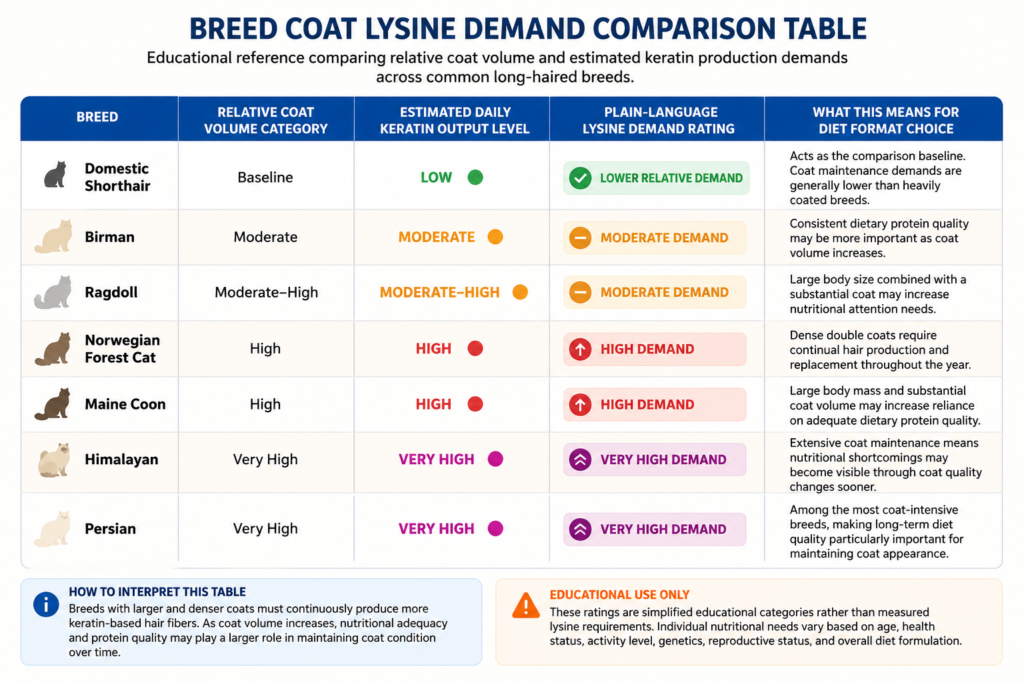
Long-haired and dense-coated breeds need more lysine than short-haired cats. They produce more keratin for every kilogram of body weight each day. This breed-specific keratin production demand, the proportionally greater daily output of the structural protein that hair is made from in high-volume coat breeds, means the same diet that supports a healthy short-haired cat may not fully support a Persian or Maine Coon of the same size.
Fur is made mostly of keratin, and keratin depends on lysine as one of its structural amino acids. The relationship is straightforward: coat volume creating a proportionally higher demand for lysine on a daily basis means these cats need a steady supply every day. This demand is constant, not occasional.
Many owners say, “my long-haired cat mats constantly even with regular grooming and a good diet.” In some cases, the issue may not be grooming at all. It may reflect a lysine supply that consistently falls just short of what the coat requires.
According to educational guidance from VCA Animal Hospitals, a substantial portion of a cat’s daily protein intake supports skin and hair production. In breeds with heavier coats, that demand naturally increases.
Nutritional information from Today’s Veterinary Practice also notes that methionine and cysteine, two amino acids heavily used in hair production, can become limiting nutrients in some diets. When amino acids involved in coat structure are in short supply, hair growth can slow, and hair may become more fragile. Lysine functions within this same nutritional system.
Several breeds are commonly associated with higher coat-related lysine demand.
- The Persian has an extremely dense double coat that can mat and flake when keratin quality declines.
- The Maine Coon has a semi-long coat with a thick undercoat and heavy seasonal shedding. This can increase nutritional demand during coat transitions.
- The Ragdoll’s silky coat often loses texture quickly when the amino acid supply becomes borderline.
- The Norwegian Forest Cat has a dense, weather-resistant double coat with high keratin output.
- The Birman and Himalayan also maintain long coats that require substantial keratin production relative to body size.
Some owners notice, “My short-haired cat looks fine, but my Persian always seems to struggle with her coat.” That difference can reflect a genuine biological variation rather than an individual quirk.
Breed-related coat decline often appears faster and looks more obvious than general deficiency. Long-haired cats simply have more keratin to maintain. As hair shaft quality declines, matting becomes more common. A cat that rarely matted before but suddenly begins matting is worth paying attention to.
Owners of long-haired breeds also tend to notice small coat changes earlier. That extra observation can be valuable because coat recovery often takes longer in high-volume breeds. More keratin must be produced before visible improvement appears.
While checking food labels one evening, Luka noticed that the kibble he had fed his Maine Coon, Atlas, for two years listed a high protein percentage but gave no information about nutrient availability after processing. He switched to a high-protein canned food with animal protein listed first. Over the next six weeks, matting in Atlas’s undercoat decreased, and his coat felt noticeably softer during grooming.
Factoring in your cat’s coat volume when thinking about whether her diet may have a nutritional gap is a practical step that many feeding guides overlook. The protein percentage printed on a cat food label was not designed around the daily keratin output of a Persian or other heavy-coated breed.
Your cat’s breed shapes how much lysine her coat consumes every day. This table shows how the most commonly affected long-haired breeds compare on that daily demand, using coat volume as the measuring lens.
Indoor and Sterilized Cats Lysine Risk
Indoor-only cats, cats recovering from surgery, and sterilized cats can all face lysine-related coat risks. These risks often develop slowly and quietly. Because the changes are gradual, owners may blame other causes before considering nutrition.
Many owners describe the same concern: “She lives indoors, eats on schedule, and still looks like something is missing nutritionally.” For indoor cats, that feeling can have a biological explanation.
Indoor cats do not have access to prey, which naturally provides highly bioavailable amino acids. Instead, they rely entirely on commercial food. For many cats, that means a diet based mostly on kibble, which may have bioavailability limitations related to processing.
Indoor lifestyles can also involve less physical activity and fewer sources of stimulation. Over time, this may contribute to low-grade chronic stress. Research has shown that stress can affect immune function and how the body allocates metabolic resources.
Feeding the same brand and formula for months or years can add another layer to the issue. It may reduce amino acid variety across the diet. The indoor-only cat nutritional deficiency concern is not a fringe idea. It is a predictable consequence of removing the dietary variation that outdoor prey would otherwise provide.
Post-surgical recovery creates a different type of lysine challenge. Healing after surgery requires substantial metabolic resources. The body prioritizes wound repair and tissue regeneration before other needs.
Lysine plays an essential role in collagen synthesis, the process that creates the structural protein needed for tissue repair. This is the same biological system that supports healthy skin and coat maintenance.
As a result, post-surgical tissue repair, competing directly with the coat for available amino acids, can temporarily reduce the resources available for coat quality. This shift may last for several weeks. A cat whose coat declines two to four weeks after successful surgery may simply be showing the expected result of this resource reallocation.
Many owners do not connect these events because the coat changes appear well after the operation. The timeline can make the relationship easy to miss.
Sterilization affects amino acid use in a slower and less obvious way. Spayed and neutered cats experience hormonal changes that can influence metabolic rate and protein utilization.
Over time, reduced metabolic rate can affect how the body processes and allocates amino acids. Weight gain after sterilization is also well documented. To manage weight, many owners reduce food portions. In some cases, that also lowers total lysine intake along with calories.
Coat changes in sterilized cats often develop gradually over months. Owners frequently attribute these changes only to hormones and never consider the nutritional side of the picture. Sterilization, altering the hormonal profile in ways that affect how efficiently protein is used, is not a dramatic event. It is a slow adjustment that the coat may eventually reflect.
Many owners say, “Her coat went downhill after her spay surgery and never fully came back.” That observation may sit at the intersection of all three factors discussed here. These include post-surgical amino acid demand, sterilization-related metabolic changes, and the nutritional limitations that can accompany an indoor lifestyle.
Considering whether your region’s most common diet format may create a higher baseline risk is the next step in understanding the bigger picture. The following section explores that factor in more detail.
Three quiet variables in your cat’s daily life can combine to create a higher lysine risk than any one of them would produce alone. Answer three questions about her situation and see how they interact.
Lifestyle Lysine Risk Profile Builder
Select your cat’s lifestyle, recent health events, and diet format to view a simplified educational coat nutrition risk profile.
How Diet Type Affects Lysine Risk
Where you live influences what you feed your cat. What you feed your cat influences how much usable lysine reaches her tissues. The risk is not mainly about price or brand reputation. It is about lysine bioavailability in the diet format commonly used where you live.
Research published in Nutrition Research Reviews by van Rooijen et al. showed that the Maillard reaction can reduce lysine availability during pet food processing. This chemical reaction occurs when food is heated. During the process, sugars and amino acids bind together, making part of the lysine unusable to the body.
Studies have found meaningful differences between the lysine listed on a label and the lysine a cat can actually absorb. The amount lost varies by processing method and food format. Research published in the British Journal of Nutrition found that canned wet foods consistently preserved more bioavailable lysine than dry kibble products.
For cat owners in the United States who feed mostly dry food, this finding has practical importance. The kibble-fed cat lysine deficiency concern is not limited to budget foods. It can apply across both premium and standard brands because lysine loss is linked to the extrusion process itself, not just ingredient quality.
According to nutritional guidelines from the Pet Food Institute, AAFCO-compliant cat foods are formulated to meet minimum lysine requirements for all life stages. However, those standards are based on total lysine content. The amount of lysine that remains biologically available after processing is a separate issue that label compliance does not fully address.
Feeding habits also vary by region, creating different baseline risk profiles. In North America, kibble-based feeding remains common. That makes moderate long-term bioavailability risk more common as well, although the exact risk depends on the food format and processing method.
In the UK and Northern Europe, wet and raw feeding are more widely used. As a result, average lysine bioavailability may be higher. However, households that rely mainly on kibble still face the same processing-related limitations.
Australia and New Zealand show a mixed pattern. Many owners use both commercial kibble and raw diets. This creates a broader range of risk profiles and growing awareness of prey-model feeding approaches.
In South Asia, homemade cat diets often include rice, lentils, and small amounts of fish. Because plant proteins generally contain less lysine and are less digestible than animal proteins, that’s why the lysine deficiency risk in homemade cat food may be higher.
Research cited by Villaverde and Chandler in the Journal of Feline Medicine and Surgery found that up to 86% of commonly prescribed homemade cat diet recipes contained nutritional inadequacies across life stages. Another study of more than 200 homemade recipes found that most did not reliably meet essential amino acid requirements.
The practical takeaway is simple. Understanding your region’s feeding habits can help you estimate whether diet format may contribute to coat problems. Before considering supplements, it is worth asking whether the current diet provides enough bioavailable lysine.
Many owners ask, “Does a cat food brand affect coat quality?” The honest answer is that diet format often matters more than brand. A cat eating a mid-range wet food may absorb more usable lysine than a cat eating premium kibble because bioavailability losses occur during processing, not just during formulation.
A practical way to think about risk is by diet type. Raw or whole-prey diets generally provide the highest lysine bioavailability and the lowest baseline deficiency risk. Wet foods in cans or pouches typically offer moderate-to-high bioavailability and lower risk than kibble.
Dry kibble generally provides the lowest lysine bioavailability because of heat extrusion. As a result, it carries a higher baseline risk regardless of marketing claims. Grain-based homemade diets vary widely, but plant proteins consistently provide less lysine and lower digestibility than animal proteins.
Choosing to begin with diet quality improvements before moving to supplementation remains one of the most consistently supported recommendations in veterinary nutrition. Understanding lysine bioavailability across different diet formats makes that advice more practical and actionable.
The research on how processing affects usable lysine is most valuable when you can apply it to the specific bag you have or already have in your kitchen. Here is exactly what to look for and what it tells you.
Diet Format Lysine Bioavailability Label Audit
Follow these steps while reading your cat food label to identify potential lysine bioavailability considerations.
Check the First 5 Ingredients
Look at the ingredient list and focus on the first five ingredients because they typically make up a substantial portion of the formula.
- Look for named animal protein sources (chicken, turkey, salmon, rabbit, etc.).
- Count how many animal-based proteins appear before grains or starches.
- Check whether meat meals or animal proteins appear near the top of the list.
Look for High-Heat Processing Clues
Processing method may influence amino acid availability. Review the product description and packaging language.
- Extruded kibble products typically undergo multiple heat-processing stages.
- Canned foods use thermal processing but differ from extrusion methods.
- Raw products generally undergo less heat treatment.
- Mixed feeding combines multiple processing methods.
Compare Guaranteed Analysis Protein Percentage
Locate the guaranteed analysis panel and note the crude protein percentage.
- Higher protein percentages do not automatically guarantee higher lysine availability.
- Protein source quality and processing method both matter.
- Compare protein percentage alongside diet format rather than by itself.
Diet Format Reference Guide
| Diet Format | General Bioavailability Consideration | Audit Flag |
|---|---|---|
| Raw Diet | Typically less heat processed | Lower Relative Processing Concern |
| Canned Wet Food | Moderate processing exposure | Moderate Consideration |
| Mixed Feeding | Depends on proportions used | Variable |
| Extruded Dry Kibble | Typically highest processing exposure | Higher Relative Processing Consideration |
Build Your Overall Label Impression
- Were animal proteins prominent in the ingredient list?
- What diet format is being fed?
- Does the crude protein percentage appear appropriate for the life stage?
- Are there coat quality concerns despite apparently adequate protein levels?
Bring a photo of the ingredient panel and guaranteed analysis to your appointment. Ask whether the diet’s protein sources, processing method, and formulation are appropriate for your cat’s age, health status, and coat condition.
What Research Says About Lysine for Cats
If you have spent time reading about lysine for cats, you have almost certainly come across two opposite claims. One source says it is essential, and the science is clear. Another says the 2015 study on lysine for cats proved it is useless.
That confusion does not mean you did poor research. It happens because people often combine two separate evidence questions into one. This creates a public narrative that can be genuinely misleading.
Many owners describe feeling stuck between marketing claims and conflicting research findings. Some even say, “I feel stuck somewhere between marketing claims and scary research headlines.” That reaction has a specific cause, and this section explains it.
If you have asked “Does lysine actually work for cats?”, the honest answer depends on what you are evaluating lysine for. The three sections below explain the origin of lysine’s popularity, what the 2015 study on lysine cats actually examined, and how to understand both evidence tracks without letting one cancel out the other.
Why Lysine Became a Cat Supplement
Lysine became widely recommended in feline veterinary practice because of a specific, biologically plausible hypothesis about how it might suppress a common cat virus, not because of established coat health evidence. Understanding where the recommendation came from makes it easier to evaluate current lysine claims accurately instead of accepting or rejecting the entire category at once.
The scientific hypothesis that launched lysine’s popularity in cat care began in the 1990s. Researchers proposed that lysine could slow feline herpesvirus type 1 (FHV-1) replication by competing with arginine. Arginine is an amino acid that cats cannot produce in sufficient amounts on their own, and the herpesvirus needs it to replicate inside the body.
The theory made biological sense. In vitro studies, meaning studies performed in cell cultures rather than living animals, showed that higher lysine levels reduced herpesvirus replication when arginine levels were also reduced. The original lysine hypothesis, coming from cell culture studies rather than live cat trials, is an important detail because it shaped everything that followed.
In vitro evidence being extrapolated into clinical use before real-world trials confirmed it is a recognized pattern in veterinary supplementation. Lysine followed that path closely. The mechanism seemed logical, the supplement was inexpensive, and early use appeared safe.
As a result, many veterinarians began recommending lysine for cats with FHV-1. Product manufacturers also built supplement lines around that association. By the time researchers evaluated the evidence through formal systematic review methodology, lysine had already become a common part of feline care.
This history matters when evaluating today’s lysine claims. Lysine’s popularity as a cat supplement comes from one specific hypothesis about one specific issue: viral suppression. The evidence supporting that hypothesis has since weakened considerably.
Coat health benefits rely on a completely different biological rationale. Using viral research to judge nutritional research, or vice versa, creates confusion. Owners searching for lysine for cat herpes, does it work, and those looking into lysine for cat coat health research are exploring two separate questions that belong to different evidence bases.
Understanding why lysine became the default recommendation requires knowing where the original evidence came from and what happened when it was tested in real cats. Here is that timeline, with the sources that document each stage.
FHV-1 Hypothesis Origin Citation Callout
Initial In Vitro Research Origin
Systematic Evidence Review
What the 2015 Lysine Study Found
The 2015 systematic review on lysine and cats reached a specific, clearly bounded conclusion about one specific use of lysine, and that conclusion is frequently cited in ways that extend far beyond what the study actually examined. Reading what it found alongside what it did not examine is essential for interpreting it accurately.
Researchers using systematic review methodology, a structured process that evaluates all available controlled studies on a specific question, reviewed the full body of research on lysine supplementation for FHV-1 infections in cats.
The conclusion, published in BMC Veterinary Research, was clear. No scientific evidence supported lysine supplementation as a way to prevent or reduce the severity of FHV-1 infections in cats. Some studies also found that high-dose lysine supplementation worsened outcomes. Researchers suggested this may have happened because excess lysine reduced arginine availability and impaired immune function rather than helping it.
Based on the total evidence, the authors recommended stopping the routine use of lysine supplementation specifically for FHV-1 management.
These findings are important and should be taken seriously. The 2015 study’s conclusion about the antiviral question is not widely disputed in veterinary nutrition literature. Some veterinary sources present the recommendation strongly, while others take a more cautious approach and call for additional research.
Even so, the overall direction of the evidence remains consistent. If your veterinarian recommends against lysine supplementation for FHV-1, the 2015 review is likely the evidence base behind that recommendation.
The review also had an important limitation. It examined lysine only as an antiviral intervention, not as a nutritional supplement for coat or skin health. No studies in the review evaluated lysine’s role in collagen synthesis, keratin production, or overall skin and coat quality.
In other words, the review delivered a verdict on lysine as a viral management strategy. It did not deliver a verdict on lysine as an essential dietary nutrient. Those are separate questions supported by different bodies of evidence.
To put it simply, it is accurate to say that lysine supplementation is not supported as a treatment or prevention strategy for feline herpesvirus. It is not accurate to say that the review proved lysine has no value for cats in every situation.
Likewise, it is not accurate to conclude that lysine is useless for cats based on the review alone. That interpretation extends the findings beyond what the researchers actually studied. The review examined antiviral use, not nutritional adequacy or structural tissue support.
The first statement reflects the evidence. The second goes beyond it. Owners and professionals who use the review to dismiss all lysine use for coat health, nutritional adequacy, or tissue support are applying the findings to questions the authors did not investigate.
Many owners express the same concern: “I don’t have a problem with supplements,I just want to know the evidence is actually there.” That is a reasonable position. To evaluate the evidence fairly, it helps to understand exactly which question each study was designed to answer.
The next time you read a claim that uses the 2015 study to support or dismiss lysine entirely, this table shows you exactly what that study was and was not designed to answer.
2015 Review Scope Clarifier
Tap a section below to see what the 2015 BMC Veterinary Research review did—and did not—investigate.
✓ What The Review Examined
- FHV-1 antiviral use hypotheses
- Lysine supplementation at clinical doses
- Effects on viral shedding
- Effects on infection severity
- Clinical outcomes in supplemented cats
- Published FHV-1 intervention studies
- Evidence supporting or refuting antiviral benefit claims
✕ What The Review Did Not Examine
- Collagen synthesis biology
- Keratin production and hair formation
- Coat quality or coat recovery timelines
- Integumentary system health
- Dietary lysine adequacy requirements
- Structural nutritional needs
- Nutritional deficiency detection
- Lysine’s role in normal tissue maintenance
- Veterinary nutrition formulation standards
When you see a claim citing the 2015 review, check whether the claim falls inside or outside the review’s actual scope.
Lysine for Coat Health vs Viral Treatment
Lysine’s role as a failed antiviral and lysine’s role as an essential structural nutrient are two entirely separate evidence questions that share a name but work through completely different biological mechanisms. Conflating the antiviral mechanism with the nutritional pathway produces an inaccurate picture of both.
This distinction is the most important concept in this entire area of research. It is also the point most often missed in public discussions about lysine and cats.
Evidence Track 1: Lysine as an antiviral for FHV-1
The original theory suggested that lysine could compete with arginine and reduce viral replication. Arginine is an amino acid that cats cannot produce in adequate amounts on their own, and FHV-1 needs it to replicate.
Clinical trials did not support this theory. The evidence reviewed in 2015 found no meaningful antiviral benefit. As a result, the systematic review recommended against using lysine specifically for FHV-1 management.
The conclusion is straightforward. Lysine should not be used as an antiviral treatment for FHV-1 without current veterinary guidance and evidence review.
Evidence Track 2: Lysine as a structural nutrient for skin and coat
The mechanism here is completely different. It is based on established biochemistry rather than viral suppression.
According to StatPearls through NCBI, lysine is directly involved in collagen formation. Lysyl hydroxylase enzymes modify lysine residues to create the stable cross-links that give skin and connective tissue their strength and structure.
Another enzyme, lysyl oxidase, also acts on lysine. It helps form the covalent bonds between collagen fibers that make tissue durable. Lysine also contributes to keratin filament assembly, an important part of hair structure.
The essential amino acid classification in obligate carnivores is not disputed. Cats cannot make enough lysine on their own and must obtain it through their diet.
The Merck Veterinary Manual lists lysine as one of the eleven essential amino acids required by cats. A 2023 peer-reviewed review published in PMC further confirmed that cats, as obligate carnivores, maintain a high rate of protein oxidation and cannot adapt well to reduced protein intake.
That means lysine remains a required dietary nutrient. The evidence supporting skin and coat health is rooted in feline nutrition and amino acid biochemistry. Research has also documented skin and coat problems when a deficiency occurs.
A 2025 randomized controlled feeding trial published in Animals through PMC found that cats receiving trace minerals complexed with lysine and glutamic acid had reduced hair shedding and improved coat scores at day 45 compared with controls.
However, the improvement was not maintained at day 90. The findings are still preliminary and do not support broad conclusions. Even so, they belong to the structural nutrition evidence track, not the antiviral track, and that distinction matters.
Using Track 1 evidence, antiviral failure, to dismiss Track 2 evidence, structural nutrition, creates a logical error. The 2015 review simply did not investigate the structural role of lysine.
A cat does not need FHV-1 for lysine deficiency to affect skin or coat quality. The nutritional requirement exists independently of any viral condition.
The phrase antiviral efficacy and nutritional adequacy representing two completely separate evidence questions captures this distinction clearly. One question asks whether lysine works against a virus. The other asks whether cats need lysine to maintain normal tissue structure.
Those are not the same question, and the evidence should not be treated as if they are.
Separating the antiviral and nutritional evidence tracks makes the research landscape much easier to understand. Once that distinction is clear, the evidence becomes far less contradictory, and it provides a stronger foundation for making practical decisions.
The reason you are considering lysine for your cat determines which body of evidence is actually relevant to your decision. Answer one question, and this filter shows you which track applies and what it currently supports.
Two Evidence Track Decision Filter
Select the primary reason you’re considering lysine and view the evidence track most relevant to your situation.
How to Decide Whether Your Cat Needs Lysine
The previous two sections mapped your cat’s risk profile by life stage, breed, and lifestyle. They also separated the research into two evidence tracks that answer different questions. This section brings those ideas together into a practical decision framework.
This is not a protocol or a prescription. It is a structured way to think about what the information means for your specific cat. No new biological concepts are introduced here.
If you are wondering whether you should give your cat a lysine supplement, the answer depends on which risk factors apply to her. It also depends on whether you have already optimized the bioavailability of the food she eats.
The goal here is simple: turn what you now understand into a decision you can make with confidence and realistic expectations.
The core decision framework for an informed owner starts with a simple shift in perspective. Lysine is best understood as a structural nutritional support tool. It is not a viral treatment, a cure-all, or a supplement that either works dramatically or does nothing. Using research findings to inform your decisions rather than to paralyse them is the practical takeaway from the previous section. The science is not perfectly settled, but it becomes much easier to understand when the antiviral question and the structural nutrition question are viewed separately.
Mapping which risk factors from this article actually apply to your specific cat is the first practical step. A kitten eating a grain-heavy diet, a senior Persian eating premium kibble, a recently spayed indoor cat, and a rescue cat four months into a new home all have different risk profiles.
Each situation requires a different level of attention. It does not require the same supplement recommendation for every cat.
Treating kittens and seniors as naturally higher-priority cats when it comes to coat nutrition reflects a basic biological reality. Their nutrient demands and absorption patterns are further from the stable adult maintenance stage. If your cat falls into one of the life-stage or breed categories discussed earlier, that risk profile should guide your decision, not the supplement label.
Prioritizing dietary lysine bioavailability before supplementation is the position most consistently supported by veterinary nutrition guidance. In many cases, it produces a greater effect than adding a supplement to a diet that already loses a portion of its lysine during processing.
Choosing to begin with diet quality improvements before moving to supplementation is not simply delaying action. It is often the more effective first step.
The question of when to give a cat a lysine supplement is often framed around timing. In practice, the answer is usually diet optimization first. Supplementation should be considered only after food-format changes have been given a fair trial.
For a kibble-fed indoor cat, discussing food-format options with your veterinarian may be more productive than starting a supplement immediately. Wet food or other formats may improve amino acid bioavailability.
Considering whether your region’s most common diet format may create a higher baseline risk helps make this principle practical and relevant to your local feeding habits.
Setting realistic expectations matters just as much as making the decision itself. Lysine support is not a quick fix for coat problems.
The coat growth cycle takes weeks to months. The goal is not a dramatic transformation. The goal is to restore the coat quality that is normal for your cat’s age, breed, and health status.
If you do not see improvement after a consistent trial period discussed with your veterinarian, lysine may not be the underlying issue. That information is valuable and should guide your next step.
Revisiting your approach if coat and skin condition have not improved after a fair consistent trial is the rational response. It is not a sign of failure.
Work with your veterinarian to reassess the situation. Lysine-related coat changes can overlap with allergies, other nutritional deficiencies, and underlying medical conditions.
Once the two evidence tracks are separated, the research becomes much easier to interpret. Conflicting findings do not mean you should do nothing. They mean you should act with realistic expectations and remain willing to reassess your approach.
The 2015 review did not recommend against lysine as a nutritional supplement. It is recommended against lysine as a herpesvirus antiviral.
Deciding in advance what a reasonable evidence threshold looks like for your situation helps keep your decision grounded. It also helps you stay focused on the question that actually applies to your cat.
Always discuss supplementation with your veterinarian, especially if your cat has another health condition, such as kidney disease, where protein metabolism may already be affected.
Bringing written notes about your cat’s risk factors to your next veterinary consultation can make that discussion far more productive. Include details about life stage, coat volume, diet format, recent surgeries, illnesses, or major life changes.
A practical three-step approach looks like this:
- Assess which risk factors from this article apply to your cat.
- Optimize food format and bioavailability before or alongside supplementation.
- Evaluate coat and skin changes after eight to twelve weeks and adjust based on the results.
Observing whether coat changes correlate with any life-stage transitions or stressful periods is often one of the most useful things an owner can do. A recent surgery, rehoming event, or transition into senior age may explain changes that otherwise seem confusing.
For example, Sofia noticed that her five-year-old Tonkinese, Mochi, developed a dull and slightly rough coat a few weeks after a routine procedure. At first, she did not connect the change to the surgery. Her veterinarian explained that healing tissue draws from the same amino acid supply used for coat maintenance. After switching to wet food, Sofia gradually saw Mochi’s coat texture improve over the next two months.
Risk stratification by life stage and phenotype, your cat’s combination of physical traits and life circumstances, is not just a theoretical concept. It helps you identify the actual problem affecting your cat rather than responding to a generic version of the problem.
Conclusion: Risk Is Not Equal, But It Is Knowable
Every cat carries some level of lysine-related risk. However, your cat’s age, breed, life history, diet format, and location help determine whether that risk stays low, becomes moderate, or is already affecting her coat and skin. These factors are not random. You can identify them, assess them, and often address them once you understand what is driving them.
What you now have is something many cat owners do not: a structured way to evaluate your cat’s risk. This is not generic advice from a supplement label. It is a practical framework for looking at your cat’s life stage, physical traits, history, and daily diet to see which factors may increase risk. That puts you in a much stronger position than simply reacting after a coat problem appears.
The research side of this topic often creates the most confusion, but it does not have to. “my vet and every website I’ve found seem to completely disagree about lysine” is a common frustration when two separate evidence tracks get blended into one story.
Once you separate the antiviral question from the nutrition question, the confusion becomes easier to resolve. The 2015 systematic review found that lysine does not help manage feline herpesvirus infections. In contrast, established amino acid biochemistry and feline nutrition research support lysine’s role as an essential nutrient. The science is not settled in every detail, and acknowledging that is important. Even so, the overall message is clear: lysine is an essential structural nutrient, while its use as a viral treatment is not supported by current evidence.
Identifying your cat’s risk profile before symptoms worsen is one of the most valuable things you can do. It can also help you avoid spending months trying approaches that do not address the real problem. You do not need perfect evidence to make a good decision. You need enough clarity to ask the right questions, choose a reasonable starting point, and evaluate results honestly over time.
Because the next step is not more information. The next step is taking the right action.
What to Watch For
Observable coat and skin signals worth noting:
- Whether your cat’s coat texture has changed over the past two to four months, rougher, duller, or less dense than her breed baseline
- Whether shedding volume has increased noticeably without a seasonal explanation
- Whether skin flaking or scaling is visible around the base of the fur, particularly along the back and around the face
- Whether coat matting has developed or worsened in a cat that did not previously mat easily
- Whether coat color appears less vivid or darker coat areas show any reddening or lightening
Life-stage and circumstance signals to track:
- Whether coat changes began or worsened following a surgery, sterilization, or significant stressor
- Whether a kitten’s coat texture lags visibly behind her overall growth and body development
- Whether a senior cat’s coat has declined progressively despite no change in food brand or feeding schedule
- Whether a rescue cat’s coat has shown no improvement after more than ten to twelve weeks on consistent adequate nutrition
Questions worth preparing for your next veterinary consultation:
- What your cat has been eating, in what format, and for how long, including any recent diet changes
- Which life-stage or breed risk factors from this article apply to your specific cat
- Whether your vet recommends evaluating amino acid density rather than total protein percentage for your cat’s specific situation
- Whether any concurrent health conditions your cat has may be affecting protein metabolism or absorption
- What a reasonable evaluation timeline looks like, given your cat’s age, coat type, and history
FAQ — Cat Lysine Symptoms and Risk
Q1: Is my kitten more at risk for lysine deficiency than an adult cat?
Kittens need significantly more lysine per kilogram of body weight than adult cats. Their bones, organs, and coat are all growing at the same time and competing for the same amino acid supply. That is why kitten amino acid deficiency coat changes can appear even when overall growth seems normal.
A diet that meets an adult cat’s maintenance needs may not fully support a kitten’s growth demands. If your kitten’s coat is not developing the texture expected for her age or breed, talk with your veterinarian about amino acid density, not just protein percentage.
Q2: Why do rescue cats often have poor coat quality even when well-fed?
A rescue cat’s coat reflects months of nutritional history, not just what she ate this week. Structural proteins like collagen, reflecting months of nutritional history rather than this week’s diet, help explain why coat quality often lags behind other signs of recovery.
During recovery, the body rebuilds internal collagen before cosmetic collagen. During recovery, the coat is usually one of the last tissues to improve. Even with good nutrition, visible coat changes can take time.
Recovery periods of three to six months are often normal. Giving rescue cats a longer, realistic window before evaluating coat recovery progress is both practical and consistent with the available evidence.
Q3: Does my cat’s breed affect how much lysine she needs?
Yes. Cats with larger or denser coats generally need more keratin production. Because keratin contains lysine, coat size can influence lysine demand.
Breeds such as the Persian, Maine Coon, Ragdoll, Norwegian Forest Cat, and Himalayan produce more coat material than short-haired breeds. Research suggests long-haired breeds producing significantly more keratin per kilogram of body weight may be more likely to show coat decline when dietary amino acid intake is marginal.
Factoring in your cat’s coat volume when thinking about whether her diet may have a gap is a useful step that many general feeding guidelines do not specifically address.
Q4: Does the science actually support giving lysine for coat health?
At the biochemical level, yes. Lysine is an essential amino acid with a direct role in collagen and keratin production. Because cats cannot make enough lysine on their own, they must obtain it through their diet.
This question is completely separate from the FHV-1 antiviral claim. The evidence for coat support and the evidence for viral management answer different questions. Understanding that distinction helps prevent one finding from being incorrectly applied to the other.
Q5: What did the 2015 study find about lysine supplements for cats?
The 2015 study on lysine cats’ systematic review, published in BMC Veterinary Research, found no scientific evidence that lysine supplementation prevents or reduces the severity of FHV-1 infections in cats.
The review also noted that some studies reported worse outcomes at high doses, likely because excess lysine interfered with arginine availability. For this reason, the authors recommended against routine lysine use for FHV-1 management.
Importantly, the review only evaluated lysine as an antiviral intervention. It did not examine lysine’s role in coat health, skin health, collagen production, or keratin synthesis. Its conclusions apply to FHV-1 management and not to nutritional coat support.
Q6: Does where I live or what I feed my cat change her lysine risk?
Yes. Where you live often influences the type of food most owners feed, and the diet format affects how much usable lysine reaches your cat’s tissues.
Research published in Nutrition Research Reviews found that heavily processed pet foods can show large differences between total lysine and bioavailable lysine. Dry kibble generally showed lower lysine bioavailability than canned wet food.
The issue is not simply food price or brand reputation. A cat in North America eating premium kibble and a cat in South Asia eating a grain-based homemade diet may face very different lysine bioavailability challenges. Understanding which diet format creates a higher baseline risk in your region can help you decide whether a dietary adjustment may be beneficial.
Disclaimer: This article is written for educational purposes only and does not replace professional veterinary advice. Always consult a licensed veterinarian before making changes to your cat’s diet or health management.
References
Veterinary Nutrition Guidelines and Institutional Sources
- Merck Veterinary Manual. Nutritional Requirements of Small Animals. Updated 2024.https://www.merckvetmanual.com/management-and-nutrition/nutrition-small-animals/nutritional-requirements-of-small-animals
- VCA Animal Hospitals. Nutrition, Skin, and Cats.https://vcahospitals.com/know-your-pet/nutrition-skin-and-cats
- Pet Food Institute. A to Z of Pet Food: Leucine and Lysine and Other Amino Acids. 2025.https://www.petfoodinstitute.org/a-to-z-of-pet-food-leucine-and-lysine-and-other-amino-acids/
- American Animal Hospital Association (AAHA). 2023 AAHA Senior Care Guidelines for Dogs and Cats — Nutrition Section. 2023.https://www.aaha.org/resources/2023-aaha-senior-care-guidelines-for-dogs-and-cats/nutrition/
- PetMD. Senior Cat Nutrition. Updated 2026.https://www.petmd.com/cat/nutrition/senior-cat-nutrition
Peer-Reviewed Research
- Larsen J A, et al. Skin Lesions Associated with Lysine Deficiency in Kittens are Characterized by Inflammation. International Journal of Applied Research in Veterinary Medicine (JARVM). 2014; Vol. 12, Issue 1.https://jarvm.com/articles/Vol12Iss1/Vol12Iss1Larsen.pdf
- van Rooijen C, et al. The Maillard Reaction and Pet Food Processing: Effects on Nutritive Value and Pet Health. Nutrition Research Reviews. 2013; 26: 130–148.https://www.cambridge.org/core/services/aop-cambridge-core/content/view/S0954422413000103
- van Rooijen C, et al. Reactive Lysine Content in Commercially Available Pet Foods. British Journal of Nutrition / PMC. 2015.https://www.ncbi.nlm.nih.gov/pmc/articles/PMC4473178/
- Bol S, et al. Lysine Supplementation Is Not Effective for the Prevention or Treatment of Feline Herpesvirus 1 Infection in Cats: A Systematic Review. BMC Veterinary Research. 2015.https://bmcvetres.biomedcentral.com/articles/10.1186/s12917-015-0594-3
- Wu G, et al. Amino Acid Nutrition and Metabolism in Domestic Cats and Dogs. Journal of Animal Science and Biotechnology. PMC. 2023; 14:19.https://pmc.ncbi.nlm.nih.gov/articles/PMC9942351/
- Kersten S, et al. Effect of Supplemental Trace Mineral Source on Haircoat and Hair Loss in Adult Cats. Animals (MDPI). PMC. 2025.https://www.ncbi.nlm.nih.gov/pmc/articles/PMC12466704/
- Salo A M, et al. Prolyl and Lysyl Hydroxylases in Collagen Synthesis. Experimental Dermatology. 2021.https://onlinelibrary.wiley.com/doi/full/10.1111/exd.14197
Educational and Clinical References
- VeterianKey. Protein Requirements in Cats.https://veteriankey.com/protein-requirements/
- VeterianKey. The Unique Nutritional Requirements of the Cat: A Strict Carnivore.https://veteriankey.com/the-unique-nutritional-requirements-of-the-cat-a-strict-carnivore-2/
- StatPearls via NCBI. Biochemistry, Collagen Synthesis. Updated 2023.https://www.ncbi.nlm.nih.gov/books/NBK507709/
- Today’s Veterinary Practice. Diets and the Dermis: Nutritional Considerations in Dermatology. 2022.https://todaysveterinarypractice.com/acvn-nutrition-notesdiets-dermis-nutritional-considerations-dermatology
- Vetlexicon. Skin Disease — Malnutrition in Cats.https://www.vetlexicon.com/felis/dermatology/articles/skin-disease-malnutrition/
- Villaverde C and Chandler M. Commercial vs Homemade Cat Diets: What You Need to Know. Journal of Feline Medicine and Surgery. 2022; 24: 415–428.https://journals.sagepub.com/doi/full/10.1177/1098612X221090389
- Veterinary Specialists. Balancing Homemade Diets for Pets: Risks, Benefits, and Guidelines. 2024.https://www.vetspecialists.com/vet-blog-landing/animal-health-articles/2024/03/28/Balancing-Homemade-Diets-For-Pets

Saloni Nagar is the founder and lead content creator of Bark & Meow Tales. As a dedicated cat parent and researcher, she transitioned from personal loss to pet health advocacy, focusing on early warning signs and preventive care. Saloni specializes in translating complex veterinary concepts into actionable guidance for pet parents. Her work is driven by a commitment to helping others interpret subtle feline health signals before they escalate, ensuring that every cat has a voice through informed, compassionate care.