
By Saloni Nagar, Medically Reviewed by Dr. Jimisha Shah, B.V.Sc & A.H., PGDAW
Iodine and cat thyroid health is a topic that sounds simple at first. Cats need iodine, but too little or too much can create problems. The deeper you look into why iodine affects cat thyroid, the more specific and fascinating the biology becomes.
If you have recently read about your cat’s symptoms or heard the word “iodine” during a vet visit, you may want to understand what is happening inside the body before deciding what to think or do next.
Many articles explain this topic at a surface level or move quickly into treatment discussions. This leaves out the most important part for many cat owners: understanding the actual biology of how iodine affects the thyroid.
Understanding this process changes how you think about food choices. It turns a vague concern into a clear chain of biological events.
This article does not recommend foods, brands, or treatments. Instead, it explains the science so you can have a more informed conversation with your vet and better understand what you read next.
The article covers four biological layers. First, it explains what iodine does inside thyroid hormones. Next, it explains why both deficiency and excess can damage the gland. It also explains why cats are more vulnerable than some other species and how thyroid disruption can affect the pituitary axis and future generations.
Every Cat Thyroid Hormone Is Built From Iodine
Many owners start this topic knowing that iodine is “important for the thyroid” in a general nutritional sense. They may think of it like vitamin C supporting immune function.
The reality is more specific and more interesting. Iodine is not just a nutrient that supports thyroid function. It is a structural part of every thyroid hormone molecule a cat’s body produces.
Once you understand this, the rest becomes easier to follow. It explains why both too little and too much iodine can cause problems and why cats are especially vulnerable.
The three sections below move through the biology step by step. They begin with the structure of thyroid hormones, then explain what happens when iodine is too limited, and finally what happens when iodine levels become too high
Why does a cat’s thyroid need iodine?
Iodine is physically incorporated into the thyroid hormone molecule. It is not a catalyst or a cofactor. It is a component. This means the thyroid cannot create working hormones by replacing iodine with another mineral or by working around an iodine shortage. The hormone molecule is simply incomplete without it.
Many owners say, “I had no idea the food itself could be affecting her thyroid at a chemical level.” This is a common reaction when they first learn how thyroid biology works.
Most nutrition advice explains minerals in terms of sufficiency: getting enough or not getting enough. It often does not explain why that amount matters or what happens inside the body when levels change.
The reason why iodine affects cat thyroid function so strongly comes down to molecular structure. Thyroid hormones are built from the amino acid tyrosine and iodine atoms.
Many owners think, “I thought iodine was just a mineral in salt, not something built into every hormone molecule.” But iodine is an atomic building block of thyroid hormones, not an optional additive.
Iodine and thyroid hormones in cats are connected at the structural level. The hormone T4, or thyroxine, contains four iodine atoms per molecule. T3, or triiodothyronine, contains three iodine atoms per molecule.
The names are not random. The numbers describe the amount of iodine attached to each hormone. Understanding what T3 and T4 hormones are in cats begins with this structure because the number of iodine atoms affects each hormone’s activity.
T4 contains four iodine atoms per molecule; T3 contains three. The number defines the hormone’s biological activity.
Research published in the Journal of Feline Medicine and Surgery (Peterson, 2024) confirms that iodine’s known biological role is to support the production of these two hormones. It does not have another known role in feline physiology.
So, what iodine does for cats has a precise answer. Iodine provides the raw material the thyroid uses to build every hormone molecule it produces.
This is not a mineral with many different jobs in the body. Its main biological purpose is thyroid hormone production. Understanding how thyroid hormone is made in cats starts with the thyroid’s dependence on iodine as a structural component.
The thyroid is the only tissue in the body that actively concentrates iodine from the bloodstream. It uses a specialized transport protein called the sodium-iodide symporter to move iodine into thyroid cells.
The sodium-iodide symporter pulls iodine into thyroid cells against the concentration gradient. This allows the thyroid to collect iodine even when blood levels are low.
Cats need iodine from food every day. This is why consistency in what you feed matters at every meal.
Without enough iodine, hormone production cannot be completed, even when other biological conditions are normal. Her thyroid can only make hormones if every molecule has the right number of iodine atoms.
Iodine is a required building block with both a minimum and a maximum functional range. The thyroid needs enough iodine to work, but excessive amounts can also create problems.
Understanding why cats need iodine in their diet at this structural level helps explain why both too little and too much iodine can affect the gland.
This is not simply a lifestyle choice for cats. It is a physiological requirement. Because the thyroid actively concentrates iodine, the amount in food can directly influence what reaches the gland.
How iodine works in the cat’s body has a simple answer at this level: iodine moves from food into the bloodstream, then into the thyroid, where it becomes part of every hormone molecule the gland produces.
What happens when a cat lacks iodine?
When dietary iodine drops below the level needed for normal hormone production, the pituitary gland detects lower hormone levels and releases more thyroid-stimulating hormone (TSH). This chemical signal tells the thyroid to produce more hormones.
The thyroid responds to this increased TSH signal by working harder. Its cells enlarge, and the gland increases its tissue mass in an attempt to capture more available iodine.
Understanding what happens if a cat does not get enough iodine is important because the early effects are not always visible from the outside. When iodine levels are too low, the gland works harder but cannot keep up.
The thyroid literally swells trying to do more with less. This enlargement has a name: a goiter. A goiter is an enlarged thyroid gland caused by the gland trying to compensate for a shortage of iodine.
Many owners find this surprising. I never knew the gland could get bigger just from being underfed one mineral. Most people connect gland enlargement with disease, not with the body trying to adapt to a nutritional shortage.
The reason why does cat thyroid enlarges during an iodine shortage is this compensatory response. The swelling is the gland’s physical reaction to limited iodine availability. It is not automatically a sign of disease by itself.
The Merck Veterinary Manual (2024) explains that cat iodine deficiency symptoms and signs of iodine deficiency in cats can range from subtle metabolic changes to visible physical changes.
Low thyroid hormone production affects many systems in the body. These effects are not only related to the thyroid gland. Owners may notice changes in their cat’s energy, coat, and behavior over time.
Even with the gland’s enlargement response, a continued iodine shortage keeps hormone production below normal. The thyroid becomes larger and works harder, but it still produces less hormone.
This creates a biological paradox. The body’s compensation response does not fix the shortage. It only shows that the gland is under pressure.
Can low iodine cause thyroid problems in cats is not just a theoretical question. It explains how a cat’s thyroid not working enough iodine can progress from a nutritional shortage to structural changes over time.
Long-term TSH overstimulation of an iodine-depleted gland is not a neutral state. Research suggests that continued TSH elevation creates cellular stress and may gradually change the gland’s structure.
These changes may continue even after iodine levels are corrected. This is why the effects of iodine deficiency can develop quietly before visible signs appear.
The gland may compensate for months before an owner notices any external changes.
What Happens Inside the Thyroid When Iodine Is Too Low
When a cat’s diet does not provide enough iodine, the thyroid does not simply stop working it goes through a sequence of compensatory stages, each one placing more stress on the gland than the last. The table below maps that sequence in plain language, from the first internal signal to the structural changes that can develop over time.
| Stage | What the Body Does | What This Means for Your Cat |
|---|---|---|
| Stage 1 | Pituitary detects falling thyroid hormone levels | The brain senses the shortage before any visible sign appears |
| Stage 2 | Pituitary releases more TSH to push the thyroid harder | The gland receives a signal to increase hormone production |
| Stage 3 | Thyroid cells enlarge and multiply to capture more iodine | The gland physically grows in an attempt to compensate |
| Stage 4 | Gland is larger but hormone output stays below normal | The compensation effort does not solve the shortage |
| Stage 5 | Chronic TSH pressure alters thyroid cell structure over time | Structural changes may develop even without visible symptoms |
This process can unfold over months before any external sign appears. A vet check is the only way to assess where your cat’s thyroid currently sits.
Can too much iodine hurt a cat?
When iodine is available in excess, thyroid hormone production can accelerate beyond the body’s ability to regulate it. The normal feedback system becomes less effective, creating a different pathway of damage from iodine deficiency.
Too much iodine can harm the same gland, but through a completely different biological process. This process works in the opposite direction from iodine shortage.
Understanding how iodine in food affects the thyroid requires looking inside the thyroid follicular cells. These are the cells inside the gland where iodine is processed, and thyroid hormones are assembled.
The enzyme responsible for attaching iodine to thyroid proteins is called thyroid peroxidase. Under normal iodine levels, this enzyme works at a controlled rate.
When iodine floods the system, thyroid peroxidase activity increases. This faster activity creates a chemical cost and helps explain how excess iodine changes thyroid hormone output.
The practical result is oxidative stress in thyroid follicular cells. Excess iodine increases oxidation inside thyroid follicular cells, creating cell-damaging free radicals.
Free radicals are unstable molecules that can damage cell structures when they build up faster than the cell can repair them. When iodine overload in cats symptoms occur at the cellular level, the environment inside the gland becomes more harmful to the cells responsible for hormone production.
Unlike iodine deficiency, where the gland may enlarge, early iodine overload in cats can be harder to notice. Cellular stress can develop before a physical change appears during a veterinary examination.
This is why why does too much iodine causes thyroid problems in cats can be harder to recognize than deficiency. There is no early gland enlargement acting as a visible warning sign.
Whether too much iodine can hurt a cat is not only a yes or no question. The answer is yes, and the process involves cellular damage that can develop before obvious changes appear.
Long-term excess iodine exposure has been linked in veterinary research to changes in areas of the gland that regulate hormone production independently. These areas can operate outside the body’s normal feedback signals.
This structural change can have lasting effects. It is not simply a matter of making more hormones. It involves changes to the gland’s cellular organization.
Understanding what iodine does for cats at this molecular level helps explain the bigger picture. Both iodine deficiency and excess can damage the gland, but they do so through different biological pathways.
Knowing what iodine does inside the thyroid explains why balance matters. The surprising part for many owners is that both too little and too much iodine can harm the same gland in different ways.
This two-sided effect is why the next section focuses on how iodine balance affects long-term thyroid health.
How Iodine Deficiency and Excess Damage the Thyroid Differently
Most owners assume that if iodine is harmful in excess, then less must always be safer. The biology does not work that way. Both too little and too much iodine damage the thyroid, but through entirely different mechanisms at the cellular level. The table below places both pathways side by side so you can see exactly how the damage differs and why neither direction is the safe one.
| Too Little Iodine | Too Much Iodine | |
|---|---|---|
| What triggers the problem | Iodine falls below what hormone synthesis needs | Iodine exceeds what the regulatory system can manage |
| What the thyroid does first | Enlarges to capture more available iodine | Accelerates hormone production beyond normal rate |
| Type of cellular damage | Overstimulation stress from chronic TSH pressure | Oxidative damage from accelerated enzyme activity |
| Is the damage visible early | Usually not — gland compensates silently | Usually not — cell stress precedes any physical change |
| What develops over time | Structural changes from sustained overstimulation | Autonomously functioning areas that ignore regulation |
| Early physical sign | Thyroid enlargement may become palpable | Often no early physical sign detectable at home |
Both directions damage the same gland through entirely different pathways. Neither is safer than the other.
Both Iodine Excess and Deficiency Damage the Cat’s Thyroid
I did not connect my cat’s behavior to what was happening chemically inside her gland” is one of the most common realizations owners describe when they begin to understand how iodine-related thyroid changes work.
This section explains the central idea of the article. It focuses on a question many owners do not expect: why both iodine deficiency and excess can cause harm.
The issue is not only that iodine levels can become too low or too high. It is also about why this damage can build over time, even when iodine levels are not severely outside the normal range.
The three sections below explain three key ideas. First, they cover how both directions of iodine imbalance can damage the thyroid. Next, they explain the thyroid’s own protective response that can become harmful in cats. Finally, they explore why ongoing iodine changes can create cumulative structural effects over time.
Can low iodine damage a cat’s thyroid too?
The thyroid works within a narrow functional iodine window. Below this range, hormone production drops and the gland receives signals to work harder. Above this range, excess hormone production and oxidative cell damage can occur. Both pathways can lead to the same result: a thyroid gland that becomes structurally changed and less reliable over time, even though the damage happens through different biological processes.
Research in veterinary nutrition shows that the narrow safe iodine range for cats differs from the range found in dogs and many other animals. Many owners assume minerals follow a simple rule: more is safer than less. However, the idea that more iodine is better for cats has a clear biological answer: no. Iodine is one of the clearest exceptions to that assumption in feline nutrition.
Understanding why iodine balance is important for cats becomes easier when you compare both damage pathways side by side:
- Deficiency pathway: iodine shortage → TSH increase from the pituitary → gland enlargement → cellular stress from long-term stimulation → structural changes over time
2. Excess pathway: iodine surplus → uncontrolled hormone production → oxidative cell damage inside thyroid follicular cells → development of independently functioning areas → disrupted feedback control
Research in feline nutrition, including a 2024 review in the Journal of Feline Medicine and Surgery (Peterson), confirms that both too little and too much iodine can cause cat thyroid problems. Both pathways support this conclusion. The thyroid is not damaged because iodine exists. Damage occurs when iodine levels remain outside the range the gland is designed to handle.
The key point is that iodine balance matters more than simply increasing or reducing intake. The thyroid needs the correct amount to maintain normal hormone production and regulation.
The Two Damage Pathways Side by Side
The thyroid operates within a narrow functional window, and both sides of that window carry consequences. This table tracks each damage pathway deficiency and excess through the same six biological stages, from the starting condition all the way to long-term structural outcome. Reading both columns together makes it easier to understand why the thyroid is vulnerable to iodine in either direction, not just one.
| Biological Stage | Deficiency Pathway | Excess Pathway |
|---|---|---|
| Starting condition | Iodine supply falls below synthesis threshold | Iodine supply exceeds regulatory capacity |
| Pituitary response | TSH rises to stimulate more production | TSH is suppressed or dysregulated |
| Gland response | Enlargement to capture more iodine | Accelerated synthesis and oxidative stress |
| Cellular consequence | Chronic overstimulation stress | Free radical accumulation in follicular cells |
| Long-term structural outcome | Tissue architecture altered by TSH pressure | Autonomous nodules form outside normal regulation |
| Feedback loop status | Chronically firing — precision erodes over time | Partially broken — nodules ignore pituitary signals |
The thyroid is not damaged because iodine is present. It is damaged when iodine sits consistently outside the range the gland is built to work within.
Why does excess iodine shut the thyroid down?
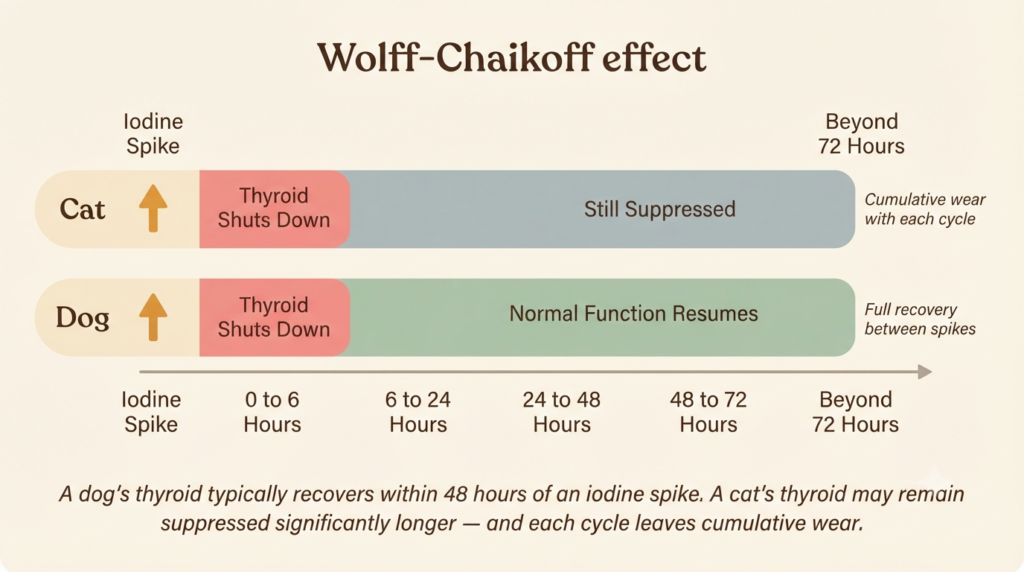
When iodine levels suddenly rise, the thyroid activates a self-protective mechanism called the Wolff-Chaikoff effect. This built-in shutdown response temporarily stops hormone production to prevent overproduction. In most mammals, this response is temporary. Within 24 to 48 hours, the thyroid usually recovers and returns to normal hormone production even if iodine levels remain high.
Why a cat’s thyroid shuts down with too much iodine is explained by this built-in safety system. The thyroid is trying to protect itself from being overwhelmed. The problem is not the mechanism itself. The problem is that cats do not always recover from this shutdown as effectively as other species.
Research on the Wolff-Chaikoff effect in cats shows that cats have a reduced ability to escape this shutdown compared with dogs and many other mammals. The gland’s own safety switch can make things worse when it activates too often. Thyroid suppression may last longer in cats, leaving the gland in an abnormal functional state after repeated iodine spikes.
In simple terms, the short-term protective response can become a source of long-term stress. Each time the thyroid goes through a spike, suppression, and recovery cycle, it experiences cumulative cellular wear. The gland’s ability to regulate itself becomes less precise over repeated episodes because recovery is not always complete.
This explains why the cat thyroid reacts differently from the dog thyroid after the same iodine spike. The difference is not only about the size of the response. It comes from how effectively each species escapes the shutdown mechanism. A dog’s thyroid usually returns to normal function within a day or two, while a cat’s thyroid may remain suppressed or poorly regulated for much longer.
Cats have a reduced ability to escape the Wolff-Chaikoff effect compared with dogs and many other mammals. This difference can create cumulative consequences over a lifetime of dietary exposure.
Can changing cat food harm the thyroid?
Chronic iodine fluctuation, not only long-term excess or deficiency, can create a cycle of thyroid overstimulation and suppression that the gland cannot easily stabilize. A period of low iodine increases TSH signals and pushes the thyroid to work harder. A period of high iodine increases oxidative stress and activates the Wolff-Chaikoff effect. The thyroid keeps moving between two stress states instead of maintaining a stable balance.
A 2022 study published in Scientific Reports by researchers from the University of Nottingham found that domestic cats may experience chronically low or fluctuating dietary iodine intake. The researchers observed wide variation in urinary iodine levels, which provided biological evidence of inconsistent iodine exposure. Every time the food changes, the thyroid has to reset, and that resetting has a cost.
Many owners relate to the thought, “I was rotating brands, thinking variety was healthier; I did not know that had a thyroid cost.” The concern is not about blaming owners or one specific feeding choice. It is about understanding how repeated iodine changes may affect a sensitive thyroid system.
Marcus had been switching between three wet food brands for his nine-year-old Ragdoll, Cleo. He believed the variety would help keep her interested in meals. During a routine senior wellness visit, his veterinarian noticed that her thyroid felt slightly enlarged and suggested follow-up monitoring. Marcus shared the feeding routine, and his vet recommended keeping her diet more consistent while continuing to monitor her thyroid.
Over months and years, repeated iodine changes may encourage the formation of autonomous thyroid nodules, which are clusters of thyroid cells that begin producing hormones outside the body’s normal control system. The question do thyroid nodules in cats form from iodine changes connects to this biological pathway. Veterinary endocrinology research describes how long-term iodine imbalance and repeated stimulation can contribute to abnormal thyroid tissue changes. Each spike-suppress-recover cycle leaves behind cumulative cellular wear that the thyroid cannot fully undo.
Autonomous nodules matter because they no longer respond normally to the body’s regulatory signals. The longer iodine levels continue to swing, and the wider those changes become, the greater the chance of progressive thyroid structure changes.
This explains why fluctuating iodine in cat food damages the thyroid over time. The problem is not one single serious or low iodine level. The concern is repeated movement between extremes that prevents the thyroid from maintaining normal structure and function.
The damage does not appear immediately. It develops quietly over months and years. This is why iodine consistency matters more than iodine quantity alone in a cat’s daily diet. If your cat has shown thyroid-related signs, noting whether the food changed in the months before those signs appeared can provide useful information for your veterinarian.
If your cat is older, the total timeline of iodine exposure may matter more than one individual feeding decision. Understanding the long-term pattern can help you have a more informed conversation with your vet.
Questions such as whether switching foods affects thyroid levels fit into this biological context. The issue is not brand loyalty. It is the consistency of iodine exposure over time. Any major diet changes should be discussed with your veterinarian rather than managed through sudden feeding changes.
Cats and other species can experience harm from iodine imbalance, but feline biology appears especially sensitive. The next section explains why cats respond differently to iodine changes compared with other animals.
Iodine Consistency Checklist What to Note Before Your Vet Visit
Before discussing thyroid health with your vet, it helps to have a clear picture of your cat’s recent feeding history particularly any changes in brand, variety, or protein source over the past year. This checklist is not a diagnostic tool. It is a preparation guide that helps you gather the observations your vet is most likely to ask about, so the conversation can be as useful as possible.
Use this checklist to gather useful information before discussing thyroid health with your vet. None of these observations are diagnostic, they are preparation tools only.
- How many different cat food brands or varieties does your cat eat in a typical week?
- Has your cat’s primary food changed in the past six to twelve months?
- Does your cat eat fish-based flavours regularly (salmon, tuna, mackerel, sardine)?
- Does your cat eat both wet and dry food from different brands on the same day?
- Have you noticed any change in your cat’s energy, coat, or weight since the last food change?
- Do you know whether iodine content is listed on your cat’s current food label?
- Has your cat been eating the same food consistently for more than one year?
Bring this completed checklist to your next vet appointment. The timing of any changes relative to symptoms is one of the most useful pieces of information your vet can receive.
Cats Are More Sensitive to Iodine Than Other Pets
My dog eats the same fish-based food and is completely fine, so why is my cat different?” is one of the most common questions owners ask. The answer comes from biology.
The iodine-related damage discussed in the previous section can affect different species, but the impact is not the same in every animal. Cats have a unique thyroid system that responds differently to iodine changes compared with dogs and other common pets.
This difference is linked to their evolutionary history as obligate carnivores. Cats developed a metabolism that works best under specific dietary conditions. Their thyroid system adapted to a consistent prey-based iodine supply, but this same biology can make them more vulnerable when iodine levels change repeatedly.
The sections below explain why cats are more sensitive to iodine changes. First, we will look at the cellular biology behind feline thyroid metabolism. Then, we will explore how this biology affects everyday feeding decisions. Finally, we will examine research showing how these differences appear in real cat populations.
Why is a cat’s thyroid so sensitive to iodine?
Cats are obligate carnivores, and their thyroid system evolved around a consistent prey-based diet. Their metabolism developed to handle the naturally stable iodine levels found in whole prey, not the changing iodine levels that can occur in manufactured foods. This is more than a food preference. It is part of feline biology that influences how their thyroid manages iodine from individual cells to the whole gland.
Cats did not evolve to eat food with iodine levels that change every time you open a different can. A prey diet is consistent; commercial food is not, and the thyroid notices the difference. Research in veterinary endocrinology suggests that feline thyrocytes, the thyroid cells responsible for iodine processing and hormone production, may have greater sensitivity to iodine changes than canine thyrocytes.
The same iodine shift that causes little disruption in a dog’s thyroid may trigger a stronger regulatory response in a cat. This helps explain why cats are more sensitive to iodine than dogs at the cellular level.
Research on obligate carnivore metabolic design, a biological system built around animal-based prey rather than variable processed food sources, highlights two additional reasons cats may respond differently to iodine changes.
First, cats appear to have a lower liver capacity for buffering and processing excess dietary iodine before it reaches the thyroid. This means more dietary iodine may arrive at the thyroid in an available form compared with a dog eating the same food.
Second, the feline thyroid’s sodium-iodide symporter, the transport protein that moves iodine into thyroid cells, may work with higher affinity in cats. In simple terms, it may pull iodine from the bloodstream more aggressively.
This stronger iodine uptake was helpful when cats lived on prey-based diets where iodine availability could be limited. However, it may become a disadvantage when modern foods provide inconsistent or higher iodine levels.
Cats have always processed iodine more intensely than dogs, and it is part of how they are built. These traits are not defects in feline biology. They are adaptations that developed for a specific natural diet.
The question why are cats uniquely sensitive to iodine does not have a single answer. It comes from several factors working together, including stronger cellular responses, reduced liver buffering, and more active iodine uptake.
These features worked well in a whole-prey environment. In a modern commercial food setting, they may increase the thyroid’s vulnerability to iodine changes.
Understanding this biology is the first step before evaluating what your cat eats. The feline thyroid is not malfunctioning by design. It is responding according to the biology it evolved.
Why Cat Thyroids React to Iodine Differently Than Dog Thyroids
The gap in thyroid disease rates between cats and dogs is not random. It reflects six specific biological differences in how the two species process iodine at the cellular and metabolic level. This table maps each of those differences side by side, from thyroid cell sensitivity and liver buffering capacity to the speed of the thyroid’s own protective shutdown response. Together they explain why the same food can affect a cat’s thyroid in ways a dog eating the same meal would never experience.
| Biological Factor | Cats | Dogs |
|---|---|---|
| Thyroid cell iodine sensitivity | Higher — cells react more strongly to concentration changes | Lower — cells tolerate wider iodine variation |
| Liver buffering of dietary iodine | Reduced — more dietary iodine reaches the thyroid directly | Greater — liver moderates what reaches the thyroid |
| Iodine uptake mechanism | More aggressive — symporter pulls iodine in at higher affinity | Less aggressive — more moderate uptake rate |
| Wolff-Chaikoff escape speed | Slower — thyroid stays suppressed longer after an iodine spike | Faster — thyroid resumes normal function within 24 to 48 hours |
| Evolutionary dietary origin | Obligate carnivore — evolved on consistent prey-based iodine | Omnivore — evolved with wider dietary iodine variation |
| Thyroid disease prevalence | Highest of all common domestic pets | Substantially lower than cats |
These are not flaws in cat biology. They are features of carnivore metabolism that evolved for a dietary consistency that commercial food does not reliably provide.
Why do cats process iodine differently from dogs?
The same fish-based food that a dog tolerates without measurable thyroid disruption may push a cat’s thyroid outside its functional range. This happens because cats and dogs do not process iodine through the same biological system. These differences help explain why the cat thyroid reacts differently from the dog thyroid when both animals eat the same food.
Research in veterinary nutrition shows that iodine imbalance affects the cat’s thyroid differently than in dogs, which involves three connected biological factors. Feline thyroid cells respond more strongly to iodine changes. Cats also have less liver-based buffering to control how much iodine reaches the thyroid. In addition, the feline Wolff-Chaikoff escape response works more slowly.
Dogs usually tolerate wider iodine fluctuations because their thyroid regulation system handles these changes more effectively. Their escape from the Wolff-Chaikoff effect happens faster, their liver provides stronger buffering, and their thyroid cells appear less reactive to iodine concentration changes. This means iodine recommendations based on dogs or canine research should not automatically apply to cats.
One owner described how her domestic shorthair had eaten the same fish-based wet food for years without obvious concerns. A routine senior wellness check later showed elevated T4 levels. Her sister’s dog ate the same brand without thyroid changes, but the vet explained that both animals processed the iodine content differently.
The cat’s thyroid had been handling a higher iodine load compared with its functional tolerance. Over time, those repeated exposures contributed to measurable changes. The food itself had not changed, but the cat’s biological response to it was different.
The increase in feline thyroid disease over recent decades has occurred alongside the growth of commercial wet cat food. Research published in the Journal of Feline Medicine and Surgery (Peterson, 2024) discusses this connection and the possible role of changing iodine exposure patterns. This does not mean commercial food is always harmful. It highlights a difference between the diet cats evolved with and the foods they commonly eat today.
Cats have always processed iodine more intensely than dogs. It is how they are built, and this biological difference affects how they respond to dietary iodine changes. Understanding this difference helps explain feline thyroid sensitivity before making any specific food decision.
Why do cats get thyroid disease more often?
The difference in feline and canine thyroid disease prevalence is one of the clearest patterns in veterinary endocrinology. The biological differences discussed in this section help explain why cats get thyroid disease more than dogs. Feline hyperthyroidism is the most common endocrine disease in older cats worldwide, while similar thyroid disease rates remain much lower in dogs. This difference reflects biology, not chance.
Research from multiple veterinary institutions confirms that feline thyroid disease prevalence, compared to that of dogs, is one of the most studied differences in small animal medicine. Studies published between 2023 and 2025 report that feline hyperthyroidism affects approximately 2 to 6% of the general cat population. The rate increases significantly in senior screening groups. While numbers vary between studies, feline thyroid disease consistently appears more common than comparable disease in dogs.
A 2024 clinic-based German study published in the Journal of Veterinary Internal Medicine (Mortier et al.) reported a 12.3% prevalence among the studied cat population. Older cats, female cats, and non-purebred cats showed the highest predisposition. These findings help researchers understand which biological factors may influence thyroid disease risk.
The question of why cats get thyroid disease more than dogs involves three connected factors. First, feline thyroid cells appear more reactive to iodine changes. Second, commercial cat foods may contain higher and more variable iodine levels than commercial dog foods. Third, cats have an obligate carnivore metabolic design that developed around whole-prey diets rather than constantly changing processed food sources.
Cats also eat smaller meals more frequently compared with dogs. This creates more daily iodine exposure events. Each meal requires the thyroid to process and respond to the iodine level it receives.
The increase in feline hyperthyroidism over recent decades has occurred alongside major changes in commercial cat food formulation. Research from the Cornell University College of Veterinary Medicine notes that the exact cause remains unknown and is likely influenced by multiple factors. The connection does not mean commercial food is always harmful. It highlights a possible mismatch between the iodine environment cats evolved with and the one they experience today.
Research published by Peterson in the Journal of Feline Medicine and Surgery also suggests that genetics may influence thyroid disease risk. Certain breeds, including Siamese and Himalayan cats, have shown lower reported rates of hyperthyroidism compared with non-purebred cats. This suggests that genetics may provide some protection or change individual risk.
Not every non-purebred cat will develop thyroid disease. Instead, biological differences, diet, age, and other factors all contribute to thyroid health. A veterinarian considers these factors together when evaluating a cat’s thyroid function.
The thyroid does not work alone. It communicates with the pituitary gland and, during pregnancy, plays a role in supporting kitten development. When iodine balance changes for long periods, those signals can affect more than just the thyroid itself.
Known Risk Factors for Feline Hyperthyroidism: What the Research Shows
Veterinary research has identified several factors consistently associated with higher rates of feline hyperthyroidism across clinical populations. This table summarises those factors alongside what the evidence actually shows and how strong that evidence is. It is worth noting that association is not the same as causation; having one or more of these factors does not mean your cat will develop thyroid disease. The table is a reference for informed conversations with your vet, not a prediction tool.
| Risk Factor | What the Research Indicates | Evidence Type |
|---|---|---|
| Age over 6 years | Risk increases progressively with age | Consistent across multiple studies |
| Female sex | Slightly higher prevalence in females than males | Observed across clinic populations |
| Non-purebred cat | Higher risk than Siamese, Himalayan and most purebreds | Association — not absolute |
| Commercial wet food diet | All epidemiological studies to date identify this as a risk factor | Consistent association — causation not proven |
| Fish or liver flavoured wet food | Specific flavours associated with higher risk in some studies | Association in observational research |
| Primarily indoor lifestyle | Indoor cats show higher prevalence in some populations | Association — mechanism not confirmed |
| Iodine variability in diet | Chronically low or fluctuating iodine linked to thyroid stress | Emerging evidence — University of Nottingham 2022 |
Having one or more of these risk factors does not mean your cat will develop thyroid disease. This table reflects population-level associations, not individual predictions. Your vet is best placed to assess your cat’s individual risk.
Iodine Imbalance Affects More Than a Cat’s Thyroid
The pituitary and the thyroid are in constant communication, and iodine can disrupt that connection. The previous sections explained how iodine imbalance affects the thyroid gland itself. However, the thyroid does not work as an isolated organ. It is part of a tightly controlled hormone communication system.
When chronic iodine imbalance disrupts this system, the effects can spread beyond the thyroid. They can influence pituitary signaling, change how cats and dogs respond to hormonal messages, and affect developing kittens whose thyroid health begins forming before birth.
A mother cat’s diet during pregnancy can influence her kittens’ developing thyroid systems. This section explores each layer of this process, starting with the pituitary feedback system, moving through species differences between cats and dogs, and ending with the risks linked to pregnancy and early development.
How does iodine affect a cat’s hormone levels?
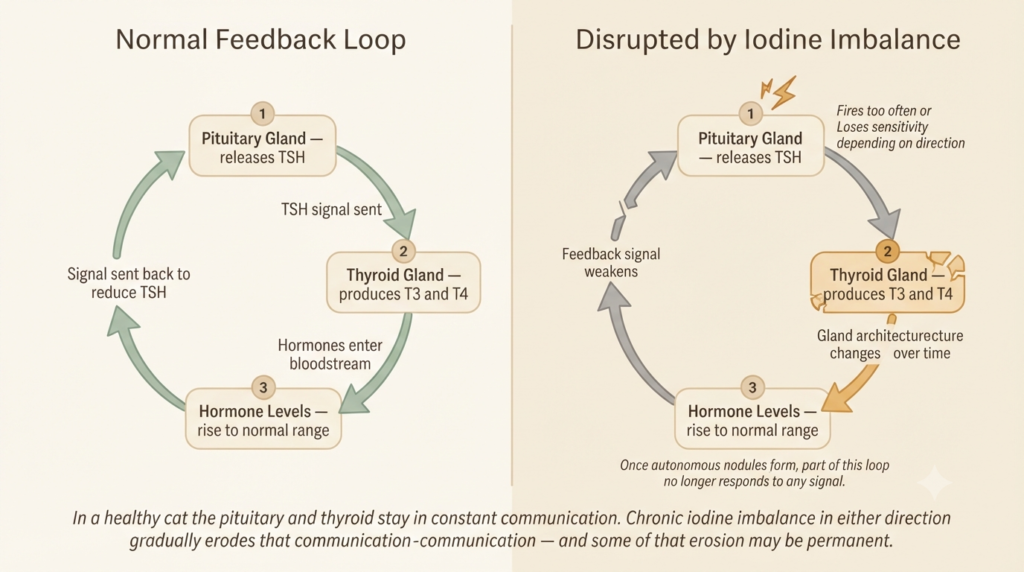
The pituitary gland and thyroid work together through a TSH feedback loop, a communication system that controls how much thyroid hormone the body produces. When thyroid hormone levels drop, the pituitary releases more TSH to stimulate production. When hormone levels rise, TSH output decreases. Under chronic iodine imbalance in either direction, this feedback system can begin to misfire, and the effects extend beyond the thyroid itself.
Understanding what TSH in cats is helps explain this process. TSH, or thyroid-stimulating hormone, is the chemical messenger the pituitary sends to tell the thyroid to increase hormone production. In a healthy system, this message is released with precise timing and balance. A small hormone change creates a small TSH adjustment, allowing the thyroid to return to normal.
Under chronic iodine imbalance, this precision starts to break down. What happens to the pituitary when the cat’s thyroid is off is that the pituitary loses its ability to regulate the thyroid accurately. In deficiency states, it may release TSH constantly because it is trying to push the thyroid to produce more hormones. In excess states, it may fail to properly control thyroid cells that have become independent, such as autonomous thyroid nodules.
Veterinary research shows that chronic TSH elevation from iodine deficiency is more than a temporary response. Long-term TSH overstimulation can change thyroid cell behavior and gland structure over time. Why the cat thyroid feedback loop fails under sustained iodine imbalance is not caused by one single event. It happens gradually as the gland changes its response to ongoing signals.
The thyroid reacts to constant TSH pressure by changing how its cells function. Those altered cells can then affect the signals sent back to the pituitary. The negative feedback loop between pituitary and thyroid begins to misfire under sustained iodine imbalance, creating a cycle that becomes harder for the body to correct.
The pituitary sends more and more signals, but the gland has already stopped responding normally. Once part of the gland stops listening to the signal, it may never fully listen again. In chronic iodine excess states, autonomous thyroid nodules can become independent from normal TSH control. These nodules continue producing hormones even when the pituitary tries to reduce stimulation.
This permanently disrupts the feedback system in that part of the gland. Once this dysregulation develops, reducing iodine exposure alone does not always restore normal thyroid regulation. The gland has already changed how it responds to the body’s signals.
How the pituitary affects cat thyroid health over a lifetime is an important question veterinarians consider when evaluating thyroid changes. Understanding what T4 in cats is, not only as a test result but as a hormone that reflects the entire feedback system, helps owners ask better questions during veterinary visits.
A vet-measured T4 level is the only way to know where your cat’s thyroid function currently sits. Any discussion of specific TSH values, laboratory interpretation, or restoring feedback balance belongs with a veterinarian rather than through dietary changes alone.
Why does iodine affect cat and dog thyroids differently?
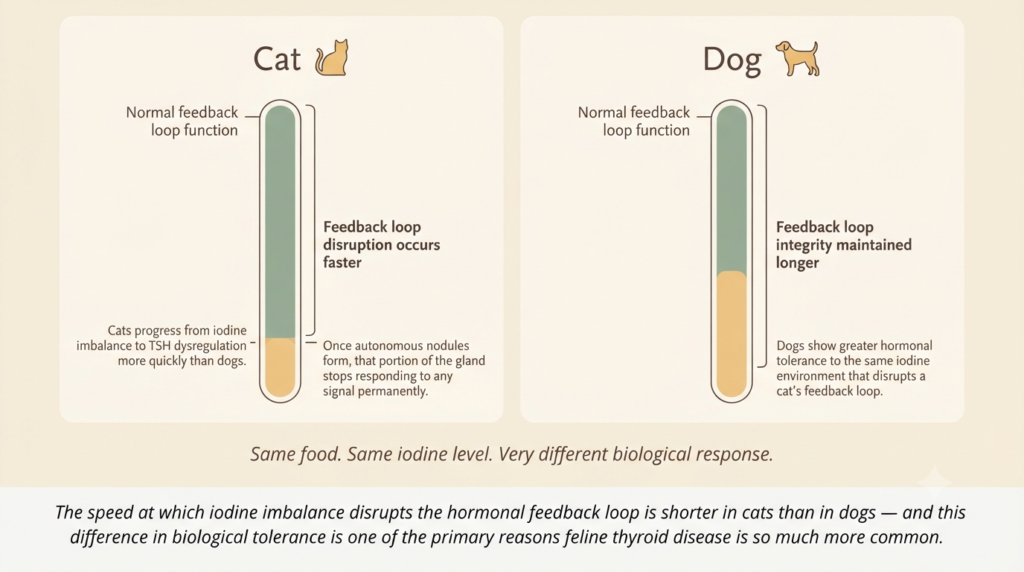
At the hormonal signaling level, dogs appear to have a stronger TSH suppression response during iodine excess. Their pituitary system compensates more effectively and maintains feedback control longer than the feline pituitary under similar iodine conditions. This difference helps explain the epidemiological gap discussed in the above section.
How iodine imbalance affects cats’ thyroid differently from dogs at this deeper level depends on how quickly feedback regulation becomes disrupted. Veterinary research suggests that cats may move from iodine imbalance to feedback problems faster than dogs. The gap between “iodine levels are consistently abnormal” and “TSH regulation becomes affected” appears shorter in cats.
A dietary iodine issue that a dog’s hormonal system may manage for a longer period without measurable thyroid changes can create detectable pituitary-thyroid axis changes in a cat sooner. This difference shows why cats and dogs cannot always follow the same iodine guidelines.
Why cats are uniquely sensitive to iodine at the hormonal level involves another important factor. The feline pituitary may respond more strongly to suppression signals created by autonomous thyroid nodules. Once these nodules develop and begin producing hormones independently, they can disrupt the pituitary-thyroid feedback system more aggressively.
This creates a compounding effect inside the gland. The nodules reduce normal pituitary signaling, which lowers TSH output. Lower TSH reduces stimulation to healthy thyroid tissue, which can allow the autonomous areas to become more dominant over time.
This hormonal difference is not separate from the cellular and metabolic differences discussed earlier. It is the same biological sensitivity appearing at a deeper level of regulation.
Cats show greater iodine reactivity in thyroid cells. They also have less liver buffering before iodine reaches the gland, a slower escape from the Wolff-Chaikoff effect in cats, and a feedback system that may become disrupted faster under iodine pressure. Each layer adds to the next, which helps explain why similar iodine exposure can produce different thyroid outcomes in cats and dogs.
Can a mother cat’s iodine affect her kittens?
The thyroid begins developing in kittens during pregnancy. The iodine needed for this process comes entirely from the mother’s dietary intake. What a mother cat eats while pregnant reaches the kittens’ developing thyroid directly, which makes the queen’s iodine status an important factor in kitten thyroid development.
Veterinary guidance from the AAHA 2023 Selected Endocrinopathies Guidelines confirms that iodine deficiency in pregnant cat kittens represents a real developmental concern. Can a mother cat’s iodine affect a kitten’s thyroid? It is not a theoretical question. A lack of iodine during pregnancy can contribute to congenital hypothyroidism, a condition present at birth where the thyroid cannot produce enough hormone because development was disrupted.
A kitten born with a thyroid problem from a nutritional pathway may have a thyroid that cannot function properly from the start. This does not necessarily happen because of a genetic mutation. It can occur because the developing gland did not receive enough iodine during the critical period when its structure was forming. However, the AAHA Guidelines also clarify that most cases of congenital hypothyroidism in kittens result from genetic defects in thyroid hormone production rather than maternal diet alone.
Clinical signs of congenital hypothyroidism in kittens can include disproportionate dwarfism, an unusually large head, short neck and limbs, lethargy, constipation, abnormal coat texture, and retained baby teeth. These signs often appear between four and eight weeks of age. Owners may mistake them for general illness instead of recognizing a developmental thyroid problem.
A cat’s thyroid deficiency from birth looks very different from the hyperthyroidism commonly seen in older cats. This difference matters for breeders and owners caring for queens and young litters. Understanding what causes congenital hypothyroidism in kittens from a nutritional pathway involves the gestational iodine shortage described above.
Pregnant cat iodine needs matter in both directions. Low iodine creates one risk, but excess iodine during pregnancy creates a separate concern. Research in veterinary endocrinology suggests that the Wolff-Chaikoff effect can operate in utero, suppressing a developing kitten’s thyroid before it has established normal function.
Too much iodine in a pregnant queen may suppress fetal thyroid development through the same shutdown response seen in adult cats. However, in a developing kitten, this suppression happens during a critical growth period. That may create more lasting effects on thyroid development.
Veterinary research also suggests that some breeds, including Abyssinian cats, show a higher prevalence of congenital hypothyroidism. This finding suggests that genetic factors may influence iodine sensitivity and may interact with maternal nutritional status.
Sofia was preparing to breed her Birman, Luna. During a pre-breeding wellness visit, she mentioned that she had recently changed Luna’s food. Her vet asked about the iodine content of the new diet, which was something Sofia had never considered before.
After reviewing the label together, they agreed to confirm that the nutritional profile was appropriate for a pregnant queen before moving forward. If your cat is pregnant or nursing, a conversation with your vet about iodine is worth having proactively. Iodine management during pregnancy and nursing should be discussed with a veterinarian rather than adjusted through self-managed diet changes.
The four sections above have covered the full biological chain from iodine’s role inside individual hormone molecules, through the bidirectional damage mechanisms, through feline-specific biological vulnerability, to the pituitary axis and gestational effects. The questions below address the most common points of confusion that do not fit neatly into any single biological layer.
Gestational Iodine Checklist — For Owners of Pregnant or Nursing Cats
A pregnant queen’s iodine intake during gestation directly influences the thyroid development of her kittens. Excess and deficiency during this window carry different risks, and the signs of a problem in a newborn litter can be easy to miss or mistake for general illness. This checklist covers two windows during pregnancy and in the first eight weeks after birth and is designed to help you notice anything worth raising at your next vet visit. It is an observation guide only, not a diagnostic checklist.
Use this checklist if you have a pregnant queen, a nursing queen, or a litter of young kittens. These are observational prompts only, not diagnostic criteria. Bring any concerns to your vet.
During pregnancy:
- Has the queen’s food changed brand or variety since becoming pregnant?
- Is the queen eating a nutritionally complete food formulated for pregnancy and lactation?
- Is iodine content listed on the queen’s current food label?
- Is the queen eating consistently, or has appetite varied significantly week to week?
In the first eight weeks after birth:
- Are all kittens in the litter growing at a similar rate?
- Does any kitten appear noticeably less active than its littermates?
- Does any kitten have a broader than usual head relative to body size?
- Is any kitten showing constipation, lethargy, or unusually soft, fluffy coat retention?
- Are all kittens nursing and gaining weight on schedule?
Signs of congenital hypothyroidism in kittens typically appear between four and eight weeks of age. If any item above prompts concern, raise it with your vet at the earliest postnatal check rather than waiting for the standard schedule.
Conclusion
Iodine is not just a minor nutritional detail for cats. It is a structural part of every thyroid hormone molecule, and both too little and too much iodine can harm the gland through different biological pathways. Cats operate within a narrow iodine balance range because their thyroid system evolved around the steady iodine levels found in whole prey. As obligate carnivores, cats show greater sensitivity to iodine changes at the cellular, glandular, hormonal, and developmental levels. This is a biological reality built into feline physiology.
Understanding this science does not replace a veterinary discussion. It helps you have a more informed one. If your cat’s iodine intake has changed, if she is pregnant or nursing, or if you have noticed possible thyroid-related changes, talking with your veterinarian is the right next step.
Knowing the biology changes how you view food choices. It does not need to create fear. Instead, it gives you a clearer way to understand how iodine exposure, thyroid function, and diet can connect over time.
Questions to Ask Your Vet
Use this list to prepare for your next veterinary visit. These questions are meant for observation and discussion. They are not a diagnosis or a replacement for veterinary advice.
- Has my cat’s T4 level been tested recently, and is it within the normal range for her age?
- My cat has been eating the same commercial food for [X months/years]. Is the iodine content of that food worth reviewing?
- I have been rotating between different food brands. Is that something worth discussing in relation to thyroid health?
- My cat is [age]. At what point would you recommend routine thyroid screening as part of a senior wellness check?
- Are there physical signs I should watch for at home that could suggest thyroid changes between veterinary visits?
- My cat is pregnant or nursing. Are her current pregnant cat’s iodine needs being met through her diet?
- My cat is a non-purebred female over the age of six. Does that affect how often you would recommend thyroid monitoring?
- Has my cat’s weight, appetite, or activity level changed noticeably over the past few months? (Bring this observation to your veterinarian.)
- Are ingredients in my cat’s current food, such as soy or fish-based proteins, worth discussing in the context of thyroid health?
- If my cat’s T4 levels are abnormal, what would the next diagnostic steps look like?
Frequently Asked Questions
FAQ 1: Is iodine the only nutritional factor that affects the cat’s thyroid?
Iodine is the most direct and most researched nutritional factor in feline thyroid health, but it is not the only one. Research published in the Journal of Feline Medicine and Surgery (Peterson, 2024) notes that soy-based ingredients contain goitrogens, compounds that interfere with thyroid hormone production by inhibiting thyroid peroxidase through a separate mechanism entirely unrelated to iodine content. Selenium also plays a role in converting T4 into the more biologically active T3 in peripheral tissues. Iodine remains the primary dietary variable with the most documented and direct impact on feline thyroid function, and it is the foundation for understanding how other nutritional factors interact with the same system.
FAQ 2: Does cooking or processing cat food change its iodine content?
Heat processing, used in most commercial wet and dry cat foods, can affect iodine bioavailability in both directions. Some iodine is lost during high-temperature processing, while other forms may become more or less available to the body depending on the food matrix and protein binding. A 2022 study published in Scientific Reports (Alborough et al.) found wide variation in urinary iodine excretion in cats eating commercial diets, suggesting that declared iodine values on labels may not reliably reflect what a cat actually absorbs. Your veterinarian can advise on what this means for your cat’s specific dietary situation.
FAQ 3: Can the thyroid recover if iodine is corrected in the diet?
Early-stage iodine imbalance that has not yet produced structural changes in the thyroid may be partially or fully reversible with appropriate correction over time. A 2017 controlled feeding trial published in PMC (Paetau-Robinson et al.) confirmed that healthy adult cats maintained normal thyroid hormone concentrations on a limited-iodine diet for two years without developing measurable thyroid gland changes, suggesting the gland can remain stable when iodine is managed consistently. Once autonomous nodules have formed or feedback loop dysregulation is established, however, dietary correction alone may not restore normal function. This assessment belongs with your veterinarian.
FAQ 4: Why did feline thyroid disease increase so much after the 1970s?
The rise of commercial cat food, particularly canned wet food with fish-based proteins and variable iodine content, is the most consistently cited dietary factor in the epidemiological literature on feline hyperthyroidism. Cornell University College of Veterinary Medicine notes that possible contributing factors include deficiencies or excesses of certain compounds in the diet and chronic exposure to thyroid-disrupting chemicals, though the precise cause remains unknown. The 2016 AAFP Guidelines explicitly state that all identified associations between diet, environment, and feline hyperthyroidism remain conjecture rather than proven causation, an important caution against overstating any single explanation.
FAQ 5: Do indoor cats face a higher thyroid risk than outdoor cats?
Indoor cats rely entirely on commercial food for their iodine intake, with no opportunity to supplement or self-regulate through prey consumption. Research published in veterinary literature suggests that the indoor/outdoor variable is considered secondary to food composition in most studies the iodine content and consistency of what a cat eats matter more than whether it lives indoors or outdoors. Outdoor cats with hunting access may have more varied iodine sources, though this also introduces its own unpredictability. Your veterinarian is best placed to assess your individual cat’s risk profile based on their diet, age, breed, and health history.
Disclaimer: This article is written for educational purposes only and does not replace professional veterinary advice. Always consult a licensed veterinarian before making changes to your cat’s diet or health management.
References
- Alborough, R., Graham, P.A., and Gardner, D.S. (2022). Estimating short and longer-term exposure of domestic cats to dietary iodine fluctuation. Scientific Reports, 12(1), 8987. https://pmc.ncbi.nlm.nih.gov/articles/PMC9148307/
- American Animal Hospital Association (AAHA). (2023). 2023 AAHA Selected Endocrinopathies of Dogs and Cats Guidelines — Feline Hypothyroidism. https://www.aaha.org/resources/2023-aaha-selected-endocrinopathies-of-dogs-and-cats-guidelines/feline-hypothyroidism/
- American Animal Hospital Association (AAHA). (2023). 2023 AAHA Selected Endocrinopathies of Dogs and Cats Guidelines — Feline Hyperthyroidism. https://www.aaha.org/resources/2023-aaha-selected-endocrinopathies-of-dogs-and-cats-guidelines/feline-hyperthyroidism/
- American Association of Feline Practitioners (AAFP). (2016). 2016 AAFP Guidelines for the Management of Feline Hyperthyroidism. Journal of Feline Medicine and Surgery, 18(5), 400–416. https://journals.sagepub.com/doi/10.1177/1098612X16643252
- Cornell University College of Veterinary Medicine, Feline Health Center. (2026, updated). Hyperthyroidism in Cats. https://www.vet.cornell.edu/departments-centers-and-institutes/cornell-feline-health-center/health-information/feline-health-topics/hyperthyroidism-cats
- Cornell University College of Veterinary Medicine, Internal Medicine Service. (2026, updated). Feline Hyperthyroidism. https://www.vet.cornell.edu/hospitals/services/internal-medicine-0/feline-hyperthyroidism
- Cornell University College of Veterinary Medicine, Animal Health Diagnostic Center. Feline Thyroid Tests. https://www.vet.cornell.edu/animal-health-diagnostic-center/testing/testing-protocols-interpretations/feline-thyroid-tests
- Edinboro, C.H., Scott-Moncrieff, J.C., and Glickman, L.T. (2010). Feline hyperthyroidism: potential relationship with iodine supplement requirements of commercial cat foods. Journal of Feline Medicine and Surgery, 12(9), 672–679. https://pmc.ncbi.nlm.nih.gov/articles/PMC11149000/
- Gould, E., Baines, S., and others. (2020). Diagnosis and management of feline hyperthyroidism: current perspectives. Veterinary Medicine: Research and Reports, 11, 101–118. https://pmc.ncbi.nlm.nih.gov/articles/PMC7337209/
- Merck Veterinary Manual. (2024). Disorders of the Thyroid Gland in Cats. https://www.merckvetmanual.com/cat-owners/hormonal-disorders-of-cats/disorders-of-the-thyroid-gland-in-cats
- Merck Veterinary Manual. (2024). Overview of the Thyroid Gland in Animals. https://www.merckvetmanual.com/endocrine-system/the-thyroid-gland/overview-of-the-thyroid-gland-in-animals
- Mortier, F., Daminet, S., Marynissen, S., Smets, P., and Paepe, D. (2024). Prevalence of and risk factors for feline hyperthyroidism among a clinic population in Southern Germany. Journal of Veterinary Internal Medicine, 38(4), 2089–2098. https://pubmed.ncbi.nlm.nih.gov/38967102/
- Paetau-Robinson, I., and others. (2017). Comparison of health parameters in normal cats fed a limited iodine prescription food vs a conventional diet. Journal of Feline Medicine and Surgery. https://pmc.ncbi.nlm.nih.gov/articles/PMC11129269/
- Peterson, M.E. (2012). Hyperthyroidism in cats: what’s causing this epidemic of thyroid disease and can we prevent it? Journal of Feline Medicine and Surgery, 14(11), 804–818. https://pmc.ncbi.nlm.nih.gov/articles/PMC11112171/
- Peterson, M.E. (2024). Hyperthyroidism in cats: what’s causing this epidemic of thyroid disease and can we prevent it? Journal of Feline Medicine and Surgery (updated review). https://pmc.ncbi.nlm.nih.gov/articles/PMC11112171/
- Scott-Moncrieff, J.C., and others. (2015). Effect of feeding an iodine-restricted diet in cats with spontaneous hyperthyroidism. Journal of Veterinary Internal Medicine, 29(4), 1063–1068. https://pmc.ncbi.nlm.nih.gov/articles/PMC4895365/
- van Hoek, I., Hesta, M., and Biourge, V. (2015). A critical review of food-associated factors proposed in the etiology of feline hyperthyroidism. Journal of Feline Medicine and Surgery, 17(10), 837–847. https://pmc.ncbi.nlm.nih.gov/articles/PMC11112195/
- Multiple authors, cited in Springer Veterinary Research Communications. (2025–2026). Investigating changes in serum metabolome and urinary endocrine-disrupting chemicals in cats with hyperthyroidism. https://link.springer.com/article/10.1007/s11259-026-11169-5

Saloni Nagar is the founder and lead content creator of Bark & Meow Tales. As a dedicated cat parent and researcher, she transitioned from personal loss to pet health advocacy, focusing on early warning signs and preventive care. Saloni specializes in translating complex veterinary concepts into actionable guidance for pet parents. Her work is driven by a commitment to helping others interpret subtle feline health signals before they escalate, ensuring that every cat has a voice through informed, compassionate care.