
By Saloni Nagar, Medically Reviewed by Dr. Jimisha Shah, B.V.Sc & A.H., PGDAW
Whether an obese cat needs vitamin supplements depends entirely on which specific nutrients are deficient. That can only be determined through veterinary testing, not by symptoms or guesswork alone. Giving fat-soluble vitamin supplements without a confirmed deficiency carries a real toxicity risk because these vitamins build up in body tissues. The safest approach is always to test first, identify what is actually low, and then make targeted supplementation decisions with your veterinarian.
If you have already changed your obese cat’s diet and are now wondering whether supplements are needed, or whether the diet is actually working, you are at exactly the stage this article is designed to help.
The worry about getting supplementation wrong is understandable. Fat-soluble vitamins are especially risky because cats cannot easily remove excess amounts from their bodies. Adding supplements without testing can do more harm than good.
This article explains how to ask your vet about cat nutrition testing, what results mean in the context of obesity, and when supplements are truly appropriate. It also shows you how to monitor muscle recovery and nutritional progress, what to watch for during weight loss, and how to create a long-term monitoring plan after your cat reaches a healthy weight.
In simple terms, this article covers five key action areas: starting the veterinary testing conversation, making safe supplementation decisions, monitoring muscle mass and recovery at home, managing the weight loss transition safely, and building a long-term nutritional monitoring plan.
A Vet’s Guide to Testing an Obese Cat’s Nutrition
This section explains how to ask your vet about cat nutrition testing in a way that encourages a productive conversation. It also covers which blood tests are most relevant for an obese cat and how to understand the results once they are available.
Starting the testing conversation the right way makes later decisions about supplementation, monitoring, and long-term nutrition much easier. The three sections below build on one another by explaining how to ask, what to ask for, and what the results actually mean.
How Do I Talk to My Vet About Nutrient Testing?
Framing your concerns around specific, observable changes usually leads to a more productive conversation with your veterinarian. It gives them clear clinical information to act on, rather than a general concern. The way you start the discussion can genuinely influence what happens next.
” I went to the vet and was told to put her on a diet, but nobody mentioned anything about vitamin levels or testing” is a familiar experience for many owners. Many people are unsure how to ask the vet about cat nutrition testing without the discussion immediately returning to a standard weight-loss conversation. Likewise, “I started giving her three meals a day and adjusting her food, and now I am wondering if I should be doing blood tests too” is a completely reasonable concern. This section is written for exactly that situation.
A simple way to approach the conversation is to use three practical steps. Thinking about nutritional testing as a separate discussion from a routine weight check can make the conversation much more focused.
Frame 1: Lead with what you have observed.
Start with a specific physical change instead of a general worry. For example: “I have noticed she is losing muscle along her spine and hindquarters even though her overall weight has not changed. I would like to understand whether this could be related to her nutritional status.” Or: “I have read that obesity can affect vitamin D and taurine (an amino acid cats cannot produce enough of on their own) levels, and I would like to know whether testing them would be appropriate.”
Frame 2: Ask for specific tests.
Instead of asking, “Can you test her nutrition?” try asking, “Would you be able to include taurine, vitamin D, B12, and phosphorus in her next blood panel?” Specific requests are easier for a veterinarian to consider because they translate directly into possible laboratory tests.
Frame 3: Bring helpful information.
Write down when you first noticed muscle changes, which parts of the body seem affected, and what diet changes you have already made. Bring your cat’s current food packaging or a photo of the ingredient list so your veterinarian can review the diet. Also mention any changes in energy, weakness, or walking, as these details can help guide testing.
Not every general practice veterinarian routinely includes micronutrient testing as part of obesity management. Asking whether these tests are appropriate for your cat is reasonable. It is not about questioning your veterinarian’s judgment. It is about making sure they have the information needed to tailor care to your cat.
“I asked the vet to add a taurine test to her blood panel, and the vet had not heard of doing that routinely. I felt like I was questioning them.” This is a common experience. It often reflects differences in how veterinary practices approach obesity-related nutrition rather than a mistake by the owner or the veterinarian.
If your veterinarian is not comfortable interpreting nutrition-related test results in obese cats, it is reasonable to ask about a referral to a veterinary internal medicine specialist or a board-certified veterinary nutritionist. Professional veterinary nutrition organizations recommend specialist involvement when results are unclear or when a cat has multiple health conditions.
Before your appointment, consider bringing a short written list of the tests you would like to discuss instead of raising a general concern. This approach often makes the conversation more productive. Your veterinarian will still decide which tests are appropriate for your individual cat.
Once the discussion has started, the next step is knowing exactly which tests to request. The next section explains those tests and what their results can tell you.
What Bloodwork Should an Obese Cat Have?
Standard wellness blood panels usually do not include the micronutrient tests most relevant to obesity-related nutritional changes. That means these tests often need to be requested by name. Knowing what blood tests an obese cat should have helps you ask for the right tests with confidence. It is also a good starting point if you are wondering whether my obese cat needs bloodwork beyond the standard yearly panel.
1. Taurine–
The relevant test measures plasma taurine or whole blood taurine concentration. If you are wondering what a plasma taurine test is, it measures the amount of taurine circulating in the blood at the time of sampling. This matters because cats cannot produce enough taurine on their own, and obesity may increase how quickly the body uses it.
A taurine deficiency can affect both the heart and the eyes. If you are asking what a taurine blood test shows in cats, whole blood taurine generally gives a better picture of long-term taurine status, while plasma taurine reflects more recent dietary intake. Veterinarians should always interpret these results because recent meals and sample handling can affect the values.
2. Vitamin D–
The recommended test is serum 25-hydroxyvitamin D, sometimes called 25-OHD. It is the storage form of vitamin D and the best single indicator of a cat’s overall vitamin D status.
If you are wondering what to expect from a cat vitamin D blood test, the test requires a routine blood sample. Most veterinary clinics send it to an outside laboratory, so results usually take several days. Vitamin D is fat-soluble, which means obese cats may store more of it in body fat. As a result, blood levels can appear lower than expected based on dietary intake. Because feline reference ranges are still evolving, these results are best interpreted by a veterinarian familiar with current research.
3. B12 (Cobalamin)–
Vitamin B12 is also known as cobalamin. Obesity-related changes in the gut microbiome may reduce both B12 production and absorption. In cats with true deficiency, veterinarians usually treat cobalamin deficiency with injections because oral absorption is often unreliable.
The relevant test is a serum cobalamin concentration. A cat B12 deficiency blood test is commonly added to a standard chemistry panel instead of being performed on its own. Although low B12 is often linked to gastrointestinal disease, it can also reflect broader microbiome disruption. Your veterinarian should interpret the result within your cat’s overall clinical picture.
4. Phosphorus–
Serum phosphorus is already included in most standard chemistry panels, making it one of the easiest values to monitor over time. This becomes especially important during the weight-loss phase, when the risk of phosphorus depletion increases.
Recording a baseline serum phosphorus level before weight loss begins gives you and your veterinarian an important reference point. If it is not already being monitored, you can ask for it to be documented during future visits.
A few additional blood tests are also worth discussing with your veterinarian, even though they are not specific to obesity:
- Complete blood count (CBC): May show changes that suggest a B vitamin deficiency through changes in red blood cells.
- Liver enzymes (ALT, AST, ALP, GGT): Help monitor for hepatic lipidosis, a condition in which the liver stores more fat than it can safely process.
- Blood glucose and fructosamine: Help assess insulin resistance and diabetes risk, both of which are more common in obese cats.
- Total T4 (thyroid): Helps rule out hyperthyroidism as another possible cause of muscle loss because it can occur alongside obesity.
Not every cat needs all of these tests during the same visit. Your veterinarian will decide which tests are most appropriate based on your cat’s medical history, current health, and stage of weight management. Likewise, how often an obese cat has blood tests depends on your individual cat rather than a fixed schedule.
One simple request is to ask your veterinarian to include taurine, vitamin D as 25-hydroxyvitamin D, B12, and phosphorus in the next blood panel if they are not already part of the standard wellness profile.
These tests can provide valuable information about your obese cat’s nutritional status. Your veterinarian can decide which combination is most appropriate for your cat and explain the results in the context of their overall health.
Once the results are available, the next step is understanding what they mean for an obese cat rather than a lean one. That interpretation is where these tests become most valuable.
Obesity-Specific Bloodwork Reference Chart
Once you know why each of these tests matters, it can help to see them gathered in one place you can bring straight into your next appointment.
| Test | What It Measures | Why It Matters Specifically in an Obese Cat |
|---|---|---|
| Taurine (plasma or whole blood) | The amount of taurine, an amino acid cats cannot produce enough of on their own, circulating in the blood | Obesity may increase how quickly the body uses and turns over taurine; deficiency carries cardiac and retinal risk |
| Vitamin D (serum 25-hydroxyvitamin D / 25-OHD) | The storage form of vitamin D, the most reliable single indicator of overall vitamin D status | Vitamin D is fat-soluble and tends to be sequestered in adipose tissue, so circulating levels can appear lower than actual dietary intake would suggest |
| B12 (serum cobalamin) | The circulating level of vitamin B12 | Obesity-related changes in gut bacteria may reduce both B12 synthesis and absorption; low B12 in cats is typically treated by veterinary injection rather than oral supplement |
| Phosphorus (serum phosphorus) | The level of phosphorus in the liquid portion of the blood | Risk of phosphorus depletion increases specifically during the weight loss transition phase, so a pre-loss baseline gives a reference point for later comparison |
| Complete Blood Count (CBC) | Red blood cell counts and characteristics, among other blood cell values | Can reveal signs of B vitamin deficiency through changes in red blood cells |
| Liver values (ALT, AST, ALP, GGT) | Enzyme levels that reflect liver function | Relevant for monitoring the risk of the liver storing more fat than it can safely process, a concern specific to obese cats who stop eating |
| Blood glucose and fructosamine | Current blood sugar, and average blood sugar over roughly the past two weeks | Relevant for monitoring insulin resistance and diabetes risk, both more common in obese cats |
| Total T4 (thyroid) | Thyroid hormone level | Helps rule out hyperthyroidism as an alternative explanation for muscle loss, since it can coexist with obesity and produce a similar appearance |
Not all of these tests need to be run at the same appointment; a veterinarian can prioritize which ones matter most based on your cat’s individual history and stage of weight management.
What Do Low Vitamin D or Taurine Results Mean?
A test result that falls within a “normal” reference range does not always mean the same thing in an obese cat as it does in a lean cat. Most laboratory reference ranges were developed using mostly lean cats. “My vet said her taurine was low, but I did not really understand what that meant or how worried I should be” is a concern many owners share because a lab report rarely provides much context on its own.
Vitamin D results–
A vitamin D result within the reference range does not always mean vitamin D status is fully optimal in an obese cat. Fat-soluble vitamins behave differently in a heavier body, and current reference ranges may not fully account for that. A value in the lower half of the reference range may deserve closer monitoring than the same result in a lean cat. A value below the reference range confirms a deficiency and generally requires veterinary-directed supplementation, which is discussed in the next section.
Taurine results–
A taurine result below the reference range needs prompt veterinary attention because of the associated heart disease risk. This is not something to simply monitor and revisit later. A low-normal result, although still within the reference range, usually calls for a dietary review and continued monitoring rather than immediate treatment.
A normal taurine result does not completely rule out heart disease risk. Additional cardiac evaluation may still be appropriate if your cat has other risk factors, such as being a Maine Coon or showing signs of heart disease.
B12 results–
Low B12 in an obese cat often suggests a problem involving the gut. This may include changes in the gut microbiome, intestinal permeability, or both. Because cats with gut-related B12 deficiency often absorb oral supplements poorly, veterinarians usually treat cobalamin deficiency with B12 injections instead of oral supplements. This decision should always be made by your veterinarian.
Phosphorus results.
A normal phosphorus level before weight loss begins provides an important baseline. During weight management, the main concern is whether phosphorus levels drop during the transition phase rather than the starting value itself. A phosphorus result below the reference range during active weight loss needs prompt veterinary attention. It should not be managed through diet changes alone.
Every blood test result should be interpreted by your veterinarian within the context of your cat’s overall health. The information above is meant to help you better understand those discussions, not replace professional interpretation.
Understanding what these tests show also helps explain why certain nutrients are more likely to become a concern in obese cats. That knowledge can help you ask more informed questions during your veterinary appointment.
Once you understand what the test results mean, the next question is whether a confirmed or suspected nutrient deficiency actually requires supplementation. The next section explains when supplements are appropriate and when they are not.
The Truth About Vitamin Supplements for Obese Cats
This section shifts from testing to the decision that testing is meant to guide: whether, when, and how supplementation may be appropriate for an obese cat. It explains the difference between supplements used to treat a confirmed deficiency and those given as a precaution.
It also covers why fat-soluble vitamins carry a higher toxicity risk in obese cats. In addition, it addresses common questions about protein and amino acid supplements that often come up at this stage. Throughout this section, the key message stays the same: testing, not instinct, should guide every supplementation decision.
Does My Obese Cat Actually Need Supplements?
Supplementation is appropriate when a specific deficiency has been confirmed through testing and dietary adjustment alone has not corrected it. It is not appropriate as a precaution without testing. This distinction is at the heart of whether obese cats need vitamin supplements, and it is important to keep in mind as the two situations below are explained.
“I bought a taurine supplement at the pet shop and gave it to her for two weeks before I started wondering if that was even safe” reflects a very understandable reaction. If a nutrient sounds beneficial, adding it can feel like the right thing to do. However, the real question is whether I give my cat supplements without testing. The safest answer is to test first because testing helps prevent real risks, not just unnecessary caution.
Likewise, “I looked up vitamin D supplements for cats online, and there were about fifteen different options, and I had no idea how to choose” describes a common experience. It also shows why a testing-first approach is so important before choosing any supplement.
There are two situations where supplementation may truly be appropriate.
Scenario 1: Confirmed deficiency through testing. If taurine levels fall below the reference range, your veterinarian may recommend taurine supplementation. If vitamin D is below the reference range, they may prescribe a dose tailored to your cat. If B12 is low, veterinary-administered B12 injections are usually the preferred treatment. If phosphorus drops below the reference range during weight loss, your cat needs prompt veterinary management rather than a supplement chosen at home. In every case, your veterinarian determines the treatment and dosage.
Scenario 2: Veterinary-directed preventive supplementation. In some situations, a veterinarian may recommend supplements before a test result falls below the reference range. This may happen because of breed-related risk, such as taurine concerns in Maine Coon cats, a specific clinical finding, or test trends that suggest a deficiency is developing. These decisions rely on your cat’s medical history and clinical assessment. They are not something owners should make on their own.
There are also situations where supplementation is not appropriate. Owners searching obese cat supplements, what should I give often fall into one of these situations without realizing it.
Giving supplements “just in case” without testing is one example, especially with fat-soluble vitamins, as explained in the next section. Choosing a supplement simply because it was available at a pet store is another. If your cat’s food already provides enough of a nutrient, adding more may lead to accumulation. With fat-soluble vitamins, that buildup can become toxic. Likewise, adding protein supplements without confirming that your cat’s diet lacks usable protein is unlikely to help and may make the situation harder to assess.
Supplement decisions for obese cats should always be based on confirmed test results and veterinary guidance, not on good intentions alone.
The reason this approach matters becomes clearer once you understand what happens to a fat-soluble vitamin supplement after it enters an obese cat’s body. The next section explains that process.
Before adding anything to your cat’s routine, it can help to run through a short checklist confirming each step has actually happened.
Before You Supplement Checklist
□ Requested the specific blood test for the nutrient in question, rather than assuming it was included in a standard wellness panel
□ Received the actual result, not just a general “everything looks fine” summary from the appointment
□ Confirmed with the veterinarian whether the result falls below range, in the low-normal range, or within the normal range
□ Discussed with the veterinarian whether the result, in the context of an obese cat specifically, warrants supplementation at all
□ Asked the veterinarian to specify the exact supplement form and dose, rather than choosing one independently
□ Confirmed the current food does not already provide adequate levels of the same nutrient before adding a supplement on top of it
□ Asked whether this is a fat-soluble vitamin (A, D, E, or K), since these carry a specific toxicity risk without confirmed deficiency
□ Agreed on a review date with the veterinarian, rather than treating the supplement as an indefinite, standing addition
Supplementation decisions for obese cats should be driven by confirmed testing results and veterinary guidance rather than by precautionary instinct, however well-intentioned that instinct is.
Can Vitamin Supplements Be Toxic Without Testing?
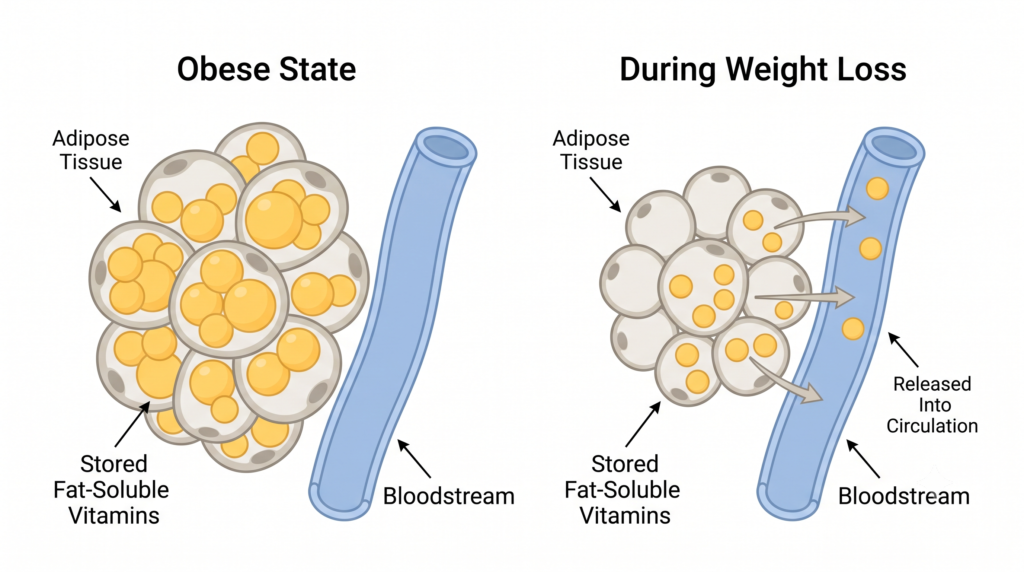
In an obese cat, fat-soluble vitamins are stored, or sequestered, in adipose tissue. This means blood levels can appear low even when the body still holds substantial vitamin reserves in fat tissue. “I am terrified of giving her something that makes things worse. I would rather do nothing than do the wrong thing” is a completely understandable concern. It also explains why fat-soluble vitamin overdose in cats is such an important topic.
Fat-soluble vitamins stay in body tissues instead of being excreted like water-soluble vitamins. As a result, giving supplements without confirming a deficiency can increase the body’s existing vitamin stores instead of correcting a true deficiency. This is why overdose is a real clinical concern rather than an overly cautious warning.
When an obese cat receives a fat-soluble vitamin supplement, the new dose adds to the vitamins already stored in body fat. As the cat loses weight, those stored vitamins gradually move back into the bloodstream. Because of this, vitamin levels that once appeared normal, or even low, can rise later, even after supplementation has stopped.
This difference between blood test results and the body’s total vitamin stores can be significant in obese cats. That is why testing before supplementation is so important.
Owners asking if too much vitamin A hurts a cat are asking about a well-recognized medical condition. Vitamin A toxicity, known as hypervitaminosis A (the medical term for vitamin A toxicity), can cause skeletal changes, neck stiffness, lethargy, and reduced grooming. These changes often develop slowly and may be mistaken for other health problems.
In obese cats already going through weight management, these signs can easily be blamed on something else. That makes hypervitaminosis A a genuine diagnostic challenge. Vitamin A supplements should never be given without a confirmed deficiency and veterinary supervision.
For owners wondering whether they can give their cat vitamin D supplements, the first step is understanding vitamin D toxicity in cats symptoms. Excess vitamin D causes hypercalcemia (abnormally high calcium levels in the blood). If it is not corrected, calcium can build up in soft tissues, including the kidneys and heart.
Cats are especially sensitive to vitamin D toxicity. Any vitamin D supplement should be prescribed by a veterinarian after confirming a deficiency and considering the cat’s body weight and kidney function. This is not a supplement that owners should introduce on their own.
Vitamin E has a different safety profile. It is less likely to cause acute toxicity than vitamins A or D. However, high doses may interfere with vitamin K function, which can matter in obese cats that may already have reduced vitamin K status. Like the other fat-soluble vitamins, vitamin E supplementation should be discussed with your veterinarian before use.
Vitamin K requires a more balanced discussion. Natural forms of vitamin K, K1 (phylloquinone) and K2 (menaquinone), have a low risk of toxicity, even at higher doses. The synthetic form, K3 (menadione), has raised safety questions in some studies and industry discussions, particularly about possible effects on the liver and red blood cells at high doses.
Even so, regulatory authorities continue to allow menadione in pet foods at approved levels, and commercial diets have not shown documented harm at those levels. Some veterinary sources prefer natural forms when available, while others consider menadione safe in commercial pet food. Your veterinarian can recommend the best option based on your cat’s diet and medical history. As with all fat-soluble vitamins, supplementation should only be started with veterinary guidance.
The practical takeaway is simple. Testing before supplementing fat-soluble vitamins is not an extra precaution. It is an essential step that helps prevent a real clinical risk in obese cats. Do not start any fat-soluble vitamin supplement, vitamins A, D, E, or K, without a blood test confirming the specific deficiency first.
Giving fat-soluble vitamin supplements to an obese cat without prior testing may increase the risk of toxicity because the supplement adds to vitamin stores that are already present in body fat.
Understanding this storage process naturally leads to another common question: does body fat itself mean an obese cat automatically needs supplements? The next section answers that question.
Do Obese Cats Store Vitamins Differently?
Obese cats may need nutritional support because fat storage can change vitamin availability. However, that alone does not mean supplementation is the right choice without testing.
This is the question many owners are really asking: Do obese cats need vitamin supplements because their bodies store fat differently? The answer has three parts.
Part 1: Fat storage can affect vitamin availability
Yes, obesity can change how the body handles certain vitamins. As explained in the previous section, fat tissue can hold onto fat-soluble vitamins. This may lower the amount circulating in the bloodstream, even when dietary intake appears adequate.
Many owners are surprised by this. I was not expecting her to need supplements — I thought the new food would sort everything out on its own is a very understandable reaction. In many cats, improving food quality really is enough. However, because fat storage can affect circulating vitamin levels, testing is a better next step than making assumptions.
Part 2: Fat storage does not automatically mean vitamin deficiency
This is where many people get confused. Fat storage alone does not mean an obese cat needs extra vitamins.
Some obese cats have normal, or even high, total body vitamin stores despite having lower circulating levels. In those cases, the vitamins are being stored differently, not depleted.
Giving supplements based only on that theory can create unnecessary risk. If the body already has enough stored vitamins, supplementation may increase the total vitamin load instead of correcting a true deficiency.
Part 3: Test before you supplement
The safest response is testing, not precautionary supplementation.
If you think your cat may have a vitamin deficiency because of fat sequestration, schedule a veterinary appointment and discuss the appropriate blood tests mentioned earlier in this article. If testing confirms a deficiency, your veterinarian can recommend the right supplement and dose based on your cat’s overall health rather than guesswork.
The relationship between obesity, fat-soluble vitamin storage, and supplementation is complex. Testing remains the most reliable way to decide whether supplementation is appropriate for an individual cat.
So, the answer to whether obese cats need vitamin supplements is: possibly, but only after testing confirms what is needed and in what amount. Supplements should not be the first response to the way fat storage works.
The amino acid side of this topic, especially protein and taurine, is closely related but different enough to deserve its own discussion. That’s what the next section covers.
Should I Give My Obese Cat Extra Protein or Amino Acid Supplements
Improving your cat’s food quality is usually a better first step than adding protein or amino acid supplements. Better-quality food often provides more usable amino acids because protein quality and digestibility determine how much actually reaches your cat’s muscles.
Many owners naturally wonder whether supplements could solve the problem more quickly. The question, should I give my obese cat extra protein or amino acid supplements, often comes up after learning that obese cats may need more high-quality protein. It seems like a logical shortcut, but food quality should come first.
A high-quality food with good digestibility and appropriate amounts of taurine and L-carnitine already included will usually provide more benefit than adding supplements to a lower-quality diet. Daniel, who owned a middle-aged Ragdoll named Winston, noticed L-carnitine listed on his cat’s food label while checking the ingredients one evening. He continued feeding the same food consistently over the next several weeks. At Winston’s routine weigh-in, his weight was steadily decreasing while his energy during playtime remained strong. Food quality evaluation, discussed elsewhere in this content series, should generally come before considering supplements.
That said, several supplementary questions come up often enough to deserve a clear answer.
Taurine supplements
Many owners ask is taurine supplement safe for cats, but there are really two separate questions. One is whether taurine is generally safe. The other is whether it should be given without testing.
Taurine is water-soluble, so it has a lower risk of toxicity than the fat-soluble vitamins discussed earlier. However, that does not mean routine supplementation is appropriate. Testing should come first. If a deficiency is confirmed, your veterinarian can recommend the right supplement and dose for your cat.
Some owners also ask, ” Can I give my cat a human taurine supplement? Human-grade taurine powder is often pure taurine, which makes it different from a multivitamin. However, cats require different doses than people. A veterinarian should always confirm the correct dose instead of estimating it at home.
L-carnitine supplements
L-carnitine is already included in many commercial cat foods and is also available as a standalone supplement.
Research involving overweight cats during weight loss has generally found L-carnitine to be well tolerated. Some studies have also shown better preservation of lean body mass during calorie restriction. Owners asking about L-carnitine supplements for cats is it safe can take some reassurance from the available veterinary research. Even so, the correct dose and supplement form still matter. It is best to discuss supplementation with your veterinarian before adding it to your cat’s weight-loss plan.
General protein powders and amino acid supplements
Most protein powders made for people are not suitable for cats. Cats need a different amino acid profile, and some human products contain ingredients that can be harmful. Artificial sweeteners, especially xylitol, are one example.
Cat-specific protein and amino acid supplements are available and are formulated more appropriately. Even then, they should be chosen with veterinary guidance instead of being selected independently. Any protein or amino acid supplement for an obese cat is worth discussing with your veterinarian before you buy it.
Improving food quality should remain the first priority. Specific amino acid supplements are generally most appropriate after a veterinary assessment confirms that a deficiency actually exists.
Before choosing any supplement, focus on improving your cat’s food quality and food format. This is the lower-risk approach because it improves nutrient delivery at the source. That topic is covered in more detail throughout the dietary guidance sections in this series.
With testing and supplementation covered, the next practical step is learning how to monitor whether these changes are actually working at home. The next section explains how to track your cat’s progress over time.
Food-First vs. Supplement-First Comparison
Since this decision comes up so often, it can help to see the food-first and supplement-first approaches compared directly.
| Factor | Improving Food Quality First | Adding a Supplement Directly |
|---|---|---|
| Digestibility | Depends on the food’s formulation and ingredient sourcing; a high-quality food is generally more consistently digestible across the whole diet | Depends on the specific supplement form and bioavailability, which can vary between products even for the same nutrient |
| Toxicity risk | Low, since nutrient levels are formulated within established feeding guidelines for the whole diet | Ranges from low (taurine, L-carnitine) to genuinely significant (fat-soluble vitamins A, D, E, K) if given without confirmed deficiency |
| Cost over time | Ongoing cost is the price difference between the current food and a higher-quality option, generally absorbed into an existing budget | Ongoing cost is added on top of the existing food budget, plus the cost of any testing needed to confirm a deficiency first |
| Veterinary oversight needed | Useful to discuss, but a food quality change is generally lower-stakes and does not require dose calculation | Genuinely requires veterinary involvement for dosing, particularly for fat-soluble vitamins and B12, where oral absorption or overdose risk is a factor |
| Best used when | The current food may not be delivering adequate protein or amino acids in usable form, and no specific deficiency has been confirmed yet | Testing has confirmed an actual deficiency that food quality improvement alone has not resolved |
Food quality evaluation is generally the step that should come before any supplement is considered at all.
Ways To Monitor an Obese Cat’s Muscle at Home
This section shifts from veterinary testing and supplementation to something you can do at home between appointments. You’ll learn how to monitor your cat’s muscle condition, understand the difference between body condition score and muscle condition score, and recognize the changes that should prompt a call to your veterinarian instead of a wait-and-see approach. Together, these steps help answer the question most owners have during a weight-loss plan: Is what I’m doing actually working?
How Do I Check My Cat’s Muscle at Home?
Dietary changes usually take weeks or even months before you can see measurable improvements in muscle condition. Without a simple way to track progress, it can be hard to tell whether your cat is improving or whether muscle loss is continuing despite your efforts. She has been on the diet for six weeks and I genuinely cannot tell if anything is improving is something many owners say at this stage. That’s exactly why a simple monitoring routine can help.
If you’re wondering how to check muscle condition in cats at home, the practical toolkit below focuses on simple, repeatable checks that do not require any special equipment.
Tool 1: Weekly spine check
Run both thumbs gently along either side of your cat’s spine once a week. Start at the base of the neck and move toward the base of the tail. Notice whether the vertebrae feel sharp and prominent or more cushioned than they did the previous week.
When I run my hand along her spine now I can feel it much more clearly than I could a few months ago and I do not know if that is better or worse is a very common concern. On its own, it does not tell the whole story. Looking at changes over several weeks gives you much more useful information.
If you’re specifically wondering how to feel cat spine for muscle loss, this weekly check is the most practical place to start. Gentle pressure and doing it the same way every week matter more than using a special technique.
Tool 2: Hip and shoulder blade check
Place your hands over your cat’s hip bones and notice whether they feel sharp or rounded. Then gently feel over the shoulder blades and note how prominent they seem compared with previous weeks.
Record these observations alongside your weekly spine check. Looking at all three areas together provides a clearer picture than relying on just one.
Tool 3: Temporal muscle check
Feel the small muscle areas above your cat’s eyes on both sides of the head. These are called the temporal muscles.
Healthy muscles usually feel full. Muscle loss makes these areas feel more hollow or sunken. Compare what you feel each week and write down any changes.
Tool 4: Weekly weight tracking
Weigh your cat once a week at about the same time of day. If you do not have a pet scale, a kitchen scale with a secure basket or box can work for smaller cats.
Record the weight together with your muscle observations. Treat body weight and muscle condition as two separate measurements because they do not always change together.
Most veterinary guidance recommends gradual weight loss of about 1 to 2% of body weight per week while muscle condition stays stable or improves. If weight loss becomes faster than this, or if muscle condition appears to worsen despite dietary changes, it is time to contact your veterinarian rather than continue watching on your own.
Tool 5: Weekly photos
Photograph your cat from the same position, in the same lighting, and on the same day each week. A consistent photo series helps both you and your veterinarian spot gradual changes that are easy to miss day to day.
Take one side view to show the spine and hips. Take one overhead view to show waist shape and overall body condition.
I photograph her from the same spot every week and I can see she looks slightly different but I cannot tell exactly what has changed is something many owners experience. Looking back over eight to twelve weeks often makes those gradual changes much easier to recognize.
To keep the process simple, write a short weekly note after each check. Document your home muscle assessment using a simple weekly note. Three words for each area are enough: spine, shoulders, hips, and the hollow above the eyes.
These home checks provide helpful information, but they do not replace a veterinary examination. Think of them as a way to monitor trends between appointments rather than diagnose muscle loss on your own.
Home monitoring can show that change is happening. However, telling the difference between fat loss and muscle loss requires a more structured system. That is where body condition scoring and muscle condition scoring become useful, which is covered in the next section.
Once you know what to check for, it can help to have all five weekly observations gathered in one place you can return to.
Weekly Home Palpation Checklist
□ Ran both thumbs along either side of the spine, from neck to tail, and noted whether the vertebrae feel more or less prominent than last week
□ Placed hands over the hip bones and noted whether they feel sharper or more rounded than last week
□ Ran hands over the shoulder blades and noted how prominent they feel against the surrounding tissue
□ Checked the temporal muscle hollows above the eyes and noted whether that area feels fuller or more hollow than last week
□ Weighed the cat at the same time of day, using the same scale, and recorded the number alongside this week’s muscle notes
□ Photographed the cat from the same position and in the same lighting as previous weeks, from both a side view and an overhead view
□ Wrote a brief weekly note using three words per site (spine, shoulders, hips, temporal area) rather than relying on memory alone
□ Compared this week’s notes and photos to the previous two to three weeks to check for a trend rather than a single week’s snapshot
These home monitoring tools provide useful observational data, but they do not replace veterinary muscle condition scoring; they are a complement to, not a substitute for, regular veterinary assessment.
What Is Muscle Condition Scoring in Cats?
Body condition score (BCS) measures body fat, while muscle condition score (MCS) measures muscle mass. These are two separate assessments, not two ways of describing the same thing. I did not know there was a difference between checking how fat she was and checking how much muscle she had. I thought they were the same measurement is something many owners realize during weight-loss monitoring.
BCS looks at how much fat covers the ribs, spine, and hips. MCS evaluates the muscles over the spine, shoulder blades, skull, and pelvis, regardless of how much fat the cat has.
This difference matters. An obese cat can have a high BCS, meaning excess body fat, and at the same time have a low MCS, meaning muscle loss. Weight-loss programs that focus only on BCS can miss this important problem. The vet weighed her and said she had lost half a kilogram but did not mention anything about whether the muscle situation had changed highlights exactly why muscle assessment deserves attention.
The body condition score and the muscle condition score are independent assessments. A high BCS does not guarantee a normal MCS in an obese cat. That’s why it is helpful to follow both scores instead of relying only on body weight or BCS.
If you are wondering how to do a cat body condition score at home, the WSAVA nine-point scale is the system most veterinarians use.
- Score 1-3: Underweight. Ribs, spine, and hip bones are easily visible without touching.
- Score 4-5: Ideal. You can easily feel the ribs under a thin fat cover, and the waist is visible from above.
- Score 6-7: Overweight. The ribs are harder to feel, fat covers the lower back, and the waist becomes difficult to see.
- Score 8-9: Obese. The ribs cannot be felt under a heavy fat layer, abdominal fat is obvious, and fat deposits are marked.
Most obese cats score between 7 and 9 on this scale.
If you’re asking what is muscle condition score in cats, the WSAVA muscle condition score uses four categories: normal, mild wasting, moderate wasting, and severe wasting. Veterinarians assess muscle by gently feeling four body areas: the spine, shoulder blades, temporal muscles above the eyes, and the pelvis.
- Normal: Muscles feel full and firm at all four sites.
- Mild wasting: Slight loss of muscle fullness at one or two sites.
- Moderate wasting: Noticeable thinning at two or more sites.
- Severe wasting: Marked muscle loss at most sites. The cat may still carry excess body fat but feel surprisingly light and bony underneath.
Palpation of the spine, scapulae, temporal muscles, and pelvis gives a more accurate picture of muscle mass in obese cats than visual assessment because fat can hide muscle loss that you cannot see.
For difference between body condition and muscle condition cats, the easiest way to remember them is this: record both your cat’s BCS and estimated MCS about once a month.
A positive trend looks like BCS gradually decreasing, for example from 8 toward 6, while MCS stays the same or improves. A concerning trend is when both BCS and MCS decrease together. That pattern suggests your cat is losing muscle along with fat instead of protecting muscle during weight loss.
The home versions of BCS and MCS are helpful estimates, but they are not replacements for a veterinary examination. Ask your veterinarian to perform formal scoring and establish a baseline that you can compare over time.
Knowing how to monitor these scores is only the first step. The next question is knowing when changes become concerning enough to contact your veterinarian instead of continuing to watch and wait.
When Should I Take My Cat Back to the Vet?
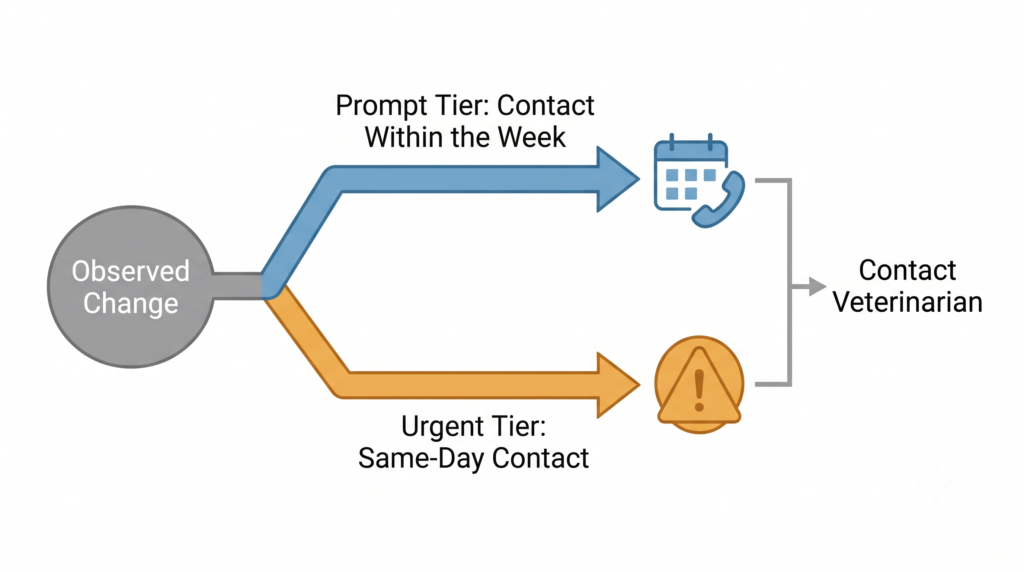
Some changes during weight management need a prompt veterinary appointment within the week, while others require same-day or emergency care. If you are asking when you should take my cat back to the vet muscle loss, the two-tier guide below answers that question directly.
Prompt appointment tier: Contact your veterinarian within the week
- Muscle condition is visibly or palpably worse after four to six weeks of dietary changes.
- BCS is decreasing while MCS is also worsening, suggesting muscle loss is outpacing fat loss.
- Reduced interest in food lasts for more than twenty-four hours without an obvious cause.
- Coat quality continues to deteriorate despite dietary changes.
- Hindlimb weakness or changes in gait appear or worsen after the diet has changed.
- A weight loss rate exceeds roughly 1–2% of body weight per week. This may increase obese cat losing weight too fast risks.
Urgent same-day or emergency contact tier
- Complete food refusal for more than twenty-four to forty-eight hours in an obese cat because of the liver risk discussed earlier in this content series.
- Sudden, severe hindlimb weakness or collapse.
- Neurological signs such as cat coordination problems on diet, loss of coordination, head drooping, or disorientation.
- Vomiting combined with lethargy and food refusal.
- Signs of cardiac distress include open-mouth breathing, labored breathing, or sudden collapse. These situations may also fit when to go to an emergency vet with a dieting cat or an obese cat not eating emergency concerns.
In most cases, signs cat is not responding to a diet change fall into the prompt appointment tier. These changes suggest the current plan may need professional review. They are usually not emergencies, but they should not be ignored for another month either.
The urgent tier is different. These signs may point to serious problems involving the liver, nervous system, or heart, where delaying veterinary care can increase the risk.
she stopped eating for two days when I changed her food and I completely panicked is a completely understandable reaction. It reflects an appropriate concern, not an overreaction. If your cat refuses food for more than twenty-four hours during weight loss, contact your veterinarian the same day. Do not wait to see if appetite returns on its own.
Any worsening of a monitored parameter is worth discussing with your veterinary team, even if it does not clearly meet the thresholds above. These guidelines help you prioritize urgency, but they are not diagnostic criteria. Your veterinarian should assess any change that concerns you.
These thresholds are practical guidelines for deciding how quickly to seek veterinary care. When you are unsure, calling your veterinary practice for advice is always the safest choice.
Home monitoring helps you see whether your dietary plan is working between appointments. For a complete discussion of foods and feeding strategies that support muscle recovery, refer to the dietary guidance covered elsewhere in this content series.
A Safe Approach to Managing Weight Loss Transition
Home monitoring helps you spot changes early. This section explains why active weight loss is a distinct stage with its own nutritional risks, beyond those already linked to obesity. It covers how nutrient needs change once weight loss begins, how to help protect against phosphorus depletion, and how to recognize thiamine deficiency, which is the most urgent nutritional concern discussed in this article. Together, these sections explain what closer monitoring should look like during the weight loss transition.
How Do Nutrient Needs Change During Weight Loss?
Weight loss is not simply a continuation of the obese state with less food. It is a distinct metabolic event that creates its own nutritional risk profile, layered on top of the risks that already exist while a cat remains obese. Understanding how an obese cat’s nutrient requirements change once weight loss begins is genuinely important preparation before an active weight loss program starts, not just background information.
Several metabolic shifts occur once weight loss begins in earnest. Fat mobilization accelerates, meaning fatty acids flood the liver for processing at a rate above what the stable obese state produces. Cellular energy demand increases at the same time, since the body’s shift from storing fat to actively burning it requires more phosphorus, thiamine, and B vitamins to support the enzymes involved in energy metabolism. Total food intake typically decreases during this phase, which reduces the absolute delivery of all nutrients at exactly the moment demand for several of them is rising. The kidneys also face elevated metabolic waste clearance during this transition, which can alter fluid balance and mineral handling more broadly.
I reduced her food gradually over eight weeks and she is losing weight but she seems to have less energy than before is a useful example of an early, transition-phase observation. Mild lethargy during this phase is worth noting and mentioning to your veterinarian, even before it becomes a clearly urgent concern.
This combination of increased nutrient demand and reduced nutrient delivery creates a specific vulnerability window, particularly for phosphorus and thiamine, covered in detail in the next two sections. Obese cat losing weight too fast risks are directly tied to the speed of this transition. Faster weight loss creates a more acute demand spike, which is a large part of why veterinary guidance consistently recommends a gradual pace rather than an aggressive one. If you are asking how fast should obese cat lose weight, veterinary sources generally point to roughly 0.5–2% of body weight per week as the range considered safe, with the more conservative end of that range reserved for cats who are more severely obese.
The nutritional risk profile of an obese cat changes meaningfully once active weight loss begins. This transition phase warrants closer monitoring and more frequent veterinary contact than the stable obese phase that preceded it.
Weight loss in obese cats should be managed under veterinary supervision. The transition risks described above are a primary reason why unsupervised, rapid weight loss in cats is genuinely dangerous rather than simply inadvisable.
The pre-management baseline your veterinarian recorded before this phase began matters more than it might seem, particularly for one nutrient in particular: phosphorus, which the next section covers directly.
How Do I Protect My Cat From Low Phosphorus?
Hypophosphatemia, or low blood phosphorus, is the specific risk at the center of this section. It happens because when the body starts burning fat rapidly, every cell needs more phosphorus to produce energy. Blood phosphorus can drop faster than the diet can replace it. The vet said everything looked normal at her last check but that was before we started the weight management programme is an important point to remember. A blood panel before weight loss does not always predict what happens once active weight loss begins. That is why a baseline measurement is important.
During active weight loss, fat mobilization increases the body’s energy demands. As a result, the need for phosphorus rises because it is required for ATP production inside cells. This is the mechanism behind phosphorus levels low in cat during diet, making it a real and documented concern rather than a theoretical one.
Action 1 – Establish a baseline phosphorus measurement before weight loss begins
Ask your veterinarian to record a baseline phosphorus level before your cat starts a weight loss programme. This reference point makes it much easier to compare future test results during the weight loss phase.
Action 2 – Schedule monitoring bloodwork during active weight loss
Ask your veterinarian how often phosphorus should be checked while your cat is losing weight. The answer depends on the rate of weight loss and your cat’s individual risk factors. It is worth discussing this directly instead of assuming routine visits will automatically include it.
Action 3 – Know the warning signs of low phosphorus
When looking for signs of hypophosphatemia in cats, muscle weakness that appears or worsens during weight loss is one of the most recognizable signs. Unusual lethargy or reluctance to move can also occur. In more severe cases, neurological signs such as disorientation or tremors may develop. If any of these signs appear during active weight loss, contact your veterinarian the same day instead of waiting to see if they improve.
Action 4 – Maintain adequate phosphorus intake through food
Animal-based protein naturally provides phosphorus. Feeding a high-quality, meat-based diet during weight loss helps maintain phosphorus intake. Do not reduce your cat’s food more quickly than your veterinarian recommends. A rapid reduction decreases phosphorus intake while increasing the body’s demand at the same time.
Cats with kidney disease require extra care. They may need phosphorus restriction for kidney management, which can conflict with maintaining adequate phosphorus during weight loss. This situation requires veterinary guidance rather than home decision-making.
Serum phosphorus is the blood measurement used to identify hypophosphatemia during feline weight loss. It is the key value this section focuses on and should ideally be measured before weight management begins. More broadly, how to protect cat from nutrient loss during diet comes down to four practical steps: getting a baseline measurement, scheduling follow-up testing, recognizing warning signs, and maintaining steady food intake.
Monitoring phosphorus during weight loss is the veterinarian’s responsibility. Your role is to watch for warning signs, follow the feeding plan, and report any changes promptly instead of trying to manage phosphorus levels yourself.
Phosphorus is not the only nutrient that deserves attention during weight loss. Thiamine is an even more time-sensitive nutrient, and understanding its warning signs is one of the most important parts of this article.
What Are the Signs of Thiamine Deficiency?
Thiamine deficiency neurological signs in cats can develop relatively quickly during active weight loss. Because cats have minimal thiamine storage reserves compared with fat-soluble nutrients, deficiency can develop within days to weeks when food intake drops while metabolic demand increases. This combination is exactly what can happen during active weight loss.
This section carries the highest urgency in the entire article because untreated thiamine deficiency can lead to severe neurological consequences. Unlike fat-soluble nutrients, thiamine has very limited storage capacity in the body.
This means depletion can happen quickly when intake decreases and energy demands rise at the same time. Active weight loss creates this exact situation, which is why owners need to recognize early warning signs.
“I noticed her walking more carefully on the stairs last week, and I could not tell if it was just her being cautious or something neurological” is exactly the type of early, unclear observation this section helps you evaluate.
For cat coordination problems on diet, the safest approach is to take new coordination changes seriously during active weight loss. Thiamine status can change quickly during this transition period.
Early signs (days to weeks of deficiency):
- Reduced appetite or gradual food refusal
- Mild lethargy that seems greater than expected from reduced food intake alone
- Vomiting, which can appear before neurological signs develop
Progressive signs (moderate deficiency):
- Loss of coordination, where the cat becomes unsteady or starts stumbling
- Abnormal posture, especially ventroflexion (the neck drooping downward). This is one of the most distinctive posture changes linked with thiamine deficiency in cats. The head hangs lower than normal instead of being held upright.
- Circling or signs of disorientation
If you notice cat neck drooping during weight loss, this is the specific posture change most strongly associated with thiamine deficiency.
Advanced signs (severe deficiency, a medical emergency):
- Seizures
- Inability to walk or stand
- Coma in extreme cases
If you are asking about cat thiamine deficiency signs during weight loss, the pattern usually moves from vague early symptoms to coordination changes, posture changes, and then severe neurological signs.
The key point is knowing when to act. Any neurological sign during active weight loss, including loss of coordination, neck drooping, seizures, or disorientation, requires immediate emergency veterinary contact.
Reduced appetite lasting more than twenty-four hours, especially when combined with lethargy during active weight loss, requires same-day veterinary contact. Do not wait to see if your cat starts eating again without help.
Vomiting combined with lethargy in a cat undergoing weight management also needs prompt veterinary advice. If you are concerned about a cat seizure during a diet change or a cat wobbling during weight loss, both belong in the emergency-contact category described here.
Thiamine deficiency can be treated with veterinary-guided thiamine supplementation, especially when it is identified early. Neurological signs may improve quickly after treatment begins, although delayed treatment can lead to permanent damage.
This is why early contact matters more than watching symptoms progress. George noticed his senior Norwegian Forest Cat, Otto, seemed slightly unsteady on the stairs during a grooming session one weekend.
He contacted his veterinarian the same day instead of waiting to see if it improved. After a short course of veterinary-guided treatment, Otto’s coordination improved, and he was climbing the stairs confidently again within a couple of weeks.
Any neurological sign in a dieting obese cat should be treated as a veterinary emergency. This is not a situation for home monitoring alone, even if your cat otherwise appears calm.
Thiamine deficiency neurological signs in cats undergoing weight management require urgent veterinary attention. Do not wait for signs to become more severe before contacting your veterinarian.
The reason phosphorus and thiamine become concerns during weight loss transition is explained in detail elsewhere in this content series. The goal here is recognition and prompt action, not managing either nutrient independently at home.
Long-Term Nutritional Management Beyond the Obese Phase
The transition-phase risks covered in the previous section usually settle as a cat moves closer to a healthy weight. However, nutritional management does not simply stop once weight normalizes.
This section explains why nutrient needs can continue to change after weight loss is complete. It also covers how to protect lean muscle mass through long-term dietary support and how to create a structured monitoring plan with your veterinarian.
The goal is to support your cat’s health for years, not just the first few months after reaching a healthy weight.
Do Nutrient Needs Change After My Cat Loses Weight?
Reaching a healthy weight does not automatically mean your cat’s nutritional management can return to a standard adult cat approach. Several changes caused by obesity take time to fully resolve.
The end of weight loss does not mean nutritional monitoring should stop immediately. Some body systems continue adjusting after your cat reaches a healthy weight. This is why she has reached her target weight but I am not sure I should stop monitoring — something feels different about her still is a reasonable concern.
Your cat’s nutrient needs can continue to change after weight loss ends. Understanding these changes helps you work with your veterinarian and avoid stopping support too early.
Reason 1 — Fat-soluble vitamin changes continue after weight loss
Fat-soluble vitamins stored in body fat do not disappear or normalize overnight. As fat stores decrease during weight loss, these vitamins are gradually released back into circulation.
This process may improve vitamin levels without adding extra supplements. That is why testing before and after weight loss can provide a clearer picture than testing only before the program begins.
If your cat started supplements during the obese phase, your veterinarian may need to review whether they are still needed. She has been at her target weight for four months and I keep wondering if the supplements she was on are still necessary is exactly the type of situation where reassessment helps.
Reason 2 — Muscle recovery continues after reaching a healthy weight
Weight loss does not mean muscle recovery finishes at the same time. Muscle protein synthesis recovery after prolonged sarcopenic obesity continues for months beyond the point at which healthy weight is reached, particularly in senior cats.
A cat that lost significant muscle may still need careful nutrition support after reaching a healthy number on the scale. Protein quality and feeding strategies discussed elsewhere in this content series remain important during this stage.
Reason 3 — Age-related needs remain after weight loss
A senior cat that was obese and reaches a healthy weight is still a senior cat. Age-related changes, such as reduced muscle-building ability, slower digestion, and possible kidney changes, do not disappear with weight loss.
This is why do cat nutritional needs change after losing weight is an important question. A senior cat that was previously obese may have different nutritional needs compared with a senior cat that was never obese.
Reason 4 — Gut recovery takes time
The gut microbiome does not immediately return to a lean-cat state after weight loss. Gut microbiome normalization after obesity is a gradual process.
B vitamin production from gut bacteria may take time to adjust after your cat reaches a healthy weight. Some cats may benefit from continued monitoring of B vitamin status during this period.
Reaching a healthy weight is a major achievement, but nutritional care should continue to change with your cat’s recovery. The goal is not to return to the old routine immediately, but to support your cat’s new healthy state.
Understanding changing nutrient needs is the first step. The next step is learning how to protect muscle mass during this longer recovery phase.
Post-Weight-Loss Nutrient Reassessment Sequence
Since these changes do not all resolve at the same pace, it can help to see what tends to continue evolving after your cat reaches a healthy weight, and what that means for ongoing monitoring.
| Nutrient or System | What Continues to Change | Practical Implication |
|---|---|---|
| Fat-soluble vitamins (A, D, E, K) | Sequestered vitamins gradually release from shrinking fat tissue back into circulation | Circulating levels may improve on their own; any supplement started during the obese phase may need review as adipose mass normalizes |
| Protein and muscle mass | Muscle protein synthesis recovery continues after target weight is reached, particularly in senior cats | Elevated protein support may remain relevant well after the scale reaches a healthy number |
| Gut microbiome and B vitamins | Microbiome normalization after obesity is a gradual process | B vitamin production from gut bacteria may not return to lean-cat levels immediately, so B12 monitoring may remain appropriate for a period |
| Age-related factors | Do not reset with weight loss | A senior cat who was previously obese continues to have different needs than a senior cat who was never obese, regardless of current weight |
The specific pace of these changes varies by cat, which is why this is a sequence to be aware of and discuss with your veterinarian, not a fixed timeline to track against.
How Do I Protect Muscle Mass Long-Term?
Once active weight loss ends and your cat reaches or approaches a healthy weight, the focus shifts from losing weight to maintaining muscle and supporting long-term health. If you are wondering how to maintain cat muscle after weight loss, the four priorities below provide a practical framework for ongoing care.
Priority 1: Maintain the protein quality standards used during weight loss
The protein standards used during weight management should continue after your cat reaches a healthy weight. Look for the same key features, including named animal protein, high digestibility, and confirmed taurine and L-carnitine content.
Switching to a lower-quality food after reaching the target weight may risk losing the muscle progress made during the weight management phase. Long-term nutrition should continue supporting the muscle your cat worked to rebuild.
Priority 2: Reassess feeding frequency
Multiple small meals can continue to support muscle protein synthesis after your cat reaches a healthy weight. This approach may be especially useful for senior cats.
Your veterinarian can help decide whether to keep the current meal schedule or adjust it based on your cat’s response over time.
Priority 3: Monitor muscle condition during life changes
Muscle condition should continue to be monitored as your cat moves through different life stages. Important times to reassess include entering the senior stage, developing a health condition, changing foods, or experiencing a major change in activity level.
Food changes can include a new product or even a reformulation of a food your cat already eats. Regular reassessment helps identify changes before they become larger problems.
Priority 4: Continue nutrient monitoring when needed
A yearly or twice-yearly nutrient check may be reasonable for some previously obese cats that have reached a healthy weight. However, your veterinarian should determine the right schedule based on your cat’s history and health needs.
These checks can help identify returning deficiencies before they become clinically significant. They also support a more complete approach to long term care for previously obese cat.
For how to know if cat diet is still working long term, think of these four priorities as an ongoing checklist. Protect protein quality, maintain appropriate feeding habits, watch for life-stage changes, and keep recommended monitoring up to date.
Protecting muscle in a cat that was previously obese requires continued attention. The management phase does not end when the scale reaches the target weight, even if it feels like the hardest part is over.
Diet is one part of long-term success. The other part is maintaining a consistent relationship with your veterinarian, which helps keep your cat’s care plan updated over time.
How Do I Build a Long-Term Monitoring Plan?
A structured, collaborative monitoring plan is the tool that supports long-term success after active weight management ends. It turns disconnected check-ins into a clear, shared framework between you and your veterinarian.
I started giving her three meals a day and adjusting her food, and now, months later, I am still not sure what “done” is supposed to look like is a feeling many owners share at this stage. A written plan, rather than a vague sense of ongoing effort, often provides much-needed clarity.
For long term care for a previously obese cat, the five components below outline what a practical monitoring plan usually includes.
Component 1 — A defined monitoring schedule
Agree with your veterinarian on specific appointment intervals. These are often every four to eight weeks during active weight loss, every three to six months during the transition toward healthy weight, and annually once your cat reaches maintenance.
At each appointment, weight, BCS, MCS, and relevant bloodwork based on your cat’s current phase should be reviewed. The schedule should match your cat’s age, health conditions, and rate of progress.
There is no single schedule that works for every cat. If you are asking how often should cat have vet check after weight loss, this tiered approach, agreed with your veterinarian, is the most reliable answer.
Component 2 — A documented baseline record
Make sure your veterinary records include baseline measurements from before weight management began. These should include weight, BCS, MCS, and any blood panels completed at that time.
Ask for copies of these records because they remain useful if your cat changes veterinary practices or needs specialist care later.
my vet retired and the new vet does not have any of her previous records — I wish I had kept copies myself reflects a common regret. You can avoid this by keeping personal copies of your cat’s blood test results at every stage, including weight management, transition, and maintenance.
This allows you and any future veterinarian to see trends across the entire journey in one place.
Component 3 — Agreed trigger points for unscheduled contact
The urgent and prompt contact framework discussed earlier should be reviewed with your veterinarian. Confirm that the warning signs match your individual cat’s needs.
A useful question to ask is: “What should I watch for between appointments that would mean I should contact you before the next scheduled visit?”
When possible, ask your veterinarian to add this guidance to discharge notes or a care plan summary. Written instructions are easier to follow than relying on memory alone.
Component 4 — Food reassessment at defined intervals
Agree with your veterinarian on when dietary reassessment should happen. In many cases, this occurs during regular monitoring appointments.
Food that worked during active weight loss may need adjustments once your cat reaches maintenance. Any manufacturer reformulation of your cat’s current food is also worth discussing as a separate reassessment point.
Component 5 — A supplementation review schedule
Any supplement started during the obese phase should have a defined review date with your veterinarian. It should not continue indefinitely without reassessment.
Fat-soluble vitamin supplementation, in particular, may need review as body fat decreases. Changes in nutrient storage during weight loss can affect whether continued supplementation is still appropriate.
For the senior cat nutritional monitoring plan specifically, these same five components still apply. However, Component 1 may require closer monitoring frequency, and Component 5 may need more careful supplement review.
Senior cats often manage several health considerations at the same time. A structured plan helps ensure important changes are noticed early.
A structured monitoring plan gives you and your veterinarian a shared framework for tracking progress and responding to changes. Long-term success does not happen automatically once your cat reaches a healthy weight.
Instead, it comes from continued attention, clear communication, and regular reassessment over time.
Conclusion
Obese cats may need targeted nutritional support, but the right support depends entirely on what testing reveals, not on what seems logical from symptoms alone. Fat-soluble vitamins carry genuine toxicity risk when supplemented without a confirmed deficiency, and amino acid supplements are most effective when they follow rather than replace food quality improvements. Home monitoring of muscle condition through weekly palpation, body condition scoring, and photography gives you meaningful data to bring to veterinary appointments. The transition to active weight loss creates its own nutrient risk window, particularly for phosphorus and thiamine, that requires closer monitoring and faster veterinary contact when warning signs appear. A structured long-term monitoring plan, built collaboratively with your veterinarian, is the infrastructure that protects your cat’s nutritional health not just through weight loss but throughout the years that follow.
What to Watch For
- Vertebrae, hip bones, or shoulder blades feeling more prominent week to week during palpation checks
- The temporal muscle hollows above the eyes appearing more sunken than in previous weeks
- Weight loss occurring faster than roughly 1–2% of body weight per week
- Reduced appetite lasting more than twenty-four hours at any point during weight management
- Any change in coordination, gait, or the way your cat holds its head or neck
- Coat quality declining despite dietary changes
- Muscle condition appearing to worsen even as body condition score improves
Questions to Ask Your Vet
- Which specific blood tests, taurine, vitamin D, B12, phosphorus, would be appropriate to include at the next visit
- What the ideal monitoring schedule looks like for this cat specifically, given age and any existing conditions
- What signs, if any, would mean contacting the practice before the next scheduled appointment
- Whether a baseline phosphorus measurement should be recorded before active weight loss begins
- Whether any supplement started during the obese phase has a planned review date
- Whether a referral to a specialist would be useful given this cat’s individual history
FAQ Section
How Often Should an Obese Cat Have Blood Tests to Check Nutrient Levels?
During active weight management, blood panels every four to eight weeks are commonly recommended to monitor phosphorus, liver values, and overall response, though the exact frequency depends on the rate of weight loss, your cat’s age, and whether any concurrent conditions are present. Baseline testing before weight management begins is the essential starting point, since without a baseline, transition-phase changes cannot be interpreted accurately. Monitoring interval should ultimately be set by the treating veterinarian based on your cat’s individual clinical factors.
Can I Use Human Vitamin D or Taurine Supplements for My Obese Cat?
Human vitamin D supplements are not appropriate for cats without veterinary guidance, since the dose in a typical capsule or tablet is calibrated for human body weight and metabolism, and the margin between a therapeutic and a toxic dose is narrow in cats. Taurine sold for human use is typically pure taurine powder, which is more straightforward than a multivitamin, but the appropriate dose for a cat differs from human dosing and should be confirmed by a veterinarian. Any supplement given to a cat should be confirmed as safe for feline use, since several common human supplement additives are toxic to cats.
What Is the Difference Between Body Condition Score and Muscle Condition Score and Why Do Both Matter?
Body condition score measures fat coverage, telling you how much fat a cat is carrying, while muscle condition score measures muscle mass independently, telling you how much lean tissue is present. An obese cat can score high on body condition score, meaning too much fat, and low on muscle condition score, meaning too little muscle, at the same time. This is why tracking both gives a more complete picture of progress than weight or body condition score alone.
If My Cat’s Weight Has Normalized, Should I Still Monitor for Nutritional Deficiencies?
Yes. Reaching a healthy weight does not immediately normalize all the nutritional disruptions obesity caused. Fat-soluble vitamin release from shrinking adipose stores continues during and after weight loss, gut microbiome recovery takes time, and senior cats retain elevated protein and micronutrient needs regardless of weight status. Annual monitoring of taurine, vitamin D, and B12 is reasonable for a previously obese cat that has reached healthy weight, though the specific post-weight-loss monitoring schedule should be agreed with your treating veterinarian.
Is There Any Supplement That Is Safe to Give an Obese Cat Without Testing First?
There is no fat-soluble vitamin supplement that should be given without testing in an obese cat. Vitamins A, D, E, and K all carry real toxicity risk in cats when given without confirmed deficiency. Taurine and L-carnitine have a lower immediate toxicity risk, but both should still be discussed with a veterinarian before starting. The only genuinely safe first step is a veterinary appointment to test what is actually needed before any supplement is introduced.
Disclaimer: This article is written for educational purposes only and does not replace professional veterinary advice. Always consult a licensed veterinarian before making changes to your cat’s diet or health management.
References
Cornell University College of Veterinary Medicine. “Obesity.” Cornell Feline Health Center. https://www.vet.cornell.edu/departments-centers-and-institutes/cornell-feline-health-center/health-information/feline-health-topics/obesity
Cornell University College of Veterinary Medicine. “Feeding Your Cat.” Cornell Feline Health Center. https://www.vet.cornell.edu/departments-centers-and-institutes/cornell-feline-health-center/health-information/feline-health-topics/feeding-your-cat
Cornell University College of Veterinary Medicine. “Ask Elizabeth: Care of Obese Cats.” Cornell Feline Health Center. https://www.vet.cornell.edu/departments-centers-and-institutes/cornell-feline-health-center/health-information/feline-health-topics/ask-elizabeth-care-obese-cats
VCA Animal Hospitals. “Obesity in Cats.” https://vcahospitals.com/know-your-pet/obesity-in-cats
VCA Animal Hospitals. “Creating a Weight Reduction Plan for Cats.” https://vcahospitals.com/know-your-pet/creating-a-weight-reduction-plan-for-cats
VCA Animal Hospitals. “Hepatic Lipidosis in Cats (Fatty Liver Syndrome in Cats).” https://vcahospitals.com/know-your-pet/liver-disease-fatty-liver-syndrome-in-cats
VCA Animal Hospitals. “Thiamine.” https://vcahospitals.com/know-your-pet/thiamine
American Animal Hospital Association (AAHA). “2021 AAHA Nutrition and Weight Management Guidelines for Dogs and Cats.” Journal of the American Animal Hospital Association, 57, 153–174. https://www.aaha.org/resources/2021-aaha-nutrition-and-weight-management-guidelines/
American Animal Hospital Association (AAHA). “Section 8: Dietary Management.” 2026 AAHA Diabetes Management Guidelines for Cats. https://www.aaha.org/resources/2026-aaha-diabetes-management-guidelines-for-cats/section-8-dietary-management/
World Small Animal Veterinary Association (WSAVA) Global Nutrition Committee. “WSAVA Nutritional Assessment Guidelines.” Journal of Small Animal Practice, 2011. https://wsava.org/wp-content/uploads/2020/01/WSAVA-Nutrition-Assessment-Guidelines-2011-JSAP.pdf
World Small Animal Veterinary Association (WSAVA). “Global Nutrition Guidelines / Nutrition Toolkit.” https://wsava.org/global-guidelines/global-nutrition-guidelines/
PetMD. “Vitamin B1 (Thiamine) Deficiency in Cats.” https://www.petmd.com/cat/conditions/digestive/c_ct_vitamin_b1_thiamine_deficiency
PetMD. “Dietary Deficiencies in Cats – Thiamine and Vitamin A in Cats.” https://www.petmd.com/blogs/thedailyvet/ktudor/2012/dec/thiamine-deficiencies-and-excess-vitamin-A-in-cats-diets-29552
Journal of Feline Medicine and Surgery. “Outbreak of Thiamine Deficiency in Cats Associated with the Feeding of Defective Dry Food.” 2016. https://pmc.ncbi.nlm.nih.gov/articles/PMC11119653
Polizopoulou, Z.S., Kazakos, G., Patsikas, M.N., Roubies, N. “Hypervitaminosis A in the Cat: A Case Report and Review of the Literature.” Journal of Feline Medicine and Surgery, 2005. https://journals.sagepub.com/doi/10.1016/j.jfms.2005.05.004
Merck Veterinary Manual. “Nutritional Disorders of the Spinal Column and Cord in Animals.” https://www.merckvetmanual.com/nervous-system/diseases-of-the-spinal-column-and-cord/nutritional-disorders-of-the-spinal-column-and-cord-in-animals
Merck Veterinary Manual. “Feline Hepatic Lipidosis.” https://www.merckvetmanual.com/digestive-system/hepatic-diseases-of-small-animals/feline-hepatic-lipidosis
Loftus, J.P., Wakshlag, J.J. “Canine and Feline Obesity: A Review of Pathophysiology, Epidemiology, and Clinical Management.” Veterinary Medicine: Research and Reports, 2014;6:49–60. https://www.tandfonline.com/doi/full/10.2147/VMRR.S40869
PMC. “Direct Activation of the Fibroblast Growth Factor-21 Pathway in Overweight and Obese Cats.” https://www.ncbi.nlm.nih.gov/pmc/articles/PMC9900002/
PubMed. “Influence of Dietary Protein and Lipid on Weight Loss in Obese Ovariohysterectomized Cats.” https://pubmed.ncbi.nlm.nih.gov/10803653/

Saloni Nagar is the founder and lead content creator of Bark & Meow Tales. As a dedicated cat parent and researcher, she transitioned from personal loss to pet health advocacy, focusing on early warning signs and preventive care. Saloni specializes in translating complex veterinary concepts into actionable guidance for pet parents. Her work is driven by a commitment to helping others interpret subtle feline health signals before they escalate, ensuring that every cat has a voice through informed, compassionate care.