
By Saloni Nagar, Medically Reviewed by Dr. Jimisha Shah, B.V.Sc & A.H., PGDAW
Most cat owners spend time comparing protein quality, ingredient sourcing, and brand reputation when choosing cat food. Very few think about iodine. It is not a nutrient that appears in pet food marketing, and it rarely comes up during routine veterinary visits until a problem develops.
Yet peer-reviewed veterinary research shows iodine content can vary by more than 100 times across commercial cat foods. That range is large enough to move the same cat’s thyroid from deficiency to excess, depending on what is in the current bag or can.
Managing your cat’s thyroid diet starts with choosing foods that stay within a consistent, moderate iodine range. Avoid both chronically high-iodine ingredients, such as daily fish and seafood, and frequent brand rotation, which creates iodine fluctuations (swings in iodine levels from meal to meal or brand to brand) that your cat’s thyroid cannot easily regulate.
According to the National Research Council (NRC), adult cats need about 0.46–2.0 mg of iodine per kg of dry food matter each day. The key factor is not only the amount but also keeping that amount consistent at every meal.
Most cat owners focus on protein quality, price, ingredient lists, and brand reputation when buying food. They rarely think about iodine. Research on commercial cat foods found iodine levels ranging from 0.2 mg/kg to more than 154 mg/kg dry matter. That means the same cat’s daily iodine intake can change dramatically depending on what is in the food bowl.
If your veterinarian has mentioned iodine, if you recently read about the connection, or if you simply want to make better food choices, this article can help.
It explains the practical details that many pet nutrition articles leave out. There is no unnecessary alarm, only clear guidance on what to check, what to watch for, and how to build a more consistent feeding plan.
This article covers five practical topics. You will learn how feeding habits can affect iodine intake, what research says about variation in commercial foods, how to verify iodine levels for your cat’s size, which ingredients can raise iodine levels, and how to build a diet with more consistent iodine intake. It also discusses homemade diets and feeding in multi-cat households.
Your Cat’s Feeding Routine Directly Affects Thyroid Iodine Levels
The conversation about iodine and cat thyroid health often focuses on what is in the food. Before looking at specific ingredients, it helps to understand how feeding habits affect your cat’s iodine intake.
When iodine intake swings too high or too low, the thyroid has to adapt under stress. The sections below explain three common feeding patterns that can create this problem over time through repeated habits, not just one poor food choice.
Can switching cat food brands cause thyroid problems?
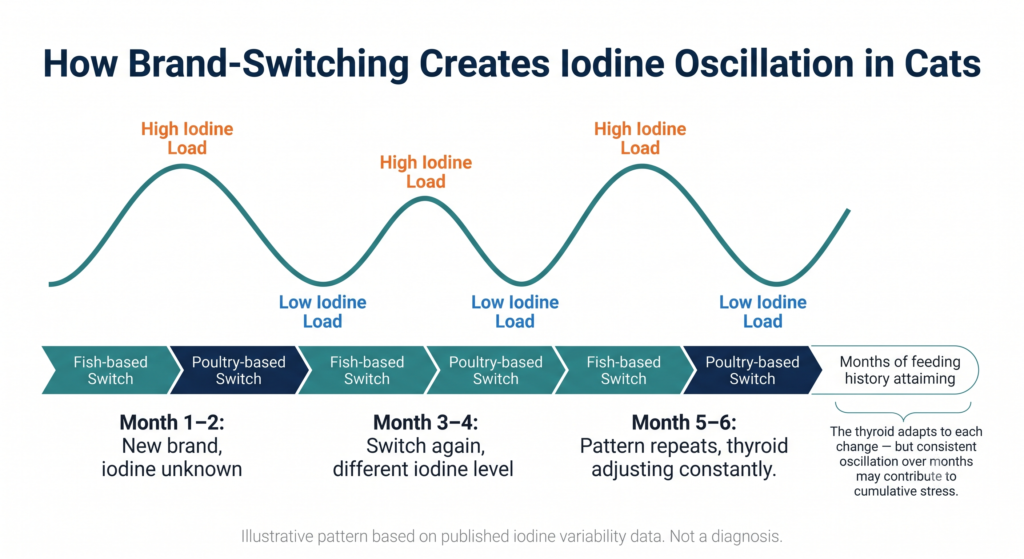
Different cat food brands use different protein sources, mineral premixes, and ingredient sources. As a result, iodine levels can vary significantly, even within the same type of cat food. When owners switch brands every few weeks, their cat’s iodine intake changes with each food. Repeated brand changes can create a pattern of iodine spikes and dips that the thyroid must keep adapting to over time.
Can switching cat food brands cause thyroid problems is a question many owners ask as they learn more about feline nutrition. The honest answer is that one food change is unlikely to cause harm. The bigger concern is the long-term pattern, especially when cat food brand switching and thyroid health are not considered together. Every new bag seemed like a harmless switch at the time, and many owners rotate foods for good reasons, such as preventing picky eating, finding better prices, or offering more variety.
The question does changing cat food affects thyroid function is really about what happens over months and years, not after one meal. Research published in peer-reviewed veterinary nutrition journals shows that commercial cat foods can differ widely because ingredient sourcing and formulation vary. It also shows that iodine content can shift with recipe changes even when the product name stays the same. A food that has a moderate iodine level in one production batch may differ in the next if the manufacturer changes fish sources or adjusts the mineral premix. I had no idea the thyroid would notice small food changes so strongly, but the effect builds gradually rather than appearing overnight.
Build a food log before changing brands again. Track what your cat has eaten over the past few months and note whether each food was fish-based, poultry-based, or mixed. This makes it easier to see whether iodine intake has stayed consistent. Watch for food swaps that happen too often to track well. The goal is not to feed the same food forever. Instead, learn where each food fits before adding it to your rotation.
Sofia rotated five different brands for her five-year-old Siamese, Mango, because she believed variety was the healthier choice. During grooming, she noticed Mango felt thinner through the shoulders than before and mentioned it at their next veterinary visit. Her veterinarian suggested keeping a simple food log before switching foods again. The log made the feeding pattern much easier to understand. Brand-switching cat food iodine is a concern that becomes clearer when you look at everything your cat has eaten and the order in which those foods were fed.
Why does fish cat food have so much iodine?
Marine-derived ingredients (seafood-based ingredients that naturally carry higher iodine) are among the richest natural sources of this mineral. Fish-based cat food consistently tests at the higher end of iodine levels across food categories. This is not a manufacturing decision. It is a natural property of the raw ingredient, so processing or formulation cannot reliably reduce it.
Is fish cat food high in iodine is one of the most common questions owners ask about feline nutrition, and the answer is consistently yes, especially for ocean fish.** Marine ingredients are naturally richer in iodine than most land-based ingredients because fish absorb and concentrate iodine from seawater throughout their lives. Fish based cat food iodine levels reflect the biology of the source animal, not the manufacturer’s choices.
Ocean fish used in cat food, including tuna, salmon, whitefish, mackerel, and cod, contain iodine levels that vary by species, fishing region, and season. This creates batch-to-batch variation, even within the same brand. She loves fish, so I assumed it must be fine every day is a thought many owners have, but feeding fish daily can unintentionally increase long-term iodine intake.
Can cats eat fish everyday without thyroid risk is a more nuanced question. Research reviewed in the Journal of Feline Medicine and Surgery suggests that can cat food with fish cause thyroid problems depends less on whether fish is included and more on how often and how much is fed. Likewise, can fish-based cat food cause thyroid problems becomes a concern when fish is the main or only protein source every day, rather than an occasional ingredient.
The same meal every day suddenly felt like the safer option, but if that meal is built around marine proteins, the iodine intake stays consistently high. At the same time, natural variation between batches can make that iodine supply less predictable.
Why is fish high in iodine for cats is easier to understand when you look at where fish live. Ocean fish naturally accumulate iodine from seawater and from their diet throughout life. There is no processing step that reliably removes it. Seafood cat food iodine content depends mainly on the source fish, not on the brand’s quality control. Fish itself is not the problem. Feeding fish as the main food every day is what can keep iodine intake consistently high over time.
Is rotating cat food bad for thyroid health?
Rotation feeding, the practice of cycling through multiple foods to provide variety and prevent dietary monotony, has one iodine-related issue that many rotation guides do not discuss. If the foods in the rotation have very different iodine levels, the rotation creates the same fluctuation as frequent brand switching. This can happen even when the diet looks well balanced on paper.
Is cat food bad for cats in general is not a settled question in veterinary nutrition, and many veterinarians consider thoughtful rotation beneficial. However, can rotating cat food cause thyroid issues depends on what foods you rotate. Rotating flavors sounded healthy until I saw what it can do to iodine intake, and that change in perspective matters. The concern is not rotation itself. It is rotating foods with very different iodine levels without knowing what each one provides. Does cat food rotation change iodine levels in the body? Yes. If intake changes from meal to meal, the gland never settles into a steady pattern.
Brand switching cat food iodine is a helpful way to think about this issue because the real concern is the combined iodine intake from the entire rotation, not one brand alone. Short rotation cycles, such as changing foods every few days, create faster iodine fluctuations than longer rotation schedules. Keep the same main food long enough to make the label meaningful. Rotation within a controlled iodine range is much safer than rotating foods with widely different iodine levels. The thyroid responds not just to total iodine, but to how consistently it arrives.
The gland depends on a narrow range of iodine to keep hormone output stable. Choose one feeding plan before testing too many changes at once. Over time, repeated iodine imbalance may contribute to thyroid cell stress. The next article in this series explains this biological process in greater detail.
Understanding how feeding habits affect iodine is the first step. The next step is learning how much iodine can vary across commercial cat foods. The numbers are more surprising than most owners expect.
Iodine Levels in Commercial Cat Food Vary More Than Most Owners Realize
The data on iodine in commercial cat food surprises many cat owners because the differences between products can be much larger than expected. One brand said one thing, another brand said something completely different, and research shows this is not simply a labeling issue. It reflects genuine formulation variability (differences in how recipes are made across brands and production batches). As a result, iodine is one of the least predictable nutrients in commercial cat food.
The gland depends on a narrow range of iodine to keep hormone output stable. That stability becomes harder to maintain when the food supply itself varies so much. This section explains why consistent iodine intake can be difficult to achieve, even when owners believe they are feeding similar products.
Look at iodine patterns over time, not just one bag or one can. A long-term view gives a much clearer picture of iodine consistency than comparing a single purchase.
Why does iodine vary so much across cat food brands?
Research analyzing commercially prepared cat foods found iodine content ranging from less than 0.2 mg/kg to over 154.6 mg/kg dry matter, a variation of more than 100 times between the lowest and highest tested products. This variation exists across foods sold at similar price points and quality levels. Premium branding does not reliably predict iodine content.
Why do cat food iodine levels vary so dramatically is a question worth answering clearly. Why is iodine so different in cat food comes down to ingredient sourcing and formulation choices. Research published in peer-reviewed veterinary nutrition literature, including reviews cited in PMC journals, shows that cat food iodine levels vary by brand because marine proteins, mineral premixes, and iodized salt can contribute very different iodine amounts. As a result, commercial cat foods can differ widely because ingredient sourcing and formulation vary, and iodine content can shift with recipe changes even when the product name stays the same.
Many owners ask, how much iodine is in cat food. Most expect to find a clear answer on the label. In reality, the answer is often harder to determine. A cat eating what appears to be the same food for months may still receive different iodine levels if the manufacturer changes ingredient sources or adjusts the mineral premix.
Compare the same brand across different formulas before assuming they match. The iodine content can vary more than the packaging suggests. As one owner put it, I assumed a premium label meant the nutrition was automatically consistent. That belief is one reason iodine remains one of the most overlooked nutritional variables in feline health.
Which cat foods have the highest iodine levels?
Wet cat foods that use fish or seafood as the main protein consistently test at the higher end of the iodine range across multiple studies. Poultry-based dry kibble usually falls in the middle of the range. Raw diets show the greatest variation of any category. Prescription veterinary diets for thyroid management are the only category where iodine is intentionally controlled to a stated range.
What cat food has the most iodine is a question best answered by looking at general category trends rather than individual products. Fish-based wet foods consistently rank higher. Do wet cat foods have more iodine than dry foods on a dry matter basis? Research published in peer-reviewed veterinary nutrition reviews suggests they often do when marine proteins are the main ingredient, although this is not true for every product. What cat food has the least iodine generally points toward poultry-based dry foods without marine ingredients, but iodine levels can still vary considerably between products.
Raw diets deserve special attention because their iodine content depends entirely on the recipe. Organ meats, especially liver and accidentally included thyroid tissue, can contain very high iodine levels. In contrast, muscle-meat-only raw diets may not provide enough iodine. This means raw feeding is neither automatically safe nor automatically risky for iodine. It depends on the recipe. Likewise, grain-free foods are not automatically lower in iodine. A grain-free salmon formula may contain much more iodine than a grain-inclusive chicken formula because iodine depends on the protein source, not the grain content.
Note whether wet and dry versions of the same brand behave differently on the label. Wet and dry foods differ in moisture, ingredient density, and nutrient concentration. These differences can change nutrient levels in ways that are not always obvious.
Cat Food Category Iodine Range Reference Table
Based on published veterinary nutrition research
| Food Category | Typical Iodine Range (mg/kg DM) | Primary Iodine Driver | Batch Consistency | Practical Note |
|---|---|---|---|---|
| Kelp-Supplemented (any format) | Extremely High — often above 100 | Kelp/seaweed additive | Very Low | Even small amounts of kelp can push iodine far above the NRC safe upper limit |
| Wet Fish-Based (tuna, salmon, mackerel) | High — commonly 10–50+ | Marine protein bioaccumulation | Low | Iodine varies by species, catch region, and season — same brand can differ between batches |
| Wet Fish-Based (whitefish, cod) | Moderate-High — typically 5–25 | Marine protein bioaccumulation | Low-Medium | Lower than oily fish but still variable; daily feeding accumulates meaningfully |
| Wet Non-Fish (chicken, turkey, beef) | Low-Moderate — typically 1–5 | Mineral premix and iodized salt | Medium | More predictable than fish-based but still not guaranteed; check for iodized salt on label |
| Dry Food — Fish Protein | Moderate-High — typically 5–20 | Fish meal concentration effect | Low | Fish meal retains iodine while removing moisture — more iodine per gram than equivalent whole fish |
| Dry Food — Poultry Protein | Low-Moderate — typically 0.5–4 | Mineral premix (potassium iodide or calcium iodate) | Medium-High | Most consistent iodine category in commercial food; still check for marine co-ingredients |
| Raw — Organ-Inclusive (liver, thyroid tissue) | Very High and Highly Variable | Organ iodine concentration | Very Low | Thyroid gland tissue if present can contribute thyroid hormones directly — not just iodine |
| Raw — Muscle Meat Only (no organs) | Low — potentially below NRC minimum | Natural meat iodine only | Medium | Risk here is deficiency rather than excess; supplement planning essential |
| Prescription Thyroid Diets | Controlled Low — typically 0.17–0.47 | Deliberately restricted and tested | High | Only category where iodine is actively managed and guaranteed — requires veterinary prescription |
NRC safe upper limit for adult cats: approximately 2.0 mg/kg DM. NRC minimum: approximately 0.46 mg/kg DM. AAFCO minimum: 0.35 mg/kg DM.
Sources: PMC veterinary nutrition reviews; Journal of Feline Medicine and Surgery. Ranges are estimates — individual products vary.
Can you trust the iodine information on cat food labels?
In most markets, iodine is not a required declared nutrient on cat food labels. That means manufacturers do not have to test or report iodine unless they make a specific iodine-related claim. The numbers on the package did not match the way her food seemed to affect her, and for many owners, that confusion starts with the label itself.
Are cat food labels accurate for iodine is a question that research answers with caution. When iodine is listed, it usually appears in the guaranteed analysis, which lists nutrient minimums or maximums, or in a typical analysis section. It is usually shown as mg/kg.
Can you trust cat food iodine label values completely? Not entirely. Guaranteed analysis values represent minimum or maximum limits, not the exact amount in every bag. Label values may not reflect every batch exactly because nutrient testing is not uniform. One production batch may contain a different iodine level than the next, even when the label looks the same.
The label looked precise, but the real picture was much less tidy. I expected the ingredient list to tell the full story, but the most useful label question is not only how much iodine is present, but how stable the supply is.
If you are wondering how to check iodine on cat food label when no value is printed, contact the manufacturer’s customer service and ask for a typical analysis that includes iodine on a dry matter basis. Compare the ingredient list and nutrient panel together. Also, check whether iodine is listed as a guaranteed analysis or only in a technical sheet.
Reputable brands with strong quality control programs should be able to provide batch-level nutrient analysis if you ask. If the label is difficult to interpret, ask your vet to help interpret nutrient values if the label is unclear instead of making decisions based on incomplete information.
The research shows that most labels do not provide a reliable iodine number. However, when a value is available, knowing how to read it correctly helps you make better feeding decisions instead of relying on a number that may be misunderstood. The next section explains how to interpret those values.
Label Iodine Reliability Checklist
Work through this checklist with the label of your cat’s current food in hand
Step 1 — Does iodine appear on the label at all?
- YES — iodine is listed in the guaranteed or typical analysis section → continue to Step 2
- NO — iodine is not listed anywhere on the label → the actual iodine content is unknown; contact the manufacturer before relying on this food for long-term iodine management
Step 2 — Is the basis of the iodine value specified?
- YES — label states “as fed” or “dry matter” next to the iodine figure → continue to Step 3
- NO — no basis is stated → treat the value as uninterpretable without manufacturer clarification; a wet food as-fed figure and a dry food dry matter figure cannot be compared without knowing which you are reading
Step 3 — Is the value a guaranteed minimum, guaranteed maximum, or typical value?
- Guaranteed minimum — the actual level may be higher than stated
- Guaranteed maximum — the actual level may be lower than stated
- Typical value — this is the most informative declaration but still reflects an average, not every batch
Step 4 — Does the manufacturer publish batch-level or third-party testing data?
- YES — this is the strongest available signal that the declared figure reflects real product content
- NO — the label value represents a formulation target, not a tested batch result
Step 5 — Does the ingredient list contain any high-iodine contributors not reflected in the declared value?
- Check for: kelp, seaweed, sea vegetables, fish meal, fish broth, fish stock, iodized salt
- If any are present and the declared iodine value appears low — the value may not capture the full iodine contribution of these ingredients at the batch level
Step 6 — Does the declared iodine value align with what the ingredient list would predict?
- Fish-based food with a declared iodine value below 2 mg/kg DM → query with manufacturer; unlikely for most fish-primary formulas
- Poultry-based food with a declared iodine value above 5 mg/kg DM → check for hidden marine co-ingredients or high-iodine mineral premix
Label Reliability Summary:
- All six steps pass: Label is the most reliable available for a non-prescription food — still represents a formulation average, not a guarantee
- Steps 1–3 pass, 4–6 unclear: Usable reference with known limitations — contact manufacturer to fill gaps
- Step 1 fails: Label provides no usable iodine data — evaluate by ingredient list only
Adult Cats Have a Specific Daily Iodine Range You Can Check
Knowing that iodine varies widely across commercial foods is only helpful if you have a reference point for comparison. I wanted a number I could actually compare, not just marketing language, and this section provides exactly that. It explains the reference ranges established by the two main nutritional authorities for cats. It also shows how to compare label values correctly and highlights the ingredient-level signs that suggest a food may be above the recommended iodine range.
How much iodine does my cat need each day?
The National Research Council (NRC) recommends a minimum iodine intake of about 0.46 mg/kg dry matter for adult cats. Research suggests a safe upper limit of about 2.0 mg/kg dry matter. Above this level, studies have documented adverse thyroid effects. Iodine is not optional because it is part of every thyroid hormone molecule, so nutrient adequacy, meaning whether a food provides enough iodine to meet daily needs, should always come before worrying about excess.
How much iodine does a cat need per day depends on body weight and calorie intake. However, the dry matter concentration provides a practical reference point. According to the Association of American Feed Control Officials (AAFCO), the minimum iodine level for adult maintenance cat foods is 0.35 mg/kg dry matter. This is slightly lower than the NRC recommendation. Recommended iodine for cats in most veterinary nutrition discussions refers to the NRC range, while AAFCO values represent the legal minimum for food labeling.
The cat iodine daily requirement ranges from 0.35 to 0.46 mg/kg dry matter at the lower end and about 2.0 mg/kg dry matter at the upper end. This is the practical range this article is designed to help owners understand. It is also important to know that AAFCO has not established a maximum iodine level for cat foods. This means products can legally contain iodine above the research-based safe upper limit without violating regulations.
Once I knew the daily range, the food label finally made sense as a starting point for evaluation instead of a guarantee of safety. These recommendations apply to healthy adult cats. Kittens, pregnant queens, and nursing cats have different iodine needs, so your veterinarian is the best person to advise you on those life-stage requirements.
NRC and AAFCO Feline Iodine Reference Standards — Side-by-Side
| Reference Point | Established By | Value (mg/kg Dry Matter) | What It Means in Practice |
|---|---|---|---|
| Minimum Iodine Requirement | NRC (National Research Council) | 0.46 mg/kg DM | The lowest iodine level at which a healthy adult cat’s thyroid can function normally on a long-term diet |
| Minimum Iodine Requirement | AAFCO (Association of American Feed Control Officials) | 0.35 mg/kg DM | The legal minimum for a commercial food to carry an “adult maintenance” complete and balanced claim in the US |
| Estimated Safe Upper Limit | NRC | ~2.0 mg/kg DM | The level above which adverse thyroid effects have been documented in research settings — no equivalent AAFCO maximum exists |
| AAFCO Maximum | AAFCO | Not established | There is currently no legal maximum iodine level for adult cat food in the US — products may legally exceed the NRC safe upper limit |
| Iodine-Restricted Therapeutic Range | Prescription diet standard (Hill’s y/d) | 0.17–0.47 mg/kg DM | The deliberately controlled range used in clinical management of feline hyperthyroidism — requires veterinary prescription |
| Observed Range in Commercial Foods | Published research (PMC) | 0.2–154.6 mg/kg DM | The actual spread found across tested commercial cat foods — illustrating how far beyond any reference point commercial products can reach |
These figures apply to healthy adult cats only. Requirements differ for kittens, pregnant queens, and nursing cats. Always consult your veterinarian before making dietary changes based on these reference numbers.
Sources: NRC Nutrient Requirements of Cats; AAFCO Official Publication; PMC — Diagnosis and Management of Feline Hyperthyroidism (2020).
How do I find iodine on a cat food label?
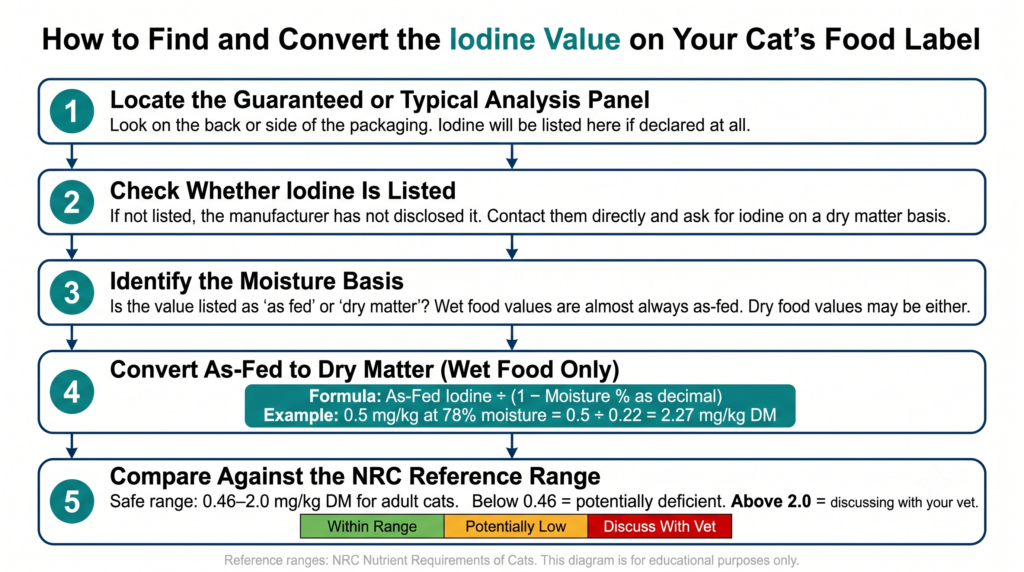
Reading a cat food label for iodine content involves five steps: locating the value, identifying the moisture basis, converting to dry matter if necessary, comparing it with the NRC reference range, and requesting manufacturer data if no value is listed. The most useful label question is not only how much iodine is present, but how stable the supply is, and understanding the format differences is what makes the number meaningful.
How to read cat food label for iodine starts with finding the guaranteed analysis panel. The cat food label iodine amount will appear there if it is listed, usually in mg/kg. The key difference is whether the value is reported “as fed” (includes moisture) or on a dry matter basis (moisture removed). As-fed values for wet food look much lower because wet food typically contains 75% to 82% moisture.
To understand how to read cat food label for iodine using a dry matter conversion, divide the as-fed iodine value by (1 minus the moisture percentage expressed as a decimal). For example, if moisture is 78% and iodine is 0.5 mg/kg as fed, the calculation is 0.5 ÷ (1 – 0.78) = 2.27 mg/kg DM. You can then compare that result directly with the NRC reference range. Review the full label before assuming a food is low in iodine. An as-fed value on wet food may look low until you convert it to a dry matter basis.
Bioavailable iodine (iodine the body can absorb and use) is what matters to the thyroid, but label values do not always reflect that difference. If no iodine value appears, contact the manufacturer and request a typical analysis that includes iodine on a dry matter basis. Many companies have this information even though they do not print it on the label.
Marcus had fed his eleven-year-old Domestic Shorthair, Chester, the same wet food for more than a year and trusted the label. One evening, he noticed the iodine value was listed on an as-fed basis for a food containing 80% moisture. After converting it to a dry matter basis, he found the value was almost four times higher than he had expected. He brought that information to Chester’s veterinarian at the next visit. Ask your vet to help interpret nutrient values if the label is unclear. A veterinary nutritionist can explain those numbers in the context of your cat’s complete diet and daily calorie intake.
How do I know if my cat food has too much iodine?
Several ingredient-level signals suggest a cat food may be at the higher end of the iodine range, even when no iodine value appears on the label. A guaranteed analysis iodine value above 2.0 mg/kg dry matter is worth discussing with a veterinarian before continuing long-term feeding.
Does cat food have too much iodine is a question best answered by reviewing the ingredient list when no numerical value is available. How to know if cat food is high in iodine starts with looking for fish, salmon, tuna, whitefish, mackerel, or cod as the first or second ingredient. Also check for kelp, seaweed, or sea vegetables anywhere in the recipe, fish broth or fish stock as the base liquid, and iodized salt instead of plain sodium chloride. The fish content was the part I had overlooked, and many owners do not notice it until they check the ingredient list more closely.
What is too much iodine for cats from a practical standpoint? Too much iodine can temporarily suppress hormone production before the gland compensates, and over time, repeated iodine imbalance may contribute to thyroid cell stress. Research suggests that repeated adjustment to high iodine intake may contribute to the cell-level changes seen in feline thyroid disease.
A “complete and balanced” label does not mean the food has controlled iodine levels. It simply means the food meets AAFCO minimum nutrient profiles, which do not include a maximum iodine limit. If iodine is not listed and several marine proteins appear among the first five ingredients, discuss the likely iodine contribution with your veterinarian before feeding that food every day for the long term. The goal is not to calculate an exact iodine intake. Instead, it is to identify clear ingredient patterns that suggest a food consistently falls at the higher end of the iodine range.
Now that you know what range to aim for and how to check what is on the label, the next layer is specific which individual ingredients are the most common sources of iodine overload, and which ones are easy to miss entirely.
These Common Cat Food Ingredients Raise Iodine Levels Significantly
Understanding the reference range is useful, but it only becomes actionable when paired with knowledge of which ingredients are actually driving iodine levels up.
This section moves from the abstract to the specific covering the ingredients most consistently linked to high iodine in commercial foods, the daily tuna question owners ask most often, the hidden risks in homemade diets, and a separate thyroid risk that operates through a completely different mechanism. Knowing what to avoid is half of the equation.
Which cat food ingredients are highest in iodine?
Kelp and seaweed derivatives are the highest-iodine ingredients found in cat food, capable of elevating total iodine content significantly even in small amounts. Fish meal concentrated, dried fish protein delivers more iodine per gram than whole fish because the concentration process retains iodine while removing water.
What cat food ingredients are high in iodine is a question that points toward a consistent ranking. Research reviewed in veterinary nutrition literature supports the following hierarchy of concern: ingredients high in iodine for cats from highest to lowest risk tend to follow this pattern kelp and seaweed derivatives, then fish meal, then whole ocean fish, then organ meats (particularly liver), then dairy derivatives, then iodized salt, then mineral premixes containing potassium iodide or calcium iodate. What foods are high in iodine for cats in the context of commercial food most often means marine proteins in their concentrated forms.
Note the fish or seafood ingredients each time you change recipes this single habit makes it easier to spot when iodine load is quietly increasing across a rotation. Mineral premixes added for nutritional completeness often contain potassium iodide or calcium iodate as iodine sources; the amount varies by manufacturer formulation and is rarely disclosed on consumer-facing labels. Iodized salt adds directly to total iodine load plain sodium chloride does not and the label will specify which is used. Organ meats, particularly liver, contain elevated iodine especially if the source animal had high dietary iodine exposure, and thyroid gland tissue (sometimes present in non-specific “meat byproduct” descriptions) can contribute meaningfully to total iodine load.
Commercial Cat Food Ingredient Iodine Ranking Table
From highest to lowest estimated iodine contribution
| Rank | Ingredient | Estimated Iodine Contribution | Appears In | What Makes It Unpredictable |
|---|---|---|---|---|
| 1 | Kelp / Seaweed / Sea Vegetables | Extremely High — can exceed safe range even in small amounts | Wet food, dry food, raw supplements | Iodine density varies significantly by harvest location and processing method |
| 2 | Fish Meal (concentrated dried fish protein) | Very High — higher per gram than whole fish | Dry food primarily; some wet food | Concentration process retains iodine while removing water — batch variation high |
| 3 | Whole Ocean Fish (tuna, salmon, mackerel, cod, whitefish) | High — varies by species and catch origin | Wet food primarily; some raw | Species, season, and fishing region all affect iodine content independently |
| 4 | Fish Broth / Fish Stock | Moderate-High | Wet food as base liquid | Iodine content tied to source fish species and dilution ratio — rarely disclosed |
| 5 | Organ Meats — Liver | Moderate-High and variable | Wet food, raw, homemade | Iodine depends on the source animal’s own dietary iodine exposure — no standard level |
| 6 | Thyroid Gland Tissue (sometimes in “meat byproducts” or whole prey neck sections) | High — also contains thyroid hormones directly | Raw whole prey, some byproduct wet food | Presence is not always disclosed; contributes hormones not just iodine |
| 7 | Dairy Derivatives (milk powder, whey, casein) | Low-Moderate | Some dry foods as secondary protein | More predictable than marine sources but adds to total load in high-dairy formulas |
| 8 | Iodized Salt | Low-Moderate but direct | Wet food, dry food, homemade | Adds iodine at a known rate per gram — plain salt does not; label specifies which |
| 9 | Mineral Premix (potassium iodide or calcium iodate) | Low-Moderate and variable | All commercial formats | Formulation varies by manufacturer and is rarely disclosed on consumer labels |
| 10 | Poultry Muscle Meat (chicken, turkey, duck) | Low — most predictable base | Wet food, dry food, raw, homemade | Lowest iodine contribution of common protein sources; most consistent across batches |
This ranking reflects relative risk contribution to cumulative iodine load — not absolute measured values for every product.
Sources: PMC veterinary nutrition literature; critical review of food-associated factors in feline hyperthyroidism.
Can I feed my cat tuna every day without risks?
Tuna is one of the most commonly fed supplemental proteins for cats, and the risk it presents to iodine balance depends on how often you feed it, not on a single serving. tuna can be a higher iodine choice because marine foods naturally accumulate more iodine, and daily feeding creates a consistently higher iodine intake than occasional feeding.
Can cats eat tuna everyday without thyroid risk is one of the questions cat owners search for most often after learning about the iodine-thyroid connection. I did not realize tuna could matter this much over time, and that captures the issue well. Tuna cat food iodine levels in both human-grade and cat-specific canned tuna can, when fed every day, push total daily iodine intake above the NRC safe upper limit for cats, according to peer-reviewed veterinary nutrition research.
Tuna every day cats iodine exposure is about the total weekly intake, not the amount in one small serving. The practical answer is that occasional tuna as a treat has a very different risk profile than tuna fed as part of a daily diet. Light tuna (skipjack) usually contains less iodine than albacore or bluefin. Even so, feeding large amounts of light tuna every day may still increase iodine intake over time.
Cat-specific tuna products also vary widely in how much tuna they actually contain. A label that says “tuna flavor” does not necessarily mean the food contains a large amount of tuna. The actual iodine content depends on how much marine protein the recipe includes.
Keep tuna as an occasional ingredient rather than a routine meal if iodine control matters. A few small servings each week create a much lower cumulative iodine load than feeding tuna every day. If tuna is a daily part of your cat’s diet and you have noticed physical changes that concern you, discuss them with your veterinarian.
What homemade cat food ingredients are high in iodine?
Homemade cat food owners face iodine risks that differ from commercial food risks because raw ingredients do not come with the nutritional analysis that manufacturers provide. The highest-iodine ingredients are also some of the most commonly recommended supplements. Homemade food sounded controlled, but the hidden risks were easy to miss, especially when adding minerals and supplements.
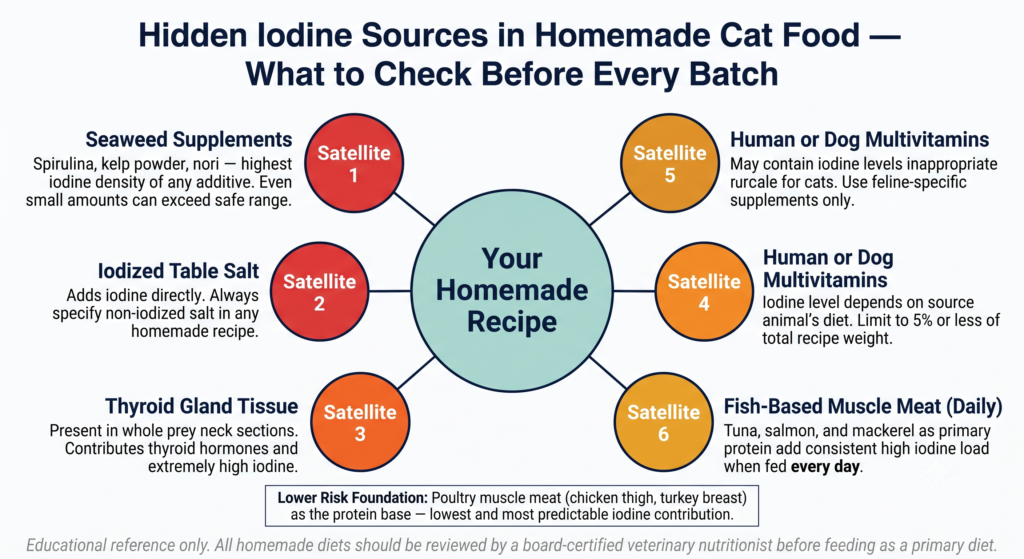
Homemade cat food iodine risk deserves careful attention. Preparing food at home can be a thoughtful and valid way to feed your cat. The goal is not to discourage homemade diets. Instead, it is to help you recognize iodine-related risks so you can manage them. Hidden iodine in homemade cat food most often comes from seaweed-based supplements, iodized table salt, and mineral supplements made for people or other animal species.
Seaweed supplements, such as spirulina, kelp powder, and nori, are often added to homemade cat diets for their mineral content. Veterinary nutrition research identifies kelp and seaweed derivatives as some of the highest-iodine ingredients available. Many homemade recipes accidentally use too much because the iodine content is not obvious from the ingredient’s appearance or the amount used.
Iodized table salt also adds iodine directly. Recipes that include salt should clearly specify non-iodized salt instead. Whole prey diets that include the thyroid gland, which may be present in poultry or rabbit neck sections, can also add very high amounts of iodine and thyroid hormone.
Use the same measuring method each time you portion homemade food. Consistent measuring helps keep iodine intake more predictable. Store recipe notes so homemade batches stay as consistent as possible.
At a basic level, how to balance iodine in homemade cat food starts with using a feline-specific vitamin and mineral supplement that clearly lists its iodine content. Build the diet around poultry muscle meat, and avoid seaweed supplements or human multivitamins that contain added iodine. A board-certified veterinary nutritionist should review every homemade cat diet before you feed it as the primary diet. Iodine balance is only one of several nutrients that requires professional calculation.
Is soy in cat food bad for thyroid health too?
Soy contains isoflavones, plant-based compounds classified as goitrogens (compounds found in some plant ingredients that may interfere with thyroid hormone function), that can affect thyroid hormone production through a mechanism separate from iodine content. Soy was not on my radar as a thyroid issue at all, and that gap in awareness means many owners overlook it even when they are carefully managing iodine.
Is soy in cat food thyroid risk is a question that requires separating the soy-iodine interaction from the goitrogen mechanism itself. Research published in peer-reviewed literature, including reviews in PMC, shows that soy isoflavones, genistein (a plant compound in soy that may interfere with an enzyme involved in thyroid hormone production) and daidzein, work by inhibiting thyroid peroxidase (TPO). This enzyme binds iodine to thyroid proteins during hormone synthesis.
This means a food can contain an appropriate iodine level and still affect thyroid hormone production if it contains significant amounts of soy. Soy in cat food thyroid risk is therefore different from the iodine-related risk discussed in this article. It is important to understand both, but they should not be confused.
The goitrogenic effect of soy isoflavones appears to be more significant when dietary iodine is also low. Some veterinary sources suggest these two factors may work together, while others report that adequate iodine largely offsets the goitrogenic effect of moderate soy intake.
Some veterinary sources consider this a meaningful concern. Others indicate that the soy levels in most commercial cat foods are unlikely to harm otherwise healthy cats. Your veterinarian is the best person to assess your cat’s individual situation.
Soy protein concentrate and soy flour are the forms most often used in commercial cat food. They contain higher isoflavone concentrations than whole soybeans. On ingredient labels, they may appear as “soy protein,” “soy flour,” “textured vegetable protein,” or “TVP.” If your cat already eats a controlled iodine diet and also consumes soy-containing food, discuss that combination with your veterinarian.
Knowing what to avoid is only half of the equation. The other half is knowing what to choose and building a feeding plan that keeps iodine intake stable, whether you feed commercial food, a homemade diet, or manage multiple cats with different nutritional needs.
The Right Diet Choices Help Prevent Thyroid Problems in Cat
This is the action layer of the article where the data and ingredient knowledge from the previous sections become practical decisions. I needed a feeding setup that was realistic, not perfect. Treat iodine management as a routine, not a one-time fix. The sections below cover how wet and dry food deliver iodine differently, how to evaluate commercial brands without brand-specific recommendations, how to build a homemade diet with iodine balance in mind, and the specific challenge that multi-cat households present. Mineral balance (keeping iodine and other minerals within the right range as a whole) is the goal and it is more achievable than most owners expect once the right questions are being asked.
Does wet cat food have less iodine than dry food?
Wet food and dry food deliver iodine differently, not just in total amount but also in how concentrated that iodine is and the form it takes. This affects how much iodine a cat receives for every calorie eaten. Nutrient density (how concentrated the nutrients are in a given portion of food) is fundamentally different between the two formats, even when their dry matter iodine content looks similar on paper.
The comparison of wet food vs dry food iodine cats starts with moisture. Does wet cat food have less iodine on an as-fed basis? Yes, in most cases. Wet food contains about 75–82% moisture, so the iodine is more diluted.
Do dry cat foods have more iodine per gram eaten? In general, yes. Dry food contains only about 8–12% moisture, so iodine is more concentrated per gram. As a result, a cat eating dry food usually consumes more iodine per calorie than a cat eating wet food with the same dry matter iodine content.
Processing methods also play a role. Research published in veterinary nutrition literature suggests that the high-heat extrusion used to make dry food may reduce iodine bioavailability slightly compared with the lower-heat retort processing used for wet food. However, this effect is not well understood and should not be used as a way to manage iodine intake.
A cat that eats both wet and dry food gets iodine from both sources. Many owners do not consider this combined iodine intake when evaluating their cat’s diet. Note whether wet and dry versions of the same brand behave differently on the label. They often do, and the differences are not always obvious from the packaging alone.
Wet Food vs Dry Food Iodine Delivery Comparison
| Dimension | Wet Food | Dry Food |
|---|---|---|
| Typical Moisture Content | 75–82% | 8–12% |
| How Iodine Appears on Label | As-fed value looks low due to high moisture dilution | As-fed value more closely reflects dry matter reality |
| Dry Matter Iodine Reality | Can be significantly higher than as-fed value suggests — always convert before comparing | Closer to actual iodine concentration per gram eaten |
| Iodine Per Calorie Consumed | Lower per calorie when non-fish based; higher per calorie when fish-based | Generally higher per calorie due to moisture concentration — a cat eats more iodine per gram of dry food |
| Primary Iodine Driver | Protein source — marine proteins drive iodine high regardless of moisture level | Fish meal concentration and mineral premix — both retain full iodine through extrusion processing |
| Processing Effect on Iodine Bioavailability | Lower-heat retort processing — iodine bioavailability relatively preserved | High-heat extrusion — may slightly reduce bioavailability but effect is not characterised enough to rely on |
| Batch-to-Batch Iodine Consistency | Lower — marine protein sourcing varies by season and catch region | Medium — mineral premix is more controlled but fish meal sourcing still varies |
| Risk When Fed Alongside Other Format | Combined wet and dry feeding creates two iodine sources — total load is rarely calculated | Same — the combined load from mixed feeding is the most commonly overlooked iodine risk in multi-format households |
| Label Conversion Needed? | Yes — always convert as-fed iodine to dry matter before comparing against NRC reference range | Usually not — but verify which basis the label uses before comparing |
Conversion formula for wet food: As-Fed Iodine Value ÷ (1 − Moisture % as decimal) = Dry Matter Iodine Value. Example: 0.5 mg/kg as-fed at 78% moisture = 0.5 ÷ 0.22 = 2.27 mg/kg DM.
Which cat foods have low or controlled iodine levels?
Iodine control in commercial cat food is not the standard. It is the exception. Only veterinary therapeutic diets made specifically for thyroid management are tested and guaranteed to provide a controlled low-iodine level. For regular non-prescription foods, the focus should be on evaluating consistency and available nutrition information rather than searching for one “perfect” product.
What cat food brands control iodine in a verified and guaranteed way? Based on veterinary guidance and published research, the only commercially available foods that meet this standard are prescription therapeutic diets. These diets are designed for cats that already have hyperthyroidism, not for preventing thyroid disease in healthy cats.
Cat food brands with controlled iodine outside the prescription category are not currently available in a verified form. This means owners should be careful when looking for a regular food that claims to manage iodine levels without supporting nutritional data.
When choosing food, the goal is not to find the best low iodine cat food to prevent thyroid issues. Instead, focus on practical evaluation factors. Look for foods where poultry proteins such as chicken, turkey, or duck are primary ingredients, avoid formulas that rely heavily on marine ingredients like kelp, seaweed, or fish meal, and check whether the manufacturer provides iodine information on a dry matter basis.
Is commercial cat food safe for thyroid health? Research suggests that most commercial cat foods are suitable for most cats. However, iodine consistency is the specific factor worth reviewing, especially for senior cats or cats with a family history of thyroid disease.
How to check iodine on cat food label information can be challenging because iodine values are not always listed on standard packaging. Contacting the manufacturer directly and asking for iodine content on a dry matter basis is a practical step many owners do not consider.
If your cat has a confirmed or suspected thyroid condition, food decisions should happen with guidance from your veterinarian or a veterinary nutritionist. Label reading alone cannot replace professional evaluation.
Brand Iodine Transparency Evaluation Framework
Apply this framework to any brand before making a long-term feeding decision
| Evaluation Criterion | What to Look For | Where to Check | Transparency Signal |
|---|---|---|---|
| 1. Is iodine declared on the label at all? | Any mg/kg value listed in the guaranteed or typical analysis panel | Product label — guaranteed analysis section | Yes = Partial transparency. No = Iodine not tested or not disclosed |
| 2. Is the basis specified (as-fed or dry matter)? | Label states “as fed” or “dry matter basis” next to the iodine value | Directly next to the iodine figure on the label | Specified = Higher reliability. Unspecified = Value cannot be meaningfully compared |
| 3. Is a typical or extended analysis available on request? | Manufacturer provides iodine on dry matter basis when contacted directly | Brand website, customer service email, or technical data sheet | Available and shared = Good transparency signal |
| 4. Is third-party testing referenced? | Any mention of independent laboratory testing, AAFCO feeding trials, or batch-level nutrient verification | Brand website — quality or testing page | Referenced with lab name = Strongest available signal for non-prescription foods |
| 5. What is the primary protein source iodine risk category? | First and second ingredient on label | Ingredient list | Poultry = Lower risk. Fish = Higher and less predictable. Organ-inclusive = Most variable |
| 6. Does the ingredient list contain hidden iodine contributors? | Kelp, seaweed, fish broth, fish meal, iodized salt in any position | Full ingredient list top to bottom | Any of these present = Iodine contribution higher than protein source alone suggests |
Scoring Guide:
- 5–6 criteria met: Verified Transparency — most reliable available option outside prescription diets
- 3–4 criteria met: Partial Transparency — usable but contact manufacturer for missing data before long-term feeding
- 0–2 criteria met: Minimal Transparency — iodine content essentially unknown; evaluate protein source as primary signal
How do I manage iodine in homemade cat food?
A nutritionally complete homemade diet for cats must meet the NRC minimum iodine level of approximately 0.46 mg/kg dry matter. Both deficiency and excess can create problems, and homemade diets can fall on either side of this narrow range. How to balance iodine in homemade cat food starts with a controlled foundation and carefully measured supplementation made specifically for cats.
How to balance iodine in homemade cat diet requires precision in ingredient selection and supplementation, not guesswork. The goal is not to add more iodine, but to provide a consistent amount that supports normal thyroid hormone production.
The protein base should come from poultry muscle meat, such as chicken thigh or turkey breast. This creates a predictable iodine foundation while still providing the animal protein cats need. A feline-specific vitamin-mineral supplement with clearly listed iodine content should provide the controlled iodine source. This allows the amount to be calculated instead of estimated.
Use the same measuring method each time you portion homemade food. Consistent measurements help keep each batch as stable as possible and reduce unexpected changes in iodine intake.
If you include organ meat, veterinary nutrition guidance recommends limiting liver to no more than 5% of the total diet by weight. Higher amounts may increase iodine exposure unpredictably because the source animal’s diet can affect nutrient levels.
Avoid adding seaweed, kelp, or iodine-containing human multivitamins on top of a feline supplement. Homemade recipes can miss iodine unless the mineral is measured deliberately, and even the same recipe can vary between ingredient batches. Small differences in sourcing can change the final iodine level without any visible change in the food.
Store recipe notes so homemade batches stay consistent over time. All homemade cat diets should be reviewed by a board-certified veterinary nutritionist before becoming the primary diet. Iodine balance is only one of several nutritional factors that requires professional calculation.
How do I manage iodine when I have multiple cats?
In a multi-cat household, controlling one cat’s iodine intake means managing the feeding environment for every cat. A cat on a low-iodine diet can lose progress by eating even small amounts of another cat’s higher-iodine food. multi cat household iodine intake management is one of the most practical challenges in dietary thyroid care.
Research on iodine-controlled therapeutic diets shows that even small amounts of cross-feeding can interfere with iodine control. A few bites of another cat’s food each day may prevent the diet from reaching its intended goal. keeping cats from eating each others food is therefore the first practical challenge owners need to solve.
The most reliable approach is physical separation during meals. This can include separate rooms, different feeding stations with supervision, or timed automated feeders that open only for a specific cat. It is easier to maintain consistency when every cat follows the same feeding plan.
This is why is rotating cat food bad for cats in a multi-cat household has a more complex answer than it does in a single-cat home. The issue is not only the food itself, but also how changes affect each cat’s overall iodine exposure.
Why multi-cat households need extra care with iodine management comes down to cross-feeding risk. Keeping the same feeding routine across all cats removes this risk and makes daily management much easier. Ideally, all cats in the household should eat foods within a similar iodine range.
Treats also need attention. Check iodine content before giving treats to any cat, especially fish-based treats. Even small amounts may add a significant iodine load. If several cats eat together, watch for accidental bowl sharing.
The hardest part was not buying food, it was keeping the routine steady. This is a common experience in multi-cat homes where one cat has different nutritional needs. A simple feeding system often works better than a complicated one that is difficult to maintain.
For households where one cat receives a veterinary therapeutic iodine-restricted diet, discuss the feeding setup directly with the prescribing veterinarian. The diet works only when that cat eats the intended food exclusively.
Priya had three cats at home and started her older British Shorthair, Biscuit, on a lower-iodine food after discussing thyroid monitoring with her vet. She noticed Biscuit was finishing meals from the other cats’ bowls before eating her own food.
Julie switched to separate feeding stations in different rooms. The change took less than five minutes per meal and made the routine easier than she expected. keep one cat from eating out of another cat’s bowl because this single step can make a controlled iodine plan possible in a shared feeding environment.
The five sections above cover the full prevention layer from feeding habits to ingredient risks to practical diet construction. The questions below address the specific details that come up consistently in this space.
Multi-Cat Household Iodine Control Readiness Checklist
Complete this checklist before starting or continuing an iodine-managed feeding plan in a home with more than one cat
Feeding Separation
- Each cat has a designated feeding station in a separate physical location or separate room
- Mealtimes are supervised — no cat is left unattended with access to another cat’s bowl
- Automated feeders (if used) are programmed per individual cat and not accessible to other cats
- Feeding stations are cleaned and removed between mealtimes — no food left out for free-grazing
Food Iodine Range Alignment
- All cats in the household are currently fed foods within a similar iodine range — or the difference in iodine level between each cat’s food is documented and discussed with the vet
- Treats given to any cat in the household have been checked for marine protein content — no fish-based treats are available to any cat without the vet’s knowledge
- No cat in the household is being fed a food that contains kelp, seaweed, or fish meal while another cat is on an iodine-restricted plan
Cross-Feeding Monitoring
- Any observed cross-feeding incidents (one cat eating from another’s bowl) have been logged and noted for the vet
- The household feeding plan has been described in full to the prescribing veterinarian — including which foods each cat receives and where feeding occurs
- If cross-feeding cannot be fully prevented, the vet has been informed so that the monitoring schedule can be adjusted accordingly
Consistency and Routine
- All cats in the household are on a consistent feeding schedule — not free-fed throughout the day
- The household feeding plan is written down or logged so that all family members or pet sitters follow the same protocol
- Iodine management is treated as a household routine — not adjusted based on individual meals or convenience
Readiness Rating:
- 12–14 items checked: Ready — your household setup supports effective iodine control
- 8–11 items checked: Partially Ready — identify unchecked items and discuss with your vet before relying on the current plan
- Fewer than 8 items checked: Not Ready — cross-feeding risk is high enough to undermine iodine management; discuss a revised household protocol with your vet before continuing
Conclusion
Managing your cat’s iodine intake through diet is one of the most practical steps an owner can take. It starts with two things: knowing the right range and understanding which ingredients and feeding habits can move your cat outside that range.
Premium pricing, “complete and balanced” labels, and rotation feeding do not guarantee iodine safety. The ingredients and feeding pattern matter most.
If this article has raised questions about your cat’s current food, talk with your veterinarian before making any major dietary changes.
For cats already showing possible thyroid changes, or cats whose vet has mentioned dietary iodine as a factor, the next step is learning how to move forward safely. This includes understanding food choices, transitions, and how to work with your vet.
What to Watch For
- Whether your cat’s food contains fish, salmon, tuna, whitefish, mackerel, or cod as a first or second ingredient. Some owners wonder is fish cat food high in iodine, especially when marine ingredients appear regularly.
- Whether kelp, seaweed, sea vegetables, or fish broth appear anywhere in the ingredient list. These ingredients can be important when reviewing what cat food ingredients are high in iodine.
- Whether iodine appears in the guaranteed analysis and whether the value is listed as-fed or on a dry matter basis. This helps answer questions like how to check iodine on cat food label and how to read cat food label for iodine.
- Whether your cat has eaten multiple brands without a consistent iodine pattern over several months. Frequent changes can raise questions such as can switching cat food brands cause thyroid problems and does changing cat food affect thyroid.
- Whether your homemade diet includes seaweed supplements, iodized salt, or multivitamins made for humans or dogs. Homemade diets carry homemade cat food iodine risk when iodine sources are not measured carefully.
- Whether any cat in a multi-cat household is eating from another cat’s bowl during meals. multi cat household iodine intake management becomes more difficult when cats share food.
- Whether your cat is over ten years old and has not had thyroid screening during a routine wellness visit.
Questions to Ask Your Vet
Does my cat’s current food stay within a reasonable iodine range based on its ingredients and protein source?
Should my cat have a baseline thyroid panel based on age, diet history, or health changes?
If I want to change foods, how should I evaluate the new food’s iodine contribution before making the switch?
Could my current rotation routine create meaningful iodine inconsistency? Is does cat food rotation change iodine something I should consider for my cat’s feeding pattern?
If my cat is eating a therapeutic iodine-restricted diet, what should the feeding plan look like across the entire household?
FAQ
FAQ 1: Should I supplement iodine if my cat’s food tests low?
Iodine supplementation should not be done without direct veterinary guidance — even small supplementation errors can push intake above the safe upper limit, which carries its own health risks. If you have reason to believe your cat’s food is iodine-deficient, the appropriate step is a veterinary consultation and possible dietary change, not independently adding a supplement. Your vet is best placed to assess whether the food is genuinely deficient and what the right adjustment would be.
FAQ 2: Does freezing or cooking raw cat food change its iodine content?
Freezing does not meaningfully alter iodine content. Light cooking — steaming or poaching — may reduce iodine slightly, but not reliably enough to treat a high-iodine ingredient as nutritionally safe after preparation. High-heat cooking can reduce iodine more significantly, but the loss is unpredictable and should not be relied on as a management strategy. Veterinary nutrition guidance consistently frames iodine management as a sourcing decision, not a cooking decision.
FAQ 3: Are grain-free cat foods safer for thyroid health than grain-inclusive foods?
Grain inclusion or exclusion does not affect iodine content — iodine is determined by protein source and mineral supplementation, not carbohydrate components. A grain-free salmon food may deliver significantly more iodine than a grain-inclusive chicken food. When evaluating a food for iodine considerations, the protein source and ingredient list are the relevant factors, not the grain status.
FAQ 4: How long does it take for a dietary iodine change to affect thyroid function?
Research on iodine-restricted therapeutic diets suggests measurable changes in thyroid hormone levels can appear within 8–16 weeks of consistent feeding — but the timeline depends on how long any imbalance existed beforehand and whether structural thyroid changes have already occurred. Monitoring during any dietary change should be done under veterinary supervision, since thyroid function testing provides the most reliable picture of whether a dietary adjustment is having the intended effect.
FAQ 5: Is organic cat food lower in iodine than conventional food?
Not necessarily — organic certification relates to pesticide use and farming practices, not mineral content. An organic fish-based food may deliver as much or more iodine as a conventional fish-based food because the iodine content reflects the source fish, not the farming certification. The same evaluation criteria apply regardless of organic status: check protein source, review the ingredient list for marine proteins, and request iodine data from the manufacturer if it is not listed.
Disclaimer: This article is written for educational purposes only and does not replace professional veterinary advice. All referenced sources were used to inform general educational content they do not constitute veterinary guidance for any individual cat. If you are concerned about your cat’s thyroid health or iodine intake, please consult a licensed veterinarian before making any dietary changes.
References and Sources
The information in this article is grounded in peer-reviewed veterinary research, institutional nutritional guidelines, and consensus-based educational guidance from recognised veterinary organisations. All sources listed below were accessed for accuracy and relevance to feline iodine nutrition and thyroid health.
Veterinary Institutional Sources
Cornell University College of Veterinary Medicine
Feline Hyperthyroidism — Health Information for Cat Owners
https://www.vet.cornell.edu/departments-centers-and-institutes/cornell-feline-health-center/health-information/feline-health-topics/hyperthyroidism-cats
Accessed 2026 — Current institutional guidance on causes, signs, diagnosis, and treatment options for feline hyperthyroidism including dietary therapy
Cornell University College of Veterinary Medicine
Feline Thyroid Tests — Testing Protocols and Interpretations
https://www.vet.cornell.edu/animal-health-diagnostic-center/testing/testing-protocols-interpretations/feline-thyroid-tests
Accessed 2026 — Institutional reference for T4, T3, free T4, and TSH interpretation in cats; notes on how nutrition and disease states affect thyroid test results
Cornell University College of Veterinary Medicine
Hyperthyroidism — Internal Medicine Services
https://www.vet.cornell.edu/hospitals/services/internal-medicine-0/feline-hyperthyroidism
Accessed 2026 — Clinical summary of treatment options, prognosis, and post-treatment care for feline hyperthyroidism patients
VCA Animal Hospitals
Hyperthyroidism in Cats
https://vcahospitals.com/know-your-pet/hyperthyroidism-in-cats
Accessed 2026 — Educational overview of clinical signs, average age of onset, cardiovascular complications, and treatment options including dietary iodine restriction
Merck Veterinary Manual
Hyperthyroidism in Animals — Endocrine System
https://www.merckvetmanual.com/endocrine-system/the-thyroid-gland/hyperthyroidism-in-animals
Accessed 2026 — Clinical reference for thyroid hormone excess in cats including diagnostic criteria and treatment modalities
Merck Veterinary Manual
Disorders of the Thyroid Gland in Cats — Cat Owners Section
https://www.merckvetmanual.com/cat-owners/hormonal-disorders-of-cats/disorders-of-the-thyroid-gland-in-cats
Accessed 2026 — Plain-language educational reference for cat owners on thyroid hormone function, hyperthyroidism signs, and treatment overview
Merck Veterinary Manual
Overview of the Thyroid Gland in Animals — Endocrine System
https://www.merckvetmanual.com/endocrine-system/the-thyroid-gland/overview-of-the-thyroid-gland-in-animals
Accessed 2026 — Reference for thyroid hormone synthesis, T3 and T4 function, iodine as the sole mineral required for thyroid hormone production
Peer-Reviewed Research — PubMed and PMC
Scott-Moncrieff JC et al.
Diagnosis and Management of Feline Hyperthyroidism: Current Perspectives
PMC / Journal of Veterinary Internal Medicine — PMC7337209
https://pmc.ncbi.nlm.nih.gov/articles/PMC7337209/
Published 2020 — Primary source for iodine content variability in commercial cat foods (undetectable to greater than 35 ppm); iodine restriction efficacy at 0.17 ppm dry matter; absolute dietary iodine requirements noted as unknown; concurrent methimazole and iodine-restricted diet contraindication
Peterson ME
Hyperthyroidism in Cats: What’s Causing This Epidemic of Thyroid Disease and Can We Prevent It?
PMC — PMC11112171
https://pmc.ncbi.nlm.nih.gov/articles/PMC11112171/
Published 2024 — Source for soy isoflavone goitrogen mechanism (genistein and daidzein inhibiting thyroid peroxidase); BPA and PBDE thyroid disruption associations; iodine deficiency and excess as dual risk factors; synergistic effects of goitrogens with iodine deficiency
van Hoek I, Hesta M, Biourge V
A Critical Review of Food-Associated Factors Proposed in the Etiology of Feline Hyperthyroidism
PMC / Journal of Feline Medicine and Surgery — PMC11112195
https://pmc.ncbi.nlm.nih.gov/articles/PMC11112195/
Published 2015 — Source for wide iodine ranges in commercial cat food across multiple countries (0.2–154.6 mg/kg DM in US study); soy isoflavone inhibition of thyroperoxidase reversed by iodine addition; iodine supplementation preventing hyperplastic thyroid changes in iodine-deficient kittens
Edinboro CH, Scott-Moncrieff JC, Glickman LT
Feline Hyperthyroidism: Potential Relationship with Iodine Supplement Requirements of Commercial Cat Foods
PMC / Journal of Feline Medicine and Surgery — PMC11149000
https://pmc.ncbi.nlm.nih.gov/articles/PMC11149000/
Published 2024 (updated) — Source for historical context of iodine supplementation changes in the 1970s; NRC iodine recommendation evolution; iodine-induced thyrotoxicosis parallels between cats and humans; cats in iodine-deficient laboratory diets showing hypothyroidism
Wakeling J et al.
One-Year Study Evaluating Efficacy of an Iodine-Restricted Diet for the Treatment of Moderate-to-Severe Hyperthyroidism in Cats
PMC — PMC6385781
https://pmc.ncbi.nlm.nih.gov/articles/PMC6385781/
Published 2019 — Source for confirmation that iodine-restricted dietary therapy does not address continued growth of abnormal thyroid tissue; distinction between dietary management and curative treatment
Fracassi F et al.
Iodine-Restricted Food Versus Pharmacological Therapy in the Management of Feline Hyperthyroidism: A Controlled Trial in 34 Cats
PMC — PMC6794403
https://pmc.ncbi.nlm.nih.gov/articles/PMC6794403/
Published 2019 — Comparative trial of dietary iodine restriction versus methimazole in hyperthyroid cats; dietary treatment proposed as alternative to pharmacological therapy
Paetau-Robinson I et al.
Comparison of Health Parameters in Normal Cats Fed a Limited Iodine Prescription Food vs a Conventional Diet
PMC — PMC11129269
https://pmc.ncbi.nlm.nih.gov/articles/PMC11129269/
Published 2024 — Source confirming no adverse health effects in healthy cats fed iodine-restricted diets long-term; relevance to multi-cat household management where healthy cats consume therapeutic food
Wakeling J et al.
Estimating Short and Longer-Term Exposure of Domestic Cats to Dietary Iodine Fluctuation
PMC — PMC9148307
https://pmc.ncbi.nlm.nih.gov/articles/PMC9148307/
Published 2022 — Source for chronic low or fluctuating dietary iodine intake in domestic cats; wide variation in urinary iodine concentrations; dietary iodine fluctuation as a potential predisposing factor to hyperthyroidism in combination with environmental goitrogens; shift away from tinned foods toward pouches noted
Menzel AP et al.
Prevalence of Feline Hyperthyroidism in a Laboratory-Based Sample of 27,888 Cats in Spain
PMC — PMC11672385
https://pmc.ncbi.nlm.nih.gov/articles/PMC11672385/
Published 2024 — Source for overall prevalence of 6.2% in Spain; 7.9% in cats older than 10 years; age as consistent primary risk factor across all geographic studies
Broussard JD et al.
Prevalence and Risk Factors for Hyperthyroidism in Irish Cats from the Greater Dublin Area
PMC — PMC5769238
https://pmc.ncbi.nlm.nih.gov/articles/PMC5769238/
Published 2018 — Source for international prevalence comparison data; advancing age as consistent risk factor; no environmental risk factor associations detected in Irish population
Kooistra HS et al.
Cardiac Abnormalities in Feline Hyperthyroidism
PMC — PMC12737610
https://pmc.ncbi.nlm.nih.gov/articles/PMC12737610/
Published 2025 — Source for cardiovascular complications of untreated feline hyperthyroidism including hypertrophic cardiomyopathy and heart failure; classical clinical signs confirmed
Sasaki N et al.
Environmental Implications of the Global Prevalence of Hyperthyroidism in Cats from a One Health Perspective
Pollutants — DOI: 10.3390/pollutants5010008
https://doi.org/10.3390/pollutants5010008
Published 2025 — Source for PBDE flame retardant associations with feline hyperthyroidism; fish-based food web as a route of higher PBDE exposure in cats compared to dogs; proposed external causative factors including nutritive iodine imbalance and fire-retardant chemicals
Mumma RO et al.
Prevalence and Risk Factors for Feline Hyperthyroidism Among a Clinic Population in Southern Germany
PubMed — PMID 26902958
https://pubmed.ncbi.nlm.nih.gov/26902958/
Published 2016 — Source for 12.3% prevalence in German clinic population; female cats significantly more affected; domestic shorthair and longhair over purebreds; moist food from aluminium tins as associated dietary risk factor
Nutritional Guidelines and Institutional Standards
National Research Council (NRC)
Nutrient Requirements of Cats
National Academies Press
Referenced for: minimum iodine requirement for adult cats (0.46 mg/kg DM); estimated safe upper limit (2.0 mg/kg DM); daily iodine intake calculations for a 4 kg cat at daily energy requirement; NRC 2006 revision increasing iodine recommendations
Association of American Feed Control Officials (AAFCO)
AAFCO Official Publication — Cat Food Nutrient Profiles
Referenced for: minimum iodine level for adult maintenance cat food (0.35 mg/kg DM); absence of established maximum iodine level for cats in current AAFCO profiles; “complete and balanced” claim criteria
American Animal Hospital Association (AAHA)
2023 AAHA Selected Endocrinopathies of Dogs and Cats Guidelines
https://www.aaha.org/wp-content/uploads/globalassets/02-guidelines/2023-aaha-selected-endocrinopathies-of-dogs-and-cats-guidelines/resources/aaha-selected-endocrinopathies-of-dogs-and-cats-guidelines.pdf
Published 2023 — Institutional guideline source for subclinical hyperthyroidism monitoring protocol (repeat T4 every 6 months for cats with enlarged thyroid glands and normal T4); endorsed by AAHA task force of veterinary specialists

Saloni Nagar is the founder and lead content creator of Bark & Meow Tales. As a dedicated cat parent and researcher, she transitioned from personal loss to pet health advocacy, focusing on early warning signs and preventive care. Saloni specializes in translating complex veterinary concepts into actionable guidance for pet parents. Her work is driven by a commitment to helping others interpret subtle feline health signals before they escalate, ensuring that every cat has a voice through informed, compassionate care.