
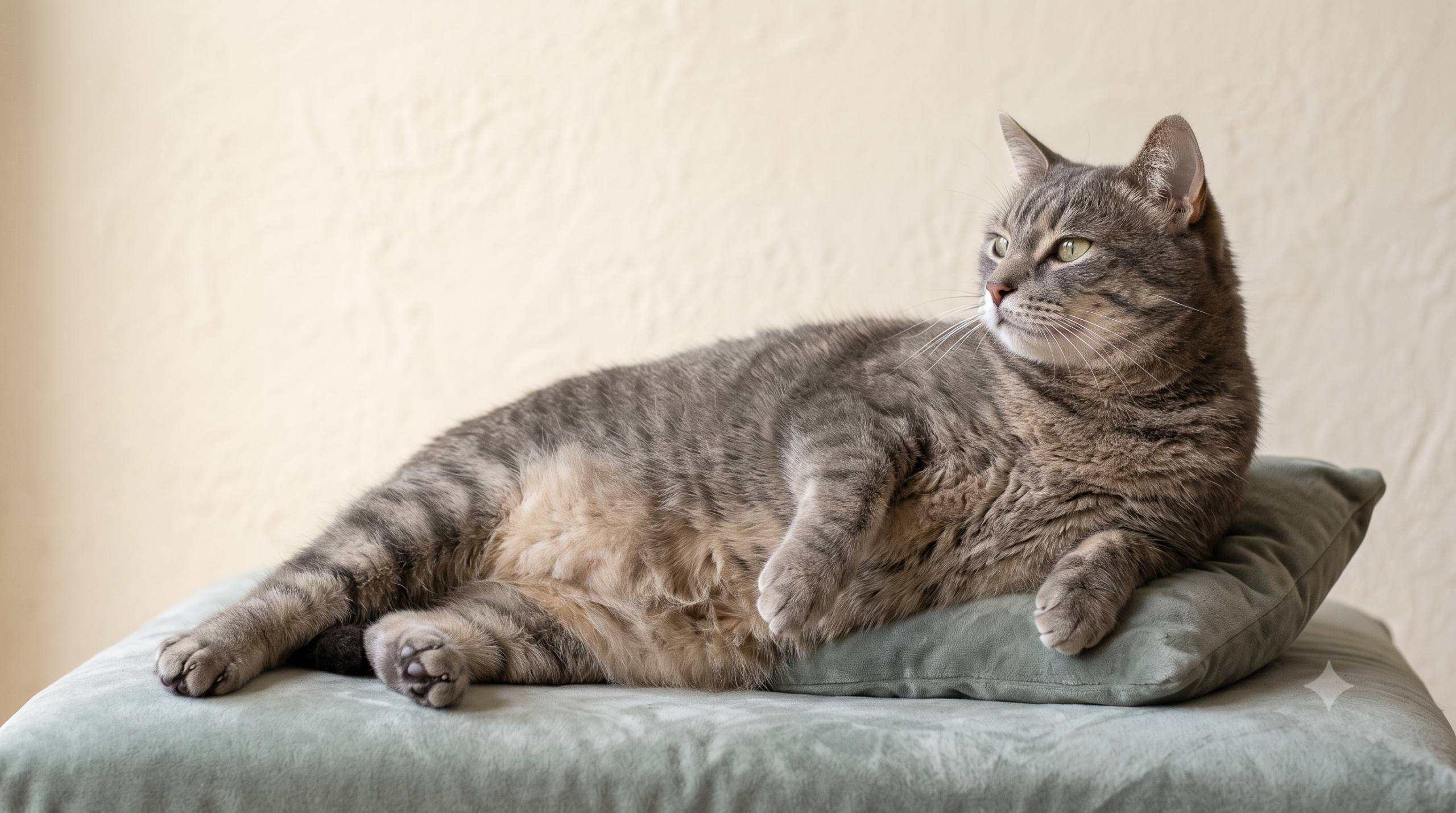
By Saloni Nagar, Medically Reviewed by Dr. Jimisha Shah, B.V.Sc & A.H., PGDAW
Yes, obese cats can lose muscle mass even while remaining overweight, and this is not a contradiction. Excess body fat disrupts how a cat’s body uses protein and nutrient signals. As a result, muscle tissue can break down even when food intake appears normal. This pattern has a clinical name. It is more common than most owners realize and is not the same as simple weight loss.
I cannot tell if she is losing weight or just changing shape in a way that worries me. That uncertainty is exactly where most owners are before they find this page. If your cat looks round but thinner across her spine, hips, or back legs, you may be seeing the earliest visible sign of obesity-related nutritional depletion. Most owners notice something feels different before they can explain it. The cat may feel lighter when picked up, the shoulder blades may become more noticeable, or the hindquarters may look thinner even with a round belly.
This article will help you understand what you are seeing, explain sarcopenic obesity in cats, and show you when careful monitoring is enough and when it is time to see your veterinarian. There is no alarmism, just a clear framework for understanding what is happening and what to do next.
This article explains the visible and behavioral signs of an obese cat losing muscle, discusses sarcopenic obesity in cats, explores why a cat eating normally can still become nutritionally depleted, and provides a clear checklist to help you recognize when these signs require urgent veterinary attention.
The Signs of Fat and Muscle Loss Together
I cannot tell if she is losing weight or just changing shape in a way that worries me, and that confusion is the right place to start. Body weight and body composition are not the same measurement. A bathroom scale cannot measure body composition, and it may not show important changes in an obese cat. A cat can lose muscle while keeping the same body weight.
James, who owned a 9-year-old Domestic Shorthair, noticed his cat’s back legs looked thinner during a routine vet visit. The veterinarian confirmed that her muscle condition had declined even though her weight had stayed the same. After switching to a food with real meat listed as the first two ingredients, James noticed her hindquarters gradually became fuller over the following months.
The sections below build on each other. First, they explain the confusion behind an obese cat losing muscle but not weight. Next, they show where these physical changes usually appear. Finally, they answer whether obesity causes muscle loss in cats and explain why it happens.
Why Is My Cat Losing Muscle but Not Weight?
An obese cat losing muscle but not weight is not a contradiction. It happens because body weight and body composition are not the same measurement. One can stay the same while the other changes in a concerning way. Fat tissue and muscle tissue have completely different metabolic fates in the body, so a cat can keep or even gain fat while losing muscle at the same time.
Many owners first notice this when they think, “She still looks round and heavy, but when I stroke her back, I can feel every vertebra.” This is one of the most common signs of a fat cat losing muscle mass, and it deserves attention rather than being dismissed. Another common moment is: I picked her up and realised I could feel her spine more clearly than I ever have before, and she has not lost any weight. Seeing a cat gaining fat and losing muscle at the same time feels confusing because the scale does not reflect what is happening inside the body.
The reason is simple. Body weight and body composition are not the same measurement. Weight is only a total. It includes fat, muscle, bone, organs, and water without showing how much of each is present. Lean body mass, which includes muscle, bone, and organs rather than fat, can decline even when the overall weight stays the same. Fat mass may increase enough to offset the muscle being lost, keeping the number on the scale stable.
Many owners describe the moment this becomes obvious by saying, ” The vet said her weight was the same, but I know something has changed because she looks different. Another common description is, when I hold her, she feels lighter than she looks; she is mostly fluff and fat now with not much underneath. Those observations often reflect changes in muscle rather than body weight alone. Can being overweight make cats lose muscle faster is the natural next question, and the next section explains why this can happen.
It is also important to understand what this does not mean. This pattern is not automatically caused by underfeeding. If your cat is eating her usual amount, the problem is not simply that she is getting too little food. Instead, it reflects a metabolic disruption that changes how her body uses the nutrients she already receives. Veterinary guidance from feline internal medicine literature recognizes fat retention alongside lean tissue loss as a real physiological pattern in cats, not a trick of the eye or an owner’s misunderstanding.
Because these changes can be subtle, a simple hands-on check can help you monitor them over time. Run your hand gently along your cat’s spine from the base of the neck to the tail and notice whether the vertebrae feel more prominent than they did a few months ago. Then weigh your cat at the same time each week using a kitchen scale and a basket or box. Consistent measurements reveal trends that a single vet weigh-in may miss. These checks do not replace a veterinary assessment. They help you bring clearer observations to your veterinarian.
A few simple checks, done consistently, can tell you more about your cat’s condition than the scale alone.
Spine and Weight Home-Check List
Checking these eight signs during a normal petting or handling session can help you notice changes early, without needing any special equipment.
Signs to Check This Week
□ Run your hand along the spine from neck to tail and note whether the vertebrae feel more prominent than usual
□ Check whether the ribs feel close to the surface under a layer of fat when you place your fingers flat against the side of the chest
□ Feel along the shoulder blades while your cat is sitting to see if they stick out more than the surrounding area
□ Press gently along the hip bones to check whether they feel sharp or angular rather than padded
□ Look at the thigh muscles from above or behind to see if they appear thinner than the rest of the body
□ Check the area just above the eyes for a hollow or sunken appearance on either side of the skull
□ Pick your cat up and note whether she feels lighter in your arms than her visual size would suggest
□ Weigh your cat on a kitchen scale using the same basket or box each time, at the same time of day
Understanding that weight alone does not tell the full story makes it easier to recognize exactly where on the body this contradiction shows up most clearly, which is what the next section explores.
Why Does My Fat Cat Look Skinny?
Why is my fat cat getting skinny is a question that confuses many owners because it seems to contradict what they expect. Can a cat be fat and skinny at the same time? Yes. Fat and muscle are stored and maintained in different parts of the body, so both can change independently. A cat can still look overweight while losing muscle.
Many owners describe the change by saying, ” Her belly hangs low, but her hips feel sharp and angular when I pick her up. Others say their cat looks fat but feels bony when they run a hand over the body. This happens because fat and muscle are distributed differently. Fat often stays around the belly, sides, base of the tail, and neck. Muscle loss usually appears first along the spine, over the shoulder blades, across the hips, above the eyes in the temporal region, and in the thigh muscles.
The muscles that support posture and locomotion are typically the first to show measurable loss in obese cats. Because of this, an overweight cat’s spine sticking out is often one of the earliest signs. Changes around the hips and hindquarters may also appear before other parts of the body look different. Another common sign is fat cat shoulder blades showing. Owners often notice that her shoulder blades stick out when she sits even though her sides are still padded. This happens because the scapular area has relatively little fat covering it, so muscle loss becomes visible there sooner.
Another common description is that she used to have a muscular look to her back legs and now they look thin even though she is still fat everywhere else. Owners also say her back end looks like it belongs to a thinner cat while her front is still round and heavy. This front-to-back difference makes the change especially confusing because it does not match the usual picture of a cat simply losing weight.
These changes are often subtle at first. Many owners notice a slight sharpness under their hand while petting. Over the following months, the difference becomes easier to see and harder to ignore. Place your thumbs along either side of your cat’s spine and your fingers over the ribs. If the ribs feel prominent beneath a layer of fat and the spine feels sharp, make a note and share that observation with your veterinarian.
Veterinary body condition scoring systems assess fat coverage and muscle mass as two separate measurements because they can change independently. This is how to tell if a cat is losing muscle, not fat, with greater confidence. The changes are not an optical illusion or a mistake in how you see your cat. They are real changes in body composition that veterinary assessment is designed to identify. While these signs may suggest nutritional disruption, only a hands-on veterinary examination can confirm the cause.
Fat Retention vs. Muscle Loss Body Map
Here’s a simple way to map what you’re feeling, broken down by the exact areas where fat and muscle tend to show up differently.
| Body Area | Typical Pattern | What It Feels Like Under the Hand |
|---|---|---|
| Belly | Fat retention | Round, pendulous, or hanging, soft and loose to the touch |
| Sides of the body | Fat retention | Padded, evenly soft, no sharp edges when pressed |
| Base of the tail | Fat retention | Thick padding, difficult to feel bone structure |
| Neck | Fat retention | Full or heavy-feeling, especially when the head is lowered |
| Spine (along the back) | Muscle loss | Vertebrae feel prominent or sharp rather than smoothly covered |
| Shoulder blades (scapulae) | Muscle loss | Protrude noticeably when the cat is sitting or standing |
| Hips | Muscle loss | Angular or bony rather than rounded |
| Temporal region (above the eyes) | Muscle loss | A hollow or sunken area on either side of the skull |
| Thighs (back legs) | Muscle loss | Noticeably thinner when viewed from above or behind, less bulk than before |
Because fat and muscle are stored and maintained in different parts of the body, checking these specific areas against each other, rather than assessing your cat’s shape as a single overall impression, tends to reveal the fat-and-wasting pattern most clearly.
Recognizing where this shows up on the body naturally raises the next question: whether obesity itself is what is driving the muscle loss, and how quickly that can happen.
Does Being Overweight Make Cats Lose Muscle Faster?
Does obesity cause muscle loss in cats? Yes. Obesity can accelerate muscle loss compared to cats at a healthy weight, and being overweight can make cats lose muscle faster is more than a coincidence. It is a metabolically driven process. Excess fat tissue is not simply passive storage. It is metabolically active and can interfere with the normal processes that build and maintain muscle.
To put it simply, fat tissue and muscle tissue have completely different metabolic fates in the body. One tissue can grow or stay the same while the other shrinks. This is the cat obesity muscle loss connection. Excess adipose tissue actively sends signals that interfere with the processes that build and maintain muscle. In simple terms, obesity changes the internal environment that muscles operate in, reducing the signals muscles need to maintain their mass. Part of this process involves adipose-derived inflammatory signaling, where fat cells release compounds that can disrupt normal muscle maintenance throughout the body.
This is why simply feeding more food does not usually solve the problem. The issue is not mainly how much the cat eats. It is how the body processes and uses those nutrients. How fast do cats lose muscle when overweight does not have one answer because obese cat muscle wasting, how quickly it develops, varies from cat to cat. Even so, the overall pattern is consistent. Excess body fat and disrupted muscle maintenance are closely linked.
The length of time a cat remains overweight also matters. The more excess body fat a cat carries, the more disrupted the signals that maintain muscle mass can become, making early recognition important. The longer obesity continues, the more noticeable this pattern may become. That is why recognizing the signs early is so valuable.
Some cats are more likely to develop this pattern than others. Senior cats, cats with underlying metabolic conditions, and cats on long-term calorie-restricted diets without enough protein may face a higher risk. If your cat also shows the physical signs described earlier, discuss those changes with your veterinarian instead of relying on home monitoring alone.
This process is easier to picture than to read about, so here’s a simple visual of what’s happening beneath the surface.
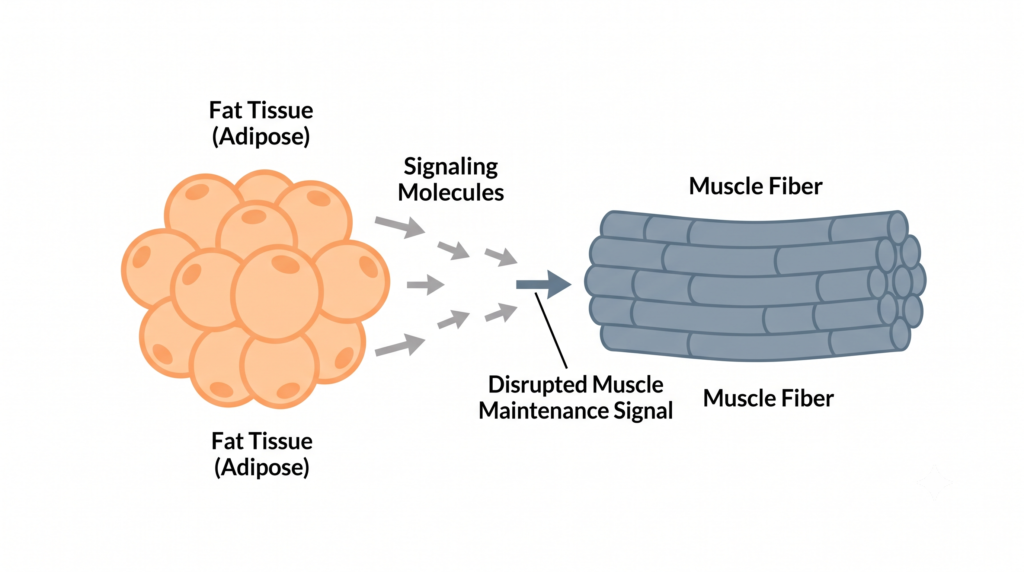
If you notice fat gain and muscle loss happening together, there is a biological reason behind it. Fat tissue is an active metabolic organ, not just a storage site. The next article in this series explains this process in greater detail.
Understanding that this pattern is driven by biology, rather than owner error or normal aging, makes it easier to recognize what is happening. The next section introduces the condition by name and explains it in more detail.
Sarcopenic Obesity Is the Clinical Name for This Condition
I thought maybe it was just her getting older, but the change has happened too quickly for that explanation to feel right. This is often the moment when owners stop dismissing what they are seeing and start looking for answers. That reaction is understandable because the changes do not match what most people expect from normal aging.
This section gives the pattern its clinical name and explains why an obese cat losing muscle mass matters once you understand what it is. It also explains why standard weight-management advice does not always fit a cat experiencing this pattern.
The given section below builds toward one clear point. This is a recognized condition with its own biological explanation, not simple obesity that just happens to look unusual.
What Is Sarcopenic Obesity in Cats?
Sarcopenic obesity in cats is the clinical name for the pattern described in the previous section: fat retention alongside muscle loss in the same animal. Let’s put it simply, sarcopenia refers specifically to the loss of skeletal muscle mass and strength, a process that obesity can accelerate in cats. When this happens alongside excess body fat, the condition is called sarcopenic obesity. It describes a cat that carries excess fat and too little muscle at the same time.
This is not a made-up or internet-created term. Sarcopenic obesity in cats is recognized in veterinary and human medicine and is described in peer-reviewed veterinary internal medicine literature covering both dogs and cats. The term matters because it changes how veterinarians approach the condition. A cat with sarcopenic obesity is not simply “too fat,” and standard weight-management advice for uncomplicated obesity may not be appropriate.
Knowing where this term actually comes from can make it easier to trust, and to bring up by name at your next vet visit. Let’s find out what experts say
Sarcopenic obesity is not a coined marketing term. Dr. Lisa M. Freeman of the Tufts Cummings School of Veterinary Medicine described sarcopenia and cachexia as related but distinct muscle-loss syndromes in dogs and cats in a 2012 paper published in the Journal of Veterinary Internal Medicine, work widely cited in subsequent veterinary nutrition literature. A 2023 nutritional guidance document from the Canadian Association of Veterinarians explains that sarcopenia can occur without fat loss or a drop in body condition score, meaning a cat can retain an obese or overweight body condition while still being under-muscled, a pattern it names directly as “sarcopenic obesity.” A later 2018 paper by Freeman notes that because body condition score and muscle condition score are not directly related, an animal can be obese while still having substantial muscle loss, and that this specific combination may carry an even worse outcome than either condition alone.
This difference has real consequences. Treating sarcopenic obesity like simple obesity by only restricting food intake can make muscle loss worse while doing little to address the underlying nutritional disruption. This is one reason why standard cat diet advice does not work for every overweight cat. Most general weight-management advice focuses on uncomplicated obesity and does not account for the increased protein and nutrient needs that may occur with sarcopenic obesity.
Is obese cat muscle wasting normal? Researchers are still studying how common this combined condition is in cats, so exact prevalence figures are not yet available. What is well established is the broader picture. Veterinary surveillance data show that many cats seen in clinical practice are overweight or obese. Middle-aged and senior cats are discussed more often in the veterinary literature, but this does not mean every overweight cat has sarcopenic obesity.
Diagnosing sarcopenic obesity requires a veterinary examination that includes formal muscle condition score assessment, not just a visual check at home. If the signs described earlier match your cat, speak with your veterinarian and mention this condition by name. Avoid trying to confirm or rule it out on your own.
Can Obesity Cause Muscle Wasting in Cats?
Can obesity cause muscle wasting in cats? Yes, obesity can and does cause muscle wasting in cats over time. To put it plainly, without delving into biological mechanisms, excess fat tissue alters the environment in which muscles work. Over time, this reduces the signals and nutrients muscles need to maintain themselves.
An overweight cat losing muscle over time is rarely a sudden process. Muscle wasting in obese cats usually develops slowly over months or even years. That is a major reason many owners do not notice it until it becomes more advanced. The muscles that support posture and movement, especially the hindquarters, back, and shoulders, are often affected first. As a result, many cats start moving differently before muscle loss becomes obvious.
She used to jump up to the sofa without thinking about it, and now she hesitates every time is a common early change that owners often overlook. Many people assume their cat is “just being lazy because she’s fat,” when muscle loss may already be playing a role. This is an understandable assumption. However, if the change is recent or continues to get worse, it deserves closer attention.
This muscle loss is not simply the result of a cat being less active. Research suggests that the metabolic changes linked with obesity can contribute to muscle loss even in cats that still play and move around. One important concept is anabolic resistance. This is a state where the body responds less effectively to the muscle-building signals from protein. Obesity and aging can both speed up this process in cats. That is why simply feeding more protein does not always reverse muscle loss, especially once it is well established or in older cats.
The table given below can help to see roughly how this tends to unfold over time, since that timeline is rarely laid out clearly anywhere else.
Muscle Wasting Progression Timeline
| Approximate Duration | Typical Observable Changes |
|---|---|
| Early weeks to first few months | Changes are usually too subtle to notice through observation alone; muscle condition may already be shifting even though nothing looks different yet |
| Around 2 to 4 months | A slight sharpness may become noticeable under the hand during petting, particularly along the spine or shoulder blades, though the overall body shape still looks mostly unchanged |
| Around 4 to 8 months | Visual signs may start to appear, such as shoulder blades or hip bones becoming more noticeable, or the temporal area above the eyes beginning to look slightly hollow |
| Around 6 months to a year | Behavioral changes may become more apparent, including hesitation before jumping, a slower rise from resting positions, or reduced interest in activity that used to come easily |
| Beyond a year without any change | The fat-and-wasting pattern tends to become more visually obvious, with a clearer contrast between the padded belly and thinner spine, hips, and hindquarters |
This timeline reflects a general pattern rather than a fixed schedule, since the pace varies by individual cat, age, and underlying metabolic status, and it is not a substitute for a veterinary muscle condition assessment.
Research in cats and other species suggests this connection is real, though the precise timeline and degree of acceleration vary between individual animals and have not been mapped with a single universal timeline.
Why Does Standard Diet Advice Fail Sarcopenic Cats?
The central problem with most mainstream cat weight management advice is that it focuses on one goal: reducing calories to lower body weight. Why does standard cat diet advice not work for a cat with sarcopenic obesity? The answer is simple. This approach is often not enough, and in some cases, it may even make the problem worse.
There are several reasons for this mismatch. Calorie restriction without protein compensation can accelerate muscle breakdown as the body turns to lean tissue for energy. Reducing cat food, causing muscle loss, is a real risk when protein intake is not adjusted. Weight management foods formulated for calorie reduction are often simultaneously lower in the protein an obese cat most needs. That means cat weight loss diet making muscle worse is a real possibility, not a rare exception.
When you reduce the amount of food, you also reduce every nutrient in that food. This includes the protein and micronutrients that a cat with this condition may need even more. That is why owners often ask, why is my cat losing muscle on a diet, even when they are following the feeding plan exactly as directed.
This is not the owner’s fault. It reflects a mismatch between advice written for simple obesity and the nutritional needs of a cat whose muscle maintenance has already been disrupted. Standard advice usually recommends feeding less of the same food, watching the scale, and expecting steady weight loss.
Cats with sarcopenic obesity may need a different nutritional approach. Veterinary nutrition research suggests the focus should be on adequate protein, not simply feeding less food. However, the right calorie-to-protein balance should always be decided by your veterinarian.
If your cat is eating a commercial weight management food, bring the packaging to your veterinary appointment. Your veterinarian can review the protein content and ingredient quality in context. Recognizing sarcopenic obesity instead of simple obesity is the first step toward getting advice that matches what is happening in your cat’s body.
Do not change your obese cat’s feeding plan on your own if you suspect muscle loss. Veterinary guidance is important because getting the calorie-to-protein balance wrong can make the problem worse.
Standard “feed less” advice often falls short because cats with sarcopenic obesity may have different protein and amino acid needs. The next article in this series explains how and why those nutritional needs change.
Standard Advice vs. Sarcopenic-Specific Approach
Seeing these two approaches side by side helps explain why following standard advice alone, however carefully, may not address what a cat with sarcopenic obesity actually needs.
| Category | Standard Obesity Advice | Sarcopenic Obesity Approach |
|---|---|---|
| Calorie approach | Reduce total calories to bring down body weight | Calorie changes are made carefully alongside protein adequacy, not as the primary lever alone |
| Protein focus | Often unspecified, or reduced along with overall food volume | Protein adequacy is prioritized specifically, since requirements may be higher than average |
| Food selection | General “weight management” formulas, typically lower in calories | Foods assessed specifically for protein content and quality, not just calorie count |
| Primary success measure | Progress tracked mainly through scale weight | Progress tracked through muscle condition score alongside weight |
| Feeding adjustment method | Reduce portion size of current food | Reassess the food itself, not just the portion, with veterinary guidance |
| Monitoring method | Periodic weigh-ins | Periodic weigh-ins combined with hands-on muscle condition checks over time |
| Who should guide changes | Often self-directed using general guidelines | Veterinary-guided, since getting the calorie-to-protein balance wrong can worsen muscle loss |
Naming this condition and understanding why generic advice does not fit it sets up the next question many owners ask: how can a cat be eating completely normally and still be nutritionally depleted? That is what the following section explains.
Obesity Changes What a Cat’s Body Needs From Food
She is eating the same food she always has, but something about her body has changed. This is one of the most confusing parts of this pattern for many owners because it challenges the common belief that a cat who eats enough is automatically well-nourished.
Miguel noticed his middle-aged Ragdoll was becoming thinner along the spine, even though she was eating normally. One evening, he checked the ingredient label on her regular food and realized the protein content was lower than he expected for a cat of her size. After switching to a higher-protein formula recommended by his veterinarian, her back felt less bony within two months.
This section explains why obesity changes cat nutritional needs, what it means for a cat to be functionally malnourished despite a normal appetite, and how protein deficiency can hide behind an overweight appearance. Together, the sections below answer the question many owners ask after noticing these physical changes: if nothing has changed about her diet, why is this happening?
How Does Obesity Change a Cat’s Nutrient Needs?
Does being overweight change what nutrients a cat needs? Yes. An overweight cat may need different amounts of certain nutrients than a healthy-weight cat. Why obesity changes cat nutritional needs is a common question. The reason is that obesity can increase the body’s need for certain key nutrients, even though total calorie needs may not rise in the same way.
This idea often surprises owners. Most people assume an overweight cat gets too much of every nutrient. In reality, that is not always true.
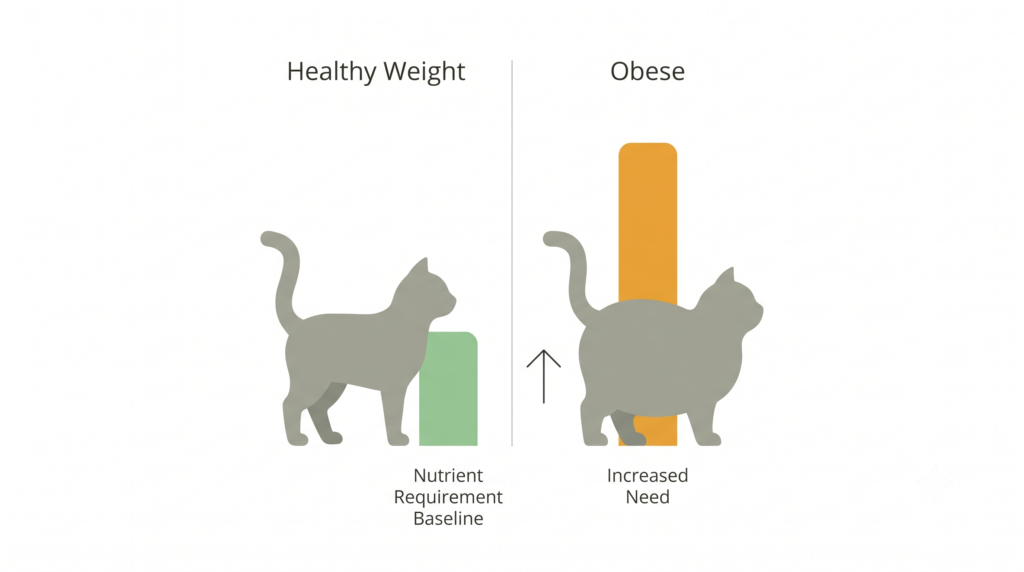
A cat’s nutritional requirements are not fixed. Excess body fat can shift the baseline upward for certain key nutrients. Think of it this way. A car with a damaged fuel system may use fuel less efficiently than one that runs well. In the same way, an obese cat’s body may need more of certain nutrients just to maintain normal tissue function. The engine has changed, even though the fuel has not. This is what obese cat nutrient requirements have changed means in practical terms.
Because of this, a food that met your cat’s needs at a healthy weight may no longer be enough after obesity develops. That can happen even if she eats the same food and the same amount every day. Why obesity changes cat nutritional needs is a common question. The answer is that this shift does not seem to be mainly about calories. Instead, it involves protein, specific amino acids, and fat-soluble vitamins. Researchers are still working to understand exactly how excess adipose tissue affects each of these nutrients.
This section does not cover which nutrients change, by how much, or the biological mechanisms behind them. Those details are covered in the next article in this series. The key point is simple. Obesity may increase the need for certain nutrients instead of lowering it. That is the opposite of what many owners expect. Current research suggests some nutrient requirements may rise with excess body fat, but this remains an active area of study, and individual cats can vary.
This shift is easier to see than explain, so here’s a simple picture of how an obese cat’s baseline needs differ from a healthy-weight cat’s.
Can an Obese Cat Be Malnourished?
Can an obese cat be malnourished? Yes. An obese cat can eat enough food and calories while still not getting enough of certain nutrients at the tissue level. This can happen when the body’s needs have changed or when it cannot use the nutrients it receives effectively.
The question of whether an obese cat can be malnourished may sound like a contradiction. But veterinary nutrition recognizes two different types of nutritional inadequacy. Absolute deficiency means a cat is not eating enough food overall. Functional deficiency is different. The cat may eat enough food, but her body cannot use what she receives effectively, or her nutritional needs have increased beyond what her current food provides.
Functional malnutrition occurs when food intake looks normal, but the body cannot use what it receives effectively enough to meet its changed requirements. This is the type of problem that may occur alongside muscle loss in an obese cat. Simply adding more of the same food may not fix the imbalance. It can instead add more calories while the underlying nutrient shortfall remains.
She gets to the food bowl and eats everything but still seems unsatisfied and hungrier than she should be. Some owners notice this pattern alongside other physical changes. A cat eating well but nutrient deficient may sound contradictory, but appetite and adequate nutrition are not always the same thing. Likewise, an obese cat eating normally but losing muscle describes a pattern that can be confusing for owners.
Functional malnutrition can be hard to notice in an obese cat because she does not look thin or underfed. Her extra body fat can hide the loss of muscle underneath. The muscle loss described earlier in this article may be one visible sign of this depletion. When the body does not get enough usable amino acids, it can break down its own muscle tissue to access them.
This is not the owner’s fault. Your cat may be eating normally and receiving food exactly as directed on the package. The problem can come from a mismatch between what the food provides and what her body now requires.
If you suspect this may be happening, talk with your veterinarian rather than trying to correct it through trial and error. Changing food or feeding amounts without guidance could worsen the nutritional imbalance you are trying to fix.
Absolute vs. Functional Deficiency Reference
Recognizing which category applies matters because the two call for very different responses; simply adding more food addresses the first but can leave the second unresolved.
| Feature | Absolute Deficiency | Functional Deficiency |
|---|---|---|
| Definition | Not enough food is being eaten overall | Enough food is being eaten, but the body cannot use it effectively |
| Food intake | Reduced or insufficient volume | Normal or typical volume |
| Root cause | An intake problem | A processing or requirement mismatch |
| How it looks from outside | Cat may appear underfed or thin | Cat may look overweight, masking the underlying issue |
| Common trigger | Underfeeding, illness reducing appetite, food restriction | Obesity-related metabolic disruption changing nutrient needs |
| Response to “feeding more” | Can help, since the gap is quantity-based | Does not help, since the gap is not about quantity |
| Detection method | Often noticeable through weight loss or visible thinness | Usually requires veterinary bloodwork, since appearance alone is misleading |
Can a Fat Cat Be Protein Deficient?
Can a fat cat be protein deficient? Yes, a cat can be visibly overweight and protein deficient at the same time. These two states are not mutually exclusive, even though they seem to contradict each other on the surface. This surprises most owners because the intuitive assumption is that a fat cat has clearly been eating enough, and therefore must be getting enough protein along with everything else, but protein sufficiency and calorie sufficiency are genuinely two separate measurements.
Fat cat protein deficiency signs can be difficult to connect to protein specifically. Many commercial cat foods, particularly weight management foods, contain less protein along with fewer calories. For a cat that already needs more protein than average, this combination may worsen her protein status rather than support recovery.
The question does excess fat affects how cats absorb protein is more complex than it may first seem. Even food with an adequate protein percentage on the label may not provide enough usable protein when obesity disrupts how the body processes and uses it. The problem appears to be less about absorption in the gut and more about how the body uses protein after it enters the bloodstream.
To understand why this can lead to visible muscle loss, it helps to know one basic process. Muscle tissue needs a steady supply of amino acids to maintain itself. When that supply falls short, the body breaks down existing muscle for fuel.
In simple terms, the body does not distinguish between dietary protein and muscle protein when amino acids are in short supply. It uses whatever is available. This process involves muscle protein synthesis, which is how the body builds and repairs muscle using amino acids from dietary protein. Obesity-related metabolic disruption can impair this process.
The visible effects can include muscle thinning across the back and hips, changes in coat quality, reduced muscle tone, and progressive weakness. These signs can appear even when a cat still looks overweight. This is why protein deficiency in an obese cat cannot be judged reliably from appearance alone.
The fat can mask the muscle loss, making the problem harder to notice. This is one reason professional assessment may be needed to confirm a suspected deficiency rather than relying only on how the cat looks or feels.
This article does not name specific tests. That level of detail belongs in the later diagnostic article in this series. It is important to understand that confirming protein deficiency requires professional assessment rather than home observation.
Research in feline nutrition suggests that protein deficiency can occur alongside obesity more often than many owners assume. However, individual veterinary assessment remains important rather than making a general assumption about any one cat.
The reason a well-fed obese cat can still become protein deficient relates to how excess fat tissue interferes with nutrient signaling. The next article in this series explores that mechanism in more detail.
Understanding that a normal diet does not always guarantee adequate nutrition in an obese cat raises an important practical question. What might this look like in your cat’s daily behavior and physical condition? That is what the next section covers.
Food Label Protein Check Guide
Since protein deficiency can hide behind a normal-looking food label, walking through these specific spots on your cat’s food packaging can help you see what’s actually being provided.
Where to Look on the Label
- Find the guaranteed analysis panel. This is usually a small boxed section on the side or back of the package listing minimum percentages for crude protein, fat, fiber, and moisture. Locate the line labeled “Crude Protein (min).”
- Note the exact percentage listed. Write down the number next to crude protein; this is the minimum percentage by weight, not the amount your cat actually absorbs and uses.
- Check whether the food is dry or wet. Wet food percentages look much lower than dry food percentages because of water content, so compare dry to dry or wet to wet, never one against the other directly.
- Read the first five ingredients on the ingredient list. Ingredients are listed by weight from heaviest to lightest, so this order shows what makes up the largest portion of the food.
- Check whether a named animal protein appears in the first two ingredients. Look for a specific source such as chicken, turkey, salmon, or beef, rather than a vague term.
- Note whether the protein source is named or generic. Terms like “meat meal” or “animal by-product” without a specific animal name provide less clarity about protein quality than a named source does.
- Check the package for a “weight management” or “light” label claim. These formulas are sometimes lower in protein alongside lower calories, so this is worth cross-referencing against the percentage you found in step 2.
- Compare this label against your cat’s previous food, if you have it. Set the two guaranteed analysis panels side by side to see whether the protein percentage has gone up, down, or stayed the same between the two.
Bringing this information, or the packaging itself, to your next vet visit gives your veterinarian something concrete to evaluate alongside a physical muscle condition assessment.
Physical and Behavioral Signs of Muscle Loss to Watch For
I thought she was just being lazy because she was overweight, but something feels different now. This shift from dismissal to genuine concern is common once owners connect the physical signs to a real change. This section brings together the visual signs to look for, the changes in movement and behavior worth noticing, and what these signs may mean when they appear despite normal feeding. Each H3 builds on the last, moving from what you can see, to changes you may notice in movement and behavior, and finally to what the combination of signs may tell you.
Is a Weak, Skinny-Looking Fat Cat Normal?
A fat cat looks weak and skinny at the same time is that normal? No, this combination is not something to dismiss, but yes, it is a recognized pattern rather than a random or unusual anomaly. The word “normal” needs some care here. This is a known and documented pattern in veterinary medicine, but that does not mean it should be left unaddressed once noticed.
When several visual signs appear together, they may suggest that muscle loss is occurring while fat remains. Look for changes such as:
- The spine feels more visible or prominent when you stroke along the back.
- The shoulder blades protrude or feel sharper than they used to.
- The hip bones feel more prominent or angular than before.
- The thigh muscles look noticeably thinner from above or behind.
- A hollow appears above the eyes in the temporal region, one area veterinarians check first.
- The belly remains round, pendulous, or padded despite changes elsewhere.
I can see a hollow above her eyes that was not there six months ago is a specific version of this observation. The temporal muscles sit close to the skull, so changes in this area can become noticeable once you know what to look for.
She groomed herself constantly when she was younger, but now she seems to struggle to reach certain spots, which is another behavioral sign worth noticing. A fat cat’s coat looking dull and thin is another change some owners may notice. Her coat is not as thick as it used to be, and she does not seem to be shedding normally. Coat changes can occur with broader nutritional changes, but they are not conclusive on their own.
Your cat does not need to show every sign on this list before you speak with your veterinarian. Even two or three signs appearing together deserve attention rather than a wait-and-see approach.
To clarify what “normal” means here, this is a recognized medical pattern because it is known to occur in cats. It does not mean the pattern requires no action. Recognized does not mean it is safe to ignore.
Why Does My Overweight Cat Seem Weak?
My overweight cat seeming weaker is that from poor nutrition? Yes, poor nutrition, specifically protein and amino acid depletion of the kind described earlier in this article, can cause real muscular weakness in an obese cat. This is different from the general sluggishness that overweight cats are often assumed to have. Overweight cat muscle loss is normal and is closely related to this question. Weakness in an overweight cat is often dismissed by owners and general advice sources as simply “a fat cat being lazy.” This can delay recognition of a more specific problem underneath.
She wobbles a little on her back legs when she walks, and I am not sure if that is just being fat or something else captures the uncertainty many owners describe. It is a reasonable distinction to make. Obesity-related sluggishness and genuine muscle weakness tend to look different once you know what to compare.
Obesity-related sluggishness usually involves a cat that is reluctant to move because of the extra weight. She may breathe a little harder with activity, but her basic muscle strength remains intact. She is capable of moving, but less willing to do so.
Muscle loss causes a different type of weakness. An obese cat’s difficulty jumping could be due to muscle is a common early question. A cat may try to jump but fail to reach a height she once managed easily. She may also wobble or stumble after landing, struggle to rise from a lying position, or seem less steady on her hind legs.
A short checklist can help you observe these changes more clearly at home:
- Has she stopped jumping to heights she used to reach without hesitation?
- Does she wobble or seem unsteady on her back legs?
- Is she noticeably slower to rise from a resting position?
- Does she seem to tire more quickly during light activity?
- Has her gait changed, especially around the hindquarters?
My fat cat wobbles when walking, overweight cat back legs weak, and obese cat weak hind legs are all ways owners may describe the same type of observation. She used to spring up from lying down, and now she pushes herself up slowly with her front legs is a specific example worth watching more than once.
Observe your cat rising from a resting position three or four times over a few days. Note whether she pushes up with effort or rises smoothly. This gives you a simple way to track changes in muscle strength without special equipment.
She moves more carefully now, like she is not quite sure her legs will hold her describes the cautious movement some cats show with muscle weakness. If you notice your cat hesitating before jumps she used to make without thinking, note the specific height and frequency. This gives your veterinarian useful behavioral information during an assessment.
Home observation still has limits. Weakness in an overweight cat can have causes other than nutritional muscle loss, including diabetes, arthritis, or neurological problems. These conditions can look similar from the outside.
You cannot reliably tell these causes apart at home. A veterinary evaluation is needed to determine what is happening. If several signs appear together, especially if they have developed or worsened over the past four to six weeks, bring them up with your veterinarian rather than continuing to monitor them on your own.
Sluggishness vs. Muscle Weakness Comparison
| Behavioral Marker | Obesity-Related Sluggishness | Genuine Muscle Weakness |
|---|---|---|
| Jumping to a familiar height | Reluctant to jump, but reaches the height when she does | Attempts to jump but cannot reach a height she used to manage easily |
| Landing after a jump | Lands normally once the jump is made | Wobbles or stumbles slightly on landing |
| Rising from a resting position | Slower to get up, but rises in one smooth motion | Struggles visibly, or pushes up slowly with the front legs first |
| Breathing during activity | Breathes a bit harder with exertion | No notable change in breathing during minimal activity |
| Overall movement style | Reluctant to move, but steady on her feet when she does | Seems generally less steady on her hindlimbs than before |
| Interest in activity | Less inclined to engage, but capable if motivated | Hesitates even when motivated, due to physical instability rather than reluctance |
| Underlying muscle strength | Intact, movement is limited by weight burden rather than weakness | Reduced, movement is limited by the muscle itself |
Since these two things can look similar at first glance, especially in a cat that is already overweight, this comparison makes it easier to tell which pattern you might actually be seeing.
What Does Muscle Loss on a Normal Diet Mean?
Cat losing muscle on normal food what to do? If you have noticed the physical signs from the earlier sections along with the behavioral changes just described, the combination is telling you something specific. The problem here is not inadequate food quantity, and simply feeding more of the same food is unlikely to resolve it. This pattern is best understood as an interpretive signal rather than a standalone symptom to react to individually.
When an obese cat losing muscle mass continues to do so despite a normal diet, it generally points to a mismatch. The current food may no longer provide what her obese body needs, as discussed earlier in this article.
The food that once seemed adequate may no longer meet her changed nutritional baseline. Nothing about her feeding routine may have changed. In this situation, her body may compensate for nutritional gaps by breaking down its own muscle tissue.
This pattern of ongoing muscle loss despite normal feeding is an important signal. It suggests that the food itself may need reassessment, rather than simply increasing the amount.
This is one of the clearest signs that the situation may have moved beyond simple obesity management. It may require a more specific nutritional strategy developed with veterinary guidance rather than general online advice.
However, this pattern cannot tell you which specific nutrients are depleted. It also cannot show whether another underlying condition contributes to the changes or what the exact treatment should be.
Those answers require a veterinary assessment, including bloodwork and a hands-on physical examination. Home observation can help you track changes, but it cannot provide these answers on its own.
Photograph your cat from above and from the side on the same day each week. These images can help your veterinarian assess whether muscle loss is progressing, staying stable, or improving.
You now have a clearer picture of what you are seeing and why it matters. The next step is learning how to track these changes and recognize when they need prompt attention.
If your cat shows weakness along with muscle loss, a structured home monitoring approach can help you track changes over time. A later article in this series covers this process in detail and focuses specifically on tracking recovery.
These Signs Determine When Veterinary Attention Is Needed
She wobbles a little on her back legs when she walks, and I am not sure if that is just being fat or something else. By this point in the article, you likely have a much clearer sense of how to answer that question for your own cat. A multi-cat household owner in Ohio with an aging Norwegian Forest Cat noticed the cat hesitating before jumping onto the couch, something she hadn’t done before. Her vet checked the cat’s muscle condition during the visit and recommended a feeding adjustment. Over several weeks, the owner noticed her jumping onto the couch again without hesitation.
This final section brings everything together into a practical framework for obese cats losing muscle mass what to do? which signs call for a prompt appointment versus urgent same-day contact, what a veterinarian actually checks during a muscle condition assessment, and what to expect when you bring these concerns to a vet visit. The goal here is not to alarm you, but to replace uncertainty with a clear, workable plan.
When Should I Take My Obese Cat to the Vet?
When to take an overweight cat to the vet for muscle loss is the central question this section answers. Most of the signs described throughout this article call for a prompt veterinary appointment rather than an emergency response, but a smaller set of specific signs should prompt same-day or urgent contact. Understanding how serious cat muscle wasting is depends heavily on which tier your cat’s signs fall into, so knowing the difference between these two tiers can help you respond appropriately without overreacting or waiting too long.
Signs that call for a prompt appointment, within days rather than as an emergency:
- Visible muscle thinning across the spine, hips, or shoulders in a cat that is not losing overall weight
- Behavioral signs of weakness, such as difficulty jumping or hindlimb instability, that have appeared or worsened over the past four to six weeks
- Coat quality changes appearing alongside muscle thinning
- Reduced grooming or reaching ability that seems physical rather than behavioral
Signs that call for same-day or emergency contact, obese cat losing muscle urgent vet visit territory:
- Sudden, pronounced hindlimb weakness or an inability to bear weight
- A cat that cannot rise or walk without falling
- Visible muscle tremors or shaking
- Sudden, rapid weight loss rather than the gradual changes described elsewhere in this article
- Collapse or extreme lethargy occurring alongside muscle changes
Obese cat symptoms that need a vet immediately generally fall into this second tier. The reason for these two tiers is straightforward. The first describes a progressive pattern that needs professional assessment but is not, by itself, an immediate emergency.
This type of change has usually developed over weeks or months. The second tier involves signs that could point to a more acute neurological or metabolic event. That is why these signs call for a faster response.
If more than two of the physical signs described above are present, that combination warrants a veterinary conversation within the week. It is better to seek guidance than to take a wait-and-see approach.
The same two-tier approach applies to senior obese cat muscle wasting: what to do. Senior cats may need closer attention because of the additional factors discussed earlier in this article.
If you notice obese cat muscle loss getting worse over several weeks, rather than staying stable, move up your appointment timeline. Do not continue waiting to see whether the changes resolve on their own.
Every sign on these lists ultimately requires professional assessment. This framework helps you judge the level of urgency, but it does not replace veterinary care. If you notice any of these changes, contact your veterinarian rather than trying to determine the cause on your own.
Urgency Tier Reference Chart
If your cat shows more than two signs from the prompt tier together, that combination is reason enough to move up your appointment timeline rather than waiting.
| Sign | Urgency Tier | Recommended Timeframe |
|---|---|---|
| Visible muscle thinning across the spine, hips, or shoulders, weight otherwise stable | Prompt appointment | Within days |
| Difficulty jumping or hindlimb instability, appeared or worsened over 4 to 6 weeks | Prompt appointment | Within days |
| Coat quality deterioration appearing alongside muscle thinning | Prompt appointment | Within days |
| Reduced grooming or reaching ability that seems physical rather than behavioral | Prompt appointment | Within days |
| Sudden, pronounced hindlimb weakness or inability to bear weight | Same-day or emergency | Immediate |
| Unable to rise or walk without falling | Same-day or emergency | Immediate |
| Visible muscle tremors or shaking | Same-day or emergency | Immediate |
| Sudden, rapid weight loss, as opposed to gradual change | Same-day or emergency | Immediate |
| Collapse or extreme lethargy occurring alongside muscle changes | Same-day or emergency | Immediate |
How Do Vets Check Muscle Condition in Cats?
What does a vet check for muscle loss in cats? A veterinary assessment for muscle condition typically combines a hands-on physical examination with a standardized scoring system. It does not usually require sedation or special equipment. Knowing what to expect can make the appointment feel simpler and less stressful.
Muscle condition score cats what is it?
The main tool used is the muscle condition score, a standardized veterinary scale that measures muscle mass separately from body fat. It is different from the body condition score that most owners already know. Muscle condition and body condition are assessed separately in veterinary practice because they can diverge significantly in obese animals. This is the same pattern discussed throughout this article.
An obese cat can have a high body condition score, which shows excess fat, while having a low muscle condition score. This means the cat may have meaningful muscle loss at the same time. A formal assessment using both scores helps reveal this combination more clearly.
How the muscle condition score is derived
The muscle condition score comes from the WSAVA Nutritional Assessment Guidelines, published in the Journal of Small Animal Practice in 2011, developed by a WSAVA committee led by Dr. Lisa M. Freeman. Unlike body condition score, which estimates fat coverage, muscle condition score is assessed through visual examination and palpation over the temporal bones, scapulae, lumbar vertebrae, and pelvic bones. Veterinary sources describe it using a categorical scale, ranging from normal muscle mass through mild, moderate, and severe muscle loss, based on how prominent these bony landmarks feel under the hand. The epaxial muscles along the spine are typically the first to show muscle loss, which is part of why this area is checked early in the exam. Clinically, body condition score and muscle condition score are not directly related, so an animal can be overweight while still having significant muscle loss, which is exactly the pattern this article has been describing.
During the exam, your veterinarian will usually feel several areas rather than relying only on what they can see. The temporal muscles, the muscles above the eyes on either side of the skull, are often the first place veterinarians look for evidence of muscle wasting. They will also check the muscle over the spine, scapulae, and pelvis.
Palpation of the spine, scapulae, and pelvis gives a more accurate picture of muscle mass in an obese cat than visual assessment alone. Fat can hide muscle loss when you look at your cat. Feeling these areas can give the veterinarian a clearer picture of changes in muscle mass.
Before your appointment, check whether the hollow above your cat’s eyes, the temporal region, has deepened or become more noticeable over the past few months. This is similar to what your veterinarian will check during the exam. It can also help you describe the changes more clearly.
You can also place your thumbs along either side of your cat’s spine and your fingers over the ribs. If the ribs feel prominent under a layer of fat while the spine is sharp, document this for your vet. Do not use this home check to diagnose muscle loss. It is simply a way to record changes that may help your veterinarian.
Your veterinarian may also check your cat’s gait, hindlimb strength, and basic reflexes. This may be especially important if you have noticed weakness or changes in movement. These checks can help put the muscle changes into a broader clinical context.
After the physical exam, your veterinarian may recommend bloodwork. Blood tests can help investigate possible underlying causes and assess nutritional status more closely than a physical exam alone.
The details of that bloodwork and what the results may show are covered in a later article in this series about diagnostics. For now, the key point is that bloodwork can be a normal next step. It does not automatically mean that something has gone seriously wrong.
What Happens at the Vet for Muscle Loss?
If you are wondering what happens at a vet appointment for an obese cat, it is best to think of the visit as an investigation rather than a crisis appointment. Knowing what to expect can visit feel less stressful. Many owners also wonder what to tell the vet about a cat losing muscle, and having a few details ready can make the conversation more productive.
What to bring to the appointment
Consider being ready to share:
- How long you have noticed the muscle changes
- What your cat currently eats, including the brand, type, and approximate amount
- Any behavior changes along with the physical changes
- Recent weight history, if you have tracked it
- Other signs you have noticed, such as weakness, gait changes, or coat changes
Note what your cat is currently eating, including the brand, type, and approximate daily amount. Bring this information to your vet instead of trying to remember it during the appointment. Keep a simple weekly note of any changes you see, when they started, which body areas are affected, and whether they are getting worse. This is useful preparation, not an unnecessary extra step.
What the appointment may involve
The appointment will usually follow a fairly predictable sequence. Your veterinarian will perform a physical exam that includes body condition and muscle condition scoring. They will also discuss your cat’s diet and feeding history.
Your veterinarian may recommend bloodwork to assess nutrient levels and look for other contributing conditions. The vet will then discuss the next steps with you. These may include a diet adjustment, a specialist referral, or a follow-up monitoring plan.
What to expect from the first visit
It is helpful to set realistic expectations. This type of appointment is usually about gathering information rather than finding a complete answer in one visit.
Think of the appointment as the start of an investigation. Your veterinarian may need more information before deciding what is causing the changes and what your cat needs next. This approach can feel less overwhelming and often reflects how the process actually works.
The next steps may include specific testing, supplementation, or dietary changes. Those details are covered in later articles in this series after a veterinarian has evaluated your cat directly.
Early recognition and prompt veterinary care generally give cats the best chance of a good outcome. By reaching this point in the article, you already have a useful foundation for that conversation with your veterinarian.
Vet Conversation Question Guide
Walking in with a few specific questions ready can make this appointment feel far more productive for both of you.
Questions to Ask Your Vet
On muscle condition scoring:
- What is my cat’s current muscle condition score, and where does that fall on the scale?
- Which specific areas showed the most muscle loss during the exam?
- How does this compare to her body condition score, and what does that combination suggest?
On diet reassessment:
- Based on what you’re seeing, does my cat’s current food need to change, or just the amount I’m feeding?
- What protein level should I be looking for on a label for a cat in her situation?
- Are there other nutrients we should be paying attention to beyond protein?
On follow-up timing:
- How soon should we recheck her muscle condition score after making any changes?
- What specific changes, if any, would tell us this is working?
- If nothing changes by the next visit, what would be the next step?
Before your vet appointment, knowing which nutrient tests to ask about can make the conversation significantly more productive. This is covered in the article that opens the next stage of this series.
Conclusion
Obese cats can and do lose muscle mass while remaining visibly overweight, and this is not a contradiction to be explained away. The condition has a name, sarcopenic obesity, a recognized biological basis, and a clear set of physical and behavioral signs that owners can learn to spot early. Eating normally does not protect an obese cat from this pattern, because obesity itself changes what her body needs from food. If you have noticed your cat looking thinner across the back, hips, or shoulders despite remaining round elsewhere, or if she seems weaker than she used to be, these observations are worth taking seriously. A veterinarian can assess muscle condition formally and help determine the right next steps. When you are ready to understand the biology behind why this happens, the next article in this series covers exactly that.
What to Watch For
- Spine, shoulder blades, or hip bones feeling more prominent than they did a few months ago
- A hollow appearing or deepening above the eyes, in the temporal region
- Thigh muscles looking thinner from above or behind, even as the belly stays round
- Hesitation or reduced height when jumping to surfaces the cat used to reach easily
- Wobbling, unsteadiness, or stumbling on the back legs, particularly on landing
- Slower or more effortful rising from a resting position than in the past
- Coat quality changes, thinning, dullness, or altered shedding patterns
- Reduced grooming reach or frequency that seems physical rather than a change in habit
- Any of the above appearing or worsening over a period of four to six weeks
Before your next vet visit, it may help to have ready: how long you’ve noticed these changes, your cat’s current food (brand, type, and amount), any recent weight measurements, and specific examples of behavioral changes you’ve observed.
Frequently Asked Questions
- Does Being Overweight Change What Nutrients a Cat Needs?
Yes, obesity shifts a cat’s nutritional requirements, particularly for protein and certain vitamins, beyond what a standard diet formulated for a healthy-weight cat typically provides. This shift appears to be less about total calories and more about specific nutrients the body needs in larger amounts once excess fat tissue is present. The biological reasons behind this shift are covered in more detail in the next article in this series.
- Can Obesity in Cats Cause Muscle Wasting Without Any Other Symptoms?
Yes, in early and moderate stages, muscle wasting can occur with no other obvious symptoms present. A cat may continue eating, drinking, and behaving normally while muscle mass is declining in a way that is measurable but not yet visually dramatic. This is part of why visual and hands-on physical checks matter even in cats that otherwise seem behaviorally fine. Regular veterinary body condition and muscle condition assessment is a reasonable habit for any obese cat, regardless of how she seems day to day.
- My Cat Is Fat but the Vet Said She Is Healthy Could She Still Be Losing Muscle?
Yes, this is possible, because a general health check does not always include a formal muscle condition score, particularly if the muscle loss is subtle or the visit was focused on a different concern. If this describes your situation, it is reasonable to ask specifically for a muscle condition score to be assessed and documented at your next visit. Obesity-related muscle loss can also be present before it becomes apparent on routine bloodwork, which is another reason a targeted assessment can be worth requesting directly.
- How Fast Does an Obese Cat Lose Muscle if Nothing Changes?
The rate varies considerably depending on the cat’s age, the degree of obesity, her underlying metabolic status, and her current diet. It is typically a gradual process unfolding over months, though it can accelerate in senior cats or those with other concurrent health conditions. There is no single universal timeline that applies to every cat, which is part of why ongoing monitoring is more useful than trying to estimate a fixed timeframe. A veterinarian can track muscle condition score over successive visits to get an actual measure of the rate of change in your specific cat.
- Is Muscle Loss in an Obese Cat Reversible?
In many cases, yes, particularly when the pattern is identified early and addressed with appropriate dietary changes and veterinary management, though full reversal tends to become more difficult the longer the condition has progressed, and the older the cat is. Whether an obese cat can regain lost muscle depends heavily on timing. Senior cats in particular can have a harder time rebuilding lost muscle even with optimal nutrition, related to the anabolic resistance mentioned earlier in this article. The extent of reversibility possible for an individual cat is best assessed by a veterinarian using baseline and follow-up muscle condition scores over time, rather than estimated in advance.
Disclaimer: This article is written for educational purposes only and does not replace professional veterinary advice. All referenced sources were used to inform general educational content; they do not constitute veterinary guidance for any individual cat. If you are concerned about your cat’s health or iodine intake, please consult a licensed veterinarian before making any dietary changes.
References
The information in this article draws on the following veterinary, institutional, and peer-reviewed sources. All sources were selected for their relevance to feline thyroid health, iodine nutrition, and dietary management in cats. This article is educational in nature and does not constitute veterinary advice.
Freeman, L.M. (2012). Cachexia and Sarcopenia: Emerging Syndromes of Importance in Dogs and Cats. Journal of Veterinary Internal Medicine, 26(1), 3–17.
Freeman, L.M., et al. (2011). WSAVA Nutritional Assessment Guidelines. Journal of Small Animal Practice, 52, 385–396. World Small Animal Veterinary Association.
Understanding Body and Muscle Condition Scoring. dvm360. Retrieved from https://www.dvm360.com/view/understanding-body-and-muscle-condition-scoring
Muscle Condition Scoring in Cats. dvm360. Retrieved from https://www.dvm360.com/view/muscle-condition-scoring-in-cats
Muscle Condition Scoring (MCS). Association for Pet Obesity Prevention / World Pet Obesity Association. Retrieved from https://www.petobesityprevention.org/mcs
WSAVA Feline Muscle Condition Score Chart. Purina Institute. Retrieved from https://www.purinainstitute.com/centresquare/nutritional-and-clinical-assessment-tools/wsava-feline-muscle-condition-score-chart

Saloni Nagar is the founder and lead content creator of Bark & Meow Tales. As a dedicated cat parent and researcher, she transitioned from personal loss to pet health advocacy, focusing on early warning signs and preventive care. Saloni specializes in translating complex veterinary concepts into actionable guidance for pet parents. Her work is driven by a commitment to helping others interpret subtle feline health signals before they escalate, ensuring that every cat has a voice through informed, compassionate care.